
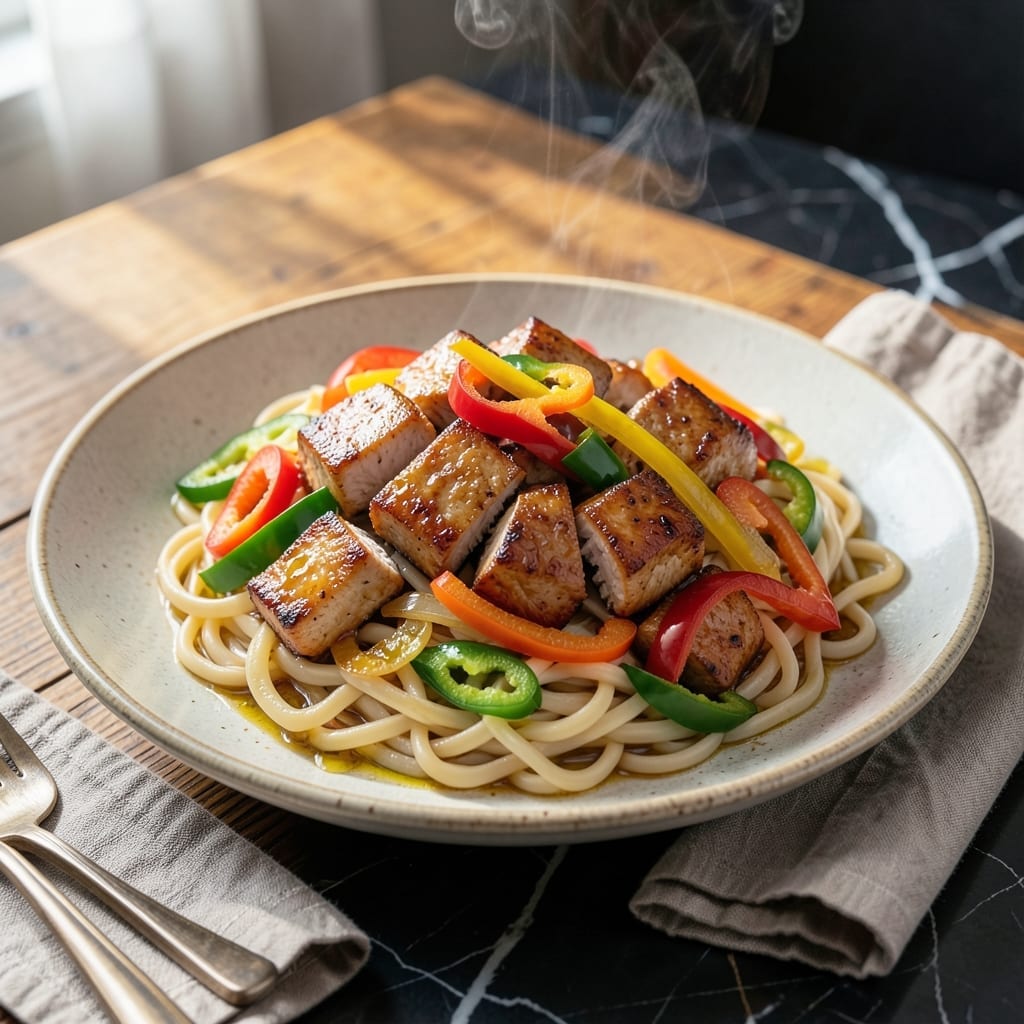
This Japanese-inspired stir-fry brings comfort food to a new level with its perfect balance of savory and sweet flavors. The dish combines tender chicken with vegetables and noodles in a satisfying one-pan meal.
I developed this recipe after trying various versions, focusing on the traditional technique of quick cooking over high heat. The result is a dish that retains the vibrant colors and textures of each ingredient while delivering rich, layered flavors.
The chicken becomes incredibly tender, the vegetables stay crisp, and the noodles soak up the delicious sauce. Every bite offers a harmony of tastes and textures that feels both nourishing and deeply satisfying.
This creation proves that comfort food can be both delicious and approachable in your own kitchen.
Ingredients for Chicken Hekka
A handful of fresh ingredients and pantry staples bring this vibrant dish to life.
| Ingredient | Amount | Notes |
|---|---|---|
| Boneless Skinless Chicken Thighs 🍗 | 1 ½ lb | Cut into bite-sized pieces |
| Udon Noodles 🍜 | 12 oz | Fresh or frozen, parboiled |
| Green Bell Pepper 🌶️ | 1 whole | Thinly sliced into strips |
| Red Bell Pepper 🌶️ | 1 whole | Thinly sliced into strips |
| Yellow Onion 🧅 | 1 whole | Thinly sliced into half-moons |
| Carrots 🥕 | 2 whole | Julienned or thinly sliced |
| Garlic Cloves 🧄 | 4 cloves | Minced for maximum flavor |
| Fresh Ginger 🌿 | 1 tbsp | Finely grated or minced |
| Soy Sauce 🥢 | ⅓ cup | Low-sodium preferred for control |
| Mirin 🍶 | ¼ cup | Sweet rice wine essential |
| Sake 🍶 | 2 tbsp | Dry variety recommended |
| Granulated Sugar 🍚 | 1 tbsp | Balances savory and sweet |
| Vegetable Oil 🫒 | 2 tbsp | High smoke point for stir-frying |
| Sesame Oil 🫒 | 1 tsp | Toasted variety for aroma |
| Green Onions 🌱 | 3 whole | Thinly sliced for garnish |
The chicken is the foundation here. Thighs stay juicier than breasts in the high heat of stir-frying. Look for skinless, boneless to save prep time. Most Asian markets carry them pre-cut, or ask the butcher to do it for you. The udon noodles are non-negotiable—fresh or frozen both work, but skip the dried ones (they’re too dense for this dish).
No mirin? 1 tbsp sugar + 2 tbsp water gets you close. Sake can be swapped with dry white wine. For the vegetables, zucchini or snap peas add great texture. If you’re missing bell peppers, broccoli florets work too—just cut them small so they cook quickly. The ginger and garlic? Fresh is best (no shortcuts here).
Everything comes together fast, so prep all ingredients before heating the wok. Leftovers keep 3-4 days in the fridge, but honestly, they’re best eaten fresh. The flavors meld overnight, but the noodles soften—so reheat gently with a splash of water.
Why You’ll Love This Recipe
- One Pan Wonder: I toss everything—the chicken, udon, and peppers—into a single skillet. Cleanup is a breeze, just how I like it.
- Umami Bomb: The chicken thighs soak up the savory-sweet sauce, while the peppers and onions add this fresh crunch. Honestly, it’s the kind of dish I crave all week.
- Feeds the Crowd: Between us, this stretches effortlessly for family dinners or meal prep—leftovers taste even better the next day.
- Budget Friendly: Chicken thighs and udon keep it affordable, but the colorful bell peppers make it feel special. I’ll be real: it’s my go-to when I need flavor without the splurge.
Step-by-Step Instructions for Chicken Hekka
This method delivers that perfect balance of sweet, savory, and umami in every bite.
Step 1: Prep and Marinate the Chicken
Cut the 1.5 lb boneless skinless chicken thighs into bite-sized pieces—about 1-inch cubes. I like to trim off any excess fat first for a cleaner texture. The uniform size ensures even cooking and maximum sauce absorption.
In a bowl, combine the chicken with 1 tbsp fresh ginger, 4 cloves minced garlic cloves, 0.33 cup soy sauce, 0.25 cup mirin, 2 tbsp sake, and 1 tbsp granulated sugar. Mix thoroughly to coat every piece. Let it marinate for 15-20 minutes while you prep the vegetables.
Step 2: Slice Vegetables and Parboil Noodles
Thinly slice the 1 whole green bell pepper, 1 whole red bell pepper, and 1 whole yellow onion into uniform strips. This shape mimics the chicken pieces and ensures even cooking. Julienne the 2 whole carrots or slice them thinly on a bias for visual appeal.
Parboil the 12 oz udon noodles according to package instructions, but shave off 1 minute from the recommended time—they’ll finish cooking in the wok. Drain and rinse under cold water to stop the cooking process and prevent sticking. Toss with 1 tsp sesame oil to keep them separated.
Step 3: Stir-Fry Chicken Until Golden
Heat 2 tbsp vegetable oil in a wok or large skillet over high heat until it shimmers. Remove the chicken from the marinade (reserve the marinade) and add it to the wok in a single layer. Let it sear undisturbed for 2-3 minutes until the edges turn golden brown.
Stir-fry the chicken for another 3-4 minutes until it’s cooked through and no longer pink inside. Transfer to a plate and set aside. Pour the reserved marinade into the wok and let it simmer for 1-2 minutes to reduce slightly and mellow the raw garlic flavor.
Step 4: Combine Everything and Finish
Add the sliced vegetables to the wok and stir-fry for 4-5 minutes until the peppers and onion soften slightly but retain a bit of crunch. The carrots should be tender but still vibrant. Return the chicken to the wok along with the prepared udon noodles.
Toss everything together for 2-3 minutes until the noodles are heated through and coated in the glossy sauce. The sauce should cling to the noodles and chicken, creating that signature hekka sheen. Garnish with the 3 whole thinly sliced green onions and serve immediately while hot.
Pro Tips For Making Chicken Hekka
- Sear Chicken First: Get a hot pan with a little oil and sear the chicken thighs for 3-4 minutes per side until golden—I learned this the hard way, skipping it leaves the dish tasting flat.
- Slice Peppers Thin: Cut the bell peppers into thin strips, about ¼-inch wide, so they soften quickly and blend into the dish instead of staying chewy.
- Skip Overcooked Udon: Boil the udon noodles for just 1-2 minutes if using pre-cooked, or they’ll turn mushy when stirred into the hekka later.
- Use Thighs Not Breast: Boneless skinless chicken thighs stay juicy even with the long simmer, while breast meat tends to dry out—this isn’t the dish to cut corners.
Troubleshooting chicken hekka
Sauce Too Thin
If your sauce looks watery, let it simmer uncovered for 2-3 minutes after adding the marinade. The alcohol in mirin and sake needs time to cook off. I often mix 1 tsp cornstarch with 1 tbsp cold water and stir it in for a quick fix.
Noodles Sticking
Prevent this by rinsing parboiled udon under cold water and tossing with 1 tsp sesame oil. If they stick during cooking, add 2 tbsp hot water to the wok and toss gently. High heat helps, but don’t let the wok dry out. 🔥
Chicken Overcooks
Cut thighs into uniform 1-inch pieces for even cooking. Sear first over high heat for 2-3 minutes, then remove before fully cooked. The chicken finishes cooking when added back with vegetables and noodles.
Vegetables Too Soft
Slice peppers and onions thinly for quick cooking. Stir-fry them separately for just 4-5 minutes until crisp-tender. Add carrots first—they take longer. Keep the heat at medium-high to maintain texture.
Flavor Too Mild
Boost umami by adding 1 tbsp extra soy sauce or a splash of fish sauce. Taste before serving and adjust with pinch of sugar or squeeze of lime for balance. Fresh ginger and garlic are key—don’t skimp. 💡
Nutrition Facts
Frequently Asked Questions
Can I use chicken breast instead of thighs?
Yes, but thighs stay juicier. If using breasts, cut into 1-inch pieces and cook for 1-2 minutes less to prevent dryness. The high heat can overcook leaner meat quickly.
What if I don’t have mirin?
Substitute with 1 tbsp sugar + 2 tbsp water per 0.25 cup needed. It won’t be identical but provides the sweetness. Avoid skipping it entirely—the balance of flavors depends on it.
Can I make this gluten-free?
Use tamari instead of soy sauce and gluten-free udon noodles. Check that your mirin and sake are also gluten-free. The rest of the ingredients are naturally safe.
How do I store leftovers?
Keep in an airtight container for 3-4 days in the fridge. Reheat gently with a splash of water to refresh the noodles. Avoid microwaving at full power to prevent drying.

- Jollof Rice Sauce Recipe: West African Tomato and Spice Infusion - September 25, 2026
- Japanese Rice Soup Recipe: Umami-Rich Comfort in a Bowl - September 25, 2026
- Homemade Cream Of Rice Recipe: Silk-Smooth Breakfast in Minutes - September 25, 2026