
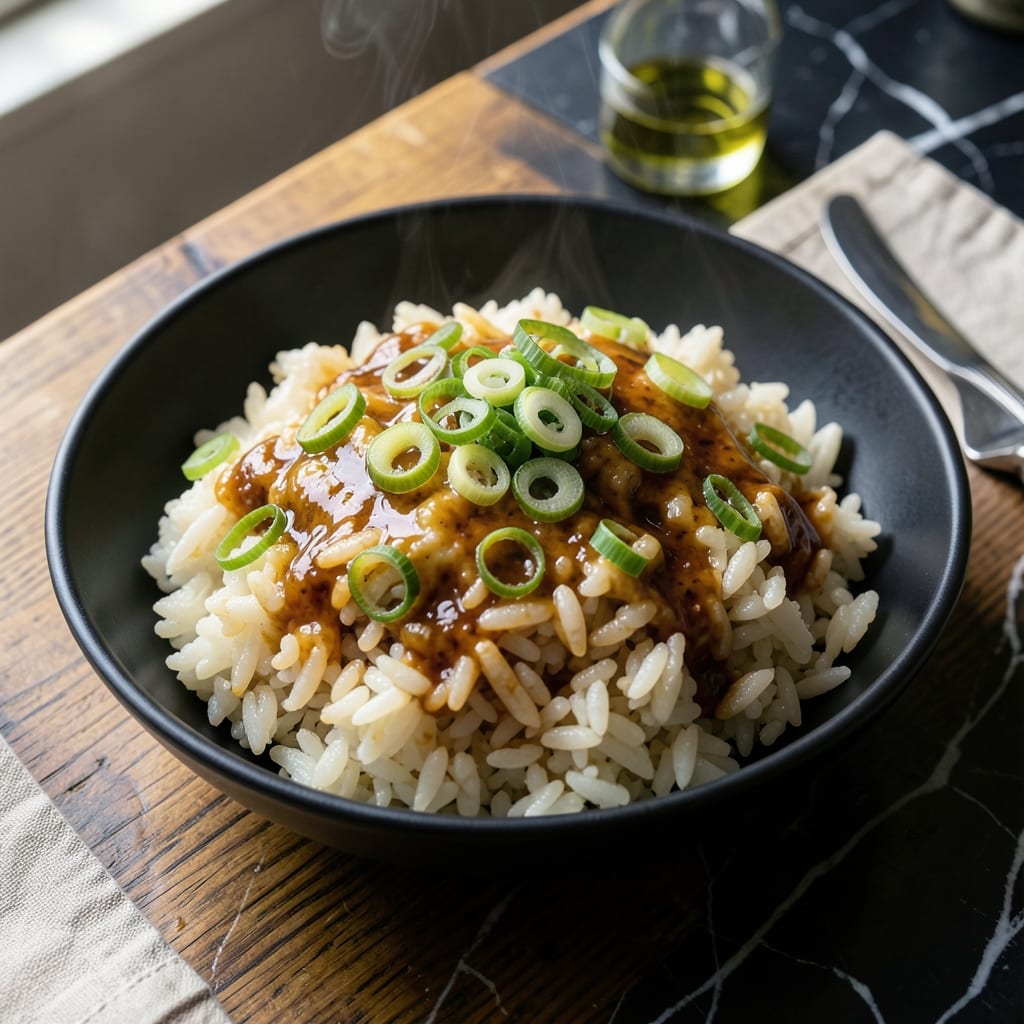
Leftover rice finds new life in this traditional Japanese wok-fried preparation that transforms yesterday’s meal into something extraordinary. The high heat of a wok creates a subtle char on the grains while keeping the centers tender and fluffy.
This method works because cold rice holds its shape better than fresh, resulting in distinct grains rather than mush. A simple combination of soy sauce, mirin, and dashi builds layers of umami without overwhelming the dish.
The final result delivers savory depth with each bite, showcasing how simple ingredients can create restaurant-worthy flavor. The technique takes less than 15 minutes from start to finish.
Perfect for using up rice and whatever vegetables you have on hand. The versatility makes this a go-to solution for quick, satisfying meals.
Ingredients for Japanese Leftover Rice
Cold rice plus a handful of pantry staples create this wok-fried Japanese classic in minutes.
| Ingredient | Amount | Notes |
|---|---|---|
| Cooked White Rice 🍚 | 4 cups | Day-old, cold, separated grains |
| Neutral Oil 🫒 | 2 tbsp | High smoke point preferred |
| Soy Sauce 🥫 | 3 tbsp | Low-sodium or regular |
| Mirin 🍶 | 2 tbsp | Sweet rice wine essential |
| Dashi Stock 🥣 | ½ cup | Or substitute vegetable broth |
| Green Onions 🧅 | 4 whole | Thinly sliced, white and green parts |
| Carrot 🥕 | 1 whole | Medium, finely diced |
| Frozen Peas 🌱 | ½ cup | Thawed under running water |
| Garlic Cloves 🧄 | 2 cloves | Minced finely |
| Fresh Ginger 🌿 | 1 tbsp | Finely grated or minced |
| Large Eggs 🥚 | 2 whole | Lightly beaten |
| Sesame Oil 🫒 | 1 tsp | Toasted, for finishing |
| Nori Sheets 🍱 | 1 sheet | Optional, shredded for garnish |
| White Sesame Seeds 🌰 | 1 tsp | Toasted, for garnish |
The rice is non-negotiable—day-old, cold, and dry is what gives you those distinct, charred grains. Jasmine or short-grain works best, but any leftover rice will do. For dashi, instant dashi granules from Asian markets or Kikkoman brand are reliable and shelf-stable. Mirin is often sold near the soy sauce; avoid the aji-mirin (it’s sweeter). If you can’t find it, a mix of dry sherry and sugar in a pinch works, but it’s not ideal.
No mirin? One tbsp sugar plus one tbsp dry sherry per two tbsp mirin. Out of dashi? Vegetable or chicken broth with a splash of soy sauce mimics the depth. For vegetables, anything quick-cooking works—bell peppers, zucchini, or corn. The egg can be omitted for a vegan version, but it adds richness. If using frozen veggies, thaw and drain them well to avoid a watery result.
Store leftover rice in the fridge for up to 3 days before using. Once fried, this keeps well for 2-3 days in an airtight container. Reheat in a dry skillet to revive the texture. The garnishes (nori, sesame seeds) are best added fresh—keep them separate until serving.
Why You’ll Love This Recipe
- I’ll be real: I used to toss leftover rice. Now it turns into a second meal that costs pennies and tastes like a million bucks.
- Five-Minute Fix: I just heat the rice in oil, splash in soy sauce and mirin, and it’s ready before the dashi even simmers.
- Umami Bomb: That first hit of soy and dashi on crispy rice grains is ridiculous—savory, sweet, and seriously addictive.
- Breakfast or Midnight Snack: I’ve served it with fried eggs at dawn and straight from the pan at 2 AM, and both felt exactly right.
Step-by-Step Instructions for Japanese Wok-Fried Rice
Transform cold rice into a savory, aromatic dish with this precise wok technique.
Step 1: Prepare and Sauté the Aromatics
Heat a wok or large skillet over high heat until it smokes slightly. Add the 2 tbsp Neutral Oil and swirl to coat the surface evenly. This high heat is essential for achieving that signature wok hei flavor.
Add the minced 2 cloves Garlic Cloves and 1 tbsp Fresh Ginger immediately, stirring constantly for 15-20 seconds until fragrant but not browned. Then add the finely diced 1 whole Carrot and cook for 2-3 minutes until slightly softened. The aroma should be intense and inviting at this stage.
Step 2: Incorporate Vegetables and Rice
Push the aromatics to one side of the wok and add the thinly sliced 4 whole Green Onions and 0.5 cup Frozen Peas. Stir-fry for 1-2 minutes until the peas turn bright green and the onions soften slightly.
Add the 4 cups Cooked White Rice, breaking up any clumps with your spatula. The cold, day-old rice is crucial—it fries up separate and fluffy rather than mushy. Stir-fry for 3-4 minutes until the rice is heated through and begins to develop a light golden color in spots.
Step 3: Season and Finish with Eggs
Create a well in the center of the wok and pour in the 2 whole Large Eggs. Scramble them quickly with your spatula until just set, then immediately incorporate into the rice mixture. This ensures the eggs remain tender rather than overcooked.
Drizzle the 3 tbsp Soy Sauce, 2 tbsp Mirin, and 0.5 cup Dashi Stock evenly over the rice. Stir-fry for another 2-3 minutes until the liquid is mostly absorbed and the rice takes on a glossy sheen. The mirin adds a subtle sweetness that balances the soy sauce’s saltiness.
Step 4: Final Touches and Presentation
Remove from heat and drizzle with the 1 tsp Sesame Oil, stirring to distribute evenly. The nutty aroma of toasted sesame oil adds depth to the dish. Taste and adjust seasoning if needed, though the soy sauce and dashi should provide ample flavor.
Transfer to serving plates and garnish with the shredded 1 sheet Nori Sheets and 1 tsp White Sesame Seeds. The nori adds a subtle oceanic note, while the sesame seeds provide texture. Serve immediately while hot, with each grain of rice distinct and flavorful.
Pro Tips For Making Japanese Leftover Rice
- Break Up the Rice: Use your hands to separate the grains before frying—leftover rice clumps like cement, and this guarantees even browning. I learned this the hard way after too many bites of crunchy rice balls.
- Heat the Oil First: Get the pan screaming hot before adding rice, about 1-2 minutes on medium-high. Sounds obvious, but cold oil just steams the rice instead of frying it.
- Use Day-Old Rice: Fresh rice turns to mush in the pan. Spread it on a tray and refrigerate overnight to dry it out—this is non-negotiable for that classic texture.
- Deglaze with Dashi: After frying, pour in 2-3 tablespoons of dashi stock to lift all the browned bits. Skipping this wastes flavor you’ve already paid for with your time.
Essential Equipment for This Recipe
Wok Selection
A carbon steel wok is ideal for this dish—it heats quickly and distributes heat evenly. I use a 14-inch flat-bottom wok from Joyce Chen for my home stove. The flat bottom works well on both gas and electric ranges, ensuring maximum contact with the heat source. 🔥
High Heat Source
You need intense heat to achieve that signature wok hei (breath of the wok) flavor. A gas range with at least 15,000 BTU burners works best. If using electric, preheat your wok for 5-7 minutes to get it screaming hot before adding oil.
Essential Utensils
A wok spatula (or chan) is a game-changer for stirring and tossing ingredients. I prefer the bamboo wok spatula from Mrs. Anderson’s—it’s sturdy and won’t scratch your wok’s seasoning. A long-handled metal spatula works in a pinch.
Oil with High Smoke Point
Choose a neutral oil with a smoke point above 450°F. I always keep avocado oil or peanut oil on hand for stir-frying. Avoid olive oil—its low smoke point can create bitter flavors at high temperatures.
Prep Tools
A sharp chef’s knife makes quick work of dicing the carrot and green onions. I use an 8-inch Wüsthof. Also, have a microplane ready for grating the ginger—it creates a fine, even texture that disperses beautifully in the dish.
Keep all ingredients prepped and within reach before you start cooking. This dish comes together fast once the heat is on! 💡
Nutrition Facts
Frequently Asked Questions
Can I use freshly cooked rice instead?
No, fresh rice contains too much moisture. Day-old, cold rice is essential for achieving separate, non-mushy grains when stir-fried. Spread hot rice on a tray to cool quickly if needed.
What if I don’t have a wok?
Use a large, heavy skillet like cast iron. Heat it until very hot before adding oil. The cooking time may need a 1-2 minute adjustment due to heat distribution differences.
How can I make this vegetarian?
Simply omit the eggs and use vegetable broth instead of dashi. For extra protein, add tofu or edamame. The flavor will still be rich and satisfying.
Why does my fried rice turn out mushy?
This usually happens with fresh rice or overcrowding the pan. Cook in batches if needed and always use cold rice. High heat and constant stirring prevent steaming.

- Jeera Rice Recipe by VahChef: Cumin-Infused Basmati Perfection - October 20, 2026
- Jollof Rice Recipe Instant Pot: West African Flavor in a Fraction of the Time - October 20, 2026
- Keema Fried Rice Recipe: Spiced Minced Meat and Fluffy Grains - October 20, 2026