
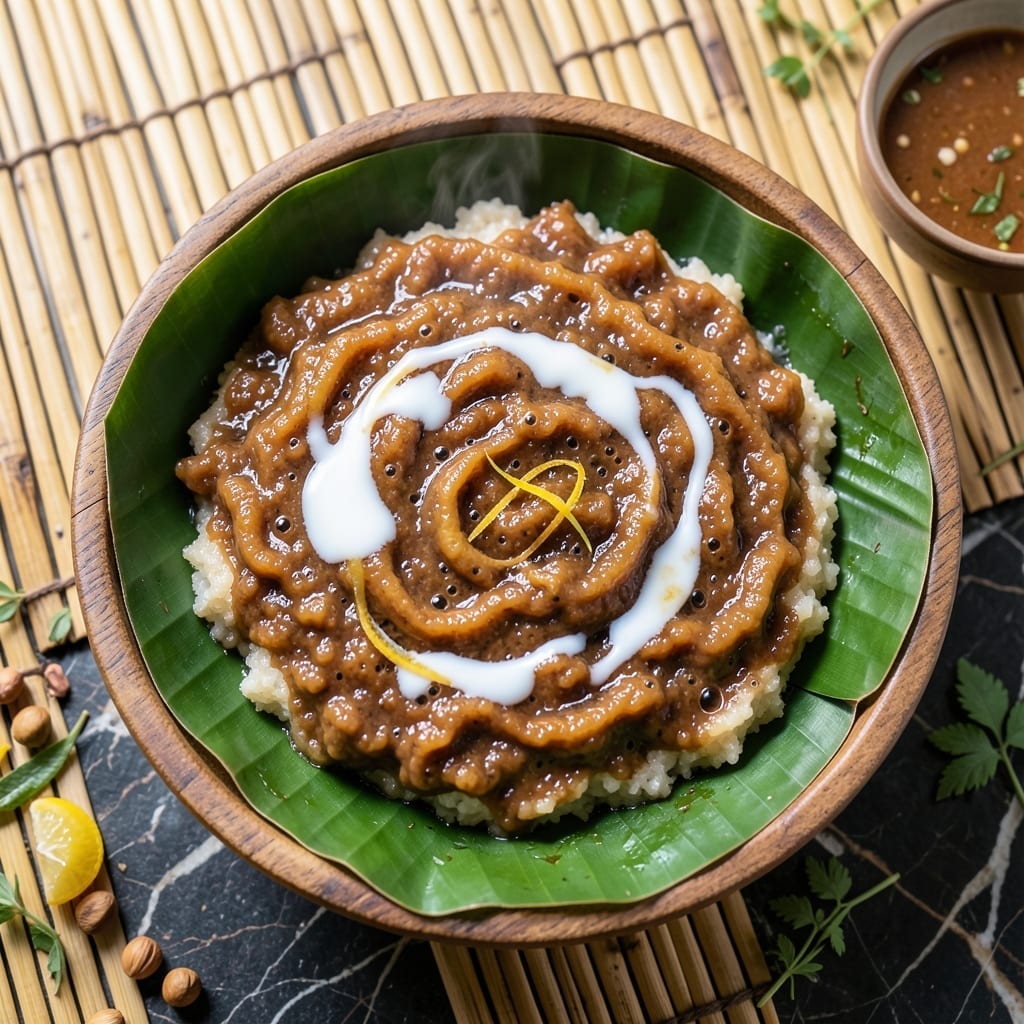
This traditional Filipino treat brings the sweet, sticky essence of coconut and rice flour together in a way that’s impossible to resist.
I learned to make this dish by watching my grandmother balance the perfect ratio of glutinous rice flour and coconut milk, creating a texture that’s both chewy and tender.
The process is simple yet precise, requiring patience as the mixture thickens to a glossy, fudgy consistency. Every bite delivers a rich, coconut-infused sweetness that lingers.
Perfect for festivals or a special homemade dessert, this recipe stays true to its roots while fitting seamlessly into any kitchen.
Ingredients for Kalamay Recipe Rice Flour
Traditional Filipino ingredients come together for that signature sticky, sweet bite everyone loves.
| Ingredient | Amount | Notes |
|---|---|---|
| Glutinous Rice Flour 🌾 | 2 cups | Also called sweet rice flour |
| Coconut Milk 🥥 | 2 cups | Full-fat, canned preferred |
| Brown Sugar 🍚 | 1 ½ cups | Packed, for sweetness |
| Coconut Sugar 🥥 | ½ cup | Optional, for deeper flavor |
| Water 💧 | 1 cup | For adjusting consistency |
| Coconut Oil 🫒 | 2 tbsp | For greasing and richness |
| Vanilla Extract 🌿 | 1 tsp | Pure, for aromatic depth |
| Salt 🧂 | ¼ tsp | Fine sea salt preferred |
| Pandan Leaves 🍃 | 2 pieces | Optional, for authentic aroma |
| Shredded Coconut 🥥 | ½ cup | Unsweetened, for topping |
| Toasted Sesame Seeds 🌰 | 1 tbsp | For garnish and crunch |
Glutinous rice flour is non-negotiable here—it’s what gives kalamay that chewy texture. Bob’s Red Mill or any Asian grocery brand works. Full-fat coconut milk from Thai Kitchen or Chaokoh is key for richness (light versions just won’t cut it). I always grab pandan leaves from the freezer section at my local Asian market if they’re not fresh.
No pandan? Vanilla extract works in a pinch, but the flavor profile shifts slightly. Brown sugar can be swapped with dark brown for more molasses notes, or coconut sugar at a 1:1 ratio. If the mixture seems too thick, add water a tablespoon at a time. Shredded coconut on top is optional but highly recommended for texture.
Store leftovers in an airtight container at room temp for 2-3 days, or refrigerate for up to 1 week. To reheat, steam briefly or microwave with a damp paper towel to restore that glossy finish. It actually tastes better the next day once flavors meld.
Why You’ll Love This Recipe
- One Bowl Magic: I just dump the glutinous rice flour, coconut milk, and sugars into a single pot—no fancy equipment, no fuss.
- Sticky Sweet Heaven: That combo of coconut milk and brown sugar? It’s rich, caramelized, and just the right kind of chewy.
- Feeds the Crew: I make a big batch for fiestas, then slice it into squares for easy grabbing—kids and adults alike devour it.
- Budget Stretcher: A bag of rice flour and a can of coconut milk go a long way, and leftovers taste even better the next day.
Step-by-Step Instructions for Kalamay
Here’s the method I use—simple, tested, and guaranteed to deliver that perfect sticky texture.
Step 1: Prepare the Kalamay Mixture
In a large mixing bowl, whisk together the 2 cups Glutinous Rice Flour, 1.5 cups Brown Sugar, and 0.5 cup Coconut Sugar until fully combined. The coconut sugar adds a deeper caramel note that complements the brown sugar beautifully.
Gradually pour in the 2 cups Coconut Milk and 1 cup Water while whisking continuously to prevent lumps. The mixture should be smooth and pourable, like a thick pancake batter. Add the 0.25 tsp Salt and 1 tsp Vanilla Extract, then stir for another 30 seconds to ensure everything is evenly incorporated.
Step 2: Infuse with Pandan and Cook
Place the 2 pieces Pandan Leaves in a large non-stick pot and pour in the kalamay mixture. Cook over medium-low heat, stirring constantly with a wooden spoon or silicone spatula. The pandan leaves will infuse the mixture with their signature aromatic fragrance as it cooks.
After about 5 minutes, you’ll notice the mixture beginning to thicken slightly. Keep stirring—this prevents the bottom from scorching and ensures even cooking. The goal is a glossy, stretchy consistency that pulls away from the sides of the pot as you stir.
Step 3: Add Coconut Oil for Richness
Once the mixture has thickened enough to see the bottom of the pot when you drag the spatula through it, drizzle in the 2 tbsp Coconut Oil. Stir well to incorporate—the oil adds a subtle richness and helps create that signature sticky, slightly chewy texture.
Continue cooking for another 5-7 minutes until the mixture becomes very thick and elastic, pulling into a single mass. You’ll know it’s ready when it forms a cohesive dough-like ball that no longer sticks to the sides of the pot.
Step 4: Shape and Top the Kalamay
Remove the pandan leaves and discard them. Transfer the kalamay mixture to a greased baking dish or banana leaf-lined tray, using your spatula to press it into an even layer about 1 inch thick. Smooth the top with the back of your spatula for a clean finish.
While the kalamay is still warm, sprinkle the 0.5 cup Shredded Coconut evenly over the top, pressing lightly so it adheres. Then add the 1 tbsp Toasted Sesame Seeds for a final touch of crunch and visual appeal.
Step 5: Cool and Serve
Let the kalamay cool to room temperature for 30-45 minutes. This allows it to set properly so it holds its shape when sliced. The texture should be firm yet slightly tacky, with a beautiful glossy sheen.
Once cooled, cut into squares or diamonds for serving. The kalamay should be sticky and slightly chewy, with a sweet coconut flavor that lingers. Store any leftovers in an airtight container at room temperature for up to 3 days.
Pro Tips For Making Kalamay Recipe Rice Flour
- Pre-cook the flour: Toast the glutinous rice flour in a dry pan for 2-3 minutes before mixing—this removes the raw taste and deepens the flavor.
- Warm the coconut milk: Heat the coconut milk gently before adding to the mixture; cold milk can cause the sugars to seize and create lumps.
- Avoid over-stirring: Stir just until the batter is smooth, then let it cook undisturbed—overmixing makes kalamay dense instead of chewy.
- Use a nonstick pot: Even with oil, kalamay sticks badly to regular pots; a good nonstick pan saves you from scraping burnt bits off the bottom.
Wine and Beer Pairings for This Recipe
Sweet Wine Pairings
This treat’s coconut sweetness pairs beautifully with Moscato d’Asti from Italy—its light fizz and stone fruit notes balance the richness perfectly. I love the Saracco Moscato for its approachable sweetness and gentle effervescence. 🍷
Dessert Wines
A chilled glass of Sauternes from Bordeaux offers a luxurious match, with honey and apricot flavors that complement the coconut. For a budget-friendly option, Late Harvest Riesling from California provides similar harmony.
Beer Recommendations
Try a Belgian Witbier like Hoegaarden—its citrus and spice notes cut through the sweetness. The effervescence cleanses your palate between sticky, chewy bites. I always grab this from my local craft beer shop. 🍺
Fruity Alternatives
A Riesling Kabinett from Germany offers crisp acidity and hints of peach that work wonderfully. The slight sweetness in the wine won’t overpower the coconut and brown sugar flavors.
Non-Alcoholic Option
For a non-alcoholic pairing, coconut water with a splash of lime juice refreshes your palate. Alternatively, chilled hibiscus tea provides a floral contrast that enhances the treat’s flavors. 💧
Nutrition Facts
Frequently Asked Questions
Can I substitute regular rice flour?
No, glutinous rice flour is essential for the sticky texture. Regular rice flour lacks the binding properties needed.
How do I fix a runny mixture?
Cook longer over medium-low heat while stirring constantly. If needed, add 1-2 tbsp more rice flour, but let it cook down first.
Why did my kalamay turn out grainy?
This usually means the sugar didn’t dissolve properly. Ensure you whisk thoroughly in Step 1 and cook until fully melted.
Can I make this without pandan leaves?
Yes! Use 1 tsp vanilla extract instead. The flavor will be slightly different but still delicious.

- Jeera Rice Recipe by VahChef: Cumin-Infused Basmati Perfection - October 20, 2026
- Jollof Rice Recipe Instant Pot: West African Flavor in a Fraction of the Time - October 20, 2026
- Keema Fried Rice Recipe: Spiced Minced Meat and Fluffy Grains - October 20, 2026