
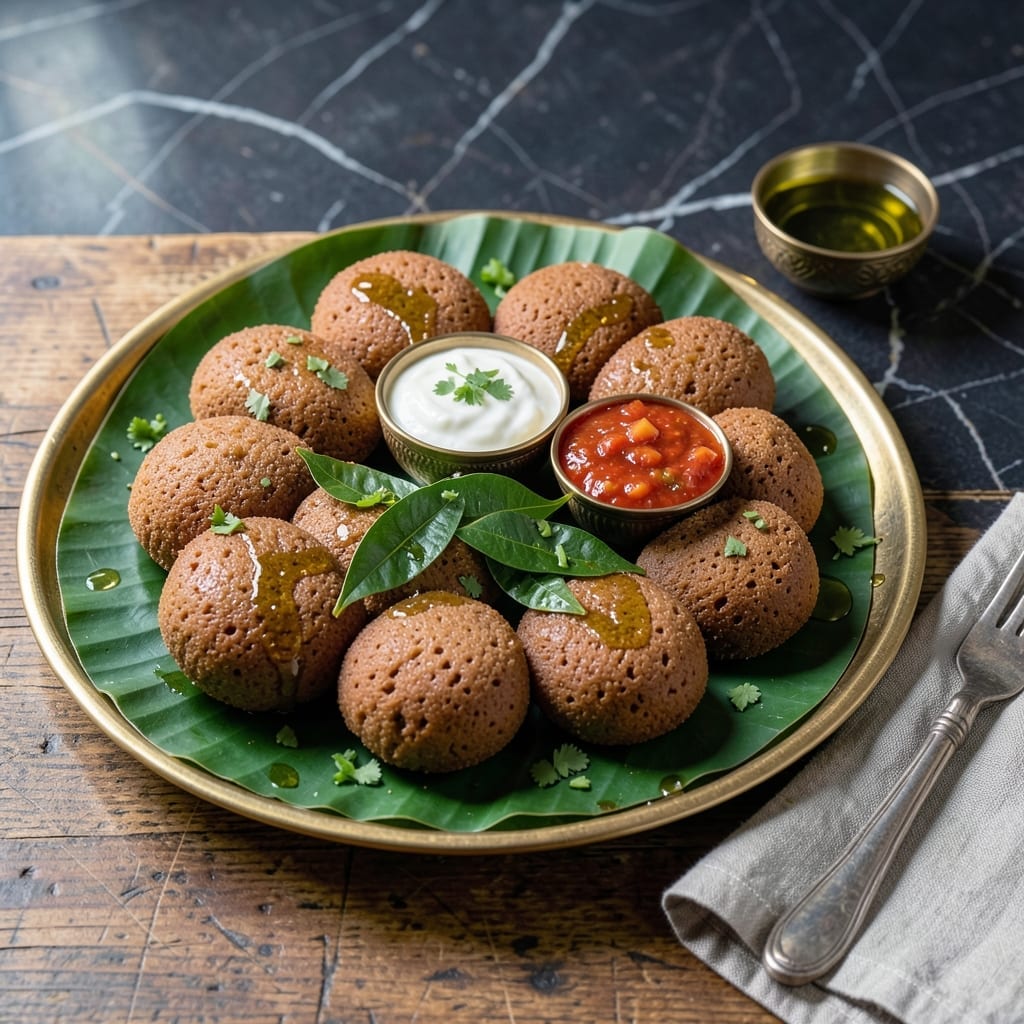
This traditional Kerala idli uses matta rice for its distinctive nutty flavor and slightly chewy texture. The process honors authentic techniques while making them accessible for home kitchens.
Soaking, grinding, and fermenting the batter properly creates those signature fluffy, pillowy idlis. The red rice gives them a beautiful rustic color and deeper taste than standard versions.
The fermentation step is non-negotiable—it develops the complex flavors and ensures the perfect soft yet springy texture. Steaming in special molds completes the transformation.
Serve with coconut chutney and sambar for the full South Indian experience. This method delivers restaurant-quality results with simple ingredients.
Ingredients for Kerala Matta Rice Idli
Matta rice and urad dal form the heart of these authentic Kerala idlis with rich nutty depth.
| Ingredient | Amount | Notes |
|---|---|---|
| Matta Rice 🍚 | 2 cups | Red rice, rinsed thoroughly |
| Urad Dal 🌾 | ¾ cup | Split black gram, whole |
| Fenugreek Seeds 🌿 | ½ tsp | Methi seeds for fermentation |
| Water 💧 | 4 cups | For soaking and grinding |
| Salt 🧂 | 1 ½ tsp | Adjust to taste after fermentation |
| Coconut Oil 🥥 | 2 tbsp | For greasing idli molds |
| Coconut 🥥 | ½ cup | Freshly grated for chutney |
| Green Chilies 🌶️ | 2 whole | Slit lengthwise for chutney |
| Ginger 🌿 | 1 piece | 1-inch, peeled for chutney |
| Roasted Chana Dal 🌾 | 2 tbsp | For coconut chutney texture |
| Mustard Seeds 🌿 | ½ tsp | For tempering chutney |
| Curry Leaves 🍃 | 8 pieces | Fresh, for tempering chutney |
Matta rice is non-negotiable for authenticity—look for Kerala red rice at Indian grocery stores or specialty markets. The urad dal should be whole, not split, with a bright white interior and no moisture. Patel Brothers or Indian Bazaar are reliable sources for both. Fenugreek seeds are tiny but powerful—ensure they’re fresh, not stale, as old seeds lose their fermentation-boosting properties.
No urad dal? Split mung beans at half the quantity work in a pinch, though the texture won’t be identical. Skip fenugreek? One-fourth teaspoon baking soda can aid fermentation, but the flavor depth won’t match. For coconut chutney, frozen coconut (thawed) works if fresh isn’t available. Mustard seeds can be swapped with cumin, but the tempering flavor changes noticeably.
Store matta rice and urad dal in airtight containers in a cool, dry place for up to 3 months. Fermented batter keeps in the fridge for 2 days—stir before using. Steamed idlis can be refrigerated for 3 days; reheat by steaming for best texture.
Why You’ll Love This Recipe
- Soak & Forget: I just mix matta rice and urad dal with fenugreek seeds, soak overnight, and grind in the morning—no last-minute stress.
- Earthy Depth: That nutty matta rice paired with the slight bitterness of urad dal gives these idlis a rich, rustic flavor I can’t get enough of.
- Breakfast to Dinner: I make a big batch on Sunday and they’re perfect for breakfast, lunch, or even a light dinner with coconut chutney.
- Stretches the Rupee: Matta rice is budget-friendly, and a little dal goes a long way—this recipe feeds my whole family without breaking the bank.
Step-by-Step Instructions for Kerala Matta Rice Idli
Precision and patience transform these simple ingredients into fluffy, fermented perfection.
Step 1: Prepare the Rice and Dal Mixture
Rinse the 2 cups Matta Rice thoroughly until the water runs clear, then drain completely. Soak the rice in 2 cups Water for 4-6 hours. Simultaneously, rinse the 0.75 cup Urad Dal and 0.5 tsp Fenugreek Seeds together, then soak in the remaining 2 cups Water for the same duration.
After soaking, drain both mixtures completely. The rice should be plump but not mushy, while the dal should have softened slightly. This dual-soaking process is crucial for proper fermentation and texture development.
Step 2: Grind and Ferment the Batter
First, grind the soaked urad dal and fenugreek seeds with ¼ cup Water until smooth and fluffy—this should take 15-20 minutes in a wet grinder. Transfer to a large bowl. Next, grind the soaked matta rice with ¼ cup Water until it reaches a coarse, rava-like consistency.
Combine both batters in the bowl, add the 1.5 tsp Salt, and mix thoroughly with your hands. The batter should be thick but pourable. Cover and let ferment in a warm place for 8-12 hours until it rises and develops a slightly tangy aroma. The fenugreek seeds are essential for proper fermentation.
Step 3: Prepare the Coconut Chutney
While the batter ferments, make the chutney. In a blender, combine the 0.5 cup Coconut, 2 whole Green Chilies, 1 piece Ginger, and 2 tbsp Roasted Chana Dal with ¼ cup Water. Blend until smooth but slightly textured. Adjust the water as needed to reach your desired consistency.
The roasted chana dal adds a subtle nuttiness that complements the coconut’s richness. Transfer the chutney to a serving bowl and set aside.
Step 4: Temper the Chutney and Steam the Idlis
For the tempering, heat the 2 tbsp Coconut Oil in a small pan over medium heat. Add the 0.5 tsp Mustard Seeds and let them sizzle for 10-15 seconds until they pop. Immediately add the 8 pieces Curry Leaves and fry for another 10 seconds until fragrant. Pour this hot oil mixture over the coconut chutney and stir to combine.
Grease idli molds with a bit of coconut oil, then pour the fermented batter into each mold, filling them about ¾ full. Steam in a preheated steamer for 12-15 minutes until a toothpick inserted into the center comes out clean. The idlis should be firm yet pillowy with a slightly nutty aroma from the matta rice.
Step 5: Serve Warm with Chutney
Remove the idlis from the steamer and let them cool in the molds for 2-3 minutes before gently unmolding. Serve warm with the coconut chutney on the side. The idlis should have a soft, spongy texture with a slightly reddish hue from the matta rice, while the chutney offers a creamy, spicy contrast.
For best results, serve immediately—the idlis are at their fluffiest and most aromatic when fresh from the steamer.
Pro Tips For Making Kerala Matta Rice Idli
- Soak Overnight: Matta rice needs a solid 8-10 hours in water to soften properly—I learned this the hard way after my first batch turned out dense and undercooked.
- Grind Urad Dal Right: Use cold water when grinding urad dal to prevent overheating, and aim for a smooth, fluffy batter consistency, not too thin or thick.
- Ferment Fully: Let the batter ferment for at least 6-8 hours in a warm place; skip this and your idlis will lack that signature tangy flavor.
- Steam Evenly: Use a deep pot with a tight lid for steaming and keep the heat medium-low—high heat can make the idlis dry out before they cook through.
Dietary Considerations for This Recipe
Gluten-Free Naturally
This dish is inherently gluten-free since it relies on matta rice and urad dal as the primary ingredients. Both are naturally free from gluten, making it safe for those with celiac disease or gluten sensitivity. I always double-check my dal source to ensure no cross-contamination.
Vegan Adaptation
The base recipe is already vegan-friendly, as it contains no animal products. The coconut chutney complements this perfectly. For strict vegans, simply ensure the roasted chana dal and other ingredients haven’t been processed with dairy or animal-derived additives.
Nut Allergy Note
While the idlis themselves are nut-free, the traditional coconut chutney contains coconut. For nut allergies, you can substitute the chutney with a tomato-onion chutney or a mint-coriander version. Always verify your coconut source for potential cross-processing. 💡
Low-Fat Option
To reduce fat, use 1 tbsp coconut oil instead of 2 tbsp for greasing the molds. The idlis will still release cleanly, and the flavor impact is minimal. The fermentation process ensures they remain soft and fluffy regardless.
Diabetic Considerations
Matta rice has a lower glycemic index than white rice, making these idlis a better option for diabetics. Pair them with high-fiber sambar or a vegetable stew to balance blood sugar levels. Portion control is key, as with any rice-based dish.
Protein Boost
For added protein, increase the urad dal to 1 cup while keeping the rice at 2 cups. This adjustment enhances the nutritional profile without compromising the texture. The idlis will be slightly denser but equally delicious.
Nutrition Facts
Frequently Asked Questions
Why does the batter need 8-12 hours to ferment?
The long fermentation develops the tangy flavor and airy texture. Fenugreek seeds help speed it up, but 8-12 hours ensures proper rise. Cold climates may need more time.
Can I use a regular blender instead of a wet grinder?
Yes, but grind in small batches with ice-cold water to prevent overheating. The texture may be slightly grainier. A wet grinder gives the fluffiest results.
How do I prevent idlis from sticking to the molds?
Grease molds generously with coconut oil before pouring batter. Let idlis cool for 2-3 minutes after steaming before unmolding. Never skip this step!
What if my idlis turn out dense instead of fluffy?
Dense idlis usually mean under-fermented batter or over-grinding the rice. Ensure urad dal is ground to a smooth paste and batter ferments fully. 8-12 hours is ideal.

- Jeera Rice Recipe by VahChef: Cumin-Infused Basmati Perfection - October 20, 2026
- Jollof Rice Recipe Instant Pot: West African Flavor in a Fraction of the Time - October 20, 2026
- Keema Fried Rice Recipe: Spiced Minced Meat and Fluffy Grains - October 20, 2026