
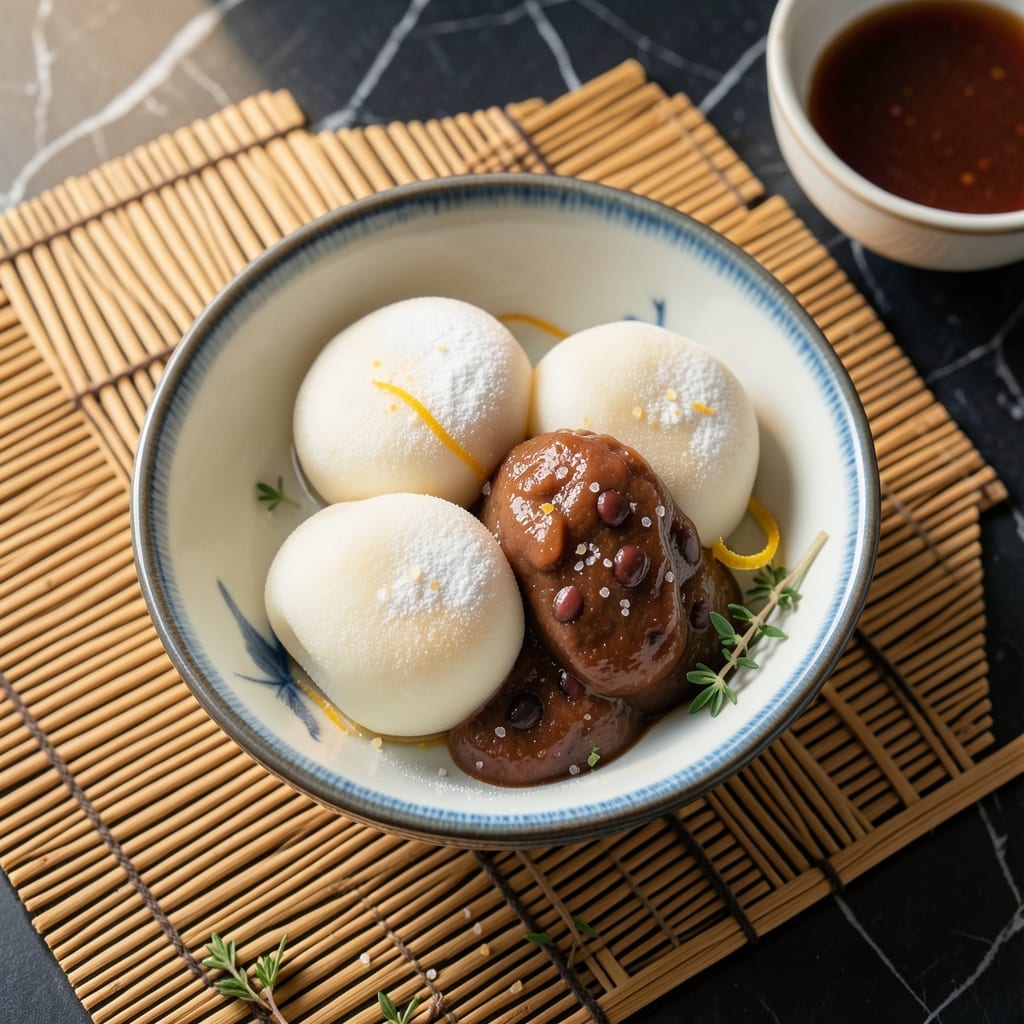
These soft, chewy dumplings capture the essence of traditional Japanese wagashi with their delicate texture and sweet red bean center. The mochi-like exterior gives way to a rich, pasty filling that balances sweetness with earthy depth.
Making them from scratch requires just a few simple ingredients and careful shaping. The result is a pillowy treat that’s both comforting and elegant, perfect for special occasions or afternoon tea.
Ingredients for Japanese Rice Dumpling
These traditional ingredients create delicate, chewy dumplings with a sweet center you will love.
| Ingredient | Amount | Notes |
|---|---|---|
| Glutinous Rice Flour 🌾 | 2 cups | Also called sweet rice flour |
| Granulated Sugar 🍚 | ¼ cup | Divided for dough and filling |
| Water 💧 | ¾ cup | Warm, for dough consistency |
| Red Bean Paste 🟥 | 1 cup | Sweetened, for filling center |
| Cornstarch 🌽 | ¼ cup | For dusting work surface |
| Salt 🧂 | ¼ tsp | For balancing sweetness |
| Matcha Powder 🍵 | 1 tsp | Optional, for green tea variation |
| Neutral Oil 🛢️ | 1 tsp | For greasing hands and bowl |
| Vanilla Extract 🌿 | ½ tsp | For depth of flavor |
Glutinous rice flour is non-negotiable here—look for brands like Mochiko or Shiratamako at Asian grocery stores or the international aisle. The texture depends entirely on this specific flour, so don’t substitute regular rice flour. Red bean paste comes sweetened or unsweetened; Koshian (smooth) works best for this recipe. For the most authentic flavor, Japanese brands like Shiroan or Ogura are ideal.
No red bean paste? Sweet potato paste or lotus seed paste make great alternatives. Matcha powder can be omitted or replaced with spirulina for color (adjust to taste). If you can’t find glutinous rice flour, tapioca starch mixed with regular rice flour at a 1:1 ratio is your best workaround. The sugar amount can be adjusted—reduce by half if you prefer less sweetness.
Store glutinous rice flour in an airtight container in a cool, dry place for up to 6 months. Unopened red bean paste keeps for 1 year in the pantry; once opened, refrigerate and use within 2 weeks. The dumplings themselves are best eaten fresh but can be frozen for up to 1 month.
Why You’ll Love This Recipe
- No Fuss Mixing: I just stir glutinous rice flour, sugar, and water—no fancy techniques, and the dough comes together in a snap.
- Sweet Surprise Inside: That first bite of warm, chewy dumpling with the rich red bean paste center? Ridiculously good.
- Gift-Worthy Treats: I pack these in little boxes for potlucks or hostess gifts—everyone flips over the homemade touch.
- Budget Stretcher: A bag of rice flour and a jar of paste make dozens. Honestly, my wallet loves it as much as my taste buds do.
Step-by-Step Instructions for Japanese Rice Dumplings
These precise steps ensure the perfect texture and balance between the chewy exterior and sweet filling.
Step 1: Prepare the Dough
In a large bowl, combine the 2 cups Glutinous Rice Flour, 0.25 cup Granulated Sugar, and 0.25 tsp Salt. Gradually add the 0.75 cup Water and 0.5 tsp Vanilla Extract while stirring with a wooden spoon until a shaggy dough forms.
The dough should feel soft but not sticky. If it’s too dry, add a teaspoon of water; if too wet, add a teaspoon of glutinous rice flour. Knead the dough for 5-7 minutes until it becomes smooth and elastic, like Play-Doh. Cover the bowl with a damp towel to prevent drying out.
Step 2: Divide and Shape the Dumplings
Divide the dough into 4 equal portions and roll each into a 3-inch diameter circle. Dust your work surface and hands lightly with 0.25 cup Cornstarch to prevent sticking. Place ¼ cup Red Bean Paste in the center of each dough circle.
Gently pull the edges of the dough up and around the filling, pinching to seal completely. Roll each filled dumpling between your palms to smooth the surface, ensuring no seams or cracks remain. The finished dumplings should be uniform in size and shape.
Step 3: Cook the Dumplings
Bring a large pot of water to a gentle boil—avoid a rolling boil to prevent the dumplings from bursting. Carefully drop in the shaped dumplings, ensuring they don’t touch each other. Stir gently to prevent sticking to the bottom.
Cook for 8-10 minutes until the dumplings float to the surface and the dough becomes translucent. Remove them with a slotted spoon and transfer to a bowl of ice water to stop the cooking process. This step ensures they retain their chewy texture.
Step 4: Optional Green Tea Variation
For a matcha twist, divide the dough into two portions before shaping. Knead 1 tsp Matcha Powder into one portion until evenly colored. Shape and fill as directed, alternating between plain and matcha dough for a visually striking result.
Lightly rub the finished dumplings with 1 tsp Neutral Oil to give them a subtle sheen and prevent sticking. Serve warm or at room temperature, and enjoy the contrast of the soft exterior and sweet, smooth filling.
Pro Tips For Making Japanese Rice Dumpling
- Steam Evenly: Use a bamboo steamer lined with parchment paper—poke holes in it first so the dumplings don’t stick. I learned this the hard way after peeling half my batch off the paper.
- Chill the Dough: Rest the glutinous rice flour mixture for 15-20 minutes before shaping. Sounds weird, but it works: the dough holds together better and cracks less when steaming.
- Dust with Cornstarch: Roll your hands and the dumplings in cornstarch before shaping to prevent sticking. My grandmother swore by this, and she was right.
- Warm the Paste: Microwave the red bean paste for 10-15 seconds to soften it before filling. After burning three batches, I finally figured out it spreads easier and won’t tear the dough.
Perfect Pairings for japanese rice dumpling
Tea Pairings
Traditional green tea like sencha or gyokuro complements the sweetness perfectly, with its grassy notes cutting through the richness. I steep 1 tsp loose tea in 8 oz hot water at 175°F for 2-3 minutes. 🍵
Coffee Options
For a bolder pairing, try iced matcha latte—the earthy matcha echoes the green tea variation. Use 1 tsp matcha powder whisked with 2 oz hot water and 6 oz cold milk. The bitterness balances the dumplings’ sweetness beautifully.
Fruit Complements
Fresh strawberries or persimmons add a bright, tangy contrast. Slice ½ cup strawberries thinly and serve alongside for a refreshing bite between dumplings. The acidity cleanses your palate wonderfully.
Dessert Wine
A chilled moscato d’asti from Italy offers a sweet, lightly sparkling pairing. The low alcohol content (around 5-6%) won’t overpower the delicate flavors. Serve in small 3 oz portions for the perfect finish. ✨
Savory Balance
For contrast, serve with pickled ginger or lightly salted edamame. The 1 tbsp pickled ginger per serving provides a zesty palate cleanser. This traditional approach mirrors Japanese tea ceremony pairings.
Nutrition Facts
Frequently Asked Questions
Can I use regular rice flour instead?
No, regular rice flour won’t give the right chewy texture. Glutinous rice flour is essential for that signature stretchy, mochi-like consistency. Substituting could result in crumbly dumplings.
How do I prevent the dumplings from sticking?
Dust your hands and work surface generously with cornstarch. Also, keep the dumplings spaced apart while cooking to avoid clumping. A light oil rub after cooking adds shine and extra protection.
Can I make these ahead of time?
Yes! Shape and fill the dumplings, then freeze on a tray before transferring to a bag. Cook from frozen, adding 2-3 extra minutes to the boiling time. Avoid thawing first to retain texture.
Why did my dumplings crack while cooking?
Cracks usually mean the dough was too dry or the filling too generous. Ensure the dough is smooth and elastic, and don’t overfill—¼ cup of paste per dumpling is ideal.

- Mujadara Rice and Lentils Recipe: Earthy Spiced Lentils With Caramelized Onions - November 1, 2026
- Naija Fried Rice Recipe: Street-Style Spice With Veggie Crunch - November 1, 2026
- Mushy Rice Recipe: Fluffy Grains Transformed in Minutes - November 1, 2026