
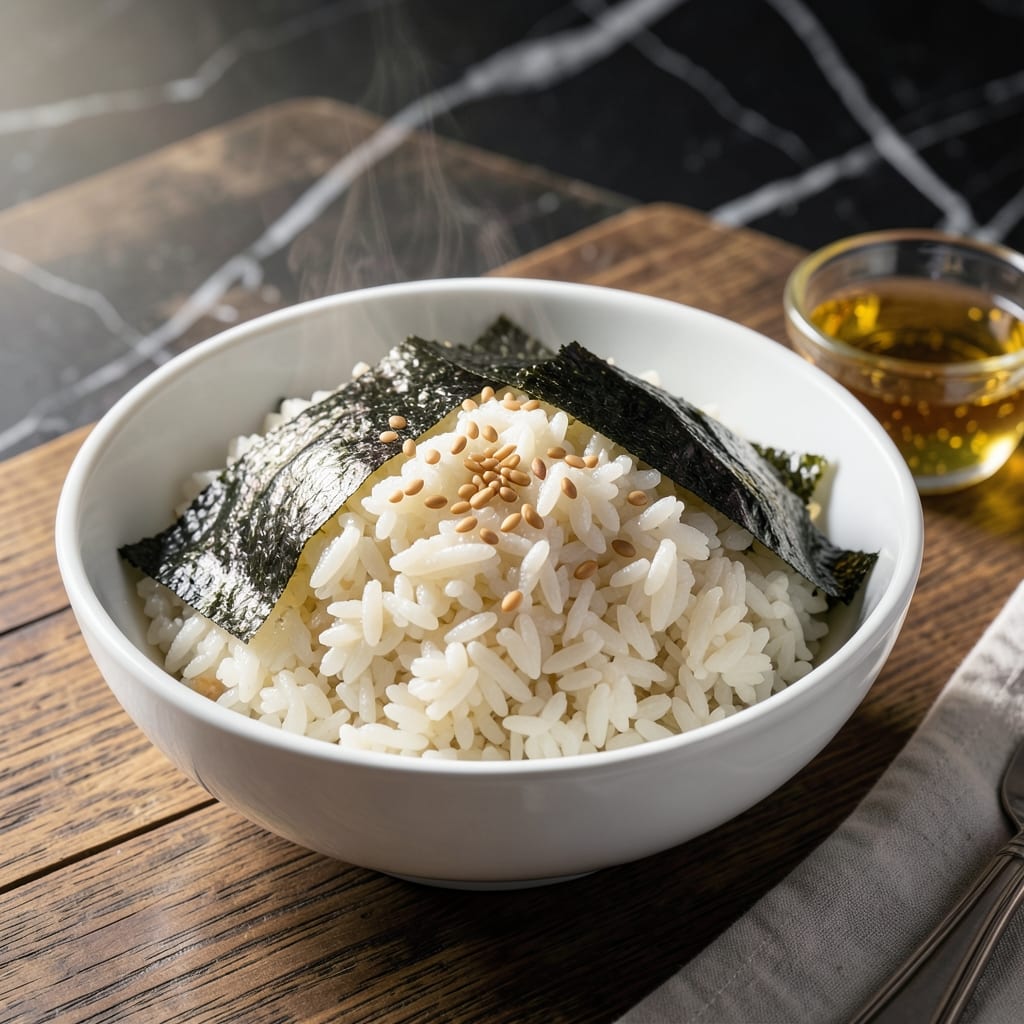
Mastering Japanese rice opens doors to countless traditional and modern dishes, from delicate sushi to hearty donburi bowls.
This proven method delivers perfectly sticky, slightly sweet rice every time, the foundation for authentic Japanese cooking at home.
The key lies in the right rice-to-water ratio and precise cooking technique, creating grains that hold together yet remain tender.
Whether shaping onigiri, filling sushi rolls, or serving as a bed for savory toppings, this rice elevates every meal with its signature texture and subtle sweetness.
Ingredients for Japanese Rice Recipe Ideas
Short list of premium ingredients for authentic Japanese rice and versatile serving options.
| Ingredient | Amount | Notes |
|---|---|---|
| Japanese Short-Grain Rice 🍚 | 2 cups | Rinsed until water runs clear |
| Water 💧 | 2 ½ cups | Filtered preferred for best taste |
| Rice Vinegar 🍯 | 3 tbsp | Seasoned or unseasoned variety |
| Granulated Sugar 🧂 | 1 tbsp | Dissolved in vinegar mixture |
| Kosher Salt 🧂 | 1 tsp | Diamond Crystal preferred |
| Sushi Nori Sheets 📜 | 4 sheets | For sushi rolls or garnish |
| Pickled Ginger 🌸 | ¼ cup | Optional for serving |
| Soy Sauce 🫒 | ¼ cup | Low-sodium if preferred |
| Sesame Seeds 🌰 | 1 tbsp | Toasted for garnish |
| Green Onions 🧅 | 2 whole | Thinly sliced for topping |
| Cucumber 🥒 | ½ whole | Julienned for sushi rolls |
| Avocado 🥑 | 1 whole | Ripe, sliced for toppings |
The rice is non-negotiable here. Japanese short-grain rice (often labeled as sushi rice) is essential—jasmine or basmati won’t deliver the same sticky texture. Koshihikari or Nishiki are top-tier brands available at most Asian markets or well-stocked supermarkets. Look for undamaged grains and avoid pre-rinsed varieties, as the starch is crucial for that signature consistency.
No rice vinegar? Apple cider vinegar with a pinch of sugar works in a pinch, though the flavor profile shifts slightly. For a gluten-free option, tamari replaces soy sauce seamlessly. The nori sheets should be dry and crisp—avoid any with added seasonings if making traditional sushi. Fresh toppings like cucumber and avocado can be swapped for bell peppers or carrots depending on preference.
Store uncooked rice in an airtight container in a cool, dark place for up to 6 months. Cooked rice keeps in the fridge for 3-4 days but is best used fresh. For longer storage, freeze in portions for up to 1 month—reheat with a splash of water to restore moisture.
Why You’ll Love This Recipe
- One Pot Wonder: I just toss the rice, water, and a splash of vinegar in a pot—no fancy steps, no stress.
- Sweet-Tangy Balance: The sugar and rice vinegar hit that perfect spot between sweet and sharp. Honestly, it’s the kind of flavor I crave daily.
- Endless Pairings: Sushi, bowls, or just plain with a fried egg—this rice works for everything from quick lunches to dinner parties.
- Budget Staple: A big bag of short-grain rice stretches forever, and the seasonings are already in my pantry. I’ll be real: it’s my cheapest meal that still feels special.
Step-by-Step Instructions for Japanese Rice
Master these precise techniques to achieve the ideal sticky texture for sushi or bowls.
Step 1: Rinse and Soak the Japanese Short-Grain Rice
Place the 2 cups Japanese Short-Grain Rice in a fine-mesh strainer and rinse under cold water, swirling with your hand for 10-15 seconds per rinse. Repeat until the water runs completely clear—this removes excess starch that could make the rice gummy.
Once rinsed, transfer the rice to a bowl and add the 2.5 cups Water. Let it soak for 20-30 minutes. This hydration step ensures even cooking and prevents dry, unevenly cooked grains. The rice will absorb some water and plump slightly during this time.
Step 2: Cook the Rice to Perfect Tenderness
Drain the soaked rice thoroughly, then transfer it to a heavy-bottomed pot with a tight-fitting lid. Add fresh 2.5 cups Water—using the same amount as for soaking ensures consistency. Bring to a boil over high heat.
Once boiling, reduce the heat to low, cover, and simmer for 15 minutes. At this point, turn off the heat and let the rice steam, covered, for an additional 10 minutes. Do not lift the lid during cooking—the trapped steam is critical for achieving the right texture.
Step 3: Prepare the Seasoned Rice Vinegar Mixture
While the rice steams, combine the 3 tbsp Rice Vinegar, 1 tbsp Granulated Sugar, and 1 tsp Kosher Salt in a small saucepan. Warm over low heat just until the sugar and salt dissolve completely—this should take 2-3 minutes.
Remove from heat and let cool slightly. The mixture should be fully homogeneous with no visible grains of sugar or salt. This seasoning liquid will give the rice its characteristic sweet-savory balance, essential for sushi or bowl applications.
Step 4: Fold in the Seasoning and Cool the Rice
Transfer the cooked rice to a large, shallow wooden or glass bowl. Using a rice paddle or silicone spatula, gently fold in the seasoned vinegar mixture with a cutting motion—this prevents crushing the grains while ensuring even distribution.
Spread the rice out in an even layer and let it cool to room temperature. Fan the rice lightly with a piece of cardboard or use a handheld fan for 5-10 minutes to speed the process. The rice should be glossy and slightly sticky but not mushy, with each grain distinct yet clinging together.
Step 5: Assemble for Sushi or Bowls
For sushi, place a Sushi Nori Sheet shiny-side down on a bamboo mat. Spread a thin, even layer of rice over the nori, leaving a ½-inch border at the top. Add fillings like julienned Cucumber or sliced Avocado in a line near the bottom.
For bowls, fluff the rice and transfer to serving dishes. Top with thinly sliced Green Onions, toasted Sesame Seeds, and a drizzle of Soy Sauce. Serve with Pickled Ginger on the side. The rice should hold its shape when pressed but melt slightly in your mouth.
Pro Tips For Making Japanese Rice Recipe Ideas
- Rinse Thoroughly: Wash the short-grain rice in 3-4 changes of cold water until it runs nearly clear—I learned this the hard way after my first batch came out gummy from excess starch.
- Soak 30 Minutes: After rinsing, let the rice soak in water for a full 30 minutes before cooking; sounds tedious but it guarantees even cooking and that perfect sticky texture.
- Use Vinegar Ratio: For sushi rice, mix 1 part rice vinegar with 1 part sugar and ½ part salt—measure this precisely or the flavor balance will be off.
- Cover Tightly: Once the rice starts steaming, resist the urge to peek—keep the lid on for the full 10-15 minutes or you’ll lose the steam that makes it fluffy.
Troubleshooting Great japanese rice recipe ideas
Rice Too Dry
If your rice turns out dry, you likely used too little water or lifted the lid during cooking. Next time, measure 2.5 cups water per 2 cups rice precisely. Also, let it steam for the full 10 minutes after turning off the heat—this final step is crucial. 💡
Rice Too Mushy
Over-rinsing or using too much water can lead to mushy rice. Rinse just until the water runs clear, then stop. Also, avoid stirring during cooking—this breaks the grains. Use a heavy-bottomed pot to prevent hot spots that cause uneven cooking.
Sticky Residue
If rice sticks to your pot, soak it in warm water immediately after cooking. For prevention, use a nonstick pot or a well-seasoned cast iron pot. Always let the rice sit for 5 minutes before transferring to prevent sticking.
Uneven Cooking
If some grains are hard while others are soft, your heat may have been too high. Keep the heat at a gentle simmer after the initial boil. Also, ensure your pot has a tight-fitting lid to trap steam evenly. A rice cooker can help if you struggle with stovetop control.
Seasoning Issues
If the rice lacks flavor, double-check your vinegar mixture ratios: 3 tbsp vinegar, 1 tbsp sugar, and 1 tsp salt. Dissolve the sugar and salt completely before mixing. Fold gently but thoroughly to distribute the seasoning evenly.
Cool Too Slowly
If your rice sits too long before cooling, it can turn mushy. Spread it in a shallow bowl and fan it with a handheld fan or cardboard for 5-10 minutes. This keeps the grains distinct and glossy, perfect for sushi or bowls. ❄️
Nutrition Facts
Frequently Asked Questions
Can I use medium-grain rice instead?
Short-grain is essential for authentic texture. Medium-grain works in a pinch but won’t be as sticky. For best results, seek out Koshihikari or Nishiki brands.
How do I keep rice warm for serving?
Cover with a damp towel in a warm oven (170°F) for up to 1 hour. Avoid microwaving as it can dry out the grains. A rice cooker’s “keep warm” function works perfectly.
Why did my sushi rice turn yellow?
This happens if you used too much vinegar or didn’t mix evenly. Stick to 3 tbsp vinegar per 2 cups rice and fold gently with a cutting motion. The color should be translucent, not yellow.

- Mujadara Rice and Lentils Recipe: Earthy Spiced Lentils With Caramelized Onions - November 1, 2026
- Naija Fried Rice Recipe: Street-Style Spice With Veggie Crunch - November 1, 2026
- Mushy Rice Recipe: Fluffy Grains Transformed in Minutes - November 1, 2026