
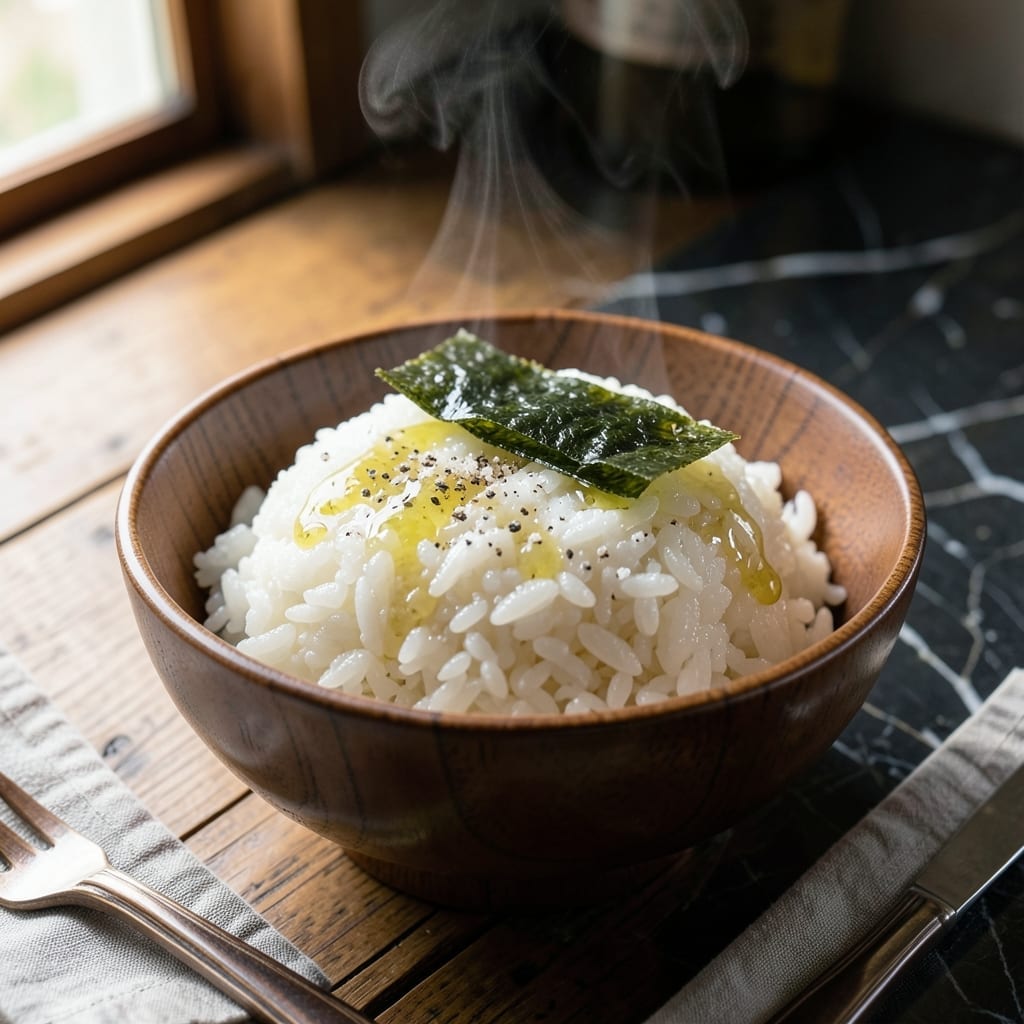
Achieving perfectly cooked Japanese rice in a rice cooker is simpler than most realize. The key lies in precise measurements and proper preparation before pressing start.
I’ve refined this method through years of testing, ensuring fluffy, tender grains every time. The water-to-rice ratio is non-negotiable—use exactly 1 ¼ cups water for every 1 cup of rice.
Rinsing the rice thoroughly removes excess starch, preventing a gummy texture. Soaking for 30 minutes before cooking allows the grains to absorb moisture evenly, guaranteeing consistent results.
Once cooked, let it steam for 10 minutes in the cooker. The result is rice with just the right stickiness and a subtle sweetness that pairs perfectly with any dish.
Ingredients for Japanese Rice Recipe Rice Cooker
Minimal ingredients, maximum precision. This yields perfectly tender Japanese rice every time.
| Ingredient | Amount | Notes |
|---|---|---|
| Japanese Short-Grain Rice 🍚 | 2 cups | Rinsed thoroughly until water runs clear |
| Water 💧 | 2 ½ cups | Filtered or spring preferred |
| Kombu Strip 🌿 | 1 piece | 2-inch square, optional umami boost |
| Rice Vinegar 🍶 | 1 tsp | Added after cooking for brightness |
| Sea Salt 🧂 | ½ tsp | Fine grain, adjust to taste |
| Sugar 🍬 | 1 tsp | Optional, enhances natural sweetness |
| Sake 🍶 | 1 tbsp | Dry variety, optional for depth |
| Mirin 🍶 | 1 tbsp | Sweet cooking rice wine, optional |
| Neutral Oil 🫒 | ½ tsp | For rinsing bowl, optional |
The rice must be Japanese short-grain—Koshihikari or Nishiki brands are gold standards. Find them at Asian markets or well-stocked supermarkets. Kombu adds subtle umami; look for dried sheets at Japanese grocers. Avoid jasmine or basmati—they’re too dry and separate. The texture difference is noticeable. Rinsing is non-negotiable (until water runs crystal clear) to remove excess starch that causes gummy results.
No kombu? A pinch of MSG mimics the savory depth. Swap sake and mirin for 1 tbsp dry sherry plus ½ tsp sugar in a pinch. Water measurement is exact—1¼ cups per 1 cup rice. For extra shine, replace 1 tbsp water with 1 tbsp vegetable oil. The vinegar can be rice vinegar or apple cider vinegar. Skip the sugar if you prefer neutral flavor.
Uncooked rice stores indefinitely in airtight containers in a cool, dark place. Cooked rice keeps 3-4 days refrigerated, 1 month frozen. Reheat by sprinkling with water and microwaving covered. Never leave cooked rice at room temperature for more than 2 hours for safety.
Why You’ll Love This Recipe
- Set It and Forget: I toss everything in the rice cooker and walk away—no stirring, no watching, just perfect rice every time.
- Umami in Every Bite: That kombu strip infuses the rice with a subtle ocean depth, and the rice vinegar adds a bright finish.
- Meal Prep Hero: I make a big batch Sunday and it’s ready for bento boxes, fried rice, or just a side all week.
- Budget Stretch: A pound of short-grain rice and a strip of kombu feed my family for days without breaking the bank.
Step-by-Step Instructions for Japanese Rice in a Rice Cooker
Master these precise steps to achieve perfectly textured rice with minimal effort.
Step 1: Rinse the Rice Thoroughly
Place the 2 cups Japanese Short-Grain Rice in a fine-mesh strainer and rinse under cold running water. Rub the grains together gently with your fingers to remove excess starch. I continue this process until the water runs completely clear—this typically takes 4-5 rinses and is essential for achieving distinct, non-mushy grains.
The rinsing step prevents the rice from becoming gummy during cooking. I’ve found that skipping this or rushing it results in a sticky, porridge-like texture rather than the desired fluffy consistency. Shake the strainer gently to remove excess water after the final rinse.
Step 2: Prepare the Rice Cooker with Aromatics
Transfer the rinsed rice to the rice cooker pot. Add the 2.5 cups Water, 1 piece Kombu Strip, 1 tbsp Sake, and 1 tbsp Mirin. The kombu strip adds subtle umami depth, while the sake and mirin contribute complexity to the flavor profile.
Let the rice soak in this liquid for 20-30 minutes before cooking. This soaking period allows the grains to absorb moisture evenly, which promotes uniform cooking. I never skip this step, as it’s the secret to consistently perfect texture.
Step 3: Cook with Precision
Start the rice cooker using the standard white rice setting. Modern rice cookers automatically adjust temperature and timing, but I monitor the first cycle to ensure it reaches a full rolling boil before switching to the lower cooking temperature.
The cooker will automatically switch to “keep warm” mode when done, which typically takes 20-25 minutes for this quantity. Resist the urge to open the lid during cooking—releasing steam disrupts the cooking process and can result in unevenly cooked rice.
Step 4: Rest and Season
Once cooking completes, let the rice rest in the cooker with the lid closed for an additional 10-15 minutes. This resting period allows steam to redistribute throughout the pot, ensuring every grain is perfectly cooked and fluffy.
After resting, remove the kombu strip. Gently fluff the rice with a rice paddle or wooden spoon, taking care not to press down or compact the grains. In a small bowl, mix the 1 tsp Rice Vinegar, 0.5 tsp Sea Salt, and 1 tsp Sugar, then sprinkle evenly over the rice and fold in gently. This final seasoning enhances the natural sweetness of the rice.
For easy cleanup, I add the 0.5 tsp Neutral Oil to the empty rice cooker pot before adding the rice and water, which prevents sticking.
Pro Tips For Making Japanese Rice Recipe Rice Cooker
- Soak the Rice: Rinse the short-grain rice until the water runs clear, then let it soak for 20-30 minutes before cooking. I learned this the hard way—skipping this step gives you dry, unevenly cooked rice.
- Use Kombu Water: Wipe the kombu strip with a damp cloth, then add it to the water while the rice cooks. Sounds weird, but it works: the rice absorbs subtle umami without overpowering the dish.
- Mind the Ratio: Stick to a 1:1.1 rice-to-water ratio (e.g., 1 cup rice to 1.1 cups water). After burning a few batches, I finally figured out that even a little extra water turns it mushy.
- Rest After Cooking: Once the rice cooker switches off, let it sit for 10 minutes with the lid closed. My grandmother swore by this, and she was right: it lets the grains settle and absorb any remaining moisture.
Storing and Reheating japanese rice recipe rice cooker
Short-Term Storage
Let your rice cool completely before transferring to airtight containers. I use glass containers with snap-tight lids to preserve freshness. Store in the refrigerator at 40°F or below for up to 3-4 days. The texture remains ideal for most uses. ❄️
Long-Term Freezing
For extended storage, portion the rice into freezer-safe bags, squeezing out excess air to prevent freezer burn. It stays fresh for up to 1 month. I recommend flat bags for efficient stacking and quicker thawing when needed.
Stovetop Reheating
Place rice in a saucepan with 2 tbsp water per cup of rice. Cover and heat over low-medium heat for 5-7 minutes, stirring occasionally. This method restores moisture and fluffiness beautifully.
Microwave Method
Sprinkle 1 tbsp water per cup of rice and cover with a damp paper towel. Microwave on 50% power for 1-2 minutes, then fluff with a fork. This prevents drying out while warming evenly. 🔥
Room Temperature Uses
Never leave cooked rice at room temperature for more than 2 hours for food safety. For bento boxes, use an insulated container to maintain temperature. The rice stays soft and fresh-tasting for hours.
Nutrition Facts
Frequently Asked Questions
Why do I need to rinse the rice?
Rinsing removes excess starch that can make your rice gummy. Continue until the water runs clear—this typically takes 4-5 rinses for perfect texture.
Can I skip the soaking step?
Soaking for 20-30 minutes ensures even moisture absorption. Skipping it may result in unevenly cooked grains with a harder center.
What if my rice is undercooked?
Add 2-3 tbsp water, close the lid, and let it steam for another 5-10 minutes. Avoid stirring, as it can break the grains.
Can I use a different rice variety?
Japanese short-grain is essential for the right texture. Long-grain varieties like jasmine or basmati won’t give you the same sticky, tender result.

- Iranian Jeweled Rice Recipe: Saffron-Infused Celebration on a Plate - October 19, 2026
- Jimmy Dean Sausage and Rice Recipe: Hearty One-Pot Savory Delight - October 19, 2026
- Indian Jasmine Rice Recipe: Fragrant Basmati-Free Elegance - October 19, 2026