
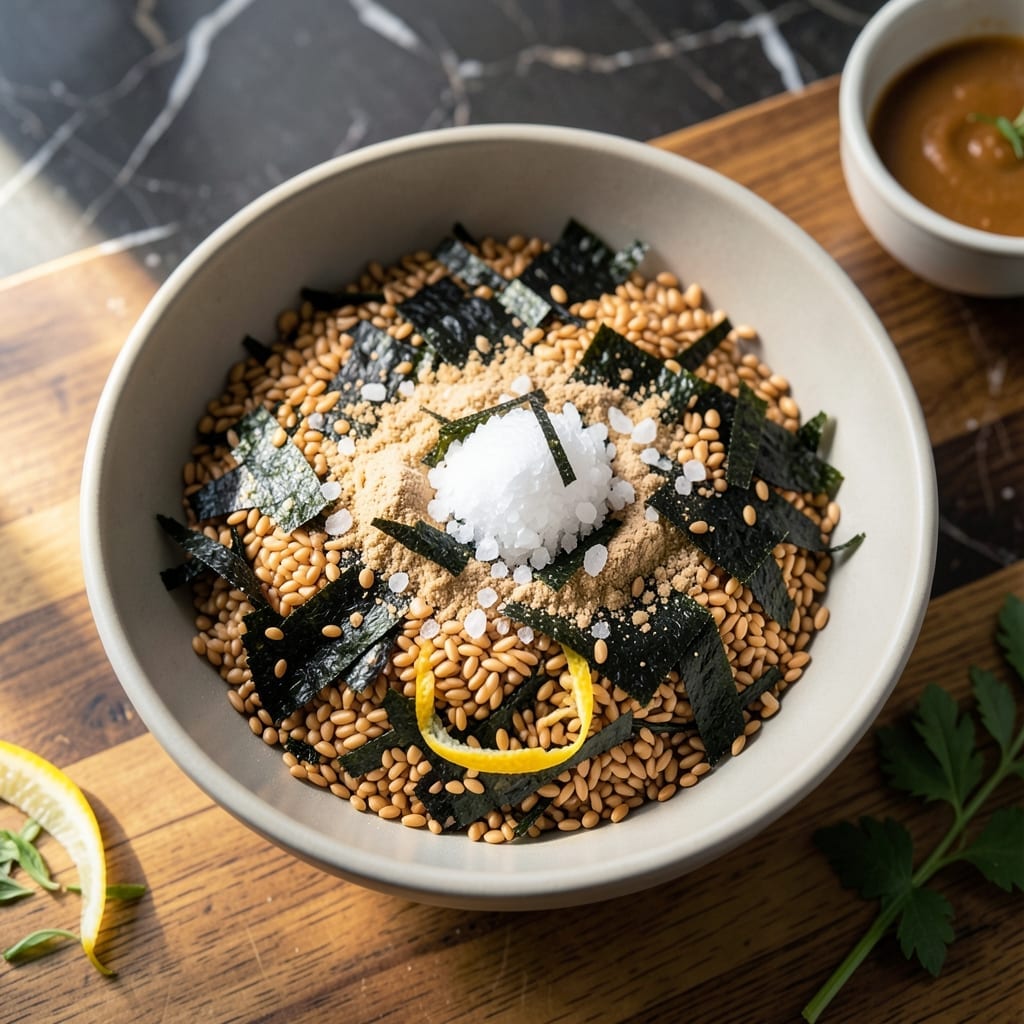
This dry seasoning blend transforms plain rice into a flavor-packed Japanese-inspired side with minimal effort. The mix balances savory, sweet, and umami notes that work beautifully with any grain.
With just a few pantry staples, you can create a versatile topping that elevates everyday meals. It takes 5 minutes to make and lasts for weeks in your cupboard.
The secret lies in toasted sesame seeds and nori flakes, which deliver authentic flavor without complicated techniques. Each sprinkle adds depth to steamed rice, noodles, or even salads.
Make a big batch and keep it on hand for quick, restaurant-quality meals at home. No cooking required—just sprinkle and enjoy.
Ingredients for Japanese Rice Seasoning
Eight pantry staples create this flavor-packed Japanese-inspired seasoning blend for any grain.
| Ingredient | Amount | Notes |
|---|---|---|
| Toasted Sesame Seeds 🌰 | 3 tbsp | White or black variety |
| Nori Flakes 🌿 | 2 tbsp | Crushed seaweed sheets |
| Granulated Sugar 🍚 | 1 tbsp | Or substitute coconut sugar |
| Diamond Crystal Kosher Salt 🧂 | 1 tsp | Fine grain alternative okay |
| Garlic Powder 🧄 | 1 tsp | Not garlic salt |
| Onion Powder 🧅 | 1 tsp | Fresh ground preferred |
| Dried Bonito Flakes Substitute 🍄 | 1 tsp | Vegan mushroom powder alternative |
| Rice Vinegar Powder 🍶 | ½ tsp | Or use freeze-dried |
The sesame seeds are the foundation—toast them yourself (350°F for 3-5 minutes) for maximum aroma, or buy pre-toasted. Asian markets or Whole Foods bulk sections have the best selection. Nori flakes should be bright green and crisp—avoid the sad, stale stuff. For the bonito substitute, Trader Joe’s mushroom powder works perfectly (that umami punch without the fish).
No rice vinegar powder? Crush a cube of freeze-dried or just skip it—the blend still shines. Swap sugar for maple syrup crystals if you want to avoid refined sugar. Out of nori? Crushed seaweed snacks work in a pinch. The garlic and onion powders are non-negotiable though—they’re doing the heavy lifting with the savory notes.
Store in an airtight container away from light—stays fresh for about 2 months. I make a double batch every time (so easy to scale). Sprinkle on warm rice right before serving—the heat releases all the aromas.
Why You’ll Love This Recipe
- 5-Minute Mix: I toss these five pantry staples together faster than the rice cooks. No chopping, no fuss.
- Umami Bomb: The toasted sesame and nori hit that salty-sweet spot with every bite of rice.
- Rice’s Best Friend: I sprinkle this on leftover rice for lunches, or over fresh bowls for dinner. Between us, it’s my secret to making plain rice exciting.
- Pennywise Flavor: A tiny jar lasts weeks, and I spend pennies on the ingredients. Honestly, it’s cheaper than buying pre-made furikake.
Step-by-Step Instructions for Japanese Rice Seasoning
This simple process transforms individual ingredients into a flavor-packed blend ready to elevate your rice.
Step 1: Toast the Sesame Seeds to Perfection
Heat a dry skillet over medium-low heat. Add the 3 tbsp Toasted Sesame Seeds and stir constantly for 2-3 minutes until they become fragrant and just slightly deeper in color. Watch closely—they burn quickly.
This toasting step intensifies their nutty aroma and adds depth to the final blend. If your sesame seeds are already toasted, skip this step, but I recommend doing it fresh for maximum flavor impact.
Step 2: Combine Dry Ingredients in a Bowl
In a medium mixing bowl, add the toasted sesame seeds, 2 tbsp Nori Flakes, 1 tbsp Granulated Sugar, 1 tsp Diamond Crystal Kosher Salt, 1 tsp Garlic Powder, and 1 tsp Onion Powder.
The nori flakes will release their briny, oceanic notes as they mingle with the other ingredients, while the sugar balances the salty and umami elements. Stir gently to avoid crushing the delicate nori pieces.
Step 3: Incorporate the Umami Boosters
Add the 1 tsp Dried Bonito Flakes Substitute and 0.5 tsp Rice Vinegar Powder to the bowl. These two ingredients are the secret to that distinctive Japanese flavor profile—earthy, savory, with just a hint of tang.
The bonito substitute (or mushroom powder) provides that deep umami backbone, while the rice vinegar powder adds a subtle acidity that brightens all the other flavors. Mix thoroughly until every grain is evenly coated.
Step 4: Store and Rest Before Using
Transfer the blend to an airtight container. Let it sit for at least 30 minutes before using—this allows the flavors to meld together. The mixture will keep well at room temperature for up to 2 weeks.
You’ll notice the aroma becomes more complex as it rests, with the sesame and nori notes becoming more pronounced. This brief waiting period makes a noticeable difference in the final taste.
When ready to use, sprinkle generously over freshly cooked rice and mix gently. The heat from the rice will release all the aromatic oils and create an irresistible umami-packed bite every time.
Pro Tips For Making Japanese Rice Seasoning
- Toast Sesame Fresh: I learned this the hard way—pre-toasted sesame seeds lose their aroma fast. Lightly toast raw seeds in a dry pan for 1-2 minutes until fragrant, then cool completely before mixing.
- Crush Nori Finely: Sounds weird, but it works: pulse nori sheets in a spice grinder or crush with your hands until powdery. Big flakes make the seasoning clump and distribute unevenly over rice.
- Balance the Sweetness: After burning three batches, I finally figured out that 1 part sugar to 2 parts salt keeps the flavor bright without being cloying. Taste as you go—Diamond Crystal is less salty than table salt.
- Skip the Moisture: Store the mix in an airtight container with a silica packet or a few uncooked rice grains. Even a little humidity turns it into a sad, sticky clump.
Perfect Pairings for This Dish
Rice Pairings
This seasoning shines on steamed white rice—the neutral base lets the umami flavors pop. For a nutty twist, try it on brown rice or black forbidden rice. The contrast of colors and textures makes for a stunning presentation.
Protein Partners
Sprinkle over grilled salmon or teriyaki chicken for an instant flavor boost. I love it on pan-seared tofu too—the savory notes complement the crispy exterior beautifully. Each bite becomes more complex with this simple addition.
Vegetable Matches
Toss with steamed broccoli or sautéed spinach for a quick side dish. The seasoning adds depth to simple veggies without overpowering them. I often use it to finish my stir-fried cabbage—it’s a game-changer. 🌱
Noodle Creations
Mix into udon noodles or soba for an instant upgrade. The flavors cling perfectly to the noodles, creating a restaurant-quality dish in minutes. Add a drizzle of sesame oil for extra richness.
Soup Topper
Sprinkle over miso soup or ramen just before serving. The heat releases all the aromatic oils, transforming a simple bowl into something extraordinary. It’s my secret weapon for elevating store-bought soups too. 💫
Salad Enhancer
Use as a finishing touch for cucumber sunomono or green salads. The savory notes balance the freshness of the veggies perfectly. A little goes a long way—start with ½ tsp and adjust to taste.
Nutrition Facts
Frequently Asked Questions
Can I make this without nori flakes?
Yes! Use 1 tbsp crushed seaweed snacks or omit entirely. The sesame still adds great flavor, though nori brings authentic oceanic notes.
How long does the seasoning last?
Stored in an airtight container away from light, it stays fresh for about 2 months. The flavors meld beautifully over time.
Can I use this on non-rice dishes?
It’s fantastic on noodles, soups, or roasted veggies. Try it on popcorn for a savory twist.
What if I don’t have rice vinegar powder?
Skip it or add ½ tsp freeze-dried vinegar. The blend will still taste great without it.

- Mujadara Rice and Lentils Recipe: Earthy Spiced Lentils With Caramelized Onions - November 1, 2026
- Naija Fried Rice Recipe: Street-Style Spice With Veggie Crunch - November 1, 2026
- Mushy Rice Recipe: Fluffy Grains Transformed in Minutes - November 1, 2026