
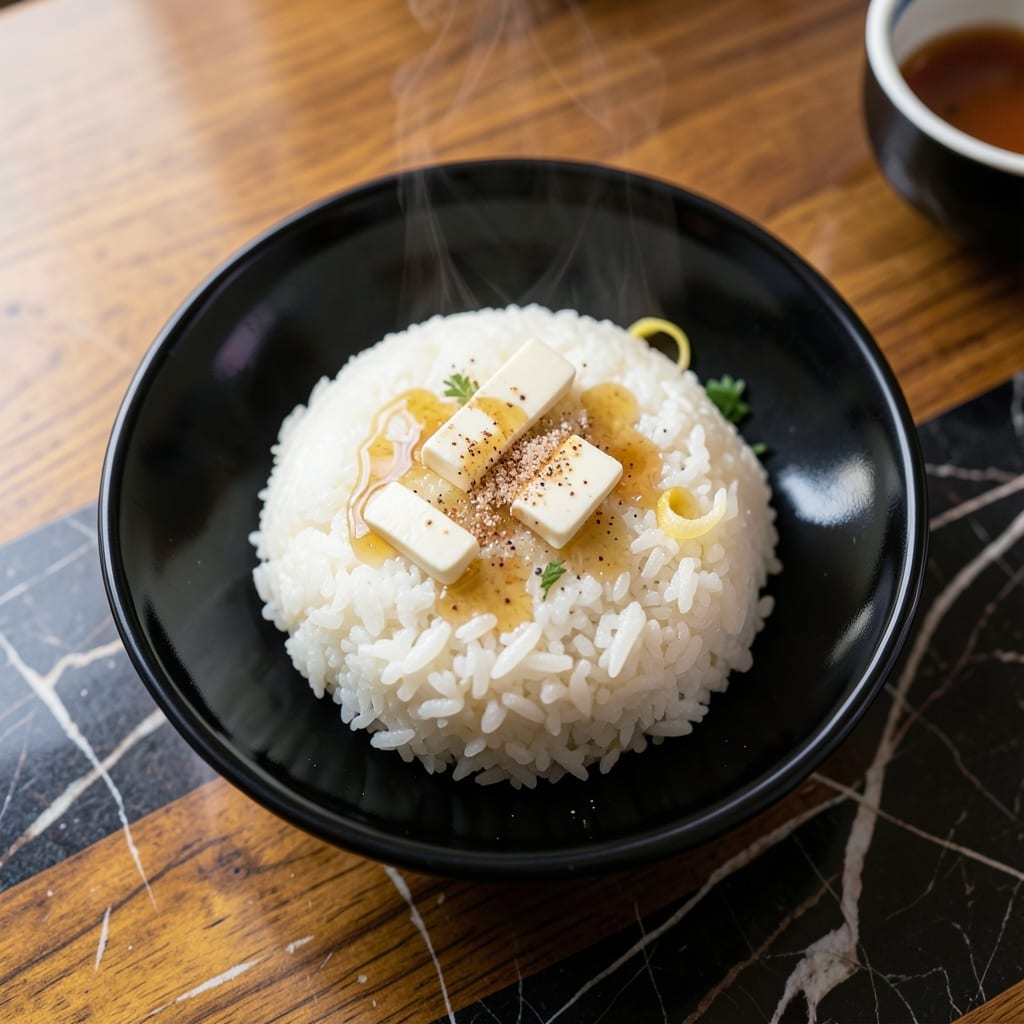
There’s a reason Japanese steakhouse rice tastes so good—it’s all in the technique. I’ve recreated that signature buttery flavor and tender texture at home with a simple method that delivers restaurant-quality results every time.
This dish starts with short-grain rice cooked to perfection, then finished with a touch of butter for that iconic richness. The key is using the right ratio of water to rice and letting it steam undisturbed until fluffy and fragrant.
What you get is tender, slightly sticky grains with a subtle sweetness that pairs beautifully with grilled proteins or vegetables. It’s the perfect base for any hibachi-style meal.
Ready in under 30 minutes, this rice will elevate your home cooking to steakhouse standards. Here’s how to make it right.
Ingredients for Japanese Steakhouse Rice
Short list, restaurant-quality results. Nothing exotic, just good technique.
| Ingredient | Amount | Notes |
|---|---|---|
| Japanese Short-Grain Rice 🍚 | 2 cups | Rinsed until water runs clear |
| Water 💧 | 2 ¼ cups | Filtered or spring preferred |
| Unsalted Butter 🧈 | 2 tbsp | Cut into small pieces |
| Rice Vinegar 🍯 | 1 tbsp | Seasoned or unseasoned |
| Granulated Sugar 🧂 | 1 tsp | Dissolved in vinegar |
| Salt 🧂 | 1 tsp | Divided, Diamond Crystal preferred |
| Garlic Cloves 🧄 | 2 cloves | Minced finely (optional) |
| Green Onions 🧅 | 2 whole | Thinly sliced for garnish |
| Sesame Seeds 🌿 | 1 tsp | Toasted for garnish |
| Neutral Oil 🫒 | 1 tsp | For rice cooker bowl |
The rice is non-negotiable—Japanese short-grain (sushi rice) is what gives you that sticky, slightly sweet texture. Koshihikari or Nishiki brands are my go-tos, available at Asian markets or the international aisle at Whole Foods. Don’t even think about jasmine or basmati here. Rinse until the water runs clear, or your grains will be gummy. The butter? Use European-style if you can—higher fat content means more richness.
No rice vinegar? Apple cider vinegar in a pinch, but it’s not quite the same. Skip the sugar if you’re out, but it balances the vinegar’s tang. Want extra flavor? Swap the water for dashi or chicken stock (use vegetable stock for vegetarian). The sesame seeds can be black or white—toast them yourself (dry pan, 2 minutes) for maximum crunch. Green onions add freshness, but chives work too.
Cooked rice keeps 4-5 days in the fridge—reheat with a splash of water to restore moisture. Freezes well for up to 3 months (portion into bags first). The garnishes (seeds, onions) are best added fresh, so store them separately. Leftovers? Perfect base for fried rice the next day.
Why You’ll Love This Recipe
- One Pot Wonder: I just dump rice, water, and a pat of butter in a pot—no fancy gadgets, no stress.
- Sweet-Tangy Magic: That butter, vinegar, and sugar combo gives it that signature steakhouse flavor I crave.
- Pairs with Anything: Honestly, it’s perfect next to teriyaki chicken or just topped with a fried egg for dinner.
- Budget Stretch: A big batch costs pennies and reheats beautifully for lunches all week.
Step-by-Step Instructions for Japanese Steakhouse Rice
Here’s the method I use to get that signature hibachi-style rice with perfect texture every time.
Step 1: Rinse and Prepare the Japanese Short-Grain Rice
Place the 2 cups Japanese Short-Grain Rice in a fine-mesh strainer and rinse under cold water until the water runs completely clear. This removes excess starch that would otherwise make your rice gummy. I find that 4-5 rinses usually does the trick.
Let the rice drain in the strainer for 10 minutes while you measure the other ingredients. Proper rinsing and draining ensures each grain stays distinct and absorbs the cooking liquid evenly for that ideal sticky yet separate texture.
Step 2: Cook the Rice with Butter and Water
In your rice cooker bowl, combine the drained rice, 2.25 cups Water, 1 tsp Neutral Oil, and ½ tsp Salt. The oil prevents sticking while the salt seasons from within. I always use the exact water-to-rice ratio for Japanese short-grain—it’s been perfected over generations.
Cut the 2 tbsp Unsalted Butter into small pieces and scatter them over the rice. Don’t stir—just let the butter melt into the water as the rice cooks. Start the rice cooker and let it work its magic. The cycle should take about 20-25 minutes.
Step 3: Prepare the Seasoning and Aromatics
While the rice cooks, combine the 1 tbsp Rice Vinegar and 1 tsp Granulated Sugar in a small bowl. Stir until the sugar completely dissolves—this creates the signature slightly sweet, tangy flavor profile of hibachi rice.
If using, mince the 2 cloves Garlic Cloves finely. Thinly slice the 2 whole Green Onions, keeping the white and green parts separate if you prefer a more refined presentation. Toast the 1 tsp Sesame Seeds in a dry pan over low heat for 1-2 minutes until fragrant and just beginning to turn golden.
Step 4: Fluff and Season the Cooked Rice
When the rice cooker switches to “keep warm,” let it sit undisturbed for 10 minutes. This steam time finishes the cooking process and ensures even texture. Then, transfer the rice to a large bowl.
Drizzle the vinegar-sugar mixture evenly over the hot rice. Add the remaining ½ tsp Salt and the minced garlic if using. Gently fold everything together with a rice paddle or spatula, being careful not to mash the grains. The rice should glisten and have a subtle sheen from the butter and vinegar mixture.
Step 5: Garnish and Serve Immediately
Sprinkle the toasted sesame seeds and sliced green onions over the rice. Fold gently one more time to distribute the garnishes evenly. The sesame seeds add a nutty crunch while the green onions provide a fresh, slightly sharp contrast.
Serve immediately while hot. The rice should be tender but still hold its shape, with each grain distinct yet slightly sticky. The flavor should be buttery with a hint of sweetness and just enough tang from the vinegar to make it irresistibly moreish—just like your favorite hibachi restaurant.
Pro Tips For Making Japanese Steakhouse Rice
- Rinse the Rice: Wash the short-grain rice in a fine-mesh strainer until the water runs clear—this removes excess starch and guarantees fluffy, separate grains instead of a gummy mess.
- Bloom the Vinegar: Warm the rice vinegar, sugar, and butter together for 30 seconds in the microwave before mixing into the rice; it dissolves the sugar completely and distributes the flavor evenly.
- Skip the Lid: After cooking, let the rice sit uncovered for 5 minutes to release excess moisture, so the final texture stays light and not soggy.
- Use Room-Temp Butter: I learned this the hard way—cold butter clumps in the rice, but room-temperature butter blends in smoothly for that signature steakhouse sheen and flavor.
Perfect Pairings for This japanese steakhouse rice
Protein Pairings
This rice shines alongside grilled hibachi chicken or shrimp—the buttery grains soak up all those savory juices beautifully. I love serving it with thinly sliced ribeye cooked to medium-rare for a true steakhouse experience at home.
Vegetable Sides
Try zucchini and onions sautéed in soy sauce and garlic for a classic hibachi combo. The rice’s mild sweetness balances the smoky char on grilled mushrooms or broccoli. I always add a squeeze of lemon to brighten the flavors. ✨
Sauce Drizzles
Yum yum sauce or ginger sauce takes this dish over the top. A light drizzle over the rice adds creaminess and tang. I keep both on hand for dipping—about 2 tbsp per serving is perfect.
Light Accompaniments
A simple miso soup or edamame makes a great starter. The rice is rich enough to stand alone, but these add freshness. I like to serve with pickled ginger for a palate-cleansing bite.
Beverage Matches
Green tea or a crisp Sapporo beer cuts through the richness. For wine lovers, a chilled sake or Pinot Grigio pairs well. I always go for jasmine tea when I want something caffeine-free. 🍵
Nutrition Facts
Frequently Asked Questions
What type of rice works best?
Use Japanese short-grain rice like Koshihikari or Nishiki. These varieties have the perfect sticky yet distinct texture that defines steakhouse rice. Avoid jasmine or basmati—they won’t give you the right consistency.
Why is rinsing the rice important?
Rinsing removes excess starch that can make your rice gummy. Continue until the water runs clear, usually 4-5 rinses. This ensures fluffy, separate grains with that signature hibachi texture.
Can I make this without a rice cooker?
Use a pot with a tight lid. Combine rice, water, and butter, bring to a boil, then reduce to low heat for 15 minutes. Turn off heat and let it steam for 10 minutes.
How do I store leftovers?
Keep cooked rice in an airtight container in the fridge for 4-5 days. Reheat with a splash of water to restore moisture. It also freezes well for up to 3 months.

- Mujadara Rice and Lentils Recipe: Earthy Spiced Lentils With Caramelized Onions - November 1, 2026
- Naija Fried Rice Recipe: Street-Style Spice With Veggie Crunch - November 1, 2026
- Mushy Rice Recipe: Fluffy Grains Transformed in Minutes - November 1, 2026