
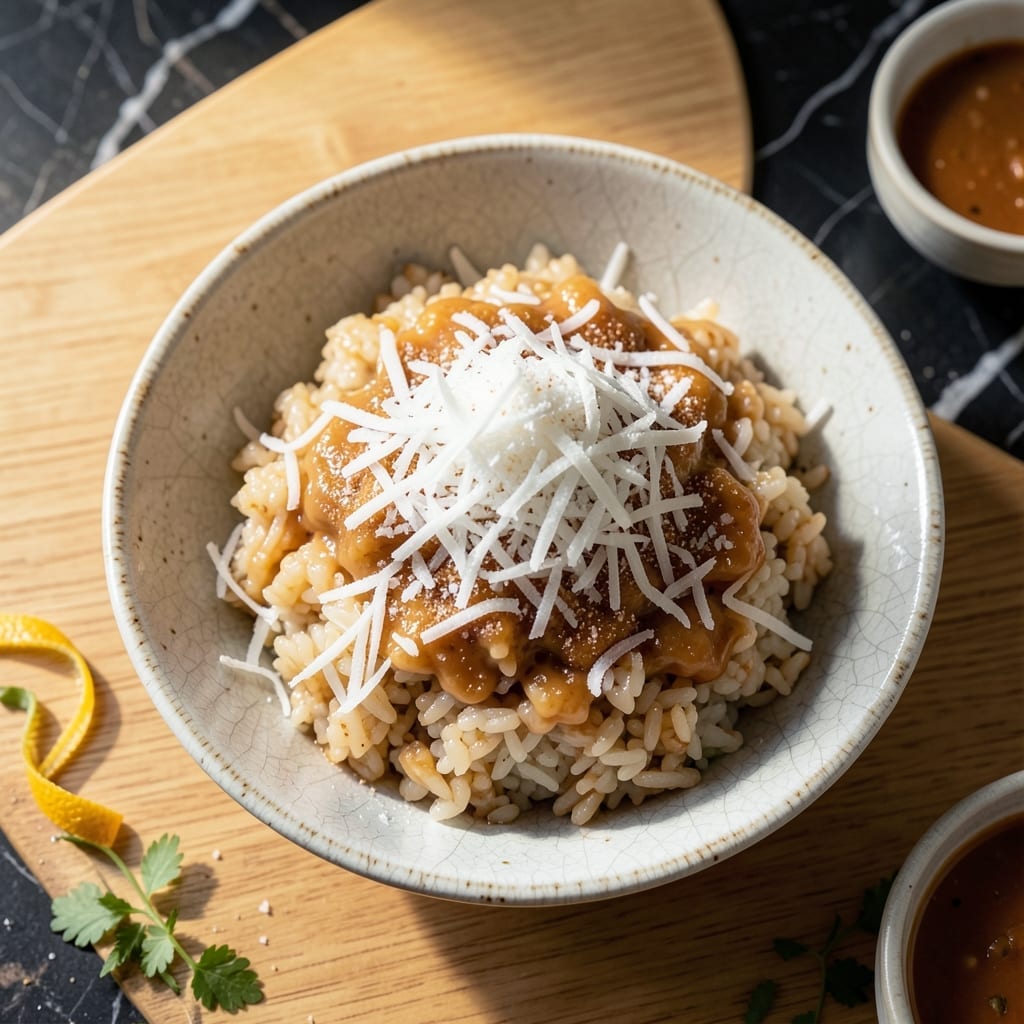
There’s a special satisfaction in achieving that perfect mochi-like texture with Japanese sweet sticky rice. This dish transforms simple ingredients into a chewy, slightly sweet treat that’s both comforting and elegant.
The secret lies in the rice selection and preparation method. Using the right variety of short-grain rice and properly soaking it ensures the characteristic sticky quality. The coconut addition brings a modern twist to this traditional favorite.
What emerges is a dish with a delicate balance of sweetness and texture. Each bite offers that signature chewiness that makes this rice so addictive, with the coconut adding a subtle tropical note.
Perfect for dessert or as a sweet snack, this recipe delivers authentic flavor with minimal effort. The process is straightforward but requires attention to detail for the best results.
Ingredients for Japanese Sweet Sticky Rice
Transform simple pantry staples into this chewy, coconut-kissed Japanese sweet rice delight.
| Ingredient | Amount | Notes |
|---|---|---|
| Japanese Short-Grain Sweet Rice 🍚 | 2 cups | Also called glutinous rice |
| Water 💧 | 2 ½ cups | For soaking and cooking |
| Coconut Milk 🥥 | 1 can | Full-fat for creaminess |
| Granulated Sugar 🍚 | ⅓ cup | Adjust to taste preference |
| Salt 🧂 | ¼ tsp | Fine sea salt preferred |
| Shredded Coconut 🥥 | ½ cup | Unsweetened, for topping |
| Vanilla Extract 🌿 | 1 tsp | Pure for best flavor |
| Cornstarch 🌾 | 1 tbsp | For thickening if needed |
| Toasted Sesame Seeds 🌰 | 1 tbsp | Optional garnish |
| Fresh Mango 🥭 | 1 whole | Diced for serving |
| Green Tea Powder 🍃 | 1 tsp | Matcha for color variation |
The rice is non-negotiable here. Japanese short-grain sweet rice (often labeled glutinous or mochigome) is the only way to get that signature chew—jasmine or Arborio won’t cut it. Look for it at Asian markets or the international aisle at Whole Foods. Brands like Koshihikari or Nishiki are reliable. Soak it for at least 4 hours (overnight is even better) to achieve that perfect sticky texture.
No coconut milk? Full-fat oat milk plus a splash of coconut cream works in a pinch. For sugar, agave or maple syrup at three-quarters the amount keeps it vegan without losing sweetness. The shredded coconut can be swapped for toasted coconut flakes—just pulse them in a food processor first. Want extra flavor? A pinch of cardamom or pandan extract pairs beautifully with the coconut.
Leftover rice keeps 3-4 days in the fridge if stored airtight. Reheat with a splash of water or coconut milk to restore moisture. For longer storage, freeze in portions for up to 1 month—thaw in the fridge overnight before reheating. Best served warm or at room temperature.
Why You’ll Love This Recipe
- One Pot Wonder: I just dump the rice, water, and coconut milk in a pot and let it do its thing—no babysitting required.
- Coconut Dream: The coconut milk soaks into the sticky rice, making it rich and just sweet enough with that hint of sugar.
- Serves a Crowd: I make a big batch for potlucks, and it’s always the first thing to disappear.
- Leftovers Win: Honestly, it tastes even better the next day—cold or warmed up, it stays perfectly chewy.
Step-by-Step Instructions for Japanese Sweet Sticky Rice
Here’s the method to achieve that perfect mochi-like texture with tropical coconut flair.
Step 1: Soak the Japanese Short-Grain Sweet Rice
Place the 2 cups Japanese Short-Grain Sweet Rice in a large bowl and cover with the 2.5 cups Water. The rice should be fully submerged by about 1 inch. Let it soak at room temperature for at least 4 hours, or ideally overnight.
This soaking step is crucial—it softens the grains and ensures they absorb moisture evenly, which is what gives the rice its signature sticky, chewy texture. You’ll notice the rice grains plump up significantly during soaking, nearly doubling in size.
Step 2: Cook the Rice with Coconut Milk
Drain the soaked rice thoroughly in a fine-mesh strainer. In a medium saucepan, combine the drained rice with the 1 can Coconut Milk, 0.33 cup Granulated Sugar, and 0.25 tsp Salt. Stir well to distribute the sugar and salt evenly.
Bring the mixture to a gentle boil over medium heat, then reduce to low heat, cover, and simmer for 15-20 minutes. Watch for the liquid to be fully absorbed and the rice to become tender and glossy. The coconut milk will infuse the rice with a rich, creamy sweetness.
Step 3: Steam for Extra Tenderness
Once the liquid is absorbed, turn off the heat and let the rice sit covered for 10 minutes. This resting period allows the rice to steam in its own moisture, ensuring every grain is perfectly tender.
After resting, gently fluff the rice with a fork to separate the grains slightly. If the mixture seems too loose, sprinkle the 1 tbsp Cornstarch over the top and fold it in—this helps thicken the texture without altering the flavor.
Step 4: Add Finishing Touches
Stir in the 1 tsp Vanilla Extract and mix thoroughly to distribute the aromatic flavor throughout the rice. The vanilla enhances the coconut’s natural sweetness and adds depth to the dish.
For a vibrant twist, gently fold in the 1 tsp Green Tea Powder until just combined, creating a marbled effect. Be careful not to overmix, as the green tea can dominate the color if stirred too vigorously.
Step 5: Serve with Tropical Garnishes
Transfer the rice to a serving dish and top with the 0.5 cup Shredded Coconut and 1 tbsp Toasted Sesame Seeds. The coconut adds a satisfying crunch, while the sesame seeds provide a nutty contrast.
Serve warm, accompanied by the 1 whole Fresh Mango, diced into bite-sized pieces. The cool, juicy mango balances the warm, creamy rice beautifully, creating a harmonious blend of textures and flavors that’s simply irresistible.
Pro Tips For Making Japanese Sweet Sticky Rice
- Soak the Rice: Give the short-grain rice a good 4-hour soak in cold water—this cuts the cooking time nearly in half and guarantees that sticky, even texture you want.
- Warm the Coconut Milk: I learned this the hard way—cold coconut milk can make the sugar seize up, so heat it gently with the sugar and salt until dissolved before mixing with the rice.
- Skip the Rinse: Resist the urge to rinse the rice like regular rice; the starch on Japanese short-grain is what gives it that perfect gluey consistency.
- Steam, Don’t Boil: After the initial simmer, switch to steaming for the last 10 minutes—this prevents a mushy bottom layer and lets the grains absorb every last bit of coconut flavor.
Essential Equipment for Great japanese sweet sticky rice
Rice Cooker
A reliable rice cooker is non-negotiable for consistent results. I use a Zojirushi 5.5-cup model—the fuzzy logic technology ensures perfect doneness every time. The non-stick inner pot prevents sticking, which is crucial for sticky rice. 💡
Fine-Mesh Strainer
For draining soaked rice, a fine-mesh strainer from OXO is my go-to. It prevents any grains from slipping through while rinsing. Look for one with a 12-inch diameter to handle the expanded rice volume comfortably.
Wooden Spoon
A wooden spoon is essential for stirring and folding the rice without damaging the grains. I prefer bamboo because it’s gentle on cookware and won’t scratch your rice cooker’s non-stick surface.
Steaming Basket
If you prefer stovetop cooking, a bamboo steaming basket fits perfectly over a wok or large pot. The 10-inch size from Helen Chen works well for this recipe. Soak the basket for 10 minutes before using to prevent sticking.
Chef’s Knife
For dicing mango garnish, a sharp 8-inch chef’s knife makes quick work. I reach for my Wüsthof Classic—it maintains a razor edge and provides excellent control. The flat blade is perfect for slicing against your cutting board.
Measuring Cups
Precise measurements matter with sticky rice ratios. I use stainless steel measuring cups from Cuisinox—they nest together and won’t warp over time. Measure the rice before soaking for accuracy.
Nutrition Facts
Frequently Asked Questions
Can I use regular rice instead of short-grain?
No, regular rice lacks the sticky texture. Japanese short-grain sweet rice (mochigome) is essential for that chewy consistency. Substitutes like jasmine or basmati won’t work.
How do I know when it’s done cooking?
The rice is ready when all liquid is absorbed and grains are tender and glossy. This typically takes 15-20 minutes over low heat. The texture should be sticky, not mushy.
Can I make this ahead of time?
Yes! Store cooled rice in an airtight container for up to 3-4 days in the fridge. Reheat with a splash of water or coconut milk to restore moisture.

- Jamaican Jollof Rice Recipe: Island Spice in Every Bite - October 18, 2026
- Hamburger Rice Hot Dish Recipe: Midwest Comfort in One Pan - October 18, 2026
- Iranian Cabbage Rice Recipe: Aromatic Herbs and Spiced Layers - October 18, 2026