
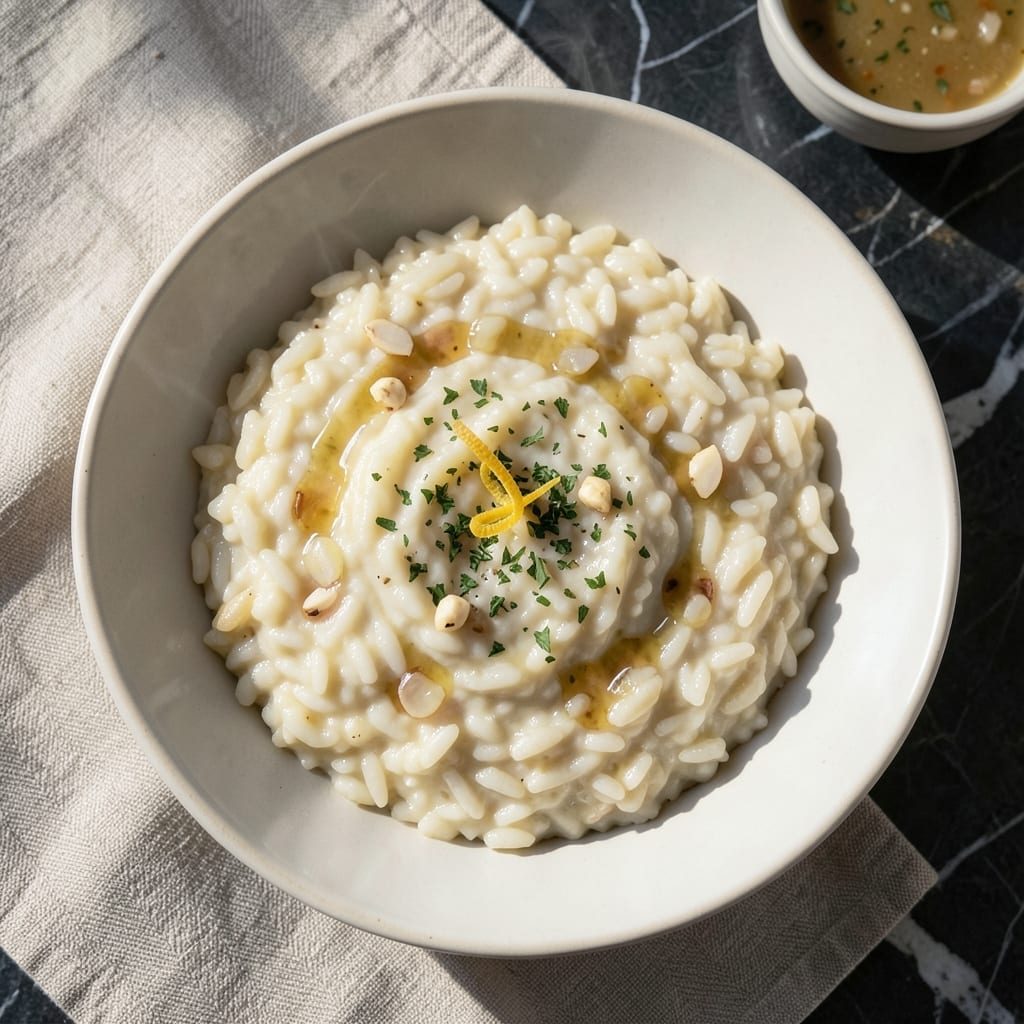
This jasmine rice risotto delivers the same creamy texture as traditional Italian versions, with an aromatic twist. I developed this method to showcase how fragrant jasmine rice can mimic Arborio’s starch content when cooked properly.
The technique relies on gradual liquid addition and constant stirring, just like classic risotto. What makes this version special is the natural perfume of jasmine rice, which infuses every bite with subtle floral notes.
You’ll achieve perfectly tender grains suspended in a velvety sauce, with each mouthful offering that signature risotto richness. The process takes patience but rewards with restaurant-quality results.
Serve immediately for the best texture, as the rice continues to absorb liquid as it sits. This method proves that authentic creamy risotto isn’t limited to Arborio rice.
Ingredients for Jasmine Rice Risotto
Fragrant jasmine rice and rich dairy create a velvety, restaurant-quality dish with floral depth.
| Ingredient | Amount | Notes |
|---|---|---|
| Jasmine Rice 🌾 | 2 cups | Rinsed until water runs clear |
| Vegetable Stock 🥕 | 6 cups | Low-sodium preferred for control |
| Shallots 🧅 | 2 whole | Finely minced for even distribution |
| Garlic Cloves 🧄 | 4 cloves | Minced to paste consistency |
| Dry White Wine 🍷 | ½ cup | Sauvignon Blanc or Pinot Grigio |
| Unsalted Butter 🧈 | 4 tbsp | Divided for cooking and finishing |
| Parmesan Cheese 🧀 | ¾ cup | Freshly grated, finely shredded |
| Heavy Cream 🥛 | ¼ cup | Full-fat for richest texture |
| Extra-Virgin Olive Oil 🫒 | 2 tbsp | For sautéing aromatics |
| Kosher Salt 🧂 | 1 ½ tsp | Diamond Crystal preferred for even seasoning |
| Freshly Ground Black Pepper 🌶️ | ½ tsp | Coarse grind for texture |
| Fresh Thyme Sprigs 🌿 | 3 sprigs | Leaves stripped, stems discarded |
| Fresh Flat-Leaf Parsley 🍃 | ¼ cup | Chopped for garnish |
The jasmine rice quality is paramount. Look for Thai jasmine rice—its higher amylose content ensures the creamy texture. Whole Foods and Trader Joe’s consistently stock excellent options. Avoid pre-rinsed rice, as the starchy surface is crucial for that signature risotto consistency. The vegetable stock should be homemade or high-quality to avoid metallic aftertastes that can ruin the dish.
No white wine? Dry vermouth works as a direct substitute. Shallots can be replaced with yellow onion at a 1:1 ratio, though the flavor will be slightly less delicate. For a richer finish, swap the heavy cream for mascarpone cheese (use 2 tbsp). The Parmesan must be Parmigiano-Reggiano—no pre-grated versions, as their anti-caking agents inhibit melting.
Risotto waits for no one. Serve immediately for optimal creamy texture. Leftovers keep for 2-3 days but will thicken—reheat with a splash of stock. The rice continues absorbing liquid, so storage is not ideal for this preparation.
Why You’ll Love This Recipe
- One Pot Wonder: I just toss jasmine rice, stock, and a splash of white wine into a single pot—no fancy equipment, no fuss.
- Umami Richness: The shallots and garlic bloom in the wine, giving every bite a deep, savory punch that’s way more exciting than plain rice.
- Meal Prep Magic: This keeps beautifully for days, so I make a big batch on Sunday and pair it with whatever protein I have on hand.
- Budget Winner: Jasmine rice is cheap, and a little goes a long way with the stock and aromatics—no fancy ingredients needed.
Step-by-Step Instructions for Jasmine Rice Risotto
Master this technique to achieve perfectly creamy texture with fragrant jasmine rice every time.
Step 1: Sauté Aromatics in Olive Oil and Butter
Heat 2 tbsp extra-virgin olive oil and 2 tbsp unsalted butter in a wide, heavy-bottomed pot over medium heat until the butter melts and foams subsides. Add the 2 whole shallots and cook for 3-4 minutes, stirring frequently, until they soften and become translucent without browning.
Add the 4 cloves garlic cloves and 3 sprigs fresh thyme sprigs (leaves stripped) to the pot. Cook for 1 minute until the garlic becomes fragrant. This aromatic base builds the flavor foundation for the risotto. Watch the heat carefully—garlic burns easily and will turn bitter if it browns.
Step 2: Toast the Rice and Deglaze with Wine
Stir in the 2 cups jasmine rice and cook for 2-3 minutes, stirring constantly, until the edges of the grains become translucent and the rice makes a slight clicking sound against the pot. This toasting step enhances the nutty flavor of the rice and helps it absorb liquid evenly.
Pour in the 0.5 cup dry white wine and stir constantly until the liquid has fully absorbed and the pot is nearly dry. The alcohol will cook off, leaving behind a bright, acidic note that balances the richness of the dish. You’ll notice the rice plumping slightly as it absorbs the wine.
Step 3: Gradually Add Vegetable Stock
Begin adding the 6 cups vegetable stock 1 cup at a time, stirring frequently. Wait until the liquid is mostly absorbed before adding the next cup. This gradual addition is crucial—it allows the rice to release starch slowly, creating that signature creamy consistency.
Maintain a gentle simmer throughout the process, adjusting the heat as needed. The rice should bubble lightly but not vigorously. After about 18-20 minutes, the grains should be al dente—tender with a slight bite in the center. Taste frequently to monitor progress.
Step 4: Finish with Cream, Butter, and Cheese
Once the rice reaches the desired doneness, reduce the heat to low. Stir in the remaining 2 tbsp unsalted butter, 0.25 cup heavy cream, and 0.75 cup parmesan cheese. The heat from the rice will melt the butter and cheese, creating a glossy, velvety sauce.
Season with 1.5 tsp kosher salt and 0.5 tsp freshly ground black pepper, adjusting to taste. The risotto should be creamy but not soupy—it should mound slightly when spooned onto a plate. If it’s too thick, stir in a splash of warm vegetable stock to reach the perfect consistency.
Step 5: Rest and Garnish Before Serving
Remove the pot from heat and let the risotto rest for 2 minutes. This brief pause allows the grains to settle and the flavors to meld. Stir in the 0.25 cup fresh flat-leaf parsley just before serving to preserve its bright color and fresh flavor.
Serve immediately while hot and creamy. Each portion should have a glossy sheen and a slight flow when spooned. The jasmine rice will deliver its signature fragrance, perfectly complementing the rich, cheesy sauce.
Pro Tips For Making Jasmine Rice Risotto
- Toast the Rice: Cook the jasmine rice in the shallots and garlic for 2-3 minutes before adding wine—this builds a nutty base flavor that carries through the whole dish.
- Warm the Stock: Keep your vegetable stock simmering in a pot nearby; cold stock slows the cooking and makes the risotto gluggy instead of creamy.
- Skip the Rinse: I learned this the hard way—rinsing jasmine rice washes away the starch that helps create that perfect risotto texture, so leave it unrinsed.
- Use the Wine: Deglaze with the dry white wine and let it fully absorb before adding stock—it cuts through the richness and adds a brightness you’ll miss if you skip it.
Common Mistakes When Making jasmine rice risotto
Skipping the Toast
Many rush past toasting the rice, but those 2-3 minutes of stirring in hot fat are crucial. This step coaxes out the rice’s natural starches and creates a nutty base flavor. Without it, your risotto will taste flat and underdeveloped. 💡
Adding Too Much Stock
Dumping in all 6 cups vegetable stock at once turns this into rice pudding, not risotto. The gradual addition—1 cup at a time—lets the rice release starch slowly for that perfect creamy texture.
Stirring Too Little
Constant stirring prevents sticking and encourages starch release. I find setting a timer for 2-minute intervals helps maintain focus. Those few minutes of vigilance make all the difference in consistency.
Using Cold Stock
Cold stock shocks the cooking process and extends your time by 5-10 minutes. Keep your vegetable stock warm in a separate pot. This maintains the gentle simmer needed for even cooking.
Overcooking the Rice
The grains should be al dente after 18-20 minutes. Overcooking turns them mushy. Taste test frequently—you want a slight bite in the center. The rice continues cooking slightly off-heat.
Rushing the Rest
Those 2 minutes of resting time let the risotto settle and the flavors meld. Skipping this step can make your dish runny. I always set a timer to ensure I don’t forget this crucial final touch.
Nutrition Facts
Frequently Asked Questions
Should I rinse jasmine rice before making this?
No, skip rinsing for risotto! The starch on the grains is essential for that creamy texture. Just measure and add directly to the pot.
Can I use chicken stock instead of vegetable?
Yes, chicken stock works well and adds depth. Use low-sodium to control seasoning. The flavor will be richer but slightly less delicate.
Why does my risotto turn out mushy?
Overcooking or too much liquid is usually the culprit. Aim for al dente grains after 18-20 minutes and add stock gradually.
What can I substitute for white wine?
Use dry vermouth or extra stock with 1 tbsp lemon juice. Both provide acidity to balance the dish’s richness.

- Jollof Rice Sauce Recipe: West African Tomato and Spice Infusion - September 25, 2026
- Japanese Rice Soup Recipe: Umami-Rich Comfort in a Bowl - September 25, 2026
- Homemade Cream Of Rice Recipe: Silk-Smooth Breakfast in Minutes - September 25, 2026