
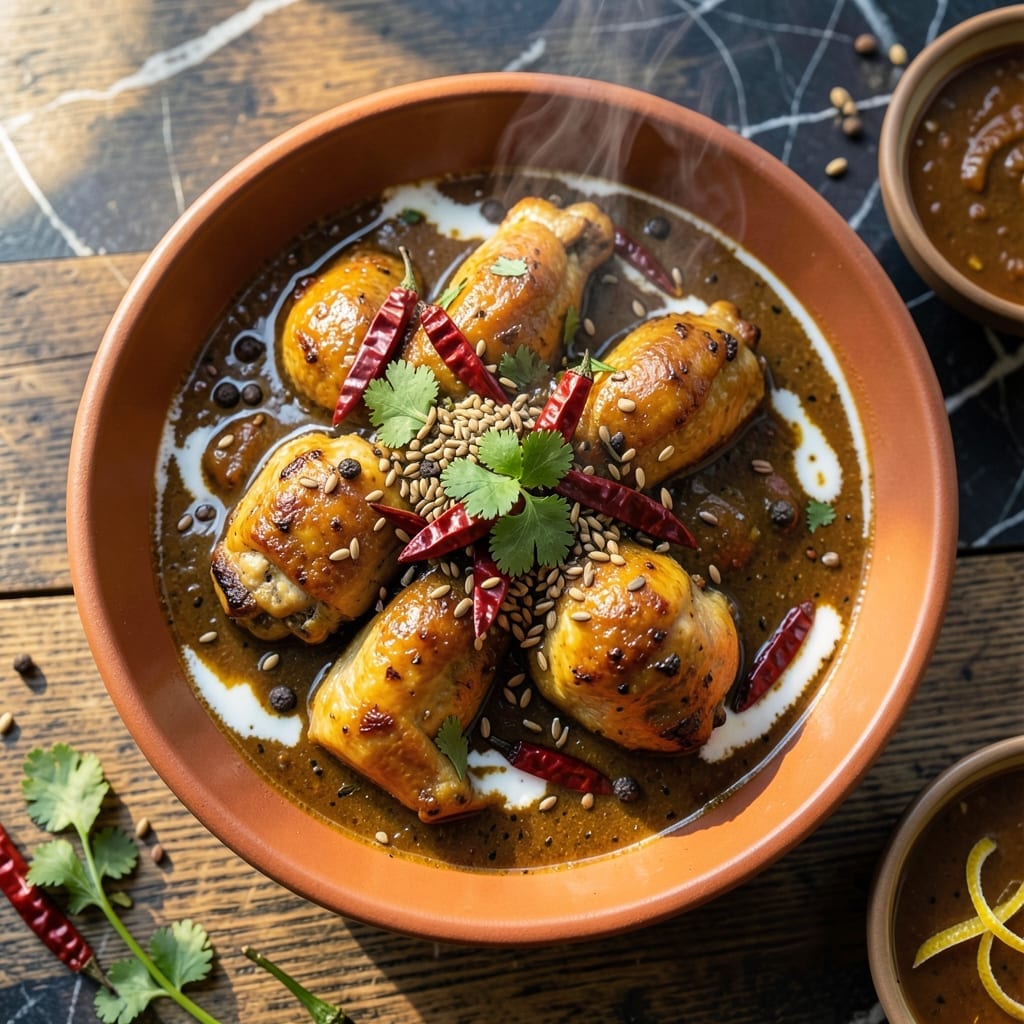
This South Indian curry brings the bold, layered flavors of Karaikudi to your kitchen table. The dish balances heat, tang, and coconut richness in a way that’s both authentic and deeply satisfying.
I’ve refined this recipe to capture the essence of Tamil Nadu’s spice traditions without overwhelming the senses. The slow-cooked chicken absorbs a complex blend of roasted spices, coconut, and tamarind for a tender, aromatic result.
What makes this version special is the careful layering of flavors—first the spice paste, then the coconut, and finally the slow simmer. The result is a curry that’s rich without being heavy, and complex without being complicated.
Serve it with steamed rice or fluffy idlis for a meal that feels both comforting and extraordinary.
Ingredients for Karaikudi Chicken Curry
Bold spices, coconut richness, and chicken come together for this South Indian feast.
| Ingredient | Amount | Notes |
|---|---|---|
| Chicken Thighs 🍗 | 2 lb | Boneless, skinless, cut into pieces |
| Dried Red Chilies 🌶️ | 10 pieces | Byadgi or Kashmiri preferred |
| Coriander Seeds 🌿 | 2 tbsp | Whole, for roasting |
| Cumin Seeds 🌿 | 1 tbsp | Whole, for roasting |
| Black Peppercorns 🌶️ | 1 tsp | Whole, for roasting |
| Fennel Seeds 🌿 | 1 tsp | Whole, for roasting |
| Shredded Coconut 🥥 | ½ cup | Unsweetened, for spice paste |
| Tamarind Paste 🍋 | 2 tbsp | For tangy depth |
| Fresh Ginger 🌿 | 1 whole | 2-inch piece, peeled |
| Garlic Cloves 🧄 | 6 cloves | Peeled, for spice paste |
| Onion 🧅 | 1 whole | Large, finely chopped |
| Tomatoes 🍅 | 2 whole | Medium, finely chopped |
| Fresh Curry Leaves 🍃 | 1 cup | Loosely packed, for aroma |
| Coconut Milk 🥥 | 1 cup | Full-fat for richness |
| Mustard Seeds 🌿 | 1 tsp | For tempering |
| Turmeric Powder 🌶️ | ½ tsp | For color and earthiness |
The dried red chilies are key here—Byadgi or Kashmiri give that signature color and mild heat. Grab them from an Indian grocery store if you can. Whole spices like coriander, cumin, and fennel need toasting to bring out their oils (just until fragrant, not burnt). The coconut should be unsweetened—Bob’s Red Mill is widely available. For the tamarind, look for pure paste in jars, not the concentrate with additives.
No tamarind paste? Lime juice plus a pinch of sugar gets you close to that sweet-tangy balance. Fresh curry leaves are ideal, but dried work in a pinch—just soak them in warm water first. If you can’t find chicken thighs, breasts work too (but they’ll be drier). The coconut milk can be canned or carton—full-fat is non-negotiable for that creamy texture.
The spice paste keeps in the fridge for 3 days if you want to prep ahead. Leftovers taste even better the next day—store in an airtight container for up to 4 days. Freezes beautifully for 3 months too.
Why You’ll Love This Recipe
- One Pot Magic: Honestly, I just toss the chicken thighs with those whole spices—cumin, coriander, peppercorns—and let them work their magic while I set the table.
- Flavor Bomb: The dried red chilies and freshly ground spices create this deep, smoky heat that clings to every bite of tender chicken.
- Feeds the Crew: I make a big batch on Sunday and it tastes even better reheated for lunch the next day.
- Budget Keeper: Chicken thighs stay juicy and cheap, and those pantry spices stretch this dish further than I expected.
Step-by-Step Instructions for Karaikudi Chicken Curry
This authentic method brings out the rich, complex flavors of Tamil Nadu with every bite.
Step 1: Toast and Grind the Whole Spices
Heat a dry skillet over medium heat and add the 2 tbsp Coriander Seeds, 1 tbsp Cumin Seeds, 1 tsp Black Peppercorns, and 1 tsp Fennel Seeds. Toast for 2-3 minutes, stirring constantly, until the seeds release their aroma and turn slightly darker in color.
Remove the toasted spices from heat immediately and transfer to a plate to cool. Once cooled, grind them into a fine powder using a spice grinder or mortar and pestle. This freshly ground spice blend is the foundation of the curry’s authentic flavor.
Step 2: Prepare the Spice Paste
In a blender, combine the ground spices with the 10 pieces Dried Red Chilies, 0.5 cup Shredded Coconut, 2 tbsp Tamarind Paste, fresh ginger, and 6 cloves Garlic Cloves. Add just enough water to help the blender process everything into a smooth, thick paste.
The paste should be vibrant and fragrant, with the tamarind adding a tangy depth that balances the heat from the chilies. I always taste the paste at this stage to ensure the flavors are well-balanced before adding it to the curry.
Step 3: Sauté Aromatics and Cook the Chicken
Heat a heavy-bottomed pot over medium heat and add the 1 tsp Mustard Seeds. Once they begin to splutter (after about 30 seconds), add the finely chopped onion and sauté for 5-6 minutes until golden brown. Stir in the 1 cup Fresh Curry Leaves and 0.5 tsp Turmeric Powder, cooking for another 1 minute to release their aromas.
Add the 2 lb Chicken Thighs pieces to the pot and cook for 5-7 minutes, turning occasionally, until the chicken is lightly browned on all sides. Pour in the prepared spice paste and stir well to coat the chicken evenly.
Step 4: Simmer with Tomatoes and Coconut Milk
Add the finely chopped tomatoes to the pot and cook for 3-4 minutes until they soften and begin to break down. Pour in the 1 cup Coconut Milk and stir to combine all the ingredients. Bring the mixture to a gentle simmer.
Reduce the heat to low, cover the pot, and let the curry cook for 25-30 minutes. Stir occasionally to prevent sticking. The curry is ready when the chicken is tender and the sauce has thickened slightly, coating the back of a spoon.
Step 5: Rest and Serve
Remove the pot from heat and let the curry rest for 10 minutes to allow the flavors to meld together. The curry leaves will infuse the dish with their distinctive aroma during this time, creating a rich and inviting scent.
Serve the Karaikudi chicken curry hot with steamed rice or fluffy idlis. The sauce should be thick and flavorful, with the chicken pieces coated in a deep, aromatic gravy that highlights the blend of spices and coconut.
Pro Tips For Making Karaikudi Chicken Curry
- Toast Whole Spices: Dry-roast the coriander, cumin, and peppercorns together on medium-low until fragrant—about 2-3 minutes. I learned this the hard way: raw spices taste dusty, but toasted ones wake up the entire curry.
- Use Thighs with Skin: Skip the boneless cuts and go for skin-on, bone-in thighs. The fat renders into the curry, giving it that rich, Karaikudi-style depth you can’t get from lean meat.
- Soak the Chilies: Cover the dried red chilies in hot water for 10 minutes before grinding. Sounds weird, but it works: they blend smoother and release color faster without burning your blender.
- Simmer Uncovered: Once the chicken is in, keep the pot uncovered for the first 15 minutes. This reduces the liquid just enough to concentrate the masala—my grandmother swore by this, and she was right.
Common Mistakes When Making This Dish
Over-Toasting Spices
Burnt spices lose their aromatic complexity and add bitterness. Toast coriander, cumin, and fennel on medium heat for just 2-3 minutes until fragrant, not dark brown. I pull them off immediately when they smell nutty and warm. 🌡️
Skipping the Paste Taste Test
Always taste your spice paste before adding it to the chicken. The balance of tamarind, coconut, and chilies should be tangy, rich, and spicy. Adjust with a pinch of salt or extra coconut if it tastes harsh or one-dimensional.
Rushing the Onion Browning
Onions need 5-6 minutes on medium heat to caramelize properly. Raw onions will make your curry taste sharp and underdeveloped. I stir frequently and lower the heat if they start to darken too quickly.
Overcrowding the Chicken
Browning 2 lb Chicken Thighs in batches prevents steaming. If you crowd the pot, the chicken releases moisture and boils instead of searing. This skips the flavor foundation built by the Maillard reaction.
Skipping the Rest
Letting the curry rest for 10 minutes off heat allows the curry leaves to infuse fully. The flavors meld and the sauce thickens slightly. I’ve ruined many curries by serving them too soon.
Using Low-Fat Coconut Milk
Full-fat coconut milk is non-negotiable for that creamy texture. The 1 cup called for in the recipe won’t work with light versions—they separate and thin out the sauce, leaving your curry watery and lackluster. 💡
Nutrition Facts
Frequently Asked Questions
Can I use chicken breast instead of thighs?
You can, but thighs stay juicier during the 25-30 minutes simmer. Breasts may dry out, so reduce cooking time to 20 minutes and check often.
What if I don’t have fresh curry leaves?
Dried leaves work—soak 2 tbsp in warm water for 10 minutes first. They won’t be as aromatic, but still add authentic flavor.
How do I adjust the heat level?
Reduce chilies to 5-6 pieces for mild heat, or add 1 tsp of cayenne for extra spice. Balance with extra coconut milk if needed.
Can I make this ahead?
The flavors deepen after 24 hours in the fridge. Store in an airtight container for up to 4 days.

- Jollof Rice Sauce Recipe: West African Tomato and Spice Infusion - September 25, 2026
- Japanese Rice Soup Recipe: Umami-Rich Comfort in a Bowl - September 25, 2026
- Homemade Cream Of Rice Recipe: Silk-Smooth Breakfast in Minutes - September 25, 2026