
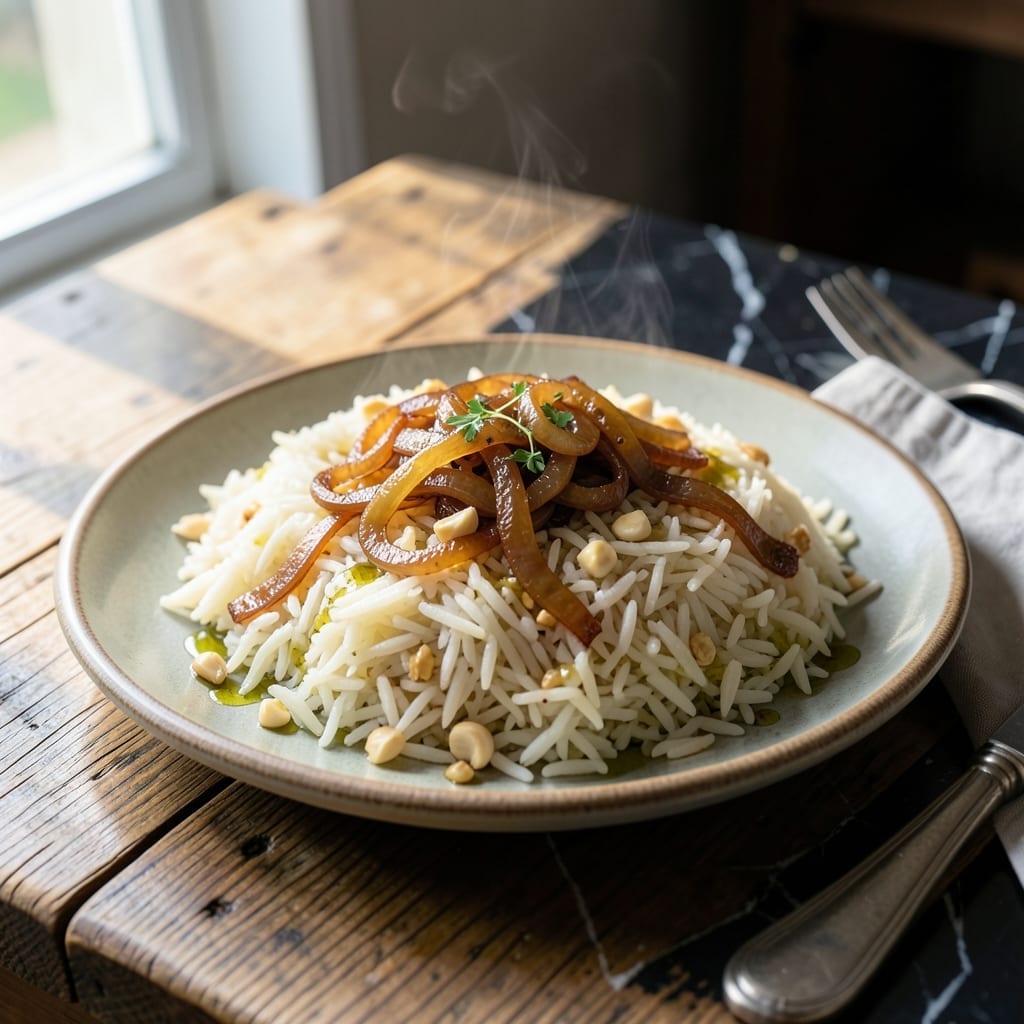
This Persian pilaf transforms simple ingredients into a fragrant, golden dish that’s as beautiful as it is delicious.
I’ve refined this method to ensure the rice cooks evenly with a crispy crust at the bottom, a hallmark of authentic karam rice.
The spices bloom in hot oil, infusing every grain with warm, aromatic flavors that make this dish unforgettable.
With a little patience and attention to detail, you’ll create a showstopping pilaf that pairs perfectly with stews or grilled meats.
Ingredients for Karam Rice
Transform simple pantry staples into this fragrant, golden Persian masterpiece with a crispy crust.
| Ingredient | Amount | Notes |
|---|---|---|
| Basmati Rice 🌾 | 2 cups | Rinsed until water runs clear |
| Water 💧 | 4 cups | For cooking rice |
| Extra-Virgin Olive Oil 🫒 | ½ cup | For sautéing and crisping |
| Unsalted Butter 🧈 | 4 tbsp | For richness and crust |
| Yellow Onion 🧅 | 1 whole | Finely diced |
| Garlic Cloves 🧄 | 4 cloves | Minced finely |
| Ground Cumin 🌿 | 1 ½ tsp | Toasted for aroma |
| Ground Turmeric 🟡 | 1 tsp | For golden color |
| Ground Cinnamon 🌰 | ½ tsp | For warm depth |
| Cardamom Pods 🌿 | 4 whole | Lightly crushed |
| Bay Leaf 🍃 | 1 whole | For infusion |
| Kosher Salt 🧂 | 2 tsp | Diamond Crystal preferred |
| Black Pepper 🌶️ | ½ tsp | Freshly ground |
| Saffron Threads 🌿 | ¼ tsp | Optional, for luxury |
| Plain Yogurt 🥛 | ½ cup | For serving, optional |
The rice is non-negotiable—Basmati is the gold standard for Persian pilaf. Look for aged basmati (often labeled as such) at Middle Eastern markets or the international aisle of Whole Foods. The saffron, while optional, elevates the dish to restaurant quality; buy from reputable spice shops to avoid the often-cut grocery store versions. Cardamom pods should be green and plump—dull, gray ones have lost their potency.
No saffron? A pinch of turmeric for color plus a splash of rosewater (if you have it) mimics the floral depth. Ground cardamom at one-third the amount works if you can’t find whole pods. For the crust, some cooks use potato slices or lavash bread instead of rice—thinly sliced Yukon Golds crisp up nicely. The yogurt garnish can be swapped for sour cream if preferred.
Uncooked rice keeps indefinitely in a cool, dark pantry. The cooked pilaf holds well, covered, at room temperature for 2 hours—perfect for gatherings. Leftovers reheat beautifully and taste even better the next day, with the flavors deepening overnight. Store in the fridge for up to 4 days.
Why You’ll Love This Recipe
- One Pot Wonder: Honestly, I just dump everything in and let the basmati rice soak up the buttery, caramelized onion flavor.
- Rich and Nutty: The combo of olive oil and butter gives it that deep, toasty taste that’s way more interesting than plain rice.
- Feeds the Masses: I make a big batch and it’s just as good for meal prep as it is for a last-minute dinner party.
- Leftovers Win: Between us, it tastes even better the next day—those onions just keep getting sweeter.
Step-by-Step Instructions for Fragrant Spice-Infused Persian Pilaf
Master this technique for perfectly layered rice with a golden, crispy crust every time.
Step 1: Prepare and Parboil the Rice
Begin by rinsing the 2 cups Basmati Rice under cold water until the water runs completely clear. This removes excess starch and prevents the grains from becoming gummy during cooking. Soak the rice in cold water for 30 minutes to ensure even cooking and maximum lengthening of the grains.
In a large pot, bring the 4 cups Water to a rolling boil with 1 tsp Ground Turmeric and 1 tsp Kosher Salt. Add the drained rice and cook for 6-7 minutes until the grains are slightly softened but still retain a firm bite. Drain immediately through a fine-mesh sieve.
Step 2: Build the Spiced Rice Foundation
In a heavy-bottomed pot with a tight-fitting lid, heat the 0.5 cup Extra-Virgin Olive Oil and 4 tbsp Unsalted Butter over medium heat. Add the 1 whole Yellow Onion (finely diced) and sauté for 8-10 minutes until deep golden brown and caramelized. This creates the flavor base for your pilaf.
Stir in the 4 cloves Garlic Cloves (minced), 1.5 tsp Ground Cumin, 0.5 tsp Ground Cinnamon, 4 whole Cardamom Pods (lightly crushed), and 1 whole Bay Leaf. Cook for 2 minutes until the spices become fragrant and toasted. Add 1 tsp Kosher Salt and 0.5 tsp Black Pepper to season the foundation.
Step 3: Layer and Begin the Steaming Process
Sprinkle a thin layer of the parboiled rice over the spiced onion mixture in the pot. Distribute the remaining rice evenly over the top, creating a gentle dome shape. Use the handle of a wooden spoon to poke 4-5 holes through the rice to the bottom of the pot—this allows steam to circulate evenly.
Drizzle 2 tbsp of the remaining melted butter over the top of the rice. If using, sprinkle the 0.25 tsp Saffron Threads over the surface for added luxury and color. Cover the pot with a clean kitchen towel before placing the lid on top—this absorbs excess steam and prevents condensation from dripping back onto the rice.
Step 4: Create the Golden Crust and Finish
Cook the rice over low heat for 10 minutes. Then, increase the heat to medium-low and continue cooking for 25-30 minutes. Resist the temptation to lift the lid during this crucial period. You’ll know it’s ready when you smell a nutty aroma and hear a gentle sizzling sound from the bottom of the pot.
The final test: the rice should have a deep golden crust on the bottom (the prized “tahdig”) while the grains above remain fluffy and separate. Remove from heat and let it rest, covered, for 5 minutes to allow the steam to redistribute and the crust to set.
Step 5: Serve with Traditional Accompaniments
To serve, invert the pot onto a large serving platter to reveal the crispy golden crust on top. Gently lift the pot to release the rice in one piece if possible. Fluff the rice gently with a fork to separate the grains while maintaining the crust’s integrity.
Serve portions with a dollop of 0.5 cup Plain Yogurt on the side if desired. The contrast of the cool, creamy yogurt with the warm, spiced rice and crispy crust completes this authentic Persian dish. The rice should be fragrant with visible flecks of turmeric and saffron throughout.
Pro Tips For Making Karam Rice
- Soak the Rice: Give the basmati rice a 30-minute soak in cold water before cooking—it plumps the grains and prevents that dreaded mushy texture.
- Brown the Onions: Cook the yellow onions low and slow in olive oil and butter until deep golden brown; I learned this the hard way—rushed onions taste raw and ruin the dish.
- Watch the Water: Use a 1:1.5 rice-to-water ratio and resist the urge to stir while cooking—this keeps the grains separate and fluffy.
- Toast the Rice: After draining the soaked rice, toast it in the pot with the onions for 2 minutes before adding water; it adds a nutty depth that plain steamed rice can’t touch.
Pro Cooking Tips for This Dish
Rice Preparation Secrets
Always rinse your Basmati Rice until the water runs completely clear—this removes excess starch that could make your pilaf gummy. I soak mine for the full 30 minutes to ensure even cooking and maximum grain elongation. 💡
Spice Blooming Technique
Toast your ground cumin, cinnamon, and cardamom pods in hot oil for exactly 2 minutes until fragrant. This crucial step unlocks their essential oils and deepens the flavor profile of your dish.
Perfect Tahdig Formation
For that coveted crispy crust, use a heavy-bottomed pot and maintain consistent low to medium-low heat. The butter-oil combination creates the ideal environment for the crust to form without burning.
Steam Management
Always cover your pot with a clean kitchen towel before adding the lid. This absorbs excess steam and prevents condensation from making your rice soggy. I use a thick cotton towel for best results.
Resting Importance
That final 5-minute rest is non-negotiable—it allows the steam to redistribute and the crust to set properly. Skipping this step often results in a broken tahdig when you invert the pot.
Serving Pro Tip
When inverting the pot, place your serving platter firmly against the pot’s edge, then flip confidently in one motion. The crust should release cleanly if you’ve maintained proper heat and timing throughout cooking. 🌟
Nutrition Facts
Frequently Asked Questions
Can I use a different type of rice?
Basmati is traditional for its long grains and fragrance. Jasmine rice works as a substitute, but avoid short-grain varieties as they’ll turn mushy.
Why didn’t my rice develop a crust?
Insufficient heat or lifting the lid too soon prevents the tahdig from forming. Keep heat at medium-low for 25-30 minutes without peeking.
Can I make this ahead of time?
Yes! The pilaf holds well at room temperature for 2 hours. Leftovers keep in the fridge for 4 days and reheat beautifully.
How do I prevent soggy rice?
Always use a clean kitchen towel under the lid to absorb steam. Rinse the rice thoroughly to remove excess starch that could make it gummy.

- Jollof Rice Sauce Recipe: West African Tomato and Spice Infusion - September 25, 2026
- Japanese Rice Soup Recipe: Umami-Rich Comfort in a Bowl - September 25, 2026
- Homemade Cream Of Rice Recipe: Silk-Smooth Breakfast in Minutes - September 25, 2026