
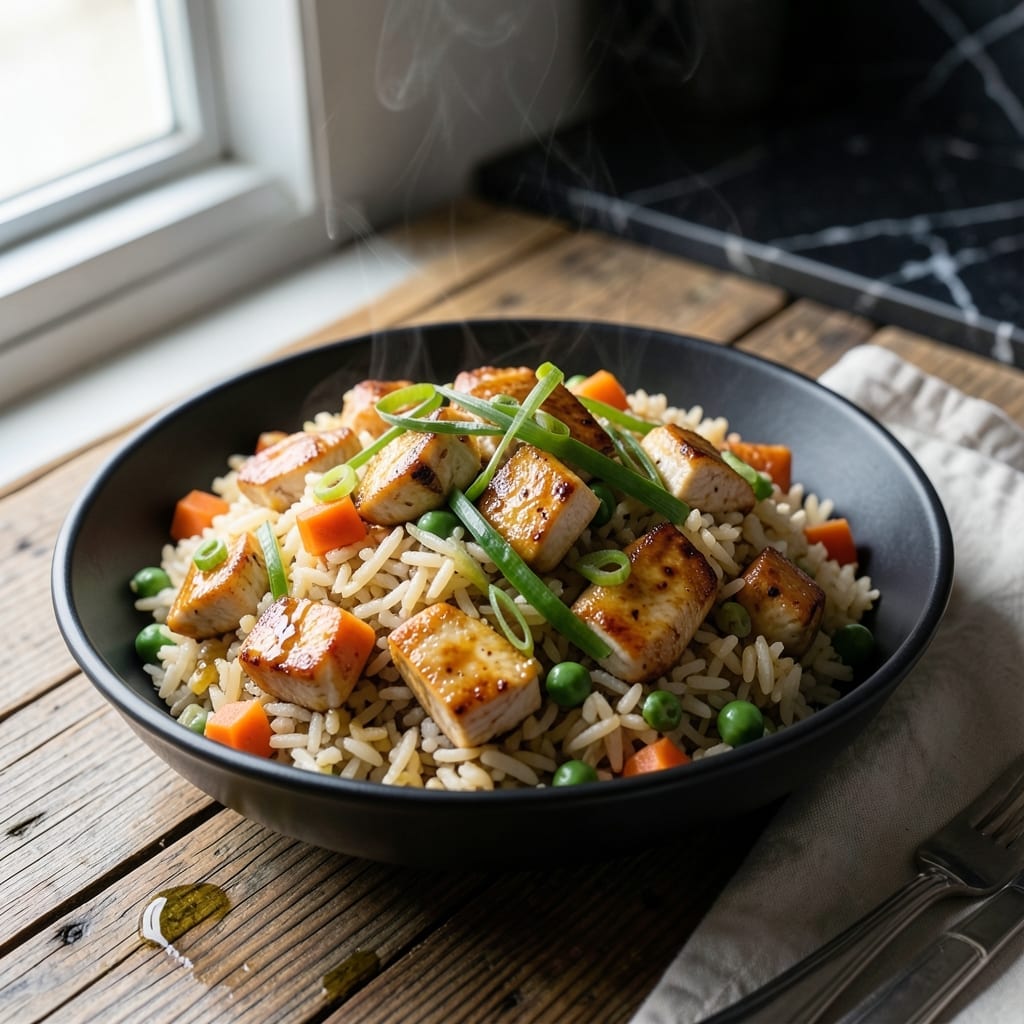
This fried rice delivers bold umami flavors with a technique that transforms simple ingredients into a restaurant-quality dish. The high-heat wok method creates that signature smoky depth you expect from professional kitchens.
I’ve refined this version to balance savory notes with fresh garden vegetables, ensuring every bite packs complexity without overwhelming the palate. The key lies in layering flavors through proper wok seasoning and precise timing.
What emerges is perfectly seared rice with tender-crisp vegetables and that coveted wok hei aroma. The dish comes together quickly once your prep work is complete, making it ideal for weeknight cooking.
Serve it as a main course or alongside your favorite protein. Here’s how to achieve professional results at home.
Ingredients for Shogun Fried Rice
Cold rice, fresh veggies, and a handful of pantry staples bring this dish to life.
| Ingredient | Amount | Notes |
|---|---|---|
| Day-Old Cooked White Rice 🍚 | 4 cups | Cold, preferably overnight |
| Large Eggs 🥚 | 3 whole | Lightly beaten |
| Green Onions 🧅 | ½ cup | Thinly sliced, white and green parts separated |
| Carrots 🥕 | 1 whole | Medium, finely diced |
| Peas 🌱 | ¾ cup | Fresh or frozen, thawed |
| Garlic Cloves 🧄 | 3 cloves | Minced |
| Fresh Ginger 🌿 | 1 tbsp | Finely grated |
| Soy Sauce 🫒 | 3 tbsp | Low-sodium preferred |
| Oyster Sauce 🍶 | 1 tbsp | Or vegetarian oyster sauce |
| Sesame Oil 🫒 | 1 tsp | Toasted variety |
| Neutral Cooking Oil 🛢️ | 3 tbsp | High smoke point, divided |
| Boneless Chicken Breast 🍗 | ¾ lb | Diced into small pieces |
| Bean Sprouts 🌱 | ½ cup | Optional garnish |
| Salt 🧂 | ½ tsp | Or to taste |
| White Pepper 🌶️ | ¼ tsp | Ground, for authenticity |
The rice is non-negotiable—day-old, cold, and preferably overnight from the fridge. Jasmine or long-grain white works best for that classic texture. For the chicken, thigh meat stays juicier than breast (though I used breast here for lean protein). Grab your veggies from the Asian market for the freshest picks, but standard grocery store stuff works fine too. The ginger and garlic? Always fresh, never powdered.
No oyster sauce? Hoisin or soy sauce with a pinch of sugar gets you close. Vegetarian? Swap in mushroom oyster sauce. Out of green onions? Shallots or regular onions work, but add a little extra for brightness. The peas can be swapped for corn or diced bell peppers. And if you’re missing sesame oil, don’t skip it—toasted sesame seeds sprinkled on top add that nutty note.
Leftovers keep 3-4 days in the fridge, but honestly, it’s best fresh. Reheat in a skillet with a splash of water to revive the texture. The rice can be made a day ahead (in fact, it should be), but prep the veggies same-day for maximum crunch.
Why You’ll Love This Recipe
- One Pan Wonder: I love throwing everything into my wok and having dinner ready in 15 minutes with just one pan to clean.
- Umami Bomb: The green onions and carrots add this ridiculous depth that makes me go back for thirds.
- Weeknight Hero: Between us, this is my Tuesday night lifesaver when I need something fast and satisfying.
- Leftovers Reinvented: Honestly, using day-old rice gives it that perfect texture while clearing out my fridge.
Step-by-Step Instructions for Wok-Seared Umami Fried Rice
Here’s the method I use to create restaurant-quality fried rice with perfect texture and rich flavor.
Step 1: Prep and Par-Cook the Chicken
Begin by dicing the 0.75 lb boneless chicken breast into small, uniform pieces. This ensures even cooking and better distribution throughout the dish. Heat 1 tablespoon neutral cooking oil in a wok or large skillet over high heat until it just begins to shimmer.
Add the chicken in a single layer and cook for 2-3 minutes, stirring occasionally, until the pieces are lightly browned but not fully cooked through. Remove the chicken from the wok and set aside. This par-cooking prevents overcooking when you combine everything later.
Step 2: Scramble the Eggs and Sauté Aromatics
In the same wok, add another 1 tablespoon neutral cooking oil if needed. Pour in the 3 whole large eggs (lightly beaten) and scramble quickly over medium-high heat until just set but still slightly runny. Remove the eggs and set aside with the chicken.
Add the remaining 1 tablespoon neutral cooking oil to the wok. Sauté the 1 whole carrots (finely diced), 3 cloves garlic cloves (minced), and 1 tbsp fresh ginger (finely grated) for 2 minutes until fragrant. Then add the 0.75 cup peas and cook for another 1 minute until the carrots begin to soften.
Step 3: Combine Rice and Vegetables
Add the 4 cups day-old cooked white rice to the wok, breaking up any clumps with your spatula. The cold rice is crucial—it won’t turn mushy like fresh rice. Stir-fry for 3-4 minutes until the rice is hot throughout and begins to take on a slight toast.
Return the chicken and eggs to the wok, along with the white parts of the 0.5 cup green onions. Drizzle the 3 tbsp soy sauce, 1 tbsp oyster sauce, and 1 tsp sesame oil over everything. Toss gently to combine, ensuring the rice is evenly coated with the sauces.
Step 4: Season and Finish with Garnishes
Sprinkle the 0.5 tsp salt and 0.25 tsp white pepper over the fried rice. Toss everything together for another 1-2 minutes until the rice is golden brown in spots and all ingredients are well incorporated.
Remove from heat and stir in the green parts of the 0.5 cup green onions and the 0.5 cup bean sprouts. The residual heat will soften the sprouts slightly while keeping them crisp. Serve immediately while hot, with extra green onions on top if desired.
Pro Tips For Making Shogun Fried Rice
- Use Cold Rice: Always start with day-old, refrigerated rice—fresh rice turns mushy. I learned this the hard way after my first few batches ended up sticky instead of fluffy.
- Beat Eggs First: Whisk your eggs with a pinch of salt before adding them to the pan, then scramble until just set. Sounds simple, but it actually changes the outcome by keeping them tender and evenly distributed.
- Skip the Crowding: Cook in batches if your pan isn’t huge—overcrowding steams the rice instead of frying it. My grandmother swore by this, and she was right: a hot, uncrowded pan is non-negotiable.
- Prep Veggies Small: Dice the carrots and peas into tiny, uniform pieces so they cook quickly and blend seamlessly into the rice. I was skeptical until I tried it, but it makes a real difference in texture.
Wine and Beer Pairings for This Dish
Asian Beer Pairings
Crisp Asian lagers like Sapporo or Asahi cut through the umami richness beautifully. Their light body and mild bitterness refresh your palate between bites. Serve ice-cold for maximum contrast with the warm, savory rice. 🍺
Light White Wines
A chilled Riesling from Germany or Washington state offers the perfect balance. Its subtle sweetness complements the soy sauce while the acidity cleanses your palate. Look for off-dry styles with 10-12% ABV for ideal pairing.
Sparkling Sake
Try a nigori sake like Tyku Junmai for a traditional pairing. The slight effervescence and creamy texture enhance the dish’s complexity. Serve in small ceramic cups to maintain temperature.
Craft IPA Options
For beer lovers, a West Coast IPA with citrusy hop notes works surprisingly well. The bitterness balances the saltiness while the fruity aromas complement the vegetables. Avoid overly malty or sweet IPAs.
Non-Alcoholic Choices
Sparkling yuzu soda or ginger beer offers refreshing alternatives. The citrus and spice notes echo the dish’s flavors without alcohol. I love Fever-Tree ginger beer for its bold kick. ✨
Tea Pairings
A lightly oxidized oolong tea like Tieguanyin enhances the meal’s depth. Its floral notes and mild astringency cleanse your palate. Brew at 195°F for 3-4 minutes for best results.
Nutrition Facts
Frequently Asked Questions
Why must the rice be day-old?
Fresh rice contains excess moisture that turns mushy when stir-fried. Day-old rice dries out in the fridge, creating separate grains that sear beautifully in the wok. This texture is essential for authentic fried rice.
Can I substitute other proteins?
Try shrimp, tofu, or pork instead of chicken. For shrimp, cook just until pink (2-3 minutes). Tofu should be pressed first to remove excess water for better searing.
How do I achieve wok hei flavor at home?
Use high heat and cook in small batches to prevent steaming. A well-seasoned wok helps too. If your stove isn’t powerful, cook in a heavy skillet and let it get ripping hot between batches.
What if my sauce tastes too salty?
Balance it with a pinch of sugar or a splash of rice vinegar. You can also add more rice to absorb excess salt. Start with 1/2 teaspoon of either and adjust gradually to taste.

- Jollof Rice Sauce Recipe: West African Tomato and Spice Infusion - September 25, 2026
- Japanese Rice Soup Recipe: Umami-Rich Comfort in a Bowl - September 25, 2026
- Homemade Cream Of Rice Recipe: Silk-Smooth Breakfast in Minutes - September 25, 2026