
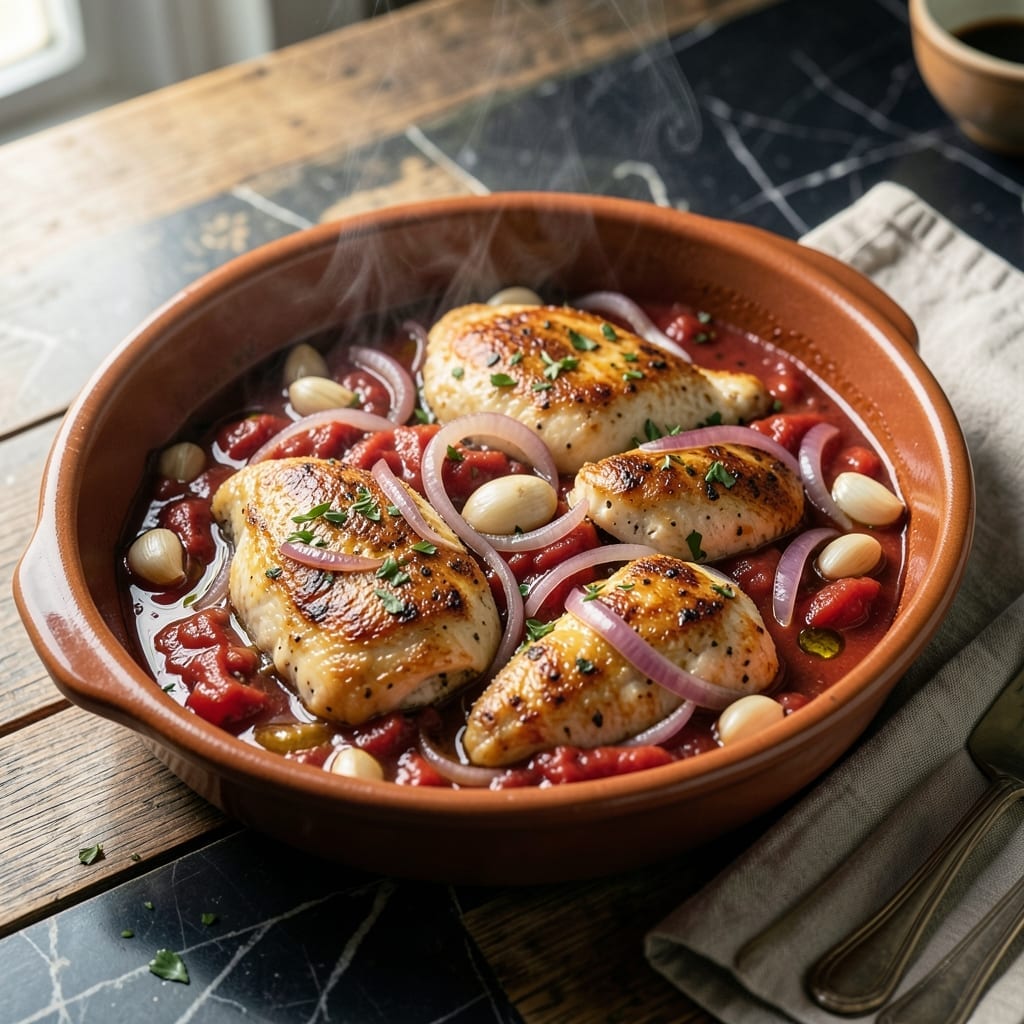
This Italian classic brings the rustic flavors of the countryside straight to your kitchen. The dish captures the essence of traditional hunter-style cooking with its rich, savory sauce and tender chicken.
What makes this version special is its simplicity and depth of flavor. The sauce builds layer by layer, combining tomatoes, herbs, and wine to create a robust base that complements the chicken perfectly.
By the end, you’ll have a hearty, aromatic stew that feels like a warm embrace. The chicken becomes fall-off-the-bone tender, soaking up every bit of the flavorful sauce.
Serve with crusty bread or over polenta to soak up every last drop. This is comfort food at its finest.
Ingredients for Katie Parla Chicken Cacciatore
Pantry staples meet fresh herbs for this hearty Italian classic.
| Ingredient | Amount | Notes |
|---|---|---|
| Chicken Thighs 🍗 | 2 lb | Boneless, skin-on preferred |
| Olive Oil 🫒 | 3 tbsp | Extra-virgin for richness |
| Red Onion 🧅 | 1 whole | Medium, thinly sliced |
| Garlic Cloves 🧄 | 4 cloves | Minced for sauce |
| Canned Tomatoes 🍅 | 28 oz | San Marzano preferred |
| Tomato Paste 🍅 | 2 tbsp | For depth of flavor |
| Dry Red Wine 🍷 | ½ cup | Bold and fruity |
| Chicken Broth 🥫 | ½ cup | Low-sodium preferred |
| Fresh Rosemary 🌿 | 2 tsp | Chopped, or 1 tsp dried |
| Fresh Thyme 🍃 | 2 tsp | Chopped, or 1 tsp dried |
| Dried Oregano 🌿 | 1 tsp | Mediterranean variety |
| Red Pepper Flakes 🌶️ | ½ tsp | Adjust for heat preference |
| Green Olives 🫒 | ½ cup | Pitted, halved |
| Capers 🌿 | 2 tbsp | Drained, rinsed |
| Kosher Salt 🧂 | 1 ½ tsp | Diamond Crystal preferred |
| Black Pepper 🌶️ | ½ tsp | Freshly ground |
The chicken is non-negotiable here. Thighs (bone-in, skin-on) give you that melt-in-your-mouth texture—breasts dry out. I grab mine from Whole Foods or a local butcher if I’m feeling fancy. The tomatoes? San Marzano cans from an Italian market or Eataly make a noticeable difference, but any good-quality canned tomatoes will work in a pinch.
No red wine? Chicken broth with a splash of balsamic vinegar gets you 90% there. Fresh herbs are ideal (rosemary and thyme if you can), but dried at half the amount works. Green olives can be swapped for Kalamata for a brinier kick. Capers are optional, but they add that salty, tangy pop that makes this dish sing.
This stew actually gets better overnight. Keeps 4-5 days in the fridge, freezes beautifully for 3 months. I always double the batch—leftovers reheat like a dream (and taste even richer).
Why You’ll Love This Recipe
- One Pan Wonder: I love that this comes together in a single skillet—just brown the chicken thighs, sauté the red onion and garlic, then let the canned tomatoes do the rest.
- Ridiculously Good Sauce: The garlic and tomatoes simmer into this rich, savory sauce that soaks into the chicken. Honestly, it’s the kind of flavor that makes you go back for seconds.
- Weeknight Friendly: I throw this together on busy evenings—it’s ready before the kids finish their homework, and it feels like a proper meal.
- Feeds and Keeps: Leftovers taste even better the next day, and it’s budget-friendly since chicken thighs stretch further than pricier cuts.
Step-by-Step Instructions for Chicken Cacciatore
Build layers of flavor with this traditional method that delivers authentic Italian taste every time.
Step 1: Brown the Chicken Thighs
Heat 3 tbsp olive oil in a large Dutch oven over medium-high heat until it shimmers. Pat the 2 lb chicken thighs dry with paper towels and season both sides with 1.5 tsp kosher salt and 0.5 tsp black pepper.
Add the chicken skin-side down and let it cook undisturbed for 6-7 minutes until the skin turns deep golden brown. I resist the urge to move it—this creates a crispy foundation and prevents sticking. Flip and cook for another 4-5 minutes until golden. Transfer to a plate and set aside.
Step 2: Sauté Aromatics and Build the Base
In the same pot, add the thinly sliced red onion and cook for 5 minutes until soft and translucent. Stir in the minced garlic cloves and cook for 30 seconds until fragrant—don’t let it brown.
Add 2 tbsp tomato paste and cook for 2 minutes, stirring constantly, until it deepens in color. This step is crucial—it removes the raw flavor and builds a rich foundation. Pour in 0.5 cup dry red wine and scrape up any browned bits from the bottom, then let it simmer for 3 minutes until reduced by half.
Step 3: Simmer with Herbs and Tomatoes
Return the chicken to the pot along with any accumulated juices. Add 28 oz canned tomatoes, 0.5 cup chicken broth, 2 tsp fresh rosemary, 2 tsp fresh thyme, 1 tsp dried oregano, and 0.5 tsp red pepper flakes.
Bring to a simmer, then reduce heat to medium-low. Cover and let it cook for 25-30 minutes, stirring occasionally, until the chicken is tender and the sauce has thickened slightly. The tomatoes should break down, creating a rustic, chunky texture.
Step 4: Finish with Briny Elements
Stir in 0.5 cup green olives and 2 tbsp capers, then simmer uncovered for 5-10 minutes to let the flavors meld. Taste and adjust seasoning if needed—the olives and capers add a bright, salty contrast.
You’ll know it’s ready when the sauce has reduced slightly and coats the back of a spoon. The chicken should be fall-apart tender, and the kitchen will smell incredible. Serve hot with crusty bread or over polenta to soak up every last bit of sauce.
Pro Tips For Making Katie Parla Chicken Cacciatore
- Brown the Chicken Well: I learned this the hard way—don’t rush the browning step. Cook the thighs skin-side down for 6-7 minutes in hot olive oil until deep golden; it builds the flavor base for the whole dish.
- Slice Onions Thinly: Sounds fussy, but thinly sliced red onions melt into the sauce better than chunks. I used to chop them rough and ended up with crunchy bits in an otherwise tender dish.
- Skip the Garlic Burn: Add the garlic cloves only after the onions soften—about 2 minutes in. Tossing it in too early turns it bitter, and no one wants bitter cacciatore.
- Use Good Canned Tomatoes: My grandmother swore by San Marzano for this recipe. Cheaper brands can taste watery and dilute the rich, herby sauce you’re building.
Storing and Reheating Leftovers
Refrigerator Storage
Let this dish cool at room temperature for no more than 2 hours before transferring to airtight containers. I use glass containers with locking lids to keep flavors fresh. It’ll stay delicious in your fridge at 40°F or below for up to 5 days. ❄️
Freezer Storage
For longer storage, freeze portions in quart-sized freezer bags or airtight containers. Leave 1 inch of headspace for expansion, and it’ll keep beautifully for up to 3 months. I always label with the date—it’s easy to forget!
Stovetop Reheating
My preferred method: warm on medium-low heat in a heavy pot, adding ¼ cup chicken broth to prevent drying. Stir occasionally for 10-15 minutes until heated through to 165°F. The flavors deepen beautifully with gentle reheating. 🔥
Microwave Reheating
For quick meals, cover individual portions with a damp paper towel. Heat on 70% power for 2-3 minutes, stir, then continue in 1-minute intervals until hot. Add a splash of water if needed.
Make-Ahead Tip
This stew actually improves overnight as the flavors meld. I often make a double batch—it reheats like a dream and tastes even richer the next day. Perfect for meal prep!
Nutrition Facts
Frequently Asked Questions
Can I use chicken breasts instead of thighs?
Thighs are ideal for their juiciness and flavor, but breasts can work if cooked carefully. Reduce simmering time to 15-20 minutes to prevent dryness. Brining them first helps retain moisture.
What wine works best in this recipe?
A bold, dry red wine like Chianti or Sangiovese complements the dish perfectly. Avoid cooking wines—use something you’d drink. The alcohol cooks off, leaving rich depth.
Can I make this ahead of time?
The flavors deepen overnight. Store in an airtight container in the fridge for up to 5 days or freeze for 3 months. Reheat gently on the stovetop.
How do I thicken the sauce if it’s too thin?
Simmer uncovered for 5-10 extra minutes to reduce. For quicker results, mash some tomatoes or add a 1 tbsp tomato paste slurry. Avoid cornstarch—it dulls the rustic texture.

- Jollof Rice Sauce Recipe: West African Tomato and Spice Infusion - September 25, 2026
- Japanese Rice Soup Recipe: Umami-Rich Comfort in a Bowl - September 25, 2026
- Homemade Cream Of Rice Recipe: Silk-Smooth Breakfast in Minutes - September 25, 2026