
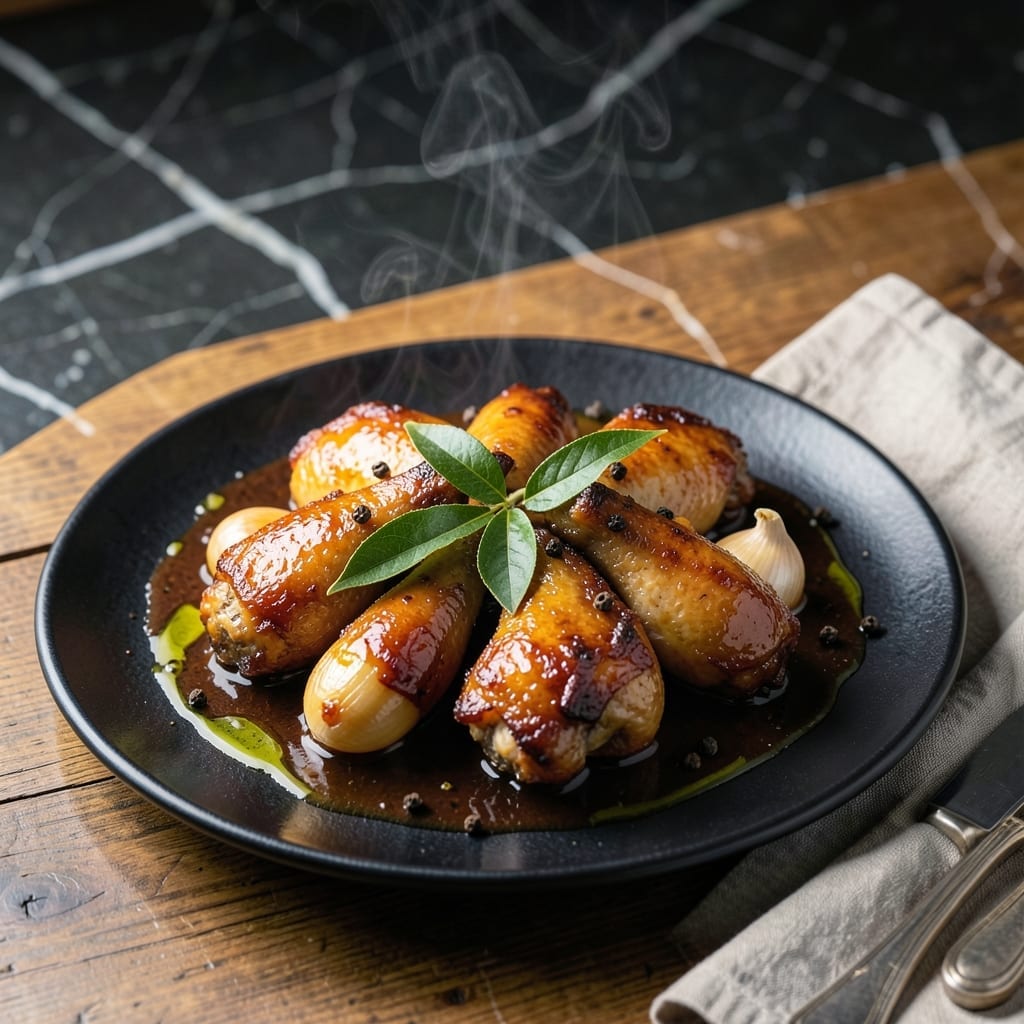
This Filipino classic balances tangy vinegar, salty soy, and aromatic garlic into a dish that’s deeply flavorful yet simple to prepare. The slow braising process allows the chicken to absorb every layer of marinade, resulting in tender meat with a rich, savory sauce.
Traditionally, adobo was a preservation method, but today it’s celebrated for its bold, comforting taste. The key is patience—letting the chicken simmer until the sauce reduces to a glossy, finger-licking consistency.
What emerges is a dish that’s both rustic and refined, with the vinegar’s brightness cutting through the soy’s depth. Serve it over steamed rice to soak up every drop of the umami-packed sauce.
Perfect for weeknight dinners or special gatherings, this recipe stays true to its roots while fitting seamlessly into modern kitchens.
Ingredients for Chicken Adobo
Simple ingredients create this deeply flavorful braised chicken with tangy, savory depth.
| Ingredient | Amount | Notes |
|---|---|---|
| Chicken Thighs 🍗 | 2 lb | Boneless, skin-on preferred |
| Soy Sauce 🫒 | ¾ cup | Regular or low-sodium |
| White Vinegar 💧 | ¾ cup | Cane or distilled |
| Garlic Cloves 🧄 | 12 cloves | Peeled and smashed |
| Bay Leaves 🍃 | 3 pieces | Dried, whole |
| Black Peppercorns 🌶️ | 1 tbsp | Whole, lightly crushed |
| Brown Sugar 🍚 | 2 tbsp | Light or dark variety |
| Olive Oil 🫒 | 2 tbsp | For searing chicken |
| Onion 🧅 | 1 whole | Yellow or white, sliced |
| Water 💧 | ½ cup | For braising liquid |
| Green Onions 🌱 | 4 whole | Thinly sliced for garnish |
The chicken is non-negotiable here. Bone-in, skin-on thighs give the richest flavor and stay juicy during the long braise—Costco or Whole Foods have great options. Soy sauce should be Filipino brands like Silver Swan or Datu Puti if you can find them (look in Asian markets). The vinegar must be white—rice vinegar is too mild, apple cider too sweet. Distilled white vinegar hits the right sharp tang.
No soy sauce? Coconut aminos work in a pinch but the flavor profile shifts. Out of white vinegar? Half the amount of rice vinegar plus a splash of lemon juice gets you close. Garlic is key—don’t skimp, and fresh is mandatory (no jars). The bay leaves should be dried Turkish or California—fresh can be bitter. If you can’t find whole peppercorns, freshly ground black pepper works at half the amount.
This tastes even better the next day—sauce thickens and flavors deepen. Refrigerate in an airtight container for up to 5 days, or freeze for 3 months. The chicken can be prepped a day ahead (marinate overnight), but don’t add vinegar until cooking or it’ll ‘cook’ the meat.
Why You’ll Love This Recipe
- One Pan Wonder: I toss everything in, let it simmer, and dinner’s done with barely any cleanup.
- Tangy Umami Bomb: The soy-vinegar combo with garlic hits that sweet-salty-sour spot I crave every time.
- Feeds a Crowd: I stretch it over rice for four, or it’s just as good packed for lunch the next day.
- Budget Hero: Chicken thighs stay cheap, and the pantry staples do all the heavy lifting flavor-wise.
Step-by-Step Instructions for Chicken Adobo
Master this classic Filipino technique for tender, tangy chicken with a perfect sauce every time.
Step 1: Sear the Chicken Thighs for Maximum Flavor
Heat the 2 tbsp Olive Oil in a large, heavy pot over medium-high heat until shimmering. Pat the 2 lb Chicken Thighs dry with paper towels to ensure proper browning. Season lightly with salt, though the soy sauce will add plenty of saltiness later.
Working in batches to avoid crowding, place the chicken thighs skin-side down in the pot. Sear undisturbed for 5-6 minutes until the skin is deep golden brown and crisp. Flip and sear the other side for 3-4 minutes. Remove the chicken and set aside.
Step 2: Build the Aromatic Base
In the same pot, reduce heat to medium. Add the sliced 1 whole Onion, the 12 cloves Garlic Cloves, the 3 pieces Bay Leaves, and the 1 tbsp Black Peppercorns. Sauté for 2-3 minutes until the onions soften and the garlic becomes fragrant but not browned.
Add the 2 tbsp Brown Sugar and stir to caramelize slightly, which balances the tanginess of the sauce. This step creates a flavor foundation that defines authentic adobo, so don’t rush it. The mixture should smell deeply aromatic with no raw garlic bite.
Step 3: Braise the Chicken in the Adobo Sauce
Return the seared chicken to the pot. Pour in the 0.75 cup Soy Sauce, 0.75 cup White Vinegar, and 0.5 cup Water. The liquid should just cover the chicken. Bring to a boil, then reduce heat to low, cover, and simmer for 35-40 minutes.
Turn the chicken pieces occasionally to ensure even cooking. The sauce will initially appear separated, but as it simmers, it will emulsify into a rich, glossy liquid. The chicken is done when it’s fork-tender and the internal temperature reaches 165°F.
Step 4: Reduce and Finish the Sauce
Uncover the pot and increase the heat to medium-high. Simmer for an additional 10-12 minutes to reduce the sauce by about one-third. The sauce should thicken enough to coat the back of a spoon with a consistency between a broth and a glaze.
Taste and adjust the seasoning if needed, though the soy sauce typically provides sufficient salt. The balance should be tangy from the vinegar, salty from the soy, with sweetness from the caramelized sugar and depth from the garlic and bay leaves.
Step 5: Garnish and Serve
Discard the bay leaves and peppercorns. Transfer the chicken to a serving platter and spoon the reduced sauce over the top. Garnish with the thinly sliced 4 whole Green Onions for a fresh, oniony contrast that brightens the rich dish.
Serve immediately with steamed rice to soak up the flavorful sauce. The chicken should be fall-off-the-bone tender with a glossy, deeply flavored sauce clinging to each piece. For best results, let the dish rest for 5 minutes before serving to allow the flavors to meld fully.
Pro Tips For Making Chicken Adobo
- Simmer, Don’t Boil: Keep the heat at a gentle simmer—vigorous boiling toughens the chicken and turns the sauce bitter. I learned this the hard way after my first few adobos came out chewy.
- Marinate the Chicken: Let the thighs soak in soy sauce, garlic, and a splash of vinegar for at least 30 minutes before cooking. It’s not fancy, but it guarantees the flavor sinks deep into the meat.
- Balance the Vinegar: Add the vinegar at the end of cooking—pouring it in too early can make the chicken dry out. My grandmother swore by this, and she was right.
- Use Skin-On Thighs: The fat renders down into the sauce, giving it richness. Sounds obvious, but I was skeptical until I tried it—now I never use boneless, skinless cuts.
Wine and Beer Pairings for These Flavors
White Wine Pairs
Crisp Riesling from Germany or Washington state works beautifully with adobo’s tangy-savory profile. I love a Dr. Loosen Blue Slate for its mineral notes that complement the vinegar’s brightness. The slight sweetness balances the salty soy perfectly.
Red Wine Options
For red lovers, try a light-bodied Pinot Noir from Oregon’s Willamette Valley. Domaine Drouhin makes one with earthy notes that won’t overpower the dish. Avoid heavy tannic reds—they’ll clash with the vinegar.
Filipino Beer
Nothing beats San Miguel Pale Pilsen with adobo—its crisp, clean profile cuts through the richness. The 4.5% ABV won’t overwhelm the dish. I always keep a six-pack on hand for this exact pairing. 🍺
Craft Beer Choices
A Belgian-style witbier like Hoegaarden offers citrus notes that brighten the sauce. The coriander spice adds an interesting layer. For darker options, a Vienna lager provides malty sweetness to balance the acidity.
Non-Alcoholic
Calamansi juice (Filipino lime) mixed with sparkling water makes a refreshing pairing. The citrus mirrors the vinegar’s tang while cleansing your palate. I also enjoy hibiscus iced tea for its floral contrast.
Ginger beer with a squeeze of lime offers a spicy kick that works wonderfully. 💫
Nutrition Facts
Frequently Asked Questions
Can I use chicken breasts instead of thighs?
Yes, but thighs stay juicier during the long braise. If using breasts, reduce simmering time to 25-30 minutes to prevent dryness. The flavor will be milder.
Why does the vinegar need to be white?
White vinegar’s sharp tang is traditional. Other types (rice, apple cider) alter the flavor balance. For authentic taste, stick with distilled white.
How do I fix sauce that’s too salty?
Add a splash of water and 1 tsp brown sugar to balance. Simmer 5 minutes longer. Avoid adding more vinegar—it’ll make it too sour.
Can I make this in a slow cooker?
Sear chicken first, then cook on low for 4-5 hours. Reduce sauce on the stovetop afterward for best texture.

- Pancake Recipe Using Rice Flour: Light and Airy Gluten-Free Stacks - September 25, 2026
- Japanese Rice Porridge Recipe: Silky Congee With Umami Depth - September 25, 2026
- Rice Bagel Recipe: Chewy Pillows With a Twist - September 25, 2026