
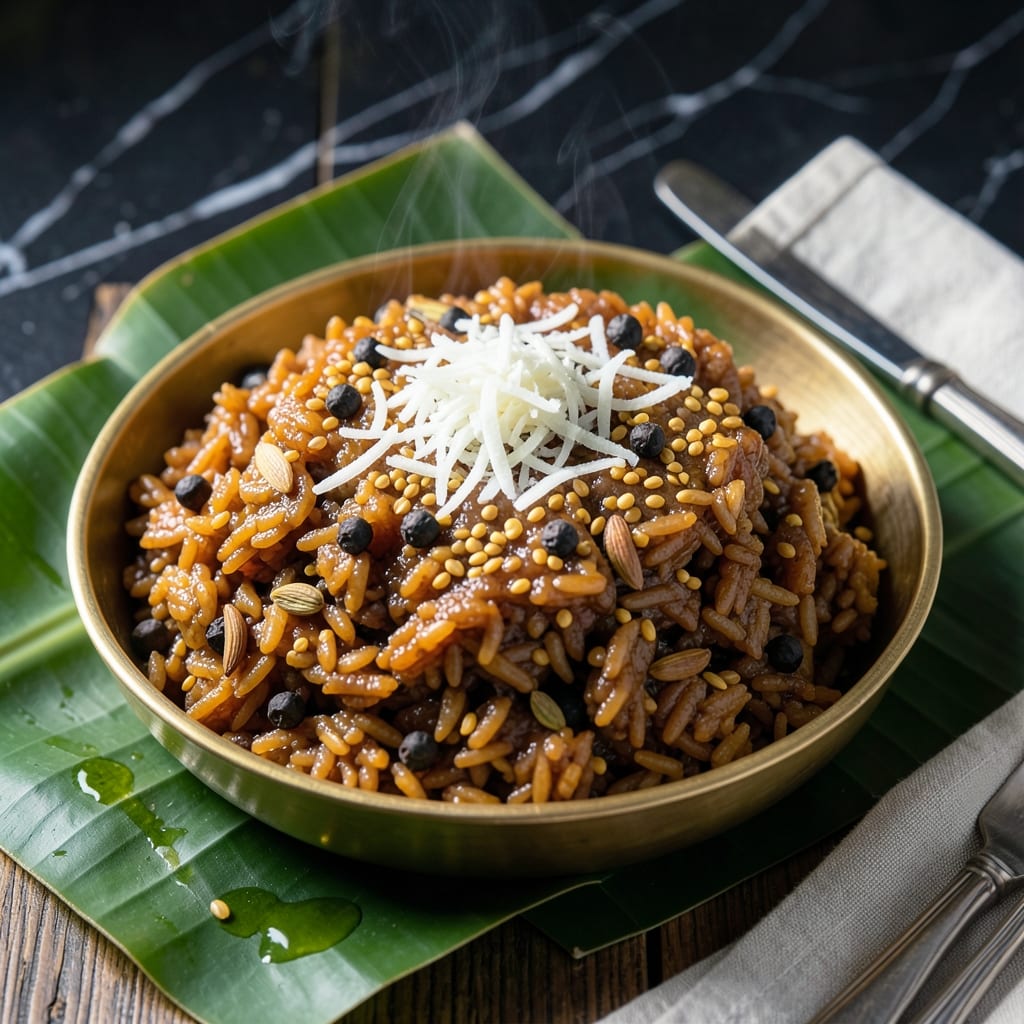
This traditional black rice dish brings the authentic flavors of South India to your kitchen table. The unique coconut aroma pairs perfectly with the nutty taste of kavuni rice, creating a side dish that’s both comforting and deeply flavorful.
I’ve refined this method over years to capture the true essence of Tamil cuisine. The rice cooks slowly with fresh coconut and mild spices, allowing every grain to absorb the rich, fragrant flavors that define this classic preparation.
What emerges is a beautifully textured rice with a natural deep purple hue. Each bite delivers the earthy notes of black rice balanced by the sweetness of coconut, making it a perfect accompaniment to any South Indian meal.
Serve this at your next family gathering or special occasion. The traditional technique ensures authentic results every time.
Ingredients for Kavuni Rice Recipe in Tamil
Traditional black rice meets fresh coconut and warm spices for an authentic dish.
| Ingredient | Amount | Notes |
|---|---|---|
| Kavuni Rice 🍚 | 1 ½ cups | Black rice, rinsed thoroughly |
| Fresh Coconut 🥥 | 1 whole | Grated, white meat only |
| Ghee 🧈 | 2 tbsp | Clarified butter, vegetarian |
| Cumin Seeds 🌿 | 1 tsp | Whole, for tempering |
| Black Peppercorns 🌶️ | 1 tsp | Lightly crushed |
| Cardamom Pods 🌿 | 4 whole | Green, lightly crushed |
| Cloves 🌰 | 3 whole | For aromatic depth |
| Cinnamon Stick 🌿 | 1 piece | Small, about 1-inch |
| Bay Leaf 🍃 | 1 whole | Dried, for fragrance |
| Cashew Nuts 🥜 | ¼ cup | Broken, for garnish |
| Raisins 🍇 | ¼ cup | Golden, for sweetness |
| Salt 🧂 | 1 tsp | Adjust to taste |
| Water 💧 | 3 cups | For cooking rice |
The kavuni rice is key—look for organic black rice at Indian grocery stores or specialty markets. Fresh coconut is non-negotiable for that authentic aroma; frozen grated coconut works in a pinch but lacks the same depth. For the spices, whole is always better than ground—toast them lightly to release their essential oils before adding to the rice.
No ghee on hand? Coconut oil maintains the dish’s traditional flavor. Missing cardamom or cloves? Skip them—but the cumin and bay leaf are essential for that signature Tamil taste. The cashews and raisins add texture and sweetness; almonds or currants make fine substitutes if that’s what you have.
This rice keeps well for 3-4 days in the fridge, and the flavors deepen over time. Store in an airtight container. Reheat gently with a splash of water to restore moisture. Best served warm with a dollop of yogurt.
Why You’ll Love This Recipe
- One Pot Wonder: I just dump everything in, let the kavuni rice soak up the ghee and coconut, and it’s done—no fuss.
- Rich Coconut Aroma: The fresh coconut and ghee combo hits differently, so fragrant it fills the whole kitchen.
- Festive Favorite: I make this for every Tamil celebration, and honestly, it’s the dish everyone asks for seconds of.
- Budget Stretcher: A little ghee and a handful of rice go a long way, and leftovers taste even better the next day.
Step-by-Step Instructions for Traditional Black Rice With Coconut Aroma
Achieve authentic flavor by following this time-tested method for perfect texture and aroma.
Step 1: Prepare and Soak the Kavuni Rice
Begin by rinsing the 1.5 cups Kavuni Rice thoroughly under cold water until the water runs clear. This removes excess starch and ensures the grains cook evenly without becoming gummy.
After rinsing, soak the Kavuni Rice in 3 cups Water for 30 minutes. Soaking softens the black rice’s outer layer, reducing the cooking time and ensuring each grain absorbs moisture uniformly. Drain the rice completely after soaking—this step is crucial for the right texture.
Step 2: Temper the Whole Spices and Nuts
Heat the 2 tbsp Ghee in a heavy-bottomed pot over medium heat. Add the 1 tsp Cumin Seeds, 1 tsp Black Peppercorns, 4 whole Cardamom Pods, 3 whole Cloves, 1 piece Cinnamon Stick, and 1 whole Bay Leaf. Stir for 1-2 minutes until the spices release their aroma and the cumin seeds begin to sizzle.
Now add the 0.25 cup Cashew Nuts and fry for 1 minute until they turn light golden brown. Remove half of the cashews and set aside for garnish. Then add the 0.25 cup Raisins and stir for 30 seconds until they plump slightly. This tempering process infuses the ghee with complex flavors.
Step 3: Cook the Rice With Coconut and Spices
Add the drained Kavuni Rice to the pot with the tempered spices and stir for 1 minute to coat the grains evenly with the ghee and spices. This toasting step enhances the nutty flavor of the black rice.
Pour in the 3 cups Water and add the 1 tsp Salt. Stir in the grated 1 whole Fresh Coconut and bring the mixture to a boil. Once boiling, reduce the heat to low, cover the pot, and simmer for 25-30 minutes until the rice is tender and the water is fully absorbed.
Step 4: Rest and Garnish for Serving
Once the rice is cooked, turn off the heat and let it rest, covered, for 10 minutes. This resting period allows the grains to steam and absorb any remaining moisture, ensuring a fluffy texture.
Gently fluff the rice with a fork and transfer it to a serving dish. Garnish with the reserved cashew nuts and any additional grated Fresh Coconut if desired. The Kavuni Rice should have a deep purple-black hue with a fragrant aroma from the coconut and spices, ready to be enjoyed as a traditional delight.
Pro Tips For Making Kavuni Rice Recipe In Tamil
- Toast the Cumin: Dry roast the cumin seeds in ghee for exactly 30 seconds until fragrant—I learned this the hard way after burning a batch when I walked away.
- Grate Coconut Fresh: Use only freshly grated coconut, not desiccated, as it releases more natural oils and gives that authentic texture my grandmother swore by.
- Skip Overcooking Rice: Kavuni rice turns mushy fast, so cook it with just 1:1.5 rice-to-water ratio and pull it off the heat when it’s still slightly firm.
- Warm the Ghee: Melt the ghee on low heat first—sounds weird, but it works to prevent the black peppercorns from sinking to the bottom and burning.
Serving Suggestions for This Recipe
Traditional Plating
Serve this dish in a banana leaf or a shallow brass bowl to honor Tamil traditions. The natural green of the leaf contrasts beautifully with the deep purple rice, creating a visually stunning presentation that wows guests. 💫
Complementary Sides
A simple cucumber raita with ½ cup yogurt and ¼ tsp roasted cumin powder balances the earthy flavors. I also love pairing it with pappadums for a crispy texture contrast.
Festive Occasions
This rice shines at special events like Pongal or weddings. Shape it into small mounds and top each with a cashew-raisin mixture for an elegant touch. The aromatic coconut scent fills the room, setting a celebratory mood.
Everyday Serving
For weeknight meals, pair with sambar or vegetable kurma. The mild sweetness of the rice complements spicy curries perfectly. I often add a spoonful of coconut chutney on the side.
Temperature Tip
Serve warm, not piping hot. The flavors develop best at 140-150°F, allowing the coconut aroma to fully express. Let it sit for 5 minutes after cooking before serving.
Nutrition Facts
Frequently Asked Questions
Can I use regular rice instead?
No, kavuni rice’s unique nutty flavor and deep purple color come from its black variety. Regular rice won’t deliver the same authentic taste or visual appeal.
How do I know when the rice is fully cooked?
The grains should be tender with no white center, and all water should be absorbed. Check at 25 minutes—if still firm, cook for 5 more minutes on low heat.
Can I make this ahead of time?
Yes! The flavors actually deepen when stored overnight. Keep in an airtight container for up to 3 days and reheat gently with a splash of water.
What if my coconut isn’t fresh?
Use frozen grated coconut in a pinch, but thaw it first. Avoid desiccated coconut—it lacks the moisture and aroma needed for this dish.

- Mujadara Rice and Lentils Recipe: Earthy Spiced Lentils With Caramelized Onions - November 1, 2026
- Naija Fried Rice Recipe: Street-Style Spice With Veggie Crunch - November 1, 2026
- Mushy Rice Recipe: Fluffy Grains Transformed in Minutes - November 1, 2026