
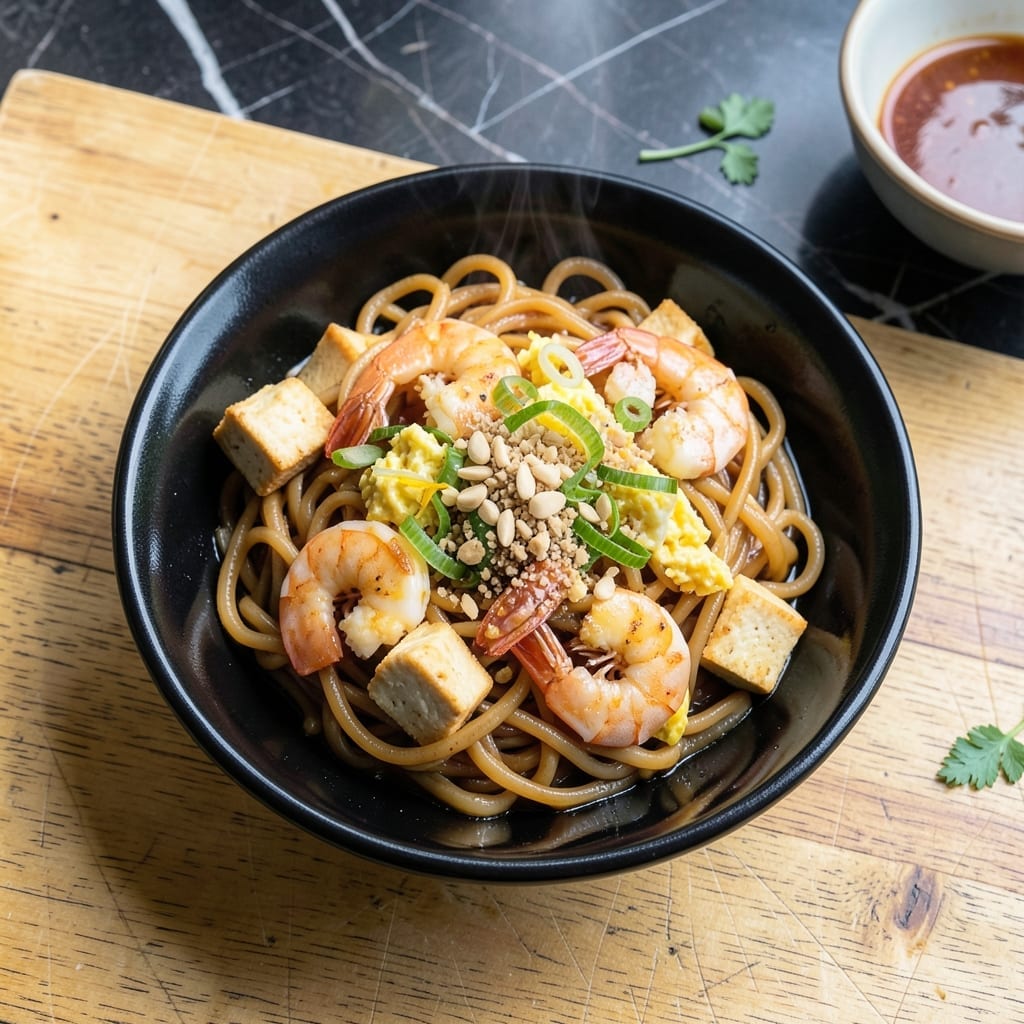
I’ve recreated that bustling Bangkok street food magic right in my home kitchen. This dish brings together all the bold, sweet, and tangy flavors you crave from a traditional pad Thai.
With simple ingredients and 20 minutes of cooking, you can achieve that perfect balance of chewy rice noodles, tender shrimp, and a sauce that’s both rich and bright. The key is high heat and constant movement.
The result is a plate of golden fried rice with a tamarind-lime zing that hits all the right notes. Eggs add richness, bean sprouts bring crunch, and peanuts finish it off with a satisfying texture.
Serve it hot with lime wedges for that final squeeze. Let’s get started.
Ingredients for Khao Pad Thai Fried Rice
Simple ingredients deliver that bold Bangkok street food flavor right at home.
| Ingredient | Amount | Notes |
|---|---|---|
| Rice Noodles 🍜 | 8 oz | Flat, medium-width, soaked 30 minutes |
| Shrimp 🍤 | ¾ lb | Peeled, deveined, medium size |
| Large Eggs 🥚 | 2 whole | Lightly beaten for scrambling |
| Firm Tofu 🧈 | ½ lb | Pressed, cubed for texture |
| Tamarind Paste 🍯 | 3 tbsp | Pure, no added sugar |
| Fish Sauce 💧 | 2 tbsp | Thai variety preferred |
| Soy Sauce 🫒 | 2 tbsp | Low-sodium or regular |
| Palm Sugar 🍚 | 2 tbsp | Or substitute brown sugar |
| Lime 🍈 | 2 whole | Juiced, plus wedges for serving |
| Bean Sprouts 🌱 | 1 ½ cups | Fresh, rinsed thoroughly |
| Green Onions 🧅 | 4 whole | Thinly sliced for garnish |
| Garlic Cloves 🧄 | 3 cloves | Minced for maximum flavor |
| Peanuts 🥜 | ½ cup | Crushed, dry-roasted preferred |
| Vegetable Oil 🛢️ | ¼ cup | High smoke point for stir-frying |
| Dried Chili Flakes 🌶️ | ½ tsp | Adjust to spice preference |
The tamarind paste is non-negotiable for authentic flavor. Look for it in Asian markets or the international aisle at Whole Foods. Shrimp should be fresh or high-quality frozen (thaw first). For tofu, extra-firm holds up best—press it for 15 minutes to get rid of excess water. Rice noodles need that 30-minute soak to soften without getting mushy. Don’t skip it.
No tamarind? Equal parts lime juice and brown sugar gets you close. Fish sauce can be swapped for soy sauce plus a dash of salt if needed. Shrimp allergies? Chicken or extra tofu work great. Bean sprouts not your thing? Shredded cabbage adds a similar crunch. The peanuts can be omitted, but they add that essential texture.
Leftovers keep 3-4 days in the fridge, but the noodles soften over time. Freeze without the sprouts or lime wedges for up to 2 months. Reheat quickly in a hot pan—microwave makes them gummy. Always add fresh garnishes when serving.
Why You’ll Love This Recipe
- One Pan Wonder: I love how everything from the shrimp to the tofu cooks together in a single wok—minimal cleanup, maximum flavor.
- Tamarind Magic: That tangy-sweet kick from the tamarind paste with the shrimp and eggs? Honestly, it’s the reason I make this weekly.
- Protein Flex: Swapping shrimp for tofu or adding both means this dish bends to whatever I’ve got in the fridge.
- Lunchbox Hero: Leftovers taste even better the next day, and my kids actually finish their portions—no small win there.
Step-by-Step Instructions for Pad Thai Fried Rice
Here’s the method I use to bring authentic street food flavor to my home kitchen.
Step 1: Soak and Prep the Noodles
Start by soaking the 8 oz Rice Noodles in warm water for 30 minutes until they’re pliable but still slightly firm. This ensures they cook evenly without turning mushy when stir-fried. Drain and set aside.
Meanwhile, press and cube the 0.5 lb Firm Tofu, and peel and devein the 0.75 lb Shrimp. Having all your ingredients prepped and within reach is crucial—this dish comes together quickly once the cooking begins.
Step 2: Make the Pad Thai Sauce
In a small bowl, whisk together the 3 tbsp Tamarind Paste, 2 tbsp Fish Sauce, 2 tbsp Soy Sauce, and 2 tbsp Palm Sugar until the sugar dissolves. This balance of tangy, salty, and sweet is what makes the dish sing.
Taste and adjust the flavors if needed—you want a harmonious blend where no single element overpowers. Lightly beat the 2 whole Large Eggs in a separate bowl and set both mixtures aside.
Step 3: Stir-Fry the Base Ingredients
Heat the 0.25 cup Vegetable Oil in a large wok or skillet over high heat until shimmering. Add the cubed tofu and cook for 3-4 minutes until golden brown on all sides. Remove the tofu and set aside.
In the same pan, add the shrimp and cook for 1-2 minutes per side until they turn pink and opaque. Remove the shrimp and set aside with the tofu. The 0.75 lb Shrimp should be just cooked through—don’t overcook or they’ll turn rubbery.
Step 4: Combine and Finish
Add the minced 3 cloves Garlic Cloves and 0.5 tsp Dried Chili Flakes to the pan and stir for 30 seconds until fragrant. Pour in the beaten eggs and scramble until just set. This creates a base layer of flavor that ties everything together.
Add the drained rice noodles, tofu, shrimp, and 1.5 cups Bean Sprouts to the pan. Pour the sauce over everything and toss vigorously with tongs for 2-3 minutes until the noodles are tender and coated in the sauce.
Step 5: Garnish and Serve
Transfer the noodles to a serving platter and top with the 4 whole Green Onions (thinly sliced), crushed 0.5 cup Peanuts, and a squeeze of 2 whole Lime wedges. The fresh lime juice brightens all the flavors and cuts through the richness.
Serve immediately while hot, with extra lime wedges and chili flakes on the side for those who want to adjust the heat to their preference. Each bite should deliver a perfect balance of sweet, sour, salty, and savory flavors.
Pro Tips For Making Khao Pad Thai Fried Rice
- Soak Noodles First: I learned this the hard way—dry rice noodles need a 15-20 minute soak in warm water before stir-frying, or they’ll stay tough and chewy. Drain them just before cooking so they finish softening in the wok.
- Press the Tofu: Firm tofu holds up better if you press it for 10 minutes wrapped in a towel with something heavy on top. Skip this and it’ll turn mushy in the pad thai instead of staying in nice, bite-sized pieces.
- Scramble Eggs Separately: After burning a few batches, I finally figured out that scrambling the eggs first in the pan, then removing them before adding the rest, keeps them from turning rubbery. Add them back at the end for perfect texture.
- Taste Before Serving: Tamarind paste varies wildly in sourness, so I always do a quick taste test and adjust with a little more fish sauce or a pinch of sugar if needed. Sounds obvious, but it’s the thing that matters most for balanced flavor.
Essential Equipment for Great khao pad thai fried rice
High-Heat Wok
A carbon steel wok is non-negotiable for authentic results. I use a 14-inch Joyce Chen wok that heats evenly and handles high temperatures. The sloped sides make tossing ingredients effortless during that 2-3 minute final stir-fry.
Sturdy Tongs
Invest in 12-inch stainless steel tongs—I prefer the OXO Good Grips brand. They give you the reach and control needed to quickly turn noodles and proteins without breaking them. The locking mechanism keeps them handy in my crowded kitchen drawer.
Sharp Chef’s Knife
A 8-inch chef’s knife makes quick work of thinly slicing the 4 green onions and mincing the 3 garlic cloves. I’ve had my Wüsthof Classic for years—it stays sharp through constant use. A dull knife is dangerous and slow.
Mortar and Pestle
For crushing the 0.5 cup peanuts, nothing beats a granite mortar and pestle. The texture is superior to pre-crushed. I use a Thai-style one that’s heavy enough to pulverize peanuts with minimal effort. 💪
Citrus Juicer
You’ll need fresh lime juice from those 2 limes. A simple handheld reamer works, but I love my Chef’n FreshForce for maximum juice extraction. The lime zest adds an extra flavor boost if you’re feeling fancy.
Large Mixing Bowls
Have at least 2 large bowls ready—one for soaking the 8 oz rice noodles and another for mixing your sauce. I use stainless steel because they’re lightweight and nest for storage. The 30-minute soak is crucial for perfect texture.
Nutrition Facts
Frequently Asked Questions
Can I use regular rice instead of noodles?
Traditional pad Thai uses rice noodles, but cooked jasmine rice works in a pinch. Use 2 cups of day-old cold rice for best texture. The flavor will differ slightly but still taste delicious.
Why is my sauce too sweet?
Balance is key. If it’s too sweet, add more fish sauce or lime juice. Start with 1 tsp at a time and taste. The tamarind should provide tang to offset the sugar.
How do I prevent soggy noodles?
Don’t over-soak the noodles—30 minutes max. Stir-fry on high heat and keep them moving constantly. Add sauce last to prevent absorption before cooking.

- Mujadara Rice and Lentils Recipe: Earthy Spiced Lentils With Caramelized Onions - November 1, 2026
- Naija Fried Rice Recipe: Street-Style Spice With Veggie Crunch - November 1, 2026
- Mushy Rice Recipe: Fluffy Grains Transformed in Minutes - November 1, 2026