
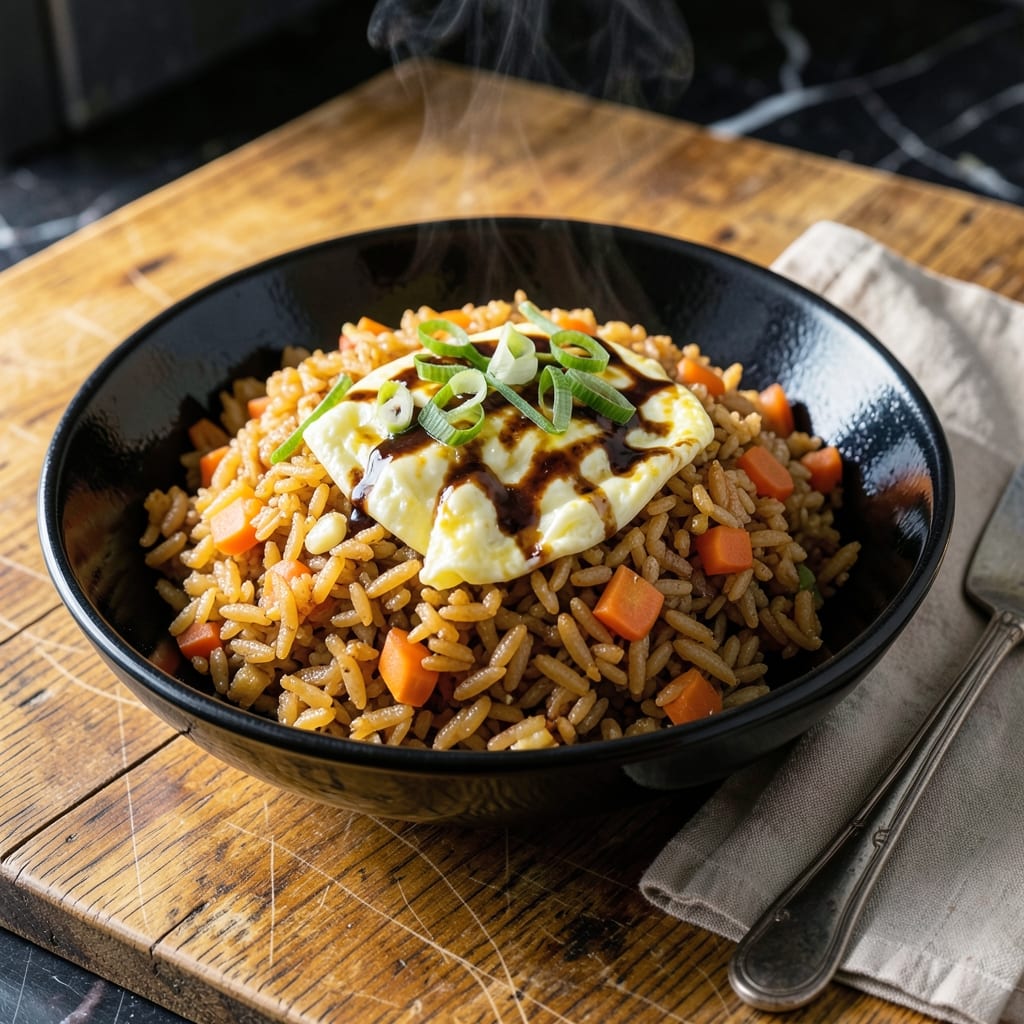
There’s a reason this dish became my go-to for busy weeknights in my tiny Boston kitchen. The secret lies in how Kikkoman soy sauce transforms simple ingredients into something deeply flavorful.
High heat and quick cooking create those signature wok-seared edges while keeping the rice tender. Fresh scallions add a bright, crisp finish that cuts through the rich umami.
This method works with day-old rice and whatever vegetables you have on hand. The soy sauce ensures every bite is packed with that savory depth you crave.
Ready in 20 minutes, it’s the kind of dish that feels special but couldn’t be easier to make. Let’s get started.
Ingredients for Kikkoman Soy Sauce Fried Rice
Pantry staples meet wok-ready freshness for that perfect 20-minute meal.
| Ingredient | Amount | Notes |
|---|---|---|
| Day-Old Cooked Rice 🍚 | 4 cups | Cold, long-grain preferred |
| Kikkoman Soy Sauce 🫕 | ¼ cup | For umami depth |
| Scallions 🧅 | 4 whole | Thinly sliced, white and green parts |
| Vegetable Oil 🫒 | 2 tbsp | High smoke point for wok frying |
| Large Eggs 🥚 | 2 whole | Beaten for scrambling |
| Garlic Cloves 🧄 | 3 cloves | Minced for aromatic base |
| Frozen Peas 🟢 | ¾ cup | Thawed, for color and texture |
| Carrots 🥕 | 2 whole | Small dice, for sweet crunch |
| Sesame Oil 🫒 | 1 tsp | Toasted, for finishing aroma |
| Ground White Pepper 🌶️ | ¼ tsp | Subtle heat without color |
| Kosher Salt 🧂 | ½ tsp | Adjust to taste |
| Fresh Ginger Root 🌿 | 1 tbsp | Peeled and finely grated |
The rice is non-negotiable—day-old, cold, and dry is what gives you those separate, wok-seared grains. Kikkoman soy sauce is the star here (the regular kind, not low-sodium). Grab it from any supermarket—I keep a bottle in my Boston kitchen at all times. For the veggies, frozen peas and carrots work great (no thawing needed if you’re in a rush). Fresh scallions are a must for that bright finish though.
No peas? Diced bell peppers or corn add similar color and crunch. Swap carrots for zucchini or snap peas. Out of scallions? Chives or green onions work in a pinch. The sesame oil is key for that final hit of aroma—toasted, not raw. If you’re avoiding eggs, just skip them and add a splash more soy sauce for flavor.
Leftover rice keeps in the fridge for 3-4 days—perfect for meal prep. The cooked dish holds for 3 days too, but honestly it’s best fresh. Freeze portions for up to 2 months if you must (reheat straight from frozen in the wok).
Why You’ll Love This Recipe
- One Pan Wonder: I toss everything into a single skillet—no extra bowls, no mess.
- Umami Bomb: Kikkoman’s rich soy sauce hits just right with those crispy egg bits and fresh scallions.
- Leftover Hero: Day-old rice soaks up the sauce better than fresh, and honestly, I always double the batch.
- Budget feeder: Five ingredients, feeds four, and costs less than takeout.
Step-by-Step Instructions for Wok-Seared Umami Fried Rice
Here’s the method. Straightforward, tested, works every time.
Step 1: Prep and Par-Cook the Aromatics
Heat 1 tablespoon vegetable oil in your wok over high heat until it shimmers. Add the minced garlic cloves and finely grated fresh ginger root, stirring constantly for 30 seconds until fragrant but not browned. The moment you smell the ginger’s bright zing, add the small-diced carrots.
Cook the carrots for 2-3 minutes until they soften slightly but retain a bit of crunch. You’re building the flavor base here—don’t let the garlic burn. Push everything to one side of the wok to make room for the eggs.
Step 2: Scramble the Eggs and Combine
Add the remaining 1 tablespoon vegetable oil to the cleared side of the wok. Pour in the beaten large eggs and let them set for 10 seconds before scrambling with a spatula. When the eggs are just set but still slightly runny, mix them with the carrots, garlic, and ginger.
Now add the thawed frozen peas and cook for another 1 minute. The peas should turn vibrant green and warm through. This step ensures every bite has the sweetness of peas and the richness of eggs.
Step 3: Add Rice and Season
Increase the heat to maximum and add all 4 cups day-old cooked rice, breaking up any clumps with your spatula. Stir-fry for 2-3 minutes until the rice is hot and starting to crisp in spots. The wok should be sizzling loudly—this is the sound of perfect texture.
Drizzle the 0.25 cup Kikkoman soy sauce evenly over the rice, then add the 0.5 tsp kosher salt and 0.25 tsp ground white pepper. Toss everything together for 1-2 minutes until the rice is uniformly coated and deeply fragrant.
Step 4: Finish with Scallions and Sesame Oil
Remove the wok from heat and stir in the thinly sliced scallions, reserving a handful for garnish. The residual heat will soften them slightly while keeping their fresh bite. Drizzle the 1 tsp sesame oil over the top and toss once more to distribute the nutty aroma.
Taste and adjust seasoning if needed—though the soy sauce usually provides enough salt. The rice should have a glossy sheen, with each grain distinct and packed with umami depth. Serve immediately, garnished with the reserved scallions.
Pro Tips For Making Kikkoman Soy Sauce Fried Rice
- Use Cold Rice: Day-old, refrigerated rice works best—it’s drier and fries up fluffier instead of turning mushy. I learned this the hard way after too many soggy attempts.
- Crank the Heat: High heat is non-negotiable for that classic wok-fried texture. About 2 tablespoons of oil in a screaming-hot pan guarantees the rice gets crispy edges.
- Scramble Eggs First: Push the scrambled eggs to one side of the pan before adding rice—this keeps them soft and distinct instead of disappearing into the dish.
- Soy Sauce Last: Add the Kikkoman soy sauce at the very end to avoid steaming the rice. Sounds weird, but it works: the flavor stays bright instead of dull.
Flavor Customization for This Dish
Spice It Up
Add 1-2 teaspoons of sriracha or 1 tablespoon gochujang with the soy sauce for a spicy kick. I tested this in my Boston kitchen during last winter—perfect for cutting through New England’s chill. The heat balances beautifully with the umami. 🌶️
Extra Umami Boost
Stir in 1 tablespoon of oyster sauce or 1 teaspoon fish sauce along with the soy sauce. This trick comes from my Nonna’s Italian-Chinese fusion experiments. It deepens the savory notes without overpowering the dish.
Protein Additions
Toss in 1 cup of diced cooked chicken, shrimp, or tofu with the peas. For best results, cook the protein separately first, then combine. I love using leftover rotisserie chicken from the neighborhood market.
Fresh Herb Twist
Finish with ¼ cup chopped cilantro or Thai basil instead of scallions for a different aromatic profile. Cilantro adds brightness, while Thai basil brings an anise-like note that pairs wonderfully with soy sauce.
Crunchy Texture
Sprinkle 2 tablespoons of toasted cashews or crushed peanuts on top before serving. The nutty crunch contrasts the soft rice beautifully. I keep a bag of cashews in my pantry just for this purpose.
Citrus Zing
Add 1 teaspoon of lime juice or orange zest at the end for a citrusy lift. This works especially well if you’ve added spice—it brightens the whole dish. Trust me, it’s a game-changer. 💛
Nutrition Facts
Frequently Asked Questions
Can I use freshly cooked rice?
No, day-old cold rice works best. Fresh rice contains too much moisture and will turn mushy when stir-fried.
What if I don’t have a wok?
A large skillet with high sides works fine. Use medium-high heat and cook in batches to avoid overcrowding.
How do I prevent soggy fried rice?
Cook over high heat and avoid overloading the pan. Spread the rice in an even layer and let it crisp between stirrings.
Can I make this vegetarian?
Skip the eggs and add extra veggies like bell peppers or mushrooms. Use tofu for protein.

- Gambia Jollof Rice Recipe: West African One-Pot Spice Fusion - October 5, 2026
- Cream of Wild Rice Soup Recipe Minnesota: Northwoods Creaminess With Foraged Grains - October 5, 2026
- Frozen Cauliflower Fried Rice Recipe: Quick Low-Carb Wok Magic - October 5, 2026