
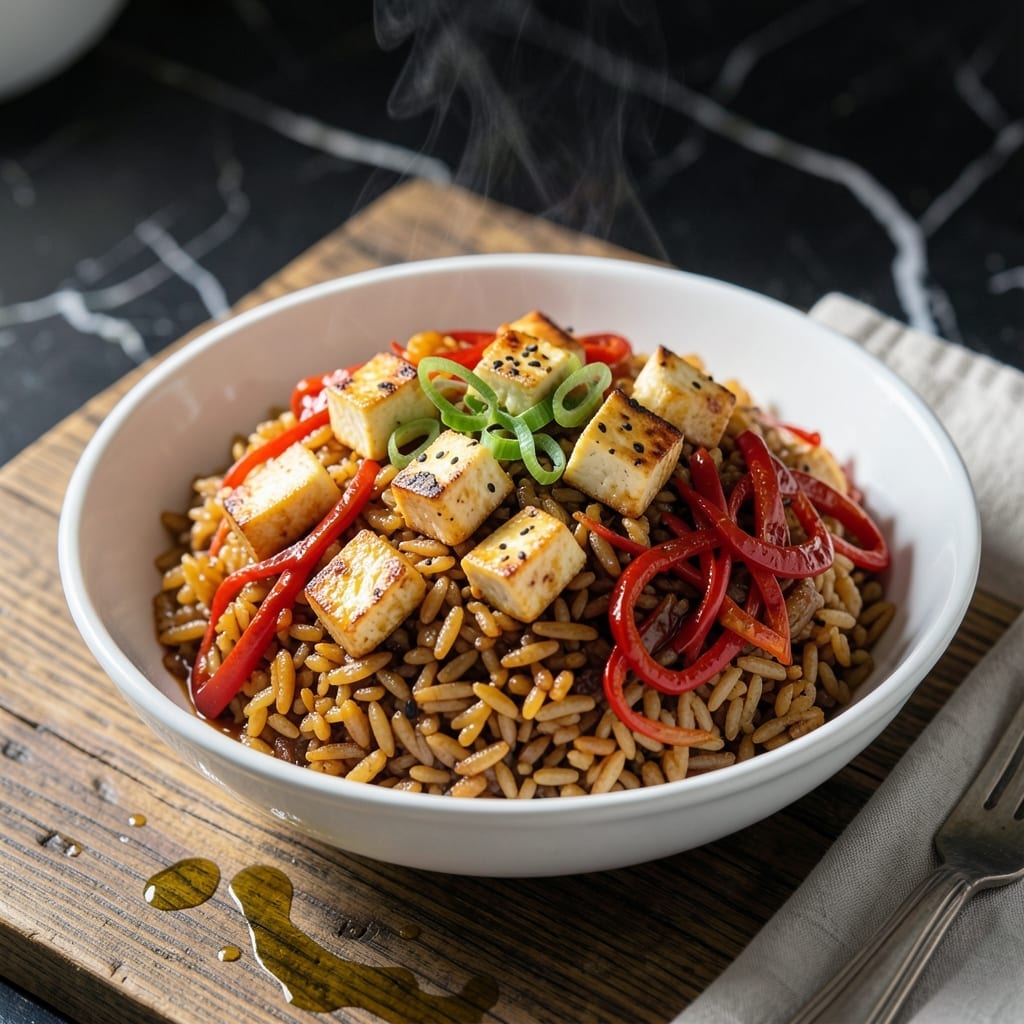
This vegan kimchi fried rice delivers bold, spicy flavor with the same depth as the traditional version. The secret lies in using well-fermented kimchi and a simple umami boost that replicates the richness typically added by animal products.
I developed this method after testing multiple plant-based alternatives, focusing on authentic taste without compromising texture. The dish comes together in 15 minutes, making it perfect for busy weeknights when you crave something exciting.
The rice develops a slight crispness in the pan while absorbing the kimchi’s tangy heat. Each bite offers a balance of spice, umami, and the signature funk that makes kimchi fried rice so addictive.
Serve it straight from the pan or top with avocado for extra creaminess. This version proves that vegan dishes can be just as satisfying as their traditional counterparts.
Ingredients for Kimchi Fried Rice Recipe Vegan
Cold rice, spicy kimchi, and a few pantry staples make this dish sing
| Ingredient | Amount | Notes |
|---|---|---|
| Cooked White Rice 🍚 | 4 cups | Day-old, cold for best texture |
| Vegan Kimchi 🥬 | 1 ½ cups | Well-fermented, chopped roughly |
| Firm Tofu 🧈 | 14 oz | Pressed, drained, and crumbled |
| Soy Sauce 🫒 | 3 tbsp | Low-sodium preferred for balance |
| Sesame Oil 🫒 | 1 tbsp | Toasted for depth of flavor |
| Gochujang 🌶️ | 1 tbsp | Korean chili paste for heat |
| Garlic Cloves 🧄 | 4 cloves | Minced finely for even distribution |
| Green Onions 🧅 | 4 whole | Thinly sliced, white and green parts |
| Vegetable Oil 🫒 | 2 tbsp | Neutral flavor for frying |
| Mushroom Soy Sauce 🍄 | 1 tbsp | Umami boost for vegan depth |
| Rice Vinegar 💧 | 1 tsp | Brightens the dish slightly |
| Sesame Seeds 🌿 | 1 tsp | Toasted, for garnish |
| Avocado 🥑 | 1 whole | Sliced, for serving |
The kimchi is non-negotiable here. Look for vegan kimchi (no fish sauce or shrimp paste) at H Mart or Whole Foods—brands like Mother-in-Law’s or Farmhouse Culture are reliable. Well-fermented means it’s tangy and bubbly (the good stuff, not the fresh kind). For the tofu, extra-firm holds up best. Press it between paper towels for 15 minutes to get out excess water—don’t skip this.
No gochujang? Sriracha mixed with a little miso paste gets you close. Mushroom soy sauce can be swapped for coconut aminos if needed. The tofu is flexible—tempeh or edamame work too (crumbled for similar texture). If you’re missing sesame oil, use a neutral oil and add a pinch of toasted sesame seeds at the end. Fresh ginger (1 tsp grated) adds a nice kick if you’ve got it.
Leftovers keep surprisingly well. Store in an airtight container for up to 4 days in the fridge. Reheat in a skillet with a splash of water to revive the texture. Freezes for up to 3 months if you’ve got extras (unlikely, it disappears fast).
Why You’ll Love This Recipe
- One Pan Wonder: I toss everything in a single skillet—rice, kimchi, tofu—and it’s done in 15 minutes.
- Umami Bomb: The combo of vegan kimchi and soy sauce hits that perfect salty, tangy, spicy note every time.
- Weeknight Savior: Honestly, it’s my go-to after a long day when I need something fast and filling.
- Budget Stretch: A block of tofu and leftover rice turn into a meal that feeds us for two nights.
Step-by-Step Instructions for Kimchi Fried Rice
This method delivers bold flavor and perfect texture with minimal effort.
Step 1: Prep the Tofu and Aromatics
Press the 14 oz firm tofu between paper towels for 10 minutes to remove excess moisture. Crumble it into small, uneven pieces—this creates more surface area for crisping. I like to let it sit while I prep the rest, as dry tofu fries better.
Mince the 4 cloves garlic cloves finely so they distribute evenly throughout the dish. Thinly slice the 4 whole green onions, keeping white and green parts separate for layered flavor. The whites cook with the aromatics, while the greens get added at the end for freshness.
Step 2: Crisp the Tofu in Neutral Oil
Heat 2 tbsp vegetable oil in a large skillet or wok over medium-high heat until it shimmers. Add the crumbled tofu in a single layer and let it cook undisturbed for 3-4 minutes until the bottoms turn golden brown.
Flip the tofu and cook another 3-4 minutes until crispy on all sides. The tofu should be firm to the touch and deeply browned in spots. Transfer it to a plate lined with paper towels to drain excess oil, but keep the skillet hot—you’ll use it again immediately.
Step 3: Sauté Aromatics and Kimchi
In the same skillet, add the minced garlic and the white parts of the green onions. Sauté for 30 seconds until fragrant—don’t let the garlic burn. Immediately add the 1.5 cups vegan kimchi, stirring to break it up and incorporate it into the oil.
Cook for 2-3 minutes until the kimchi softens slightly and the juices start to sizzle. This step builds the base flavor, so let the kimchi caramelize a bit at the edges. The aroma should be pungent and slightly sweet—this means it’s ready for the next ingredients.
Step 4: Combine Everything and Season
Add the 4 cups cooked white rice to the skillet, breaking up any clumps with your spatula. Stir-fry for 2 minutes to heat the rice through and let it absorb the flavors. The rice should start to look slightly dry and separate easily.
Return the crispy tofu to the skillet. Drizzle in the 3 tbsp soy sauce, 1 tbsp mushroom soy sauce, 1 tbsp gochujang, 1 tbsp sesame oil, and 1 tsp rice vinegar. Stir everything together for 2-3 minutes until the rice is evenly coated and heated through. Taste and adjust seasoning if needed.
Step 5: Finish and Serve
Remove the skillet from heat and stir in the green onion tops. The heat from the rice will slightly wilt them, but they’ll retain a bright, fresh bite. Sprinkle the 1 tsp sesame seeds over the top and give it one final toss.
Divide the fried rice among bowls and top each serving with slices of 1 whole avocado. The cool, creamy avocado balances the spicy, tangy heat of the dish. Serve immediately while hot—the texture is best fresh from the pan.
Pro Tips For Making Kimchi Fried Rice Recipe Vegan
- Use Day-Old Rice: Fresh rice turns mushy—spread leftover rice on a tray and refrigerate overnight to dry it out. I learned this the hard way after my first three batches came out like porridge.
- Press the Tofu: Skip this and your tofu will steam instead of crisp. Wrap firm tofu in a towel, weigh it down with a heavy pan for 15 minutes, then cube and pan-fry in sesame oil.
- High Heat First: Crank the heat to medium-high when frying the kimchi and tofu to get that caramelized edge. After burning two batches, I finally realized low heat just makes it soggy.
- Drain the Kimchi: Sounds weird, but it works: squeeze excess liquid from vegan kimchi before cooking to prevent a watery fried rice. Reserve the juice for soups or marinades—waste not, want not.
Wine and Beer Pairings for These Flavors
Crisp White Wines
For this dish, I love pairing with a dry Riesling from Washington State—its bright acidity cuts through the spice while complementing the kimchi’s tang. The Chateau Ste. Michelle version is widely available and consistently excellent. 🍷
Light Bodied Reds
A lightly chilled Pinot Noir from Oregon works surprisingly well. The Domaine Drouhin offers red fruit notes that harmonize with the gochujang without overpowering the dish. Serve at 60°F for best results.
Asian Beer Classics
The crisp, clean finish of Asahi Super Dry or Sapporo makes them perfect companions. Their light body and subtle sweetness balance the heat beautifully. I always keep a few bottles on hand for exactly this purpose. 🍺
Craft Beer Options
A Belgian witbier like Hoegaarden brings citrus and coriander notes that play well with the fermented flavors. For local options, look for a session IPA with low bitterness—Founders All Day IPA is a great choice.
Non-Alcoholic Pairings
For a non-alcoholic option, try ginger beer—the spice mirrors the dish’s heat while the sweetness cools the palate. Fever-Tree makes an excellent version. Sparkling water with a lime wedge also works in a pinch.
Nutrition Facts
Frequently Asked Questions
Can I use fresh kimchi instead of fermented?
Fresh kimchi lacks the tangy depth needed. Always use well-fermented kimchi, which develops its signature sour funk after at least 1-2 weeks in the fridge.
What can replace gochujang for less heat?
For milder spice, swap 1 tbsp gochujang with 1 tsp miso paste plus 1/2 tsp sriracha. This reduces heat while keeping umami.
Why is cold rice better for fried rice?
Cold rice has less moisture, so it fries up fluffier instead of mushy. Day-old rice from the fridge works best—never use freshly cooked.
How do I make this gluten-free?
Use tamari instead of soy sauce and check that your kimchi and gochujang are certified gluten-free. Most brands clearly label this.

- Mujadara Rice and Lentils Recipe: Earthy Spiced Lentils With Caramelized Onions - November 1, 2026
- Naija Fried Rice Recipe: Street-Style Spice With Veggie Crunch - November 1, 2026
- Mushy Rice Recipe: Fluffy Grains Transformed in Minutes - November 1, 2026