
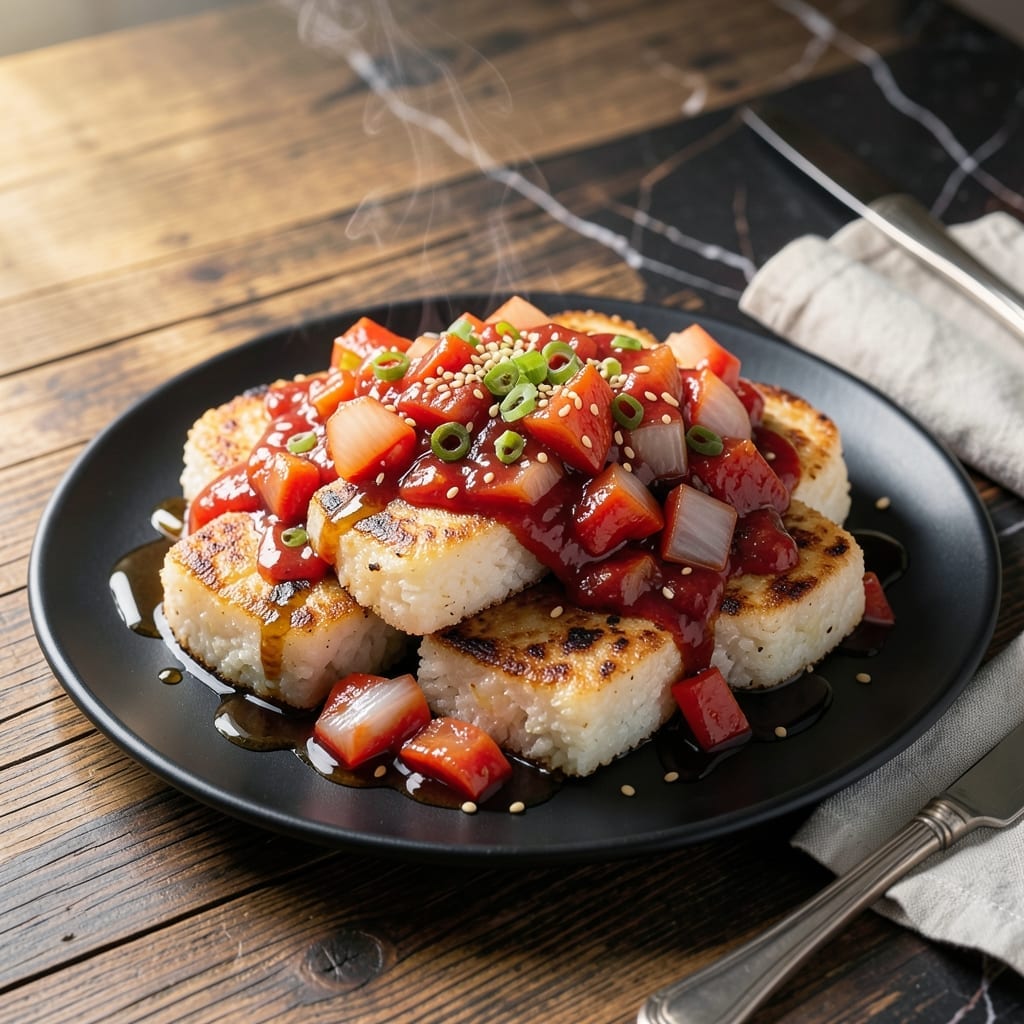
This dish brings authentic Korean street food flavors to your kitchen with minimal effort. The combination of chewy rice cakes, spicy kimchi, and savory sauce creates a balance that’s both comforting and exciting.
I developed this method after testing multiple approaches to achieve the perfect texture—soft yet slightly resistant rice cakes coated in a rich, spicy-savory sauce. The key is using Korean rice cakes (tteok) and blooming the gochujang in oil for depth.
What results is a dish that’s sticky, slightly sweet, and packed with umami from the kimchi and fish sauce. The rice cakes absorb the sauce beautifully while maintaining their signature chew.
Serve it hot with a fried egg on top for the full street food experience. Ready in 20 minutes.
Ingredients for Kimchi Rice Cake
Fresh rice cakes, spicy kimchi, and bold flavors come together for authentic Korean street food at home.
| Ingredient | Amount | Notes |
|---|---|---|
| Korean Rice Cakes 🍚 | 1 lb | Fresh or frozen tteok, sliced |
| Kimchi 🥬 | 2 cups | Well-fermented, chopped with juice |
| Gochujang 🌶️ | 3 tbsp | Korean red pepper paste |
| Soy Sauce 🫒 | 2 tbsp | Low-sodium preferred |
| Brown Sugar 🍚 | 1 tbsp | Light or dark variety |
| Sesame Oil 🫒 | 1 tbsp | Toasted for depth |
| Vegetable Oil 🫒 | 2 tbsp | Neutral flavor for frying |
| Garlic Cloves 🧄 | 4 cloves | Minced for sauce |
| Green Onions 🧅 | 4 whole | Thinly sliced, green parts only |
| Fish Sauce 🐟 | 1 tbsp | Vegan fish sauce for strict vegetarian |
| Sesame Seeds 🌾 | 1 tsp | Toasted for garnish |
| Red Pepper Flakes 🌶️ | ½ tsp | Korean gochugaru preferred |
| Large Eggs 🥚 | 4 whole | Optional for topping |
The rice cakes are non-negotiable—look for fresh tteok at Korean markets (like H Mart or local Asian grocers). Frozen works too, just thaw before cooking. For kimchi, older, well-fermented has the best sour punch. I grab mine from Whole Foods or make my own, but store-bought is fine if it’s in the refrigerated section (shelf-stable lacks the tang).
No gochujang? Sriracha plus miso paste gets you close but won’t be the same. For a vegetarian version, swap fish sauce for soy sauce or vegan fish sauce. The brown sugar can be honey or maple syrup, but sugar balances the heat best. Green onions are flexible—substitute chives or scallions if that’s what you’ve got. The sesame oil is key though—don’t skip it.
Leftovers keep 3-4 days in the fridge. Reheat with a splash of water to loosen the sauce. The rice cakes firm up as they cool, so microwave or stovetop works best. Freezing isn’t ideal—texture suffers. Make the sauce ahead though; it keeps 1 week and tastes even better.
Why You’ll Love This Recipe
- 20-Minute Meal: I can have this on the table faster than it takes to decide what to order in.
- Flavor Bomb: The gochujang and tangy kimchi create that sweet-spicy-umami combo I crave every time.
- Feeds Everyone: Honestly, it’s my go-to for picky eaters and spice lovers alike—just adjust the heat.
- Budget Stretcher: One pack of rice cakes and leftover kimchi turns into a filling meal that costs pennies per serving.
Step-by-Step Instructions for Kimchi Rice Cake
Here’s the method. Straightforward, tested, works every time.
Step 1: Prep the Rice Cakes and Make the Sauce
If using frozen Korean rice cakes, soak them in warm water for 15-20 minutes until soft and pliable. Drain well and pat dry with a clean towel—you want them dry enough to absorb the sauce but not so dry they become tough.
In a bowl, whisk together the 3 tbsp Gochujang, 2 tbsp Soy Sauce, 1 tbsp Brown Sugar, 1 tbsp Fish Sauce, and 0.5 tsp Red Pepper Flakes until smooth. This sauce should be thick, glossy, and deeply red. Set it aside while you cook the rice cakes.
Step 2: Sauté Aromatics and Kimchi
Heat the 2 tbsp Vegetable Oil in a large skillet or wok over medium-high heat. Add the 4 cloves Garlic Cloves (minced) and sauté for 30 seconds until fragrant but not browned—garlic burns easily, so keep it moving.
Add the 2 cups Kimchi (with juice) and cook for 3-4 minutes until the edges start to caramelize and the liquid has mostly evaporated. The kimchi should soften and deepen in color, filling your kitchen with that unmistakable fermented aroma.
Step 3: Cook the Rice Cakes Until Chewy and Glazed
Add the drained Korean rice cakes to the skillet with the kimchi. Pour the prepared sauce over everything and stir well to coat evenly. Cook for 5-7 minutes, stirring occasionally, until the rice cakes are tender and the sauce has thickened into a glossy glaze that clings to each piece.
Drizzle the 1 tbsp Sesame Oil over the top and add 4 whole Green Onions (thinly sliced). Stir to combine—the sesame oil adds a nutty depth, while the green onions bring a fresh, bright contrast to the rich, spicy sauce.
Step 4: Add the Eggs and Finish
Make four small wells in the rice cake mixture. Crack the 4 whole Large Eggs directly into these wells. Cover the skillet and cook for 3-4 minutes until the egg whites are set but the yolks remain runny. The steam from the skillet will gently cook the tops of the eggs without overcooking the yolks.
Once the eggs are done, sprinkle the 1 tsp Sesame Seeds over the top. The sesame seeds add a subtle crunch and visual appeal. Let this sit off the heat for 1-2 minutes to allow the flavors to meld together before serving.
Pro Tips For Making Kimchi Rice Cake
- Soak the Rice Cakes: If using dried Korean rice cakes, soak them in warm water for 15-20 minutes until soft—skipping this leaves them chewy and undercooked. I learned this the hard way after ruining two batches.
- Sear the Kimchi First: Cook the kimchi for 2-3 minutes in a hot pan before adding anything else. This deepens the flavor and removes excess moisture that can make your dish watery.
- Balance the Sauce: Mix 1 tablespoon gochujang, 1 teaspoon soy sauce, and 1 teaspoon brown sugar per cup of kimchi—taste as you go. Sounds simple, but I was skeptical until I tried it and the flavors finally clicked.
- Skip the Overcrowding: Cook the rice cakes in a single layer if possible, or stir frequently. After burning a batch from stacking everything, I finally figured out that even heating is non-negotiable.
Serving Suggestions for This Dish
Traditional Toppings
For the classic Korean street food experience, top each serving with a fried egg—the runny yolk mixes perfectly with the spicy sauce. I always crack the eggs directly into the skillet with the rice cakes during the final 3-4 minutes of cooking.
Fresh Garnishes
Sprinkle with toasted sesame seeds and thinly sliced green onions just before serving. The nutty crunch and fresh bite complement the dish beautifully. I keep a small bowl of extra gochugaru on the table for heat lovers. 🌶️
Side Pairings
Serve with quick-pickled cucumbers to cut through the richness—the cool crunch balances the heat. I make mine with rice vinegar, a pinch of sugar, and salt, sliced thin and chilled for 30 minutes before serving.
Protein Additions
For extra heartiness, add pan-seared spam or bulgogi beef. The salty-sweet spam is traditional in Korea, while bulgogi adds a luxurious touch. I cube the spam and sear until crispy edges form.
Beverage Pairings
An ice-cold Korean lager like Hite or OB cuts through the spice perfectly. For non-alcoholic options, barley tea or soy milk are traditional choices that complement the flavors. 🍺
Serving Style
Present in a stone bowl (dolsot) for sizzling table appeal, or use a cast iron skillet for family-style serving. The dish stays hot longer in these vessels, keeping the rice cakes tender and the sauce bubbling.
Nutrition Facts
Frequently Asked Questions
Can I use fresh kimchi or does it need to be fermented?
Well-fermented kimchi works best for maximum tangy flavor. Fresh kimchi lacks the sour depth that balances the dish. If using fresh, add 1 tsp rice vinegar to mimic the fermentation taste.
How do I keep rice cakes from sticking to the pan?
Use a non-stick skillet and sufficient vegetable oil. Stir frequently during cooking and avoid high heat which causes sticking. Let the sauce develop first before adding rice cakes.
Can I make this without gochujang?
Yes, but the flavor will differ. Substitute 2 tbsp sriracha + 1 tbsp miso paste for a similar spicy-savory profile. The dish won’t taste identical but still delivers heat and umami.
What’s the best way to reheat leftovers?
Add a splash of water and reheat on the stovetop over medium heat for 3-4 minutes. Microwave works in 1-minute bursts, stirring between. This prevents drying out.

- Jollof Rice Sauce Recipe: West African Tomato and Spice Infusion - September 25, 2026
- Japanese Rice Soup Recipe: Umami-Rich Comfort in a Bowl - September 25, 2026
- Homemade Cream Of Rice Recipe: Silk-Smooth Breakfast in Minutes - September 25, 2026