
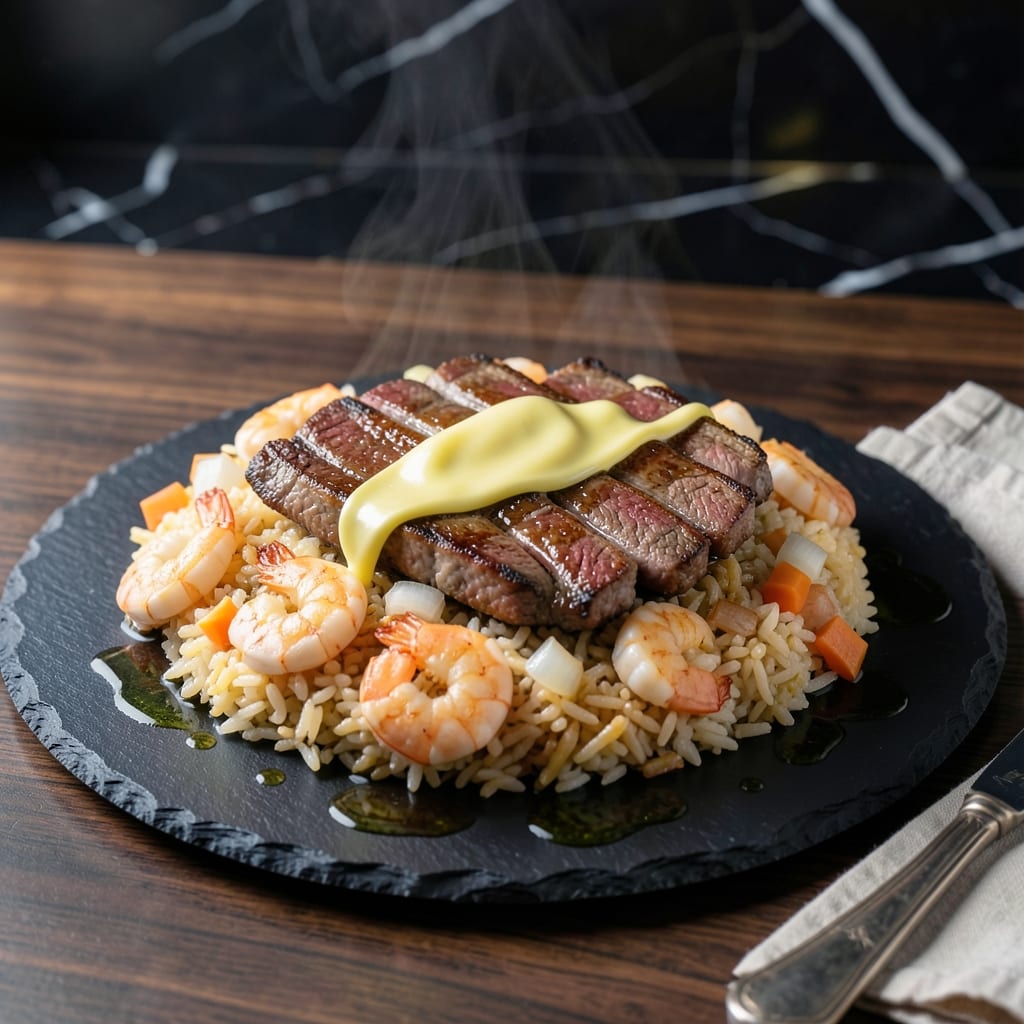
This teppanyaki-style fried rice captures the essence of a Kobe steakhouse experience right in your kitchen. The dish brings together tender proteins, crisp vegetables, and an umami-rich egg coating that ties everything together.
I’ve refined this method to replicate the high-heat cooking of a steakhouse grill, using simple ingredients like soy sauce and sesame oil to build authentic flavor. The key is cooking in stages to ensure each component shines.
What sets this apart is the egg coating, which creates a silky texture and layers of savory depth. The rice stays light and fluffy, never greasy, while the proteins and veggies add satisfying bites.
The result is a dish that’s as impressive as it is satisfying, ready to serve straight from the pan.
Ingredients for Kobe Japanese Steakhouse Fried Rice
Day-old rice, fresh proteins, and bold seasonings create this steakhouse classic at home.
| Ingredient | Amount | Notes |
|---|---|---|
| Jasmine Rice 🍚 | 3 cups | Day-old, cooked and chilled |
| Large Eggs 🥚 | 4 whole | Lightly beaten for coating |
| Ribeye Steak 🥩 | 1 lb | Thinly sliced, teppanyaki-style |
| Shrimp 🍤 | ½ lb | Peeled, deveined, tail-off |
| White Onion 🧅 | 1 whole | Small dice, uniform pieces |
| Carrots 🥕 | 2 whole | Small dice, blanched briefly |
| Zucchini 🥒 | 1 whole | Small dice, seeds removed |
| Green Onions 🌱 | 4 whole | Thinly sliced, green parts only |
| Soy Sauce 🥢 | ¼ cup | Low-sodium preferred for balance |
| Sesame Oil 🫒 | 2 tbsp | Toasted, for authentic aroma |
| Garlic Cloves 🧄 | 3 cloves | Minced finely for even distribution |
| Fresh Ginger 🌿 | 1 tbsp | Grated, for zing and depth |
| Butter 🧈 | 3 tbsp | Unsalted, for cooking proteins |
| Salt 🧂 | ½ tsp | Kosher flakes for seasoning |
| Black Pepper 🌶️ | ½ tsp | Freshly ground for finish |
The ribeye is non-negotiable for authenticity—USDA Prime or Choice from a trusted butcher ensures tender, flavorful bites. Whole Foods or a local Asian market will have the right cut (look for good marbling). The shrimp should be wild-caught if possible, but frozen from Trader Joe’s works in a pinch. For rice, jasmine is ideal, but any long-grain will do as long as it’s thoroughly chilled before cooking.
No ribeye? Flank steak or sirloin can substitute, but slice thinly against the grain. Shrimp haters can use diced chicken breast instead. Tamari instead of soy sauce for gluten-free needs. Missing sesame oil? A dash of toasted peanut oil adds depth. The ginger and garlic are essential—fresh only, no powdered shortcuts here.
Cooked rice keeps in the fridge for 3 days—perfect for meal prep. The proteins and veggies can be prepped ahead too. Leftovers reheat well in a skillet with a splash of soy sauce, but honestly this is best eaten fresh off the heat. Stores in the fridge for up to 4 days.
Why You’ll Love This Recipe
- I’ll be real: it tastes even better the next day, and the portions stretch for lunch tomorrow.
- One Pan Wonder: I toss the rice, shrimp, and ribeye in the same wok—minimal cleanup, maximum flavor.
- Umami Bomb: The ribeye and shrimp soak up the soy-garlic sauce, and the jasmine rice? Pure comfort in every bite.
- Weeknight Hero: Honestly, it’s my go-to for busy evenings when I need something fast but still restaurant-worthy.
Step-by-Step Instructions for Kobe Japanese Steakhouse Fried Rice
Master the teppanyaki technique with this precise method for restaurant-quality results at home.
Step 1: Prepare the Protein and Aromatics
Heat 1 tbsp Butter in a wok or large skillet over high heat until it begins to foam but not brown. Add the 1 lb Ribeye Steak slices in a single layer, ensuring they don’t overlap. Sear undisturbed for 1-2 minutes until browned on the edges but still slightly pink inside.
Remove the ribeye and set aside. In the same pan, add another 1 tbsp Butter and cook the 0.5 lb Shrimp for 1-2 minutes per side until opaque and pink. Transfer to the plate with the steak. The residual heat will finish cooking both proteins perfectly.
Step 2: Sauté the Vegetables
Add the remaining 1 tbsp Butter to the pan along with 2 tbsp Sesame Oil. When shimmering, add the 1 whole White Onion, 2 whole Carrots, and 1 whole Zucchini. Stir-fry for 4-5 minutes until the vegetables soften but retain a slight crispness—edges should be golden.
Push the vegetables to one side of the pan and add the 3 cloves Garlic Cloves and 1 tbsp Fresh Ginger to the cleared space. Cook for 30 seconds until fragrant, then mix everything together. This layering builds depth of flavor in each bite.
Step 3: Combine Rice and Proteins
Add the 3 cups Jasmine Rice to the pan, breaking up any clumps with your spatula. The rice should sizzle on contact. Drizzle the 0.25 cup Soy Sauce evenly over the rice and stir to coat every grain. Cook for 2-3 minutes until the rice is heated through and begins to crisp slightly in spots.
Return the cooked ribeye steak and shrimp to the pan, stirring to distribute them evenly. The proteins should warm through without overcooking—they should glisten but not dry out. This is where the teppanyaki magic happens as flavors meld together.
Step 4: Finish with Egg Coating
Push all ingredients to one side of the pan and pour the 4 whole Large Eggs into the cleared space. Scramble quickly with your spatula until just set but still slightly runny. Immediately fold the eggs into the rice mixture, stirring vigorously to create a silky coating over every grain.
Season with 0.5 tsp Salt and 0.5 tsp Black Pepper, then add the 4 whole Green Onions. Toss everything together for 1 final minute until the green onions wilt slightly and the eggs are fully cooked. The finished dish should have distinct pieces of protein and vegetables with a glossy, umami-rich egg coating.
Pro Tips For Making Kobe Japanese Steakhouse Fried Rice
- Chill the Rice: Use day-old jasmine rice straight from the fridge—fresh rice turns to mush. I learned this the hard way after my first three attempts ended up gummy.
- Prep Shrimp First: Pat the shrimp completely dry before cooking, or they’ll steam instead of sear. About 2 tablespoons of oil in a screaming-hot pan guarantees that perfect crust.
- Beat Eggs Separately: Whisk the eggs with a pinch of salt in a bowl first, then pour into the rice—this distributes them evenly instead of ending up with sad, rubbery clumps.
- Slice Steak Thin: Freeze the ribeye for 20 minutes to firm it up, then slice against the grain into ¼-inch strips. This makes it cook in seconds and stay tender—no chewy bites.
Perfect Pairings for kobe japanese steakhouse fried rice
Beverage Pairings
An ice-cold Asahi Super Dry or Sapporo cuts through the richness of this dish beautifully. The crisp, clean finish of Japanese lagers complements the umami flavors without competing. I always keep a six-pack chilled for steakhouse nights. 🍺
Wine Options
A light, slightly sweet Riesling from Washington state or Germany balances the savory notes. For red lovers, try a Pinot Noir from Oregon—its bright acidity and earthy tones work surprisingly well. Avoid heavy, tannic reds that will overpower the dish.
Side Dish Ideas
A simple miso soup with tofu and scallions starts the meal perfectly. I use Kikkoman miso paste and silken tofu for authenticity. Alternatively, edamame with sea salt provides a light, protein-packed accompaniment.
Condiment Pairings
Set out small bowls of sriracha and Yum Yum sauce for dipping. The heat from sriracha contrasts nicely with the rich fried rice, while Yum Yum sauce adds a creamy, tangy element. I make mine with mayonnaise, ketchup, and a touch of sugar.
Dessert Follow-Up
End with green tea ice cream from Matcha Matcha or Trader Joe’s for a refreshing finish. The earthy matcha flavor cleanses your palate after the savory meal. For something warm, mochi with red bean paste hits the spot. 💛
Nutrition Facts
Frequently Asked Questions
Can I use fresh rice instead of day-old?
Fresh rice is too moist and will turn mushy. Always use day-old, chilled rice for the right texture. Spread hot rice on a tray to cool quickly if needed.
What’s the best pan for this?
A wok or large cast-iron skillet works best for high heat distribution. Avoid nonstick—it can’t reach the necessary searing temperatures.
How do I prevent soggy fried rice?
Cook in small batches and keep the heat at maximum. Overcrowding steams the rice instead of frying it. Let each ingredient sizzle before adding the next.
Can I make this vegetarian?
Swap proteins for tofu or extra veggies like bell peppers. Use vegetable oil instead of butter and ensure soy sauce is vegan.

- Mujadara Rice and Lentils Recipe: Earthy Spiced Lentils With Caramelized Onions - November 1, 2026
- Naija Fried Rice Recipe: Street-Style Spice With Veggie Crunch - November 1, 2026
- Mushy Rice Recipe: Fluffy Grains Transformed in Minutes - November 1, 2026