
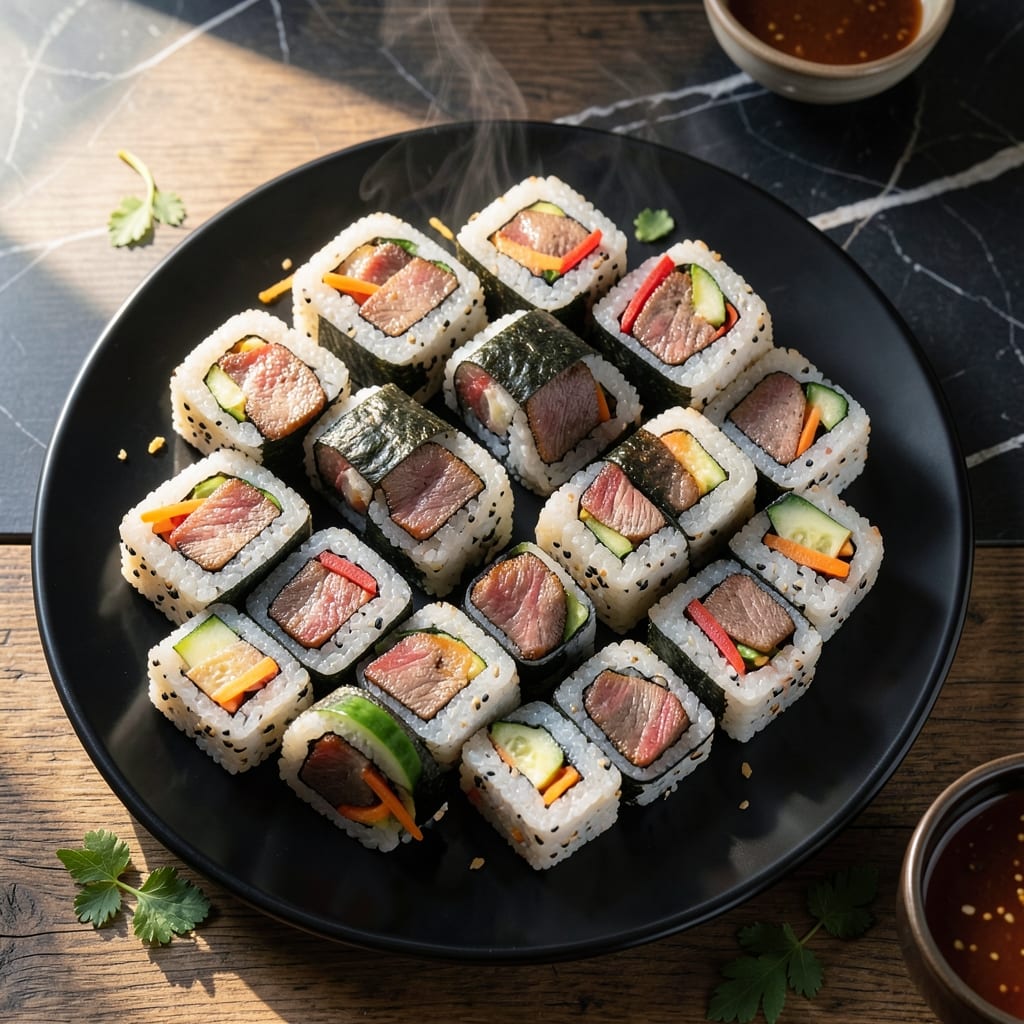
This Korean rice roll recipe transforms simple ingredients into an elegant, flavorful dish perfect for any gathering. The combination of seasoned rice, crisp vegetables, and tender beef creates a satisfying bite in every piece.
I’ve refined this method to ensure the nori stays crisp while the fillings remain fresh and vibrant. The key is balancing the rice seasoning and rolling technique for a perfectly tight yet tender roll every time.
These rolls are as visually impressive as they are delicious, with colorful fillings peeking through the dark nori. They hold their shape beautifully, making them ideal for parties or meal prep.
Serve with a side of soy dipping sauce for an extra layer of umami. Here’s how to make them at home.
Ingredients for Korean Rice Roll
Transform everyday ingredients into elegant, nori-wrapped rolls with vibrant fillings and seasoned rice.
| Ingredient | Amount | Notes |
|---|---|---|
| Sushi Rice 🍚 | 2 cups | Short-grain, rinsed until clear |
| Nori Sheets 🌿 | 4 sheets | Full-size, toasted preferred |
| Ribeye Steak 🥩 | ¾ lb | Thinly sliced, against grain |
| Carrots 🥕 | 1 whole | Julienned, blanched 30 seconds |
| English Cucumber 🥒 | 1 whole | Seeded, cut into matchsticks |
| Red Bell Pepper 🌶️ | 1 whole | Thinly sliced, seeds removed |
| Green Onions 🧅 | 4 whole | Thinly sliced on diagonal |
| Rice Vinegar 🍶 | 2 tbsp | Seasoned variety preferred |
| Sugar 🍬 | 1 tbsp | Granulated, for rice seasoning |
| Salt 🧂 | 1 tsp | Fine sea salt preferred |
| Sesame Oil 🫒 | 1 tbsp | Toasted, for finishing rice |
| Soy Sauce 🥫 | 3 tbsp | Low-sodium for dipping sauce |
| Sesame Seeds 🌰 | 1 tbsp | Toasted, for garnish |
| Vegetable Oil 🫒 | 1 tbsp | Neutral flavor, for cooking beef |
| Garlic Cloves 🧄 | 2 cloves | Minced, for beef marinade |
The sushi rice quality is non-negotiable for authentic texture. Koshihikari or Nishiki brands deliver the ideal sticky consistency. Nori sheets should be toasted and crisp—avoid any with tears or moisture. For the beef, ribeye offers the best marbling, but sirloin works in a pinch. Source these at Asian specialty markets for the widest selection and freshest products.
Substitute ribeye with flank steak or bulgogi-marinated chicken if preferred. No nori? Soy paper provides a similar wrap with milder flavor. For rice seasoning, apple cider vinegar at half the quantity can replace rice vinegar. Vegetable substitutions are flexible—try zucchini or avocado (add lemon juice to prevent browning). Mirin instead of sugar adds depth to the rice dressing.
Store unrolled components separately in the fridge for 2-3 days. Assembled rolls are best consumed immediately but hold for 24 hours wrapped tightly in plastic. Freezing is not recommended as it compromises the nori texture. Keep sesame seeds in the freezer to prevent rancidity.
Why You’ll Love This Recipe
- No Fuss Rolling: I just spread the sushi rice on nori, add my fillings, and roll—no fancy tools needed, honest.
- Steakhouse Surprise: The ribeye slices with the rice and veggies? Ridiculously good in every bite.
- Packable Lunch: I make a batch on Sunday and grab one daily—stays fresh, no soggy mess.
- Budget Stretch: A little ribeye goes a long way here, and the rice and veggies keep it affordable.
Step-by-Step Instructions for Korean Rice Rolls
Master the technique of assembling and rolling these flavorful, textured rolls with precision and ease.
Step 1: Prepare and Season the Sushi Rice
Rinse the 2 cups sushi rice under cold water until the water runs clear, which removes excess starch and prevents a gummy texture. Cook according to package instructions, then transfer to a large bowl.
In a small saucepan, gently warm the 2 tbsp rice vinegar, 1 tbsp sugar, and 1 tsp salt until dissolved. Pour this mixture over the hot rice and fold gently with a rice paddle or spatula to distribute evenly. Finish by drizzling the 1 tbsp sesame oil over the rice and folding once more. The rice should be glossy and slightly sticky, perfect for rolling.
Step 2: Cook the Ribeye Steak
Slice the 0.75 lb ribeye steak thinly against the grain into strips no thicker than ¼ inch. This ensures tenderness. In a bowl, toss the beef with 1 tbsp soy sauce and the 2 cloves minced garlic cloves. Let it marinate for 10 minutes while you prep the remaining ingredients.
Heat 1 tbsp vegetable oil in a skillet over high heat until shimmering. Add the marinated beef in a single layer and sear for 1-2 minutes per side until browned and cooked through. Transfer to a plate to cool.
Step 3: Prepare the Vegetable Fillings
Julienne the 1 whole carrots and blanch in boiling water for 30 seconds, then shock in ice water to preserve color and crunch. Seed and cut the 1 whole English cucumber into matchsticks. Thinly slice the 1 whole red bell pepper into strips, and slice the 4 whole green onions diagonally for visual appeal.
Pat all vegetables dry with a clean towel to prevent excess moisture from making the nori sheets soggy. Arrange the fillings in separate piles on a cutting board for easy access during assembly.
Step 4: Assemble and Roll
Place a nori sheet shiny-side down on a bamboo sushi mat. With wet hands, spread a thin, even layer of seasoned rice over the nori, leaving a 1-inch border at the top. Distribute a portion of the beef, carrots, cucumber, red bell pepper, and green onions horizontally across the rice, about 1 inch from the bottom edge.
Lift the edge of the bamboo mat closest to you and roll tightly over the fillings, pressing gently as you go. Use the mat to shape the roll into a firm cylinder. Moisten the exposed nori border with a bit of water to seal. Repeat with the remaining 4 sheets nori sheets and fillings.
Step 5: Slice and Serve
Using a sharp, damp knife, trim the ends of each roll for a clean presentation. Slice each roll into 6-8 pieces, wiping the knife clean between cuts to prevent sticking. Arrange the pieces on a platter.
Mix the remaining 2 tbsp soy sauce with the 1 tbsp sesame seeds for a dipping sauce. Serve the rolls immediately with the sauce for a fresh, vibrant dish with balanced textures and flavors.
Pro Tips For Making Korean Rice Roll
- Chill the Rice: I learned this the hard way—use sushi rice that’s been cooled to room temperature, or your rolls will tear when you try to slice them. About 30 minutes after cooking does the trick.
- Slice Steak Thin: Freeze the ribeye for 15-20 minutes before slicing to get paper-thin cuts that cook fast and stay tender in the rolls. Sounds weird, but it works.
- Dry the Nori: Resist the urge to use nori straight from the package—give it a quick toast over low heat for 10 seconds per side to crisp it up and prevent soggy rolls.
- Salt the Cucumber: Sprinkle the cucumber sticks with a pinch of salt and let them sit for 5 minutes before rolling, then pat dry. This pulls out excess water that would make your kimbap mushy.
Common Mistakes When Making Great korean rice roll
Overworking the Rice
Stirring the rice too vigorously after adding the seasoning can break the grains, making them mushy. I gently fold the mixture with a rice paddle or spatula just until combined. This preserves the sticky yet distinct texture essential for holding the roll together. 💡
Overfilling the Rolls
Using too much filling causes the nori to tear or the roll to burst. Stick to a thin, even layer of rice and a modest amount of fillings—about 1 inch from the bottom edge. This ensures a tight, manageable roll that stays intact when sliced.
Wet Nori Sheets
Even a little moisture on the nori can make it soggy and difficult to work with. I keep my hands slightly damp for the rice but pat the nori dry if it feels humid. Store unused sheets in an airtight container with a silica packet to maintain crispness.
Dull Knife for Slicing
A sharp knife is crucial for clean cuts. I use a damp chef’s knife and wipe it between slices to prevent dragging the rice. Slice in one smooth motion rather than sawing, which can squish the roll and ruin its shape. ⚡
Skipping the Marinade
Marinating the beef for at least 10 minutes enhances its flavor and tenderness. Without this step, the meat can taste bland or dry. I toss the thinly sliced ribeye with soy sauce and garlic right after slicing to maximize absorption.
Improper Rice Temperature
Using rice that’s too hot or too cold makes it harder to handle. I let the cooked rice cool slightly—just warm to the touch—before seasoning and rolling. This prevents the nori from becoming limp while keeping the rice sticky enough to adhere.
Nutrition Facts
Frequently Asked Questions
What can I use if I don’t have a bamboo mat?
You can use plastic wrap or a clean kitchen towel as a substitute. Lay it flat and roll tightly, pressing gently to shape the roll. The texture won’t be as smooth, but it’ll still work.
How do I keep the rolls from falling apart?
Use slightly warm rice and don’t overfill. Leave a 1-inch border at the top of the nori and seal with a bit of water. Slice with a sharp, damp knife for clean cuts.
Can I make these ahead of time?
Assemble and wrap tightly in plastic. They’ll keep in the fridge for 24 hours, but the nori may soften slightly. For best texture, serve fresh.
What other proteins can I use?
Try bulgogi-marinated chicken, shrimp, or tofu for variation. Thinly slice or cook proteins fully before rolling to ensure even texture and flavor.

- Mujadara Rice and Lentils Recipe: Earthy Spiced Lentils With Caramelized Onions - November 1, 2026
- Naija Fried Rice Recipe: Street-Style Spice With Veggie Crunch - November 1, 2026
- Mushy Rice Recipe: Fluffy Grains Transformed in Minutes - November 1, 2026