
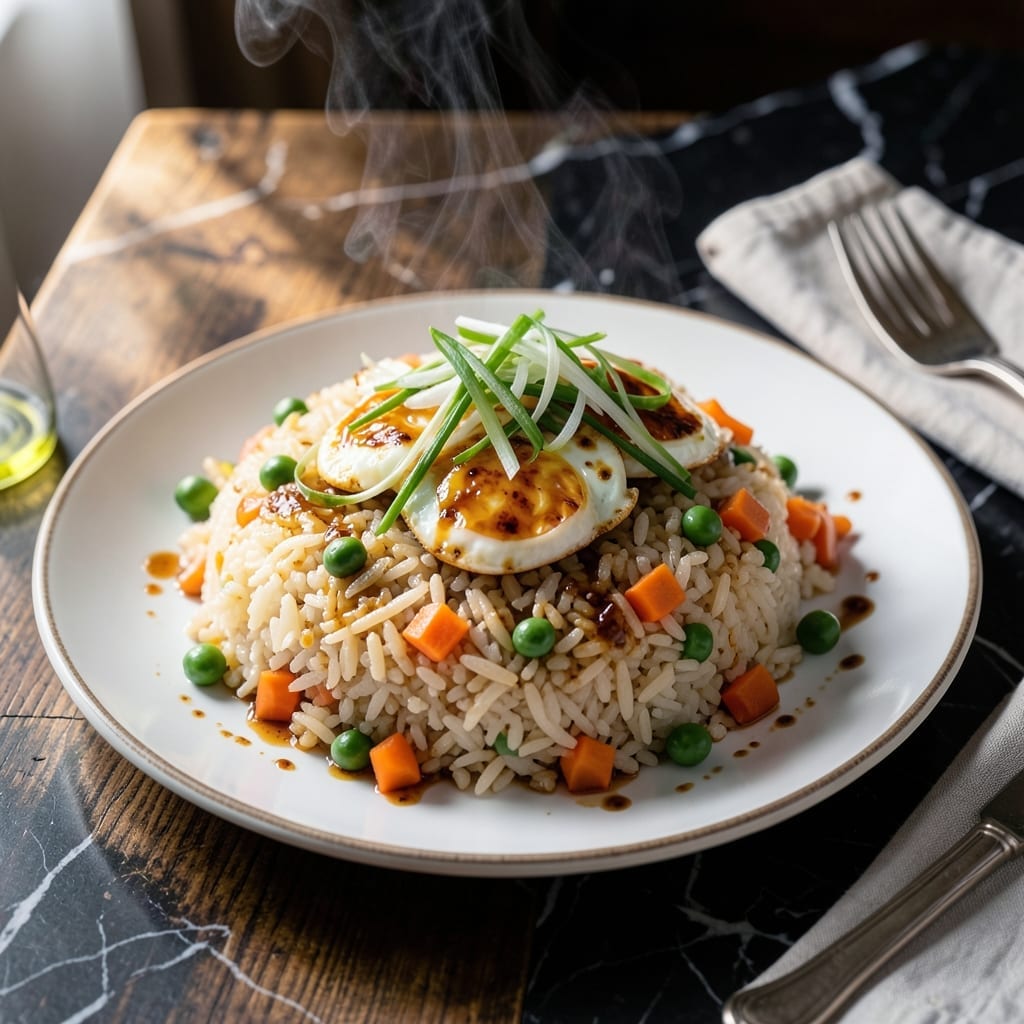
This Kyoto-style fried rice brings imperial elegance to your kitchen with minimal effort. The dish combines traditional Japanese techniques with accessible ingredients to create something extraordinary.
Each grain of rice is coated in a delicate balance of savory and slightly sweet flavors, with subtle umami notes that define authentic Kyoto cuisine. The preparation is straightforward but precise, ensuring perfect texture and taste.
What emerges is a dish that’s both comforting and refined, with tender rice, crisp vegetables, and just the right amount of seasoning. It’s a testament to how simple ingredients can create sophisticated results.
Ready in under 30 minutes, this recipe proves that restaurant-quality fried rice is achievable at home.
Ingredients for Kyoto Palace Fried Rice
Accessible ingredients transform into an elegant dish with imperial Kyoto roots and refined flavor.
| Ingredient | Amount | Notes |
|---|---|---|
| Jasmine Rice 🍚 | 2 cups | Day-old, cooked and cooled |
| Carrots 🥕 | 1 whole | Medium, finely diced |
| Green Onions 🧅 | 4 whole | Thinly sliced, whites and greens separated |
| Frozen Peas 🌱 | ¾ cup | Thawed under warm water |
| Eggs 🥚 | 3 whole | Large, lightly beaten |
| Soy Sauce 🫒 | 2 tbsp | Low-sodium preferred |
| Saké 🍶 | 1 tbsp | Dry cooking variety |
| Mirin 🍯 | 1 tbsp | Sweet rice wine |
| Sugar 🧂 | 1 tsp | Granulated white |
| Vegetable Oil 🫒 | 2 tbsp | Neutral flavor, divided |
| Garlic Cloves 🧄 | 3 cloves | Minced finely |
| Fresh Ginger 🌿 | 1 tbsp | Peeled and grated |
| Sesame Oil 🫒 | 1 tsp | Toasted, for finishing |
| Nori Sheets 🍙 | 1 sheet | Crushed into flakes for garnish |
| White Pepper 🌶️ | ¼ tsp | Ground, for subtle heat |
The rice is crucial here. Jasmine rice provides the authentic texture and fragrance, and it must be day-old and fully cooled to prevent mushiness. Koshihikari rice is an excellent substitute if available. Look for sushi-grade nori sheets at Asian markets or specialty grocers for the best quality and freshness. The mirin and saké should be labeled as cooking varieties to avoid excessive sweetness or alcohol content.
Short on time? Pre-diced mirepoix from the grocery store works in a pinch, though fresh carrots are ideal. No saké? Dry sherry at half the amount can stand in. For a vegetarian version, tofu or edamame can replace the eggs. The soy sauce can be tamari for gluten-free, but adjust salt levels accordingly. Fresh ginger is non-negotiable though—dried lacks the bright, zesty punch.
Cooked rice keeps in the fridge for 3-4 days, but dry it slightly before frying. The dish reheats well—store in an airtight container for up to 3 days. Nori flakes lose crispness quickly, so add them fresh when serving. The sesame oil should be added last to preserve its aromatic qualities.
Why You’ll Love This Recipe
- 20-Minute Meal: I can have this from fridge to plate faster than delivery arrives. Honestly, the frozen peas and pre-cooked jasmine rice make it stupid simple.
- Umami Bomb: That first bite with the caramelized carrots and green onions hitting the wok-tossed eggs? Ridiculously good.
- Lunchbox Hero: My kids actually finish their thermoses when I pack this, and it’s just as good cold the next day.
- Budget Stretcher: One bag of jasmine rice and a handful of veggies feeds four of us with change left for the week.
Step-by-Step Instructions for Kyoto Palace Fried Rice
Master the technique behind this refined dish with precision and elegant simplicity.
Step 1: Prepare and Sauté the Aromatics
Heat 1 tablespoon of the vegetable oil in a wok or large skillet over medium-high heat until it shimmers. Add the minced garlic and grated fresh ginger, stirring constantly for 30-45 seconds until fragrant but not browned.
Immediately add the finely diced carrot and the white parts of the green onions. Stir-fry for 2-3 minutes until the carrots begin to soften but retain a slight bite. This builds the aromatic foundation that defines the dish’s depth of flavor.
Step 2: Scramble the Eggs and Combine with Rice
Push the aromatic mixture to one side of the wok, then add the remaining 1 tablespoon of vegetable oil to the cleared space. Pour in the lightly beaten eggs and scramble quickly with a spatula until just set but still slightly runny, about 1 minute.
Add the 2 cups of cooked jasmine rice, breaking up any clumps with your spatula. Stir-fry for 2-3 minutes until the grains are separate and heated through. The rice should be dry and slightly crisp in spots, absorbing the flavors of the aromatics and eggs.
Step 3: Incorporate Vegetables and Seasonings
Add the thawed frozen peas and the green parts of the green onions, stirring to distribute evenly. Drizzle the 2 tablespoons of soy sauce, 1 tablespoon of saké, 1 tablespoon of mirin, and 1 teaspoon of sugar over the rice.
Toss everything together vigorously for 2-3 minutes until the liquid is mostly absorbed and the rice takes on a glossy sheen. The peas should be tender and bright green, and the seasonings should coat every grain uniformly.
Step 4: Finish and Garnish
Remove the wok from heat and stir in the 0.25 teaspoon of white pepper, ensuring it is evenly incorporated. Drizzle the 1 teaspoon of sesame oil over the top and toss once more to coat.
Transfer to a serving platter and garnish with the crushed nori sheets. The nori adds a subtle oceanic note and a striking visual contrast. Serve immediately while the rice is hot and fragrant, with each grain distinct yet harmoniously seasoned.
Pro Tips For Making Kyoto Palace Fried Rice
- Use Day-Old Rice: Fresh rice turns mushy—spread leftover jasmine rice on a tray and refrigerate overnight to dry it out. I learned this the hard way after my first few batches turned to paste.
- Prep Veggies Small: Dice carrots and green onions into tiny, even pieces (think ¼-inch) so they cook quickly and blend into every bite. Sounds tedious, but it actually changes the outcome.
- Hot Wok, Quick Cook: Crank the heat to high and work fast—eggs first, then veggies, then rice—so everything gets that slightly charred, smoky flavor. After burning three batches, I finally figured out patience isn’t the goal here.
- Skip Thawing Peas: Toss frozen peas straight into the hot wok—they’ll warm through in seconds without turning soggy. My grandmother swore by this, and she was right.
Essential Equipment for Perfect Results
Wok Selection
A well-seasoned carbon steel wok is my top choice for authentic texture and even heating. I use a 14-inch flat-bottom wok from Joyce Chen—perfect for home stovetops. The high, sloped sides make tossing rice effortless while maintaining high heat. 🔥
Rice Cooker
For perfectly cooked jasmine rice, a Zojirushi rice cooker is unbeatable. It ensures consistent texture every time, and the non-stick pot makes cleanup simple. Cook the rice the day before and refrigerate it—this dries the grains for better stir-frying.
Knife Essentials
A sharp 8-inch chef’s knife is crucial for fine dicing. I recommend Shun Premier for precision. Pair it with a bamboo cutting board to protect the blade’s edge while prepping your aromatics and vegetables.
Measuring Tools
Accurate measurements matter for balanced flavors. Use OXO Good Grips measuring spoons and cups for the saké, mirin, and soy sauce. A kitchen scale helps ensure your rice portions are exact, especially when scaling the recipe.
Utensils for Stir-Frying
A bamboo spatula or metal wok spatula is ideal for tossing rice without damaging your cookware. I prefer bamboo for its gentle touch on non-stick surfaces. Keep a ladle nearby for drizzling sauces evenly.
Finishing Touches
Invest in a fine-mesh sieve for dusting the nori flakes evenly. A small bowl for the sesame oil lets you drizzle with control. These small tools make a big difference in presentation and flavor distribution. ✨
Nutrition Facts
Frequently Asked Questions
Why use day-old rice for this dish?
Day-old rice is drier, preventing mushiness when stir-fried. Fresh rice contains too much moisture, which steams the grains instead of frying them.
What can I substitute for saké?
Dry sherry works in a pinch—use 1/2 tablespoon instead. Avoid cooking wine, as it contains added salt. For alcohol-free, try 1 tablespoon rice vinegar.
How do I prevent the rice from sticking?
Use high heat and keep the rice moving constantly. A well-seasoned wok or non-stick pan helps.
Can I make this vegan?
Yes! Skip the eggs and add 1 cup diced tofu or edamame. Use tamari for gluten-free if needed.

- Mujadara Rice and Lentils Recipe: Earthy Spiced Lentils With Caramelized Onions - November 1, 2026
- Naija Fried Rice Recipe: Street-Style Spice With Veggie Crunch - November 1, 2026
- Mushy Rice Recipe: Fluffy Grains Transformed in Minutes - November 1, 2026