
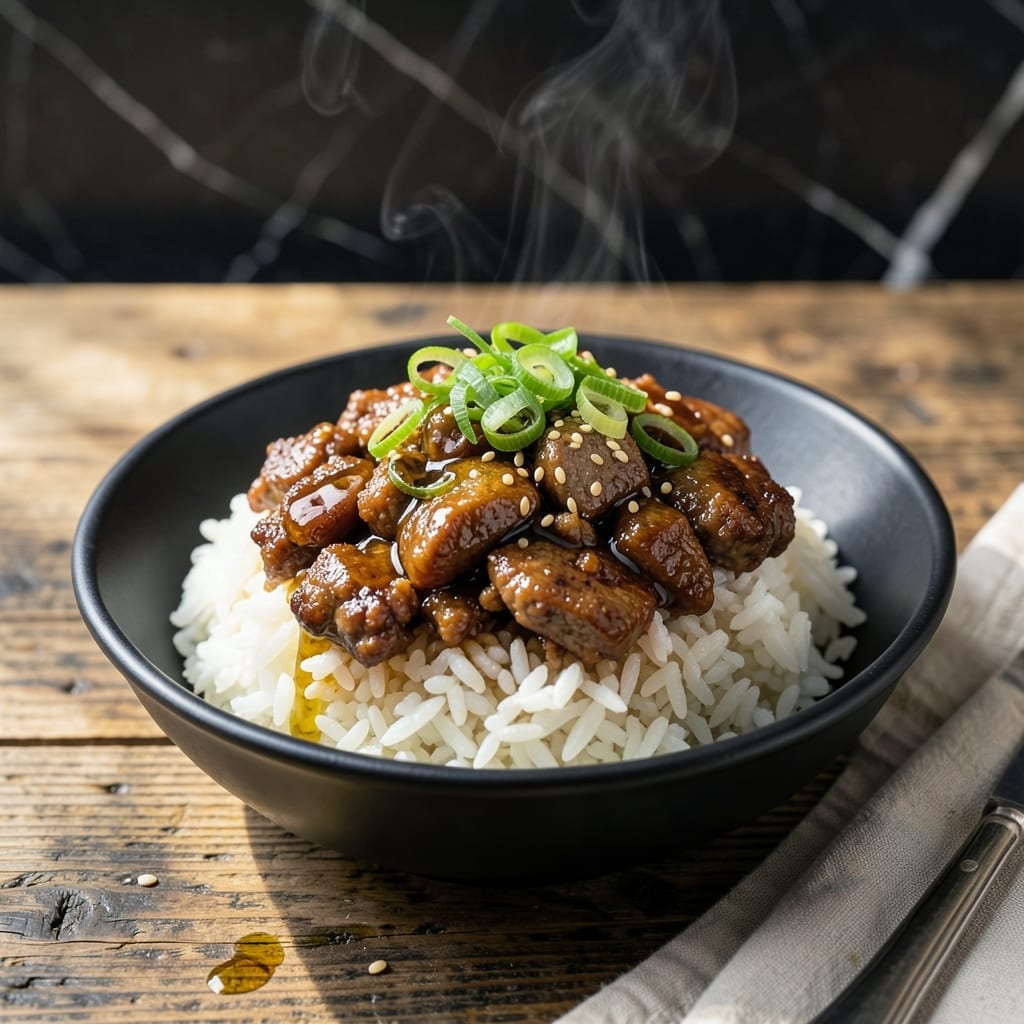
This Korean-inspired dish brings bold, sweet-savory flavors to your weeknight table with minimal effort. The combination of brown sugar, soy sauce, and garlic creates a sauce that caramelizes beautifully with the ground beef.
Cooking everything in one skillet ensures easy cleanup while developing deep, rich flavors. The sauce simmers with the beef until it reduces to a glossy, sticky consistency that clings to every grain of rice.
In 20 minutes, you’ll have tender beef with a perfect balance of sweet and umami, served over steamed rice. Garnish with sesame seeds and sliced green onions for an authentic finish.
This recipe proves that restaurant-quality Korean flavors can be achieved at home with simple ingredients and straightforward techniques.
Ingredients for Korean Beef and Rice
Simple ingredients deliver bold Korean-inspired flavors over steamed rice in minutes.
| Ingredient | Amount | Notes |
|---|---|---|
| Ground Beef 🥩 | 1 lb | 80/20 lean-to-fat ratio preferred |
| Brown Sugar 🍚 | ⅓ cup | Packed light or dark |
| Soy Sauce 🫒 | ⅓ cup | Low-sodium for controlled seasoning |
| Garlic Cloves 🧄 | 4 cloves | Minced for maximum flavor |
| Sesame Oil 🫒 | 1 tbsp | Toasted for nutty aroma |
| Ground Ginger 🌿 | ½ tsp | Freshly ground if possible |
| Red Pepper Flakes 🌶️ | ½ tsp | Adjust for spice preference |
| Black Pepper 🌶️ | ½ tsp | Freshly ground preferred |
| Long-Grain White Rice 🍚 | 1 ½ cups | Uncooked, rinsed before cooking |
| Green Onions 🧅 | 4 whole | Thinly sliced for garnish |
| Sesame Seeds 🌰 | 1 tbsp | Toasted for garnish |
| Vegetable Oil 🫒 | 1 tbsp | Neutral flavor for cooking |
The beef is the foundation—80/20 ground chuck gives you the best balance of flavor and juiciness without being greasy. Whole Foods or Costco have excellent grass-fed options if that’s your preference. For the soy sauce, Kikkoman low-sodium is widely available and reliable. Don’t skip the sesame oil—Kadoya brand is a professional kitchen standard for its pure, toasted flavor.
No brown sugar? Coconut sugar or honey (at a 1:1 ratio) works, though the flavor profile shifts slightly. Swap soy sauce for tamari if you need gluten-free. Fresh ginger can replace ground ginger at triple the amount—grate it finely so it distributes evenly. The green onions can be substituted with chives if that’s what you’ve got on hand.
Cooked beef and sauce keep in the fridge for 3-4 days—the flavors deepen overnight. Freeze for up to 3 months in airtight containers. Reheat gently to avoid drying out the beef. Always store rice separately to prevent sogginess.
Why You’ll Love This Recipe
- One Pan Wonder: I brown the beef, stir in the soy sauce and brown sugar, and it’s done—no extra pots, no fuss.
- Sweet-Savory Magic: The brown sugar caramelizes with the soy sauce, and the garlic? Honestly, it’s the flavor bomb I crave every time.
- Feeds a Crowd: Between us, this stretches easily for leftovers or a family dinner, and it’s always a hit.
- Budget Friendly: Ground beef and pantry staples keep it cheap, but the sesame oil makes it taste like a restaurant meal.
Step-by-Step Instructions for Korean Beef and Rice
Here’s the method. Straightforward, tested, works every time.
Step 1: Cook the Rice
Rinse the 1.5 cups long-grain white rice under cold water until the water runs clear. This removes excess starch and prevents gummy texture. Use a 1:1.5 rice-to-water ratio for perfect fluffiness.
Bring the rice and water to a boil in a saucepan, then reduce to a simmer, cover, and cook for 15-18 minutes until the water is absorbed and the rice is tender. Remove from heat and let it sit covered for 5 minutes. Fluff with a fork before serving.
Step 2: Brown the Ground Beef
Heat the 1 tbsp vegetable oil in a large skillet over medium-high heat. Add the 1 lb ground beef and cook, breaking it apart with a wooden spoon, for 5-7 minutes until fully browned and no pink remains.
Drain excess fat if necessary, leaving just enough to coat the pan. Season the beef with the 0.5 tsp black pepper during cooking. This builds a flavorful foundation for the sauce.
Step 3: Create the Korean-Inspired Sauce
Reduce heat to medium and add the 4 cloves minced garlic cloves to the skillet. Cook for 30 seconds until fragrant—don’t let it burn. Stir in the 0.33 cup brown sugar, 0.33 cup soy sauce, 1 tbsp sesame oil, 0.5 tsp ground ginger, and 0.5 tsp red pepper flakes.
Simmer for 2-3 minutes until the sauce thickens slightly and coats the beef. The mixture should be glossy and aromatic, with the sugar fully dissolved. Taste and adjust seasoning if needed.
Step 4: Combine and Garnish
Spoon the cooked rice onto serving plates and top with the beef mixture. Drizzle any remaining sauce from the pan over the top. Garnish with the 4 whole thinly sliced green onions and 1 tbsp toasted sesame seeds.
The green onions add a fresh, crisp contrast to the rich beef, while the sesame seeds provide a nutty crunch. Serve immediately while hot for the best texture and flavor.
Pro Tips For Making Korean Beef And Rice
- Brown the Beef First: Cook the ground beef in a hot pan until deeply browned before adding the sauce—this builds a rich, caramelized base that makes the dish taste far more complex.
- Mince the Garlic Fine: I learned this the hard way—chop the garlic into tiny pieces so it distributes evenly and doesn’t leave harsh, uneven bites in the finished beef.
- Skip the Over-Saucing: Resist the urge to double the soy sauce or brown sugar; the beef releases juices as it cooks, and too much liquid turns it into a soggy mess instead of a glossy, sticky glaze.
- Finish with Sesame Oil: Stir in the sesame oil at the very end, off the heat—adding it too early dulls its nutty aroma, and you’ll lose that signature Korean beef fragrance.
Serving Suggestions for This Dish
Bowl Presentation
Serve this dish in shallow white bowls to highlight the vibrant colors. I love using stoneware for its rustic feel that complements the homemade nature of the meal. The contrast between the white rice and dark sauce is visually striking. 💛
Garnish Like a Pro
Beyond the recipe’s green onions and sesame seeds, try adding thin cucumber ribbons or pickled radishes for extra crunch and color. A sprinkle of crushed peanuts adds an unexpected nutty texture that pairs well with the sweet-savory sauce.
Family-Style Serving
For gatherings, present the beef in a large serving dish with rice in a separate bowl. Let guests build their own portions. This works especially well with cauliflower rice for those watching carbs.
Kid-Friendly Plating
Make it fun for children by using cookie cutters to shape the rice into stars or hearts. The sweet sauce is usually a hit with kids. I’ve found that letting them add their own garnishes increases their interest in trying it.
Temperature Matters
Serve the beef piping hot over room-temperature rice. The temperature contrast enhances the flavor experience. If serving buffet-style, keep the beef in a slow cooker on warm setting for up to 2 hours. ✨
Portion Control
For a balanced plate, use ½ cup rice and ¼ lb beef per serving. This leaves room for sides like kimchi or a simple cucumber salad. The flavors are rich enough that smaller portions satisfy without overwhelming.
Nutrition Facts
Frequently Asked Questions
Can I use ground turkey instead of beef?
Use ground turkey with the same cooking method. The flavor will be milder, so you might add an extra 1 tbsp soy sauce for depth.
How can I make this dish spicier?
Increase the red pepper flakes to 1 tsp or add 1 tsp gochujang (Korean chili paste) to the sauce. Adjust to your heat preference.
What’s the best rice for this dish?
Jasmine or short-grain white rice works best—they’re slightly sticky and soak up the sauce well. Avoid instant rice for the best texture.
Can I prep this ahead of time?
Cook the beef and sauce, then store separately in the fridge for up to 3 days. Reheat gently before serving over fresh rice.

- Mujadara Rice and Lentils Recipe: Earthy Spiced Lentils With Caramelized Onions - November 1, 2026
- Naija Fried Rice Recipe: Street-Style Spice With Veggie Crunch - November 1, 2026
- Mushy Rice Recipe: Fluffy Grains Transformed in Minutes - November 1, 2026