
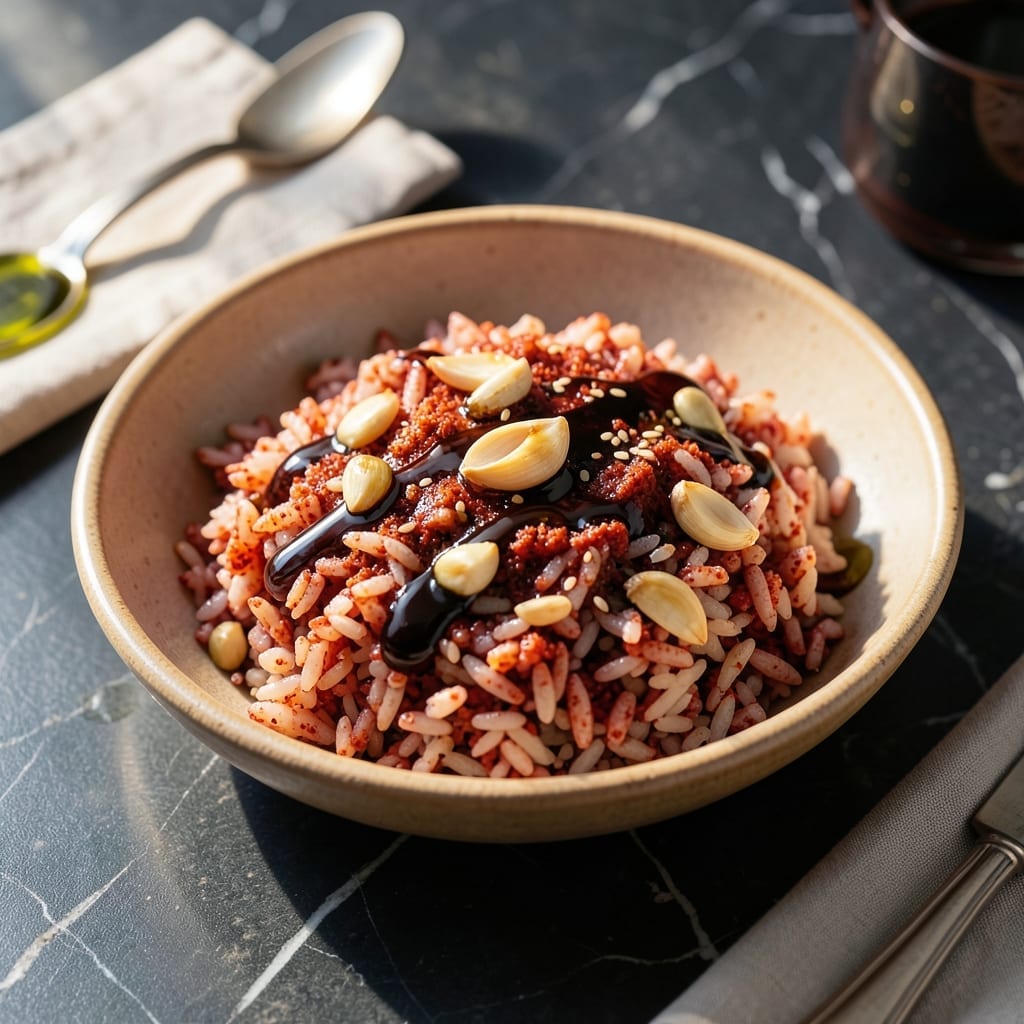
This traditional Korean dish transforms simple rice into a vibrant, nutty creation with minimal effort. The secret lies in the fermented spice that infuses every grain with deep, aromatic complexity.
Using only a handful of ingredients, you’ll achieve a side dish that pairs perfectly with grilled meats or vegetables. The process is straightforward, yet the results are anything but ordinary.
The rice emerges with a subtle red hue and a rich, savory flavor that’s both comforting and bold. It’s a staple in Korean households for a reason—simple, satisfying, and full of character.
Ready in under 45 minutes, this dish brings authentic flavor to your table with ease.
Ingredients for Korean Red Rice
Short list. Big flavor. Fermented spice does all the heavy lifting here.
| Ingredient | Amount | Notes |
|---|---|---|
| Short-Grain White Rice 🍚 | 2 cups | Rinsed until water runs clear |
| Gochugaru 🌶️ | 2 tbsp | Korean red pepper flakes |
| Vegetable Oil 🫒 | 1 tbsp | Neutral flavor preferred |
| Garlic Cloves 🧄 | 4 cloves | Minced finely |
| Soy Sauce 🥫 | 2 tbsp | Low-sodium or regular |
| Sesame Oil 🫒 | 1 tsp | Toasted for aroma |
| Salt 🧂 | ½ tsp | Kosher or sea salt |
| Sugar 🍚 | 1 tsp | Granulated or coconut sugar |
| Toasted Sesame Seeds 🌰 | 1 tbsp | For garnish and crunch |
| Green Onions 🧅 | 3 whole | Thinly sliced for garnish |
| Water 💧 | 2 ½ cups | For cooking rice |
| Korean Fermented Soybean Paste 🥫 | 1 tbsp | Doenjang preferred |
The gochugaru is non-negotiable for authentic flavor. H Mart or Korean markets carry it, but Amazon works too (look for coarse, vibrant red flakes). The doenjang adds depth—Sempio is a reliable brand. Short-grain rice is key for that sticky, nutty texture. Don’t skip the rinse; it removes excess starch so the grains stay separate. I buy mine in bulk at H Mart (cheaper and fresher).
No gochugaru? Substitute with 1 tbsp cayenne plus 1 tbsp paprika (less authentic but works). Out of doenjang? Miso paste at half the amount gets you close. Green onions can be swapped for chives. For extra nuttiness, toss in a handful of toasted pine nuts at the end. The sesame oil is worth the splurge—Kadoya is my go-to brand.
Leftovers keep 4-5 days in the fridge—actually taste better the next day. Freeze for up to 3 months (portion before freezing). Reheat with a splash of water to restore moisture. Always toast sesame seeds fresh (takes 2 minutes).
Why You’ll Love This Recipe
- One Pot Wonder: I love that this comes together in a single pot—just rice, gochugaru, and a few pantry staples.
- Flavor Bomb: The garlic and gochugaru give it that deep, spicy-savory kick I crave with every bite.
- Meal Prep Star: It keeps beautifully for days, so I make a big batch and pair it with different proteins all week.
- Budget Friendly: Honestly, the ingredients cost pennies and stretch far—short-grain rice and gochugaru go a long way.
Step-by-Step Instructions for Korean Red Rice
Here’s the method I use to get that signature nutty flavor and vibrant color every time.
Step 1: Rinse and Prepare the Short-Grain White Rice
Place the 2 cups Short-Grain White Rice in a fine-mesh strainer and rinse under cold running water until the water runs completely clear. This removes excess starch that would otherwise make your rice gummy. I like to swirl the rice with my hand while rinsing to ensure every grain gets cleaned.
Drain the rice thoroughly in the strainer for 5 minutes. You want the grains to be damp but not wet—this prevents the rice from becoming mushy during cooking. Proper rinsing is the secret to that perfect, separate grain texture that Korean rice dishes are known for.
Step 2: Toast the Aromatics and Spices
Heat the 1 tbsp Vegetable Oil in a medium saucepan or rice cooker pot over medium heat. Add the 4 cloves Garlic Cloves and 2 tbsp Gochugaru, stirring constantly for 30-45 seconds until the garlic turns fragrant and the gochugaru deepens in color. Be careful not to burn the garlic.
Add the 1 tbsp Korean Fermented Soybean Paste and stir for another 30 seconds. The paste will start to darken slightly and release its rich, fermented aroma. This toasting step is crucial for developing the deep, complex flavors that make this dish special.
Step 3: Combine and Cook the Rice
Add the drained 2 cups Short-Grain White Rice to the pot and stir to coat the grains with the aromatic mixture. Pour in the 2.5 cups Water, then add the 2 tbsp Soy Sauce, 0.5 tsp Salt, and 1 tsp Sugar. Stir everything together until the seasonings are evenly distributed.
Bring the mixture to a boil over high heat. Once boiling, reduce the heat to low, cover the pot with a tight-fitting lid, and let it simmer undisturbed for 15 minutes. Resist the urge to peek—the steam needs to stay trapped inside for perfect cooking.
Step 4: Rest and Finish with Sesame Oil
After 15 minutes, turn off the heat and let the rice sit, covered, for an additional 10 minutes. This resting period allows the grains to steam and absorb any remaining liquid. The rice should be tender with no hard bits in the center.
Gently fluff the rice with a rice paddle or fork. Drizzle the 1 tsp Sesame Oil over the top and fold it in carefully to distribute the nutty flavor throughout. The rice should have a beautiful reddish hue from the gochugaru and a glossy sheen from the sesame oil.
Step 5: Garnish and Serve
Transfer the rice to a serving bowl. Sprinkle the 1 tbsp Toasted Sesame Seeds and 3 whole Green Onions (thinly sliced) over the top. The sesame seeds add a delightful crunch, while the green onions provide a fresh, sharp contrast to the rich, nutty flavors.
Serve immediately while hot. Each bite should deliver a perfect balance of spicy, savory, and nutty notes with a satisfying texture. This dish pairs wonderfully with grilled meats or as a standalone vegetarian meal.
Pro Tips For Making Korean Red Rice
- Bloom the Gochugaru: Heat the gochugaru in oil for 30-60 seconds before adding liquids—this wakes up the flavor and removes any raw bitterness. I learned this the hard way after my first batch tasted dull.
- Rinse the Rice: Wash the short-grain rice until the water runs clear, then drain well. Skipping this makes the rice gummy, not fluffy, and the sauce won’t cling as nicely.
- Don’t Rush the Garlic: Cook the minced garlic in oil just until fragrant, not brown. Burnt garlic turns bitter and ruins the sweet-spicy balance in the dish.
- Use Fresh Gochugaru: Old gochugaru loses its vibrant color and punch. If yours looks faded or smells stale, replace it—sounds obvious, but it actually changes the outcome.
Pro Cooking Tips for korean red rice
Rice Prep Perfection
Rinsing the short-grain white rice until the water runs clear removes excess starch, preventing gummy texture. I swirl the grains with my hand for 30-60 seconds per rinse—it usually takes 4-5 rinses to get it right. Drain for 5 minutes before cooking.
Toast for Depth
Blooming the gochugaru and garlic in vegetable oil over medium heat for 30-45 seconds unlocks their aromas. Add the Korean fermented soybean paste last—it burns easily. This step builds layers of flavor that define the dish. 🔥
Liquid Ratios Matter
For every 2 cups rice, use 2.5 cups water. The soy sauce and sugar don’t count toward liquid volume. Bring to a boil, then immediately reduce to low heat for even cooking.
Steam and Rest
After simmering for 15 minutes, turn off the heat and let it rest covered for 10 minutes. This steam phase ensures every grain absorbs moisture evenly. Peeking releases steam and ruins the texture.
Sesame Oil Finish
Fluff the rice gently with a fork, then fold in 1 tsp sesame oil off-heat. This preserves its delicate aroma. The rice should glisten with a subtle red hue and nutty fragrance.
Garnish Strategy
Toast the sesame seeds in a dry pan for 2 minutes until golden. Sprinkle them and green onions just before serving to maintain crunch and freshness. 💫
Nutrition Facts
Frequently Asked Questions
Can I use long-grain rice instead?
Short-grain is best for that sticky texture, but long-grain works in a pinch. Reduce water to 2 cups and expect a firmer bite.
Why is my rice mushy?
Over-rinsing or peeking during cooking releases starch and steam. Stick to 4-5 rinses and keep the lid on.
Can I make this gluten-free?
Swap soy sauce for tamari or coconut aminos. All other ingredients are naturally gluten-free.
How do I store leftovers?
Keep in an airtight container for 4-5 days in the fridge. Reheat with a splash of water.

- Mujadara Rice and Lentils Recipe: Earthy Spiced Lentils With Caramelized Onions - November 1, 2026
- Naija Fried Rice Recipe: Street-Style Spice With Veggie Crunch - November 1, 2026
- Mushy Rice Recipe: Fluffy Grains Transformed in Minutes - November 1, 2026