
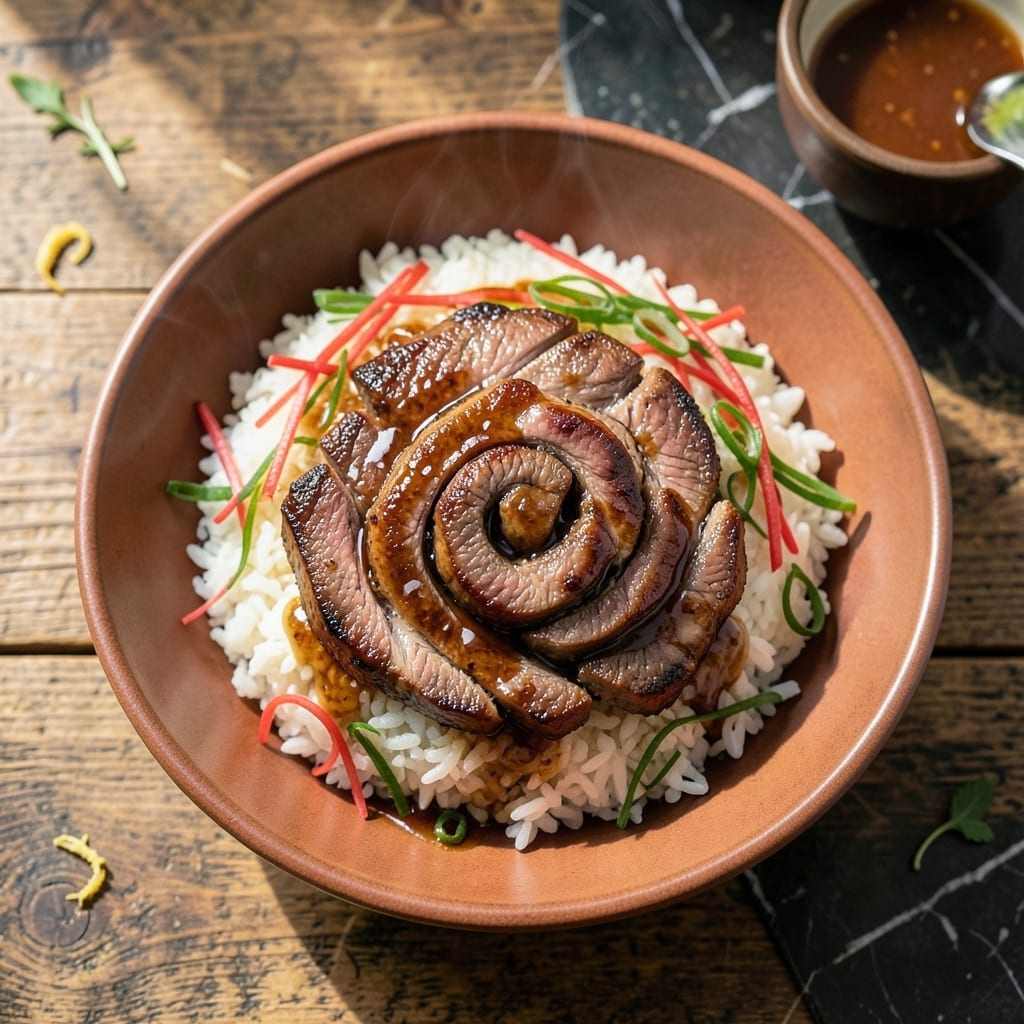
This dish transforms thinly sliced beef through a sweet-savory marinade that tenderizes while infusing bold Korean flavors. The process is simpler than it appears, with most of the work happening during the marinating time.
The key lies in the balance of soy sauce, brown sugar, and Asian pear, which creates a sauce that caramelizes beautifully when cooked. Serve the beef over steamed rice for a complete meal that’s ready in 30 minutes of active cooking.
Each bite delivers tender beef with a glossy, slightly sticky coating that pairs perfectly with the neutral base of rice. The dish works equally well for weeknight dinners or impressive weekend meals.
Leftovers keep beautifully, making this a practical choice for meal prep. The flavors only deepen after a day in the refrigerator.
Ingredients for Korean Beef Bulgogi Rice Bowl
Thinly sliced beef and a pantry-friendly marinade create this bold, restaurant-quality dish.
| Ingredient | Amount | Notes |
|---|---|---|
| Ribeye Steak 🥩 | 1 ½ lb | Thinly sliced against the grain |
| Soy Sauce 🫒 | ½ cup | Low-sodium preferred for balance |
| Brown Sugar 🍚 | ¼ cup | Light or dark both work |
| Asian Pear 🍐 | ½ whole | Grated for natural sweetness |
| Garlic Cloves 🧄 | 5 cloves | Minced for maximum flavor |
| Fresh Ginger 🌿 | 1 tbsp | Peeled and grated finely |
| Sesame Oil 🫒 | 1 tbsp | Toasted for depth of flavor |
| Rice Vinegar 🍋 | 2 tbsp | Adds subtle tang to marinade |
| Green Onions 🧅 | 4 whole | Thinly sliced for garnish |
| Jasmine Rice 🍚 | 2 cups | Uncooked, for serving base |
| Sesame Seeds 🌾 | 1 tbsp | Toasted for garnish |
| Vegetable Oil 🫒 | 1 tbsp | High smoke point for cooking |
| Black Pepper 🌶️ | ½ tsp | Freshly ground preferred |
| Red Pepper Flakes 🌶️ | ½ tsp | Optional for heat adjustment |
The beef is everything here. Ribeye gives you that perfect marbling (and tenderness) that makes bulgogi special. Most Korean markets will slice it paper-thin for you if you ask—saves a ton of time. If you’re buying pre-packaged, look for very thin cuts and freeze for 30 minutes to make slicing easier. The Asian pear is the secret weapon—its enzymes tenderize the meat beautifully.
No Asian pear? Bosc pear or grated apple works in a pinch (just use the same amount). Out of rice vinegar? Apple cider vinegar at half the quantity gets you close. For the soy sauce, Kikkoman or Pearl River Bridge are reliable brands. Want more heat? Double the red pepper flakes. Short on time? Skip the marinating overnight—even 30 minutes makes a difference.
Leftovers taste even better the next day once the flavors meld. Keeps in the fridge for 4-5 days or freezes for 3 months. I always make extra rice—it soaks up that delicious sauce like a dream (and reheats perfectly).
Why You’ll Love This Recipe
- One Pan Magic: I marinate the ribeye with soy sauce and brown sugar the night before, then cook everything in one pan while the rice steams.
- Sweet-Savory Balance: The brown sugar caramelizes with the garlic and Asian pear to create this ridiculous sweet-savory depth that hits all the right notes.
- Meal Prep Hero: I make a double batch on Sunday and it reheats beautifully for lunches all week—never mushy, always flavorful.
- Budget Stretcher: A little ribeye goes a long way here, and the pear tenderizes it so even cheaper cuts work in a pinch.
Step-by-Step Instructions for Korean Beef Bulgogi Rice Bowl
Master this technique for tender beef with a perfect sweet-savory glaze every time.
Step 1: Prepare the Marinade and Slice the Ribeye
In a large bowl, whisk together 0.5 cup soy sauce, 0.25 cup brown sugar, 1 tbsp sesame oil, 2 tbsp rice vinegar, 0.5 tsp black pepper, and 0.5 tsp red pepper flakes until the sugar dissolves. Stir in the grated 0.5 whole Asian pear, minced 5 cloves garlic cloves, and 1 tbsp fresh ginger until fully combined.
While the marinade rests, thinly slice the 1.5 lb ribeye steak against the grain into ¼-inch thick strips. This ensures maximum tenderness. Place the sliced beef in the marinade, coating each piece thoroughly. Let it sit for 20-30 minutes at room temperature.
Step 2: Cook the Marinated Beef to Perfection
Heat 1 tbsp vegetable oil in a large skillet or wok over medium-high heat until shimmering. Add the marinated beef in a single layer, reserving any excess marinade. Cook undisturbed for 2-3 minutes until the edges begin to caramelize.
Stir the beef and continue cooking for another 3-4 minutes until it reaches your desired doneness. Pour in the reserved marinade and cook for an additional 2 minutes, stirring constantly, until the sauce thickens into a glossy glaze coating the beef.
Step 3: Prepare the Jasmine Rice Base
Rinse the 2 cups jasmine rice under cold water until the water runs clear. This removes excess starch and prevents gummy rice. In a pot, combine the drained rice with 4 cups water and bring to a boil over high heat.
Once boiling, reduce heat to low, cover, and simmer for 15-18 minutes until all liquid is absorbed and the rice is tender. Remove from heat and let it sit covered for 5 minutes to steam—this ensures fluffy, separate grains.
Step 4: Assemble and Garnish the Rice Bowls
Divide the cooked jasmine rice evenly among four bowls. Spoon the glazed beef over the rice, ensuring each serving gets plenty of the flavorful sauce. Drizzle any remaining sauce from the pan over the top of the beef.
Garnish each bowl with thinly sliced 4 whole green onions and 1 tbsp sesame seeds. The green onions add a fresh, crisp contrast to the rich beef, while the sesame seeds provide a nutty crunch. Serve immediately while hot.
Pro Tips For Making Korean Beef Bulgogi Rice Bowl
- Slice Against the Grain: Cut the ribeye into thin strips against the grain for tender bulgogi that melts in your mouth—I learned this the hard way after chewing through a few tough bites.
- Grate the Pear: Use a fine grater on the Asian pear so it dissolves into the marinade, adding natural sweetness and tenderness without chunks.
- Don’t Overcrowd the Pan: Cook the beef in batches to avoid steaming it—steer clear of this mistake or you’ll end up with soggy, gray meat instead of caramelized edges.
- Use Fresh Garlic: Mince the garlic cloves just before mixing the marinade; pre-minced jars lack the punch and can turn bitter when cooked.
Make-Ahead Tips for korean beef bulgogi rice bowl
Marinate Overnight
For the deepest flavor, let the beef marinate in the fridge for up to 24 hours. I always prep this the night before—I mix the marinade, slice the beef, and let it soak up all those delicious flavors while I sleep. 💤
Prep Rice in Advance
Cook the jasmine rice up to 2 days ahead and store it in the fridge. When ready to serve, microwave with a splash of water and cover with a damp paper towel for 1-2 minutes. This revives the texture perfectly.
Batch Cook Beef
Double or triple the beef portion of the recipe and cook as directed. Store cooked beef in airtight containers in the fridge for up to 5 days. It reheats beautifully in a skillet with a splash of water.
Freeze for Later
Freeze marinated raw beef in a single layer on a tray first, then transfer to a freezer bag for up to 3 months. Thaw overnight in the fridge before cooking. This method prevents clumping and ensures even cooking. ❄️
Garnish Separately
Store garnishes like green onions and sesame seeds separately in the fridge. Slice onions and toast seeds just before serving to maintain freshness and crunch. This keeps textures vibrant.
Portion for Meal Prep
Divide rice and beef into individual containers for grab-and-go lunches. I use glass containers with tight lids to keep everything fresh. The flavors meld together even better after a day in the fridge.
Nutrition Facts
Frequently Asked Questions
Can I use a different cut of beef?
Yes! While ribeye is ideal, sirloin or flank steak work well too. Just ensure it’s sliced ¼-inch thick against the grain for tenderness.
What if I don’t have an Asian pear?
Substitute with grated apple or Bosc pear in equal amounts. These contain similar enzymes that tenderize the meat.
How do I prevent the sauce from burning?
Cook over medium-high heat and stir frequently once the marinade is added. The sugar can caramelize quickly, so keep it moving.
Can I make this gluten-free?
Swap regular soy sauce for tamari or coconut aminos. Both are gluten-free alternatives that maintain the dish’s rich flavor.

- Mujadara Rice and Lentils Recipe: Earthy Spiced Lentils With Caramelized Onions - November 1, 2026
- Naija Fried Rice Recipe: Street-Style Spice With Veggie Crunch - November 1, 2026
- Mushy Rice Recipe: Fluffy Grains Transformed in Minutes - November 1, 2026