
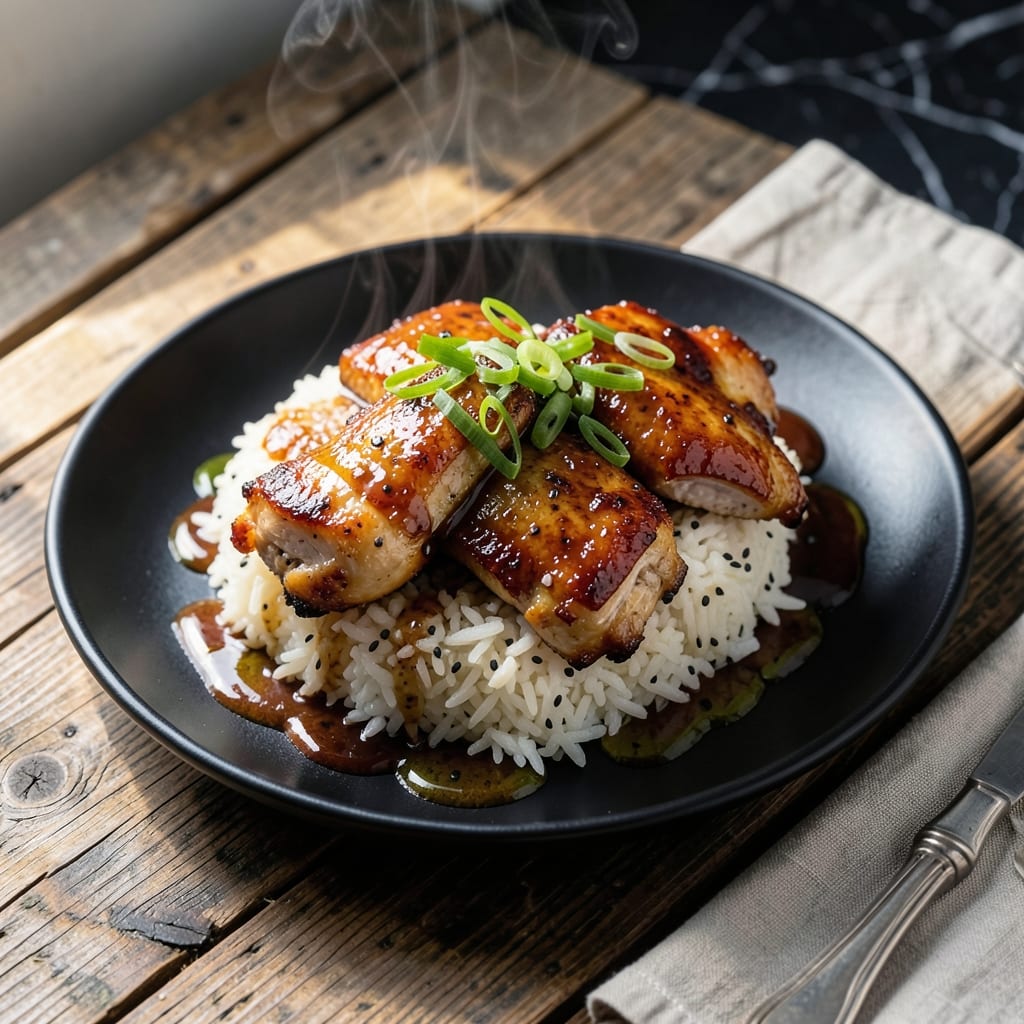
This dish brings together tender chicken and fluffy rice in a perfectly balanced meal. The ginger-garlic glaze creates a sweet-savory harmony that elevates every bite.
I developed this recipe after years of perfecting Korean-inspired flavors. The chicken cooks in a sticky, aromatic sauce while the rice absorbs all the extra flavor, making each grain delicious.
The result is juicy, caramelized chicken over light, fragrant rice. It’s a complete meal that feels special but comes together with straightforward techniques.
Serve it hot, with extra sauce drizzled on top for maximum impact. This is comfort food with bold, satisfying flavors.
Ingredients for Korean Chicken and Rice
Pantry staples plus a few Korean specialties make this dish sing with bold flavors.
| Ingredient | Amount | Notes |
|---|---|---|
| Chicken Thighs 🍗 | 1 ½ lb | Boneless, skin-on preferred |
| Jasmine Rice 🍚 | 1 ½ cups | Rinsed until water runs clear |
| Soy Sauce 🫒 | ½ cup | Low-sodium for balance |
| Brown Sugar 🍚 | ¼ cup | Packed, for caramelization |
| Fresh Ginger 🌿 | 2 tbsp | Minced or grated fine |
| Garlic Cloves 🧄 | 6 cloves | Minced for maximum flavor |
| Sesame Oil 🫒 | 2 tbsp | Toasted variety preferred |
| Rice Vinegar 🍯 | 2 tbsp | Adds brightness to glaze |
| Gochujang 🌶️ | 2 tbsp | Korean chili paste, adjust to taste |
| Green Onions 🧅 | 4 whole | Sliced thin for garnish |
| Sesame Seeds 🌾 | 1 tbsp | Toasted for garnish |
| Vegetable Oil 🫒 | 2 tbsp | For searing chicken |
| Water 💧 | 2 ¼ cups | For cooking rice |
| Cornstarch 🌾 | 1 tbsp | For thickening glaze |
The chicken thighs are key here—skin-on, bone-in gives the juiciest results, but boneless works in a pinch. Asian markets or well-stocked supermarkets will have gochujang (look for the red tub). I always grab mine at H Mart (the brand Sempio is solid). For the ginger and garlic, fresh is non-negotiable—pre-minced just doesn’t have the same punch.
No gochujang? Sriracha plus a teaspoon of miso gets you close. Brown sugar can be swapped for honey or maple syrup (adjust to taste). Jasmine rice is ideal, but short-grain white rice works too—just reduce the water by a splash. If you’re out of rice vinegar, apple cider vinegar in a 1:1 ratio does the trick.
The cooked chicken keeps beautifully for 3-4 days in the fridge, and the flavors deepen overnight. Reheat in a skillet to crisp the skin. Rice is best fresh, but leftovers freeze for up to 3 months—just add a splash of water when reheating.
Why You’ll Love This Recipe
- One Pan Dinner: I throw everything in one skillet—chicken thighs, jasmine rice, and that sticky-sweet soy-brown sugar glaze. One pot, minimal cleanup.
- Sweet-Savory Magic: The brown sugar caramelizes with the soy sauce while the ginger cuts through with a little zing. It’s the kind of flavor that lingers after the last bite.
- Meal Prep Hero: I make a big batch on Sunday and it tastes just as good reheated for lunch. The rice soaks up all the sauce overnight.
- Budget Stretcher: Chicken thighs are cheap, jasmine rice is a pantry staple, and this feeds my family for two nights. Honestly, it’s my wallet’s favorite recipe.
Step-by-Step Instructions for Korean Chicken and Rice
Here’s the method. Straightforward, tested, works every time.
Step 1: Cook the Rice to Fluffy Perfection
Rinse the 1.5 cups Jasmine Rice under cold water until the water runs clear—this removes excess starch and prevents gummy texture. I use a fine-mesh strainer for this.
Combine the rinsed rice with the 2.25 cups Water in a pot. Bring to a boil, then reduce heat to low, cover, and simmer for 15 minutes. Turn off the heat and let it sit covered for 10 minutes—this steam time ensures every grain is tender and separate.
Step 2: Sear the Chicken Thighs to Golden Crispness
Pat the 1.5 lb Chicken Thighs dry with paper towels—this guarantees a good sear. Heat the 2 tbsp Vegetable Oil in a large skillet over medium-high heat until it shimmers.
Add the chicken skin-side down and cook undisturbed for 6-7 minutes until the skin is deep golden brown and crispy. Flip and cook for another 5-6 minutes until the chicken is cooked through. Transfer to a plate and tent with foil to keep warm.
Step 3: Build the Ginger-Garlic Glaze
In the same skillet, reduce heat to medium and add the 2 tbsp Sesame Oil, minced 2 tbsp Fresh Ginger, and minced 6 cloves Garlic Cloves. Sauté for 1-2 minutes until fragrant—don’t let the garlic burn.
Stir in the 0.5 cup Soy Sauce, 0.25 cup Brown Sugar, 2 tbsp Rice Vinegar, and 2 tbsp Gochujang. Bring to a simmer and cook for 3 minutes until the sugar dissolves and the sauce thickens slightly.
Step 4: Thicken and Coat the Chicken
Mix the 1 tbsp Cornstarch with 2 tbsp Water to create a slurry. Stir this into the simmering sauce and cook for 1-2 minutes until it turns glossy and coats the back of a spoon.
Return the chicken to the skillet and spoon the sauce over it. Let it simmer for 2-3 minutes until the chicken is fully coated and the sauce clings beautifully. The sauce should be thick enough to glaze the chicken but still pourable.
Step 5: Serve Over Rice and Garnish
Spoon the fluffy rice onto plates and top with the glazed chicken. Drizzle any remaining sauce from the skillet over the dish. Garnish with the sliced 4 whole Green Onions and 1 tbsp Sesame Seeds for freshness and crunch.
Let the dish rest for 2 minutes before serving. The rice will soak up some of the sauce, and every bite will be packed with sticky, savory, slightly spicy flavor.
Pro Tips For Making Korean Chicken And Rice
- Sear Chicken First: I learned this the hard way—browning the chicken thighs in a hot pan before braising adds a depth of flavor that skipping this step just can’t match.
- Rinse the Rice: Sounds tedious, but rinsing jasmine rice until the water runs clear removes excess starch so your final dish isn’t gummy.
- Skip Raw Ginger: Fresh ginger can be fibrous; mince it finely or grate it so you don’t end up with stringy bits in your sauce.
- Use Dark Brown Sugar: The molasses in dark brown sugar gives the glaze a richer caramelized flavor compared to light—it’s the thing that matters most for that authentic taste.
Dietary Considerations for korean chicken and rice
Gluten-Free Adaptation
Swap the regular soy sauce for tamari or a certified gluten-free soy sauce. I recommend San-J brand for consistent quality. All other ingredients in this dish are naturally gluten-free, making it an easy switch without sacrificing flavor. 💪
Lower Sugar Version
Reduce the brown sugar by half and add 1 tbsp honey or 1 tbsp maple syrup for depth. The sauce will be less sticky but still packed with ginger-garlic flavor. I often do this when serving to friends watching their sugar intake.
Dairy-Free Friendly
This dish is naturally dairy-free as written. No substitutions needed! The richness comes from the chicken thighs and sesame oil. Double-check your gochujang brand, as some contain trace dairy, but most are safe. 🌱
Spice Level Control
For milder heat, reduce the gochujang to 1 tbsp or omit entirely. Add ½ tsp red pepper flakes instead for subtle warmth. For extra heat, increase to 3 tbsp gochujang—just balance with a touch more sugar.
Low-Carb Option
Replace jasmine rice with cauliflower rice. Sauté 4 cups riced cauliflower in 1 tbsp sesame oil for 5-6 minutes until tender. The chicken and sauce pair just as well, and you’ll save about 40g carbs per serving.
Paleo Adjustments
Use coconut aminos instead of soy sauce and coconut sugar in place of brown sugar. Skip the cornstarch—simmer the sauce longer to reduce naturally. The dish keeps its bold flavors while fitting paleo guidelines.
Nutrition Facts
Frequently Asked Questions
Can I use chicken breast instead of thighs?
Yes, but thighs stay juicier. If using breast, reduce cooking to 5-6 minutes per side and brine first to prevent dryness.
What if I don’t have gochujang?
Substitute 1 tbsp sriracha + 1 tsp miso paste. It won’t be identical but gives similar heat and depth.
How do I store leftovers?
Keep chicken and rice separate in airtight containers for 3-4 days in the fridge. Reheat chicken in a skillet to crisp the skin.
Can I make this in a slow cooker?
Yes! Sear chicken first, then cook on low for 4-5 hours with the sauce. Add cornstarch slurry at the end to thicken.

- Jollof Rice Sauce Recipe: West African Tomato and Spice Infusion - September 25, 2026
- Japanese Rice Soup Recipe: Umami-Rich Comfort in a Bowl - September 25, 2026
- Homemade Cream Of Rice Recipe: Silk-Smooth Breakfast in Minutes - September 25, 2026