
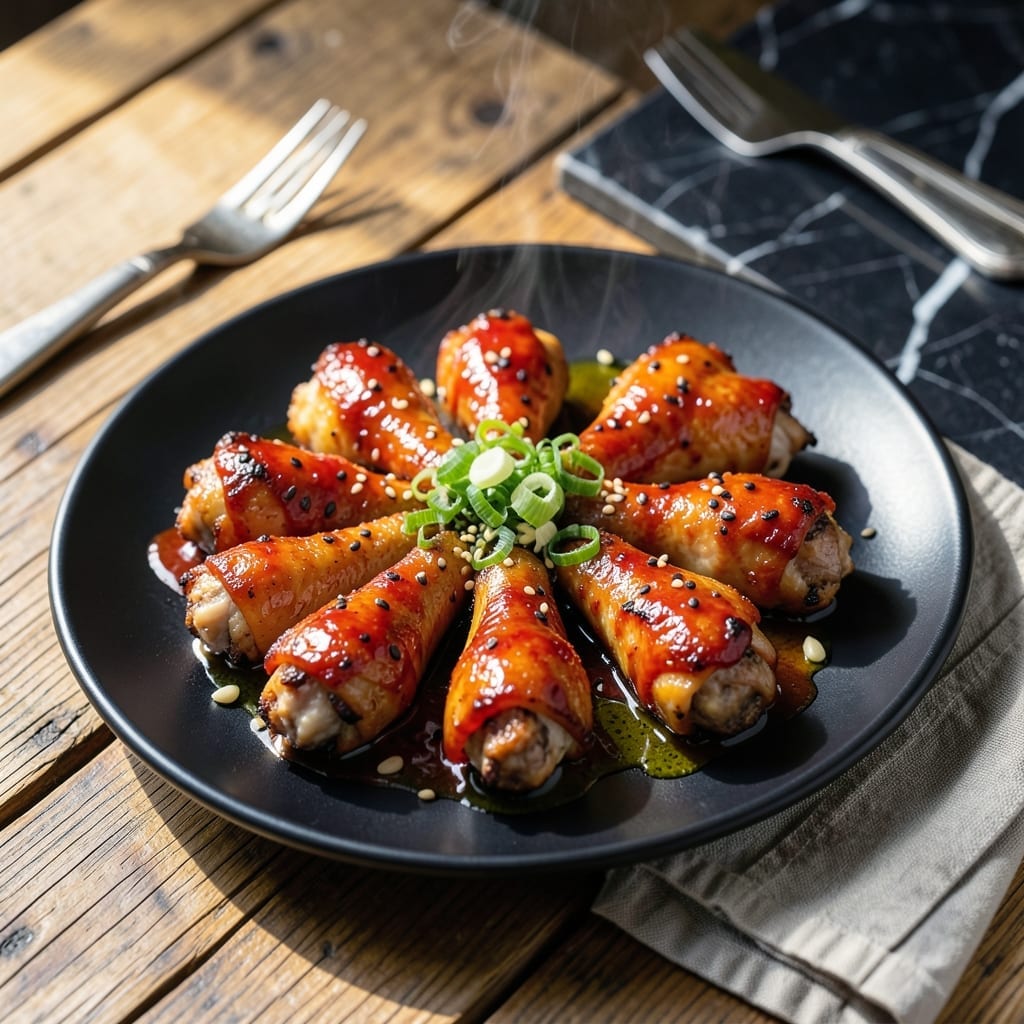
This recipe transforms ordinary chicken legs into a sticky, glossy sweet and spicy Korean masterpiece that’s impossible to resist. The secret lies in the double-coating technique that builds layers of flavor with each brush of sauce.
I’ve perfected this method to ensure the glaze caramelizes into a finger-licking finish while keeping the meat juicy and tender. The sauce strikes the ideal balance—sweet from honey, spicy from gochujang, and tangy from vinegar.
What you’ll get is fall-off-the-bone chicken with a glossy, slightly charred exterior that’s packed with umami depth. It’s the kind of dish that disappears as soon as it hits the table.
Serve with steamed rice and pickled radish to complete the experience. Here’s how to make it right every time.
Ingredients for Korean Chicken Legs
These bold ingredients create that irresistible glossy, finger-licking Korean chicken everyone loves at first bite.
| Ingredient | Amount | Notes |
|---|---|---|
| Chicken Legs 🍗 | 8 pieces | Skin-on, bone-in preferred |
| Gochujang 🌶️ | ½ cup | Korean red pepper paste |
| Honey 🍯 | ⅓ cup | For natural sweetness |
| Soy Sauce 🫙 | ¼ cup | Low-sodium recommended |
| Rice Vinegar 💧 | 2 tbsp | For tangy balance |
| Garlic Cloves 🧄 | 6 cloves | Minced for depth |
| Fresh Ginger 🌿 | 1 tbsp | Grated, no fibers |
| Sesame Oil 🫒 | 1 tbsp | Toasted for aroma |
| Brown Sugar 🍚 | 2 tbsp | Packed, for caramelization |
| Sesame Seeds 🌰 | 1 tbsp | Toasted, for garnish |
| Green Onions 🧅 | 3 whole | Thinly sliced for freshness |
| Vegetable Oil 🛢️ | 2 tbsp | For searing chicken |
| Kosher Salt 🧂 | 1 tsp | For seasoning meat |
| Black Pepper 🌶️ | ½ tsp | Freshly ground preferred |
The chicken legs are the foundation—skin-on, bone-in yields the juiciest, most flavorful result. Gochujang is non-negotiable; seek out Korean markets or the international aisle at Whole Foods for authentic brands like Sempio or Chongga. Fresh ginger and garlic are essential for the aromatic base, and their quality is noticeable (avoid the pre-minced jars). The soy sauce should be Korean or Japanese for the right umami balance.
No gochujang? Sriracha plus miso paste (2:1 ratio) offers a workable substitute, though the depth won’t be identical. Honey can be swapped for maple syrup or agave at a 1:1 ratio. For a gluten-free version, use tamari instead of soy sauce. The brown sugar can be replaced with coconut sugar, but don’t skip it entirely—it’s key for the caramelized finish. Sesame oil is irreplaceable here, though a pinch of toasted sesame seeds in regular oil can mimic some flavor.
The glaze can be made 2 days ahead and stored in the fridge. Cooked chicken keeps for 3-4 days refrigerated or freezes beautifully for 3 months. Reheat in the oven to maintain that coveted crispy skin (microwave works in a pinch, but the texture suffers).
Why You’ll Love This Recipe
- One Pan Wonder: I toss everything in one bowl, marinate, then bake—no fancy techniques or extra dishes.
- Sweet and Spicy: The gochujang and honey create that sticky, finger-licking glaze I can’t resist.
- Feeds a Crowd: I make a big batch for Sunday dinner and everyone—kids included—reaches for seconds.
- Budget Friendly: Chicken legs are cheap, and the sauce ingredients stretch across multiple meals.
Step-by-Step Instructions for Korean Chicken Legs
Master these precise techniques to achieve the perfect balance of sweet, spicy, and sticky glaze.
Step 1: Season and Sear the Chicken Legs
Pat the 8 pieces Chicken Legs completely dry with paper towels to ensure maximum browning. Season them generously with the 1 tsp Kosher Salt and 0.5 tsp Black Pepper, rubbing the spices into the skin so they adhere well.
Heat the 2 tbsp Vegetable Oil in a large skillet over medium-high heat until shimmering. Add the chicken legs skin-side down and sear undisturbed for 6-8 minutes until the skin turns deep golden brown and crispy. Flip and cook the other side for 4-5 minutes until browned. Transfer to a plate and set aside.
Step 2: Create the Gochujang Glaze Base
In the same skillet, reduce heat to medium and add the 6 cloves Garlic Cloves and 1 tbsp Fresh Ginger. Sauté for 1-2 minutes until fragrant, being careful not to let the garlic burn.
Pour in the 0.5 cup Gochujang, 0.33 cup Honey, 0.25 cup Soy Sauce, 2 tbsp Rice Vinegar, and 2 tbsp Brown Sugar. Stir well to combine, scraping up any browned bits from the bottom of the pan. Bring the mixture to a gentle simmer.
Step 3: Finish the Glaze and Coat the Chicken
Let the glaze simmer for 3-4 minutes until it thickens slightly and becomes glossy. Stir in the 1 tbsp Sesame Oil to add depth and aroma to the sauce. The glaze should coat the back of a spoon but still be pourable.
Return the chicken legs to the skillet, skin-side down. Spoon the glaze over the chicken, turning each piece to coat evenly. Cook for an additional 2-3 minutes until the glaze caramelizes and the chicken is fully cooked through to 165°F internally.
Step 4: Garnish and Serve
Transfer the glazed chicken legs to a serving platter. Sprinkle the 1 tbsp Sesame Seeds over the top and garnish with the 3 whole Green Onions, thinly sliced. The sesame seeds add a nutty crunch, while the green onions provide a fresh contrast to the rich glaze.
Serve immediately while the glaze is still sticky and the chicken is hot. The sauce should cling to each piece, creating a beautiful, glossy finish that’s irresistible with every bite.
Pro Tips For Making Korean Chicken Legs
- Slash the Thighs: Make two deep cuts into the thickest part of each thigh before marinating. I learned this the hard way—it lets the gochujang-honey glaze penetrate deeper and cooks the meat more evenly.
- Balance the Marinade: Mix 1 part rice vinegar with your gochujang and honey first to thin it slightly. Sounds weird, but it works: the vinegar cuts through the thickness so the sauce clings better to the chicken.
- Skip the Boil: Resist the urge to boil the marinade to thicken it before coating. High heat can make the honey caramelize too fast, leaving bitter spots—I ruined a batch doing this.
- Broil Last 3 Minutes: After baking, switch to broil for the final 3 minutes. This is the thing that matters most for getting that sticky, slightly charred finish on your gochujang glaze.
Regional Styles of This korean chicken legs
Seoul Street Food Style
In bustling Seoul markets, this dish is called Yangnyeom Chicken—the sauce is thicker and more syrupy, achieved by reducing the glaze an extra 5-7 minutes on medium heat. Vendors often add 1 tbsp corn syrup for extra shine. 🗺️
Busan Spicy Version
Coastal Busan favors a fiery twist: increase gochujang to ¾ cup and add 1 tbsp gochugaru (Korean chili flakes) to the glaze. The heat level ramps up significantly, so balance with an extra 1 tbsp honey to tame the burn.
Jeonju Royal Court
For a refined take inspired by Jeonju’s royal cuisine, add 2 tbsp doenjang (fermented soybean paste) to the sauce for deeper umami. The flavor becomes more complex and less sweet. Garnish with edible gold leaf for special occasions.
Modern Fusion
My favorite contemporary adaptation swaps honey for maple syrup and adds 1 tbsp sriracha for a Western-Korean fusion. The maple adds a woodsy depth that pairs surprisingly well with the gochujang’s heat.
Gangwon Province
In the mountainous Gangwon region, they incorporate 1 tbsp grated apple into the glaze for natural sweetness and slight tartness. The apple’s pectin also helps thicken the sauce naturally without extra reduction time.
Nutrition Facts
Frequently Asked Questions
Can I use boneless chicken thighs instead?
Yes, but reduce cooking time to 12-15 minutes total. Thighs stay juicier than legs but won’t have the same bone-in richness. Adjust glaze thickness to cling better to the smoother surface.
How do I make the glaze less spicy?
Cut the gochujang to ¼ cup and add 1 tbsp honey extra. For mild heat, replace half the gochujang with miso paste. Taste and adjust before coating the chicken.
Why is my sauce not sticking to the chicken?
Pat the chicken completely dry before searing, and simmer the glaze until it’s thick enough to coat a spoon. Apply sauce in 2-3 thin layers instead of one thick coat.
Can I bake this instead of pan-searing?
Bake at 400°F for 35-40 minutes, flipping halfway. Brush with glaze during the last 10 minutes to prevent burning. The texture differs but still delivers great flavor.

- Jollof Rice Sauce Recipe: West African Tomato and Spice Infusion - September 25, 2026
- Japanese Rice Soup Recipe: Umami-Rich Comfort in a Bowl - September 25, 2026
- Homemade Cream Of Rice Recipe: Silk-Smooth Breakfast in Minutes - September 25, 2026