
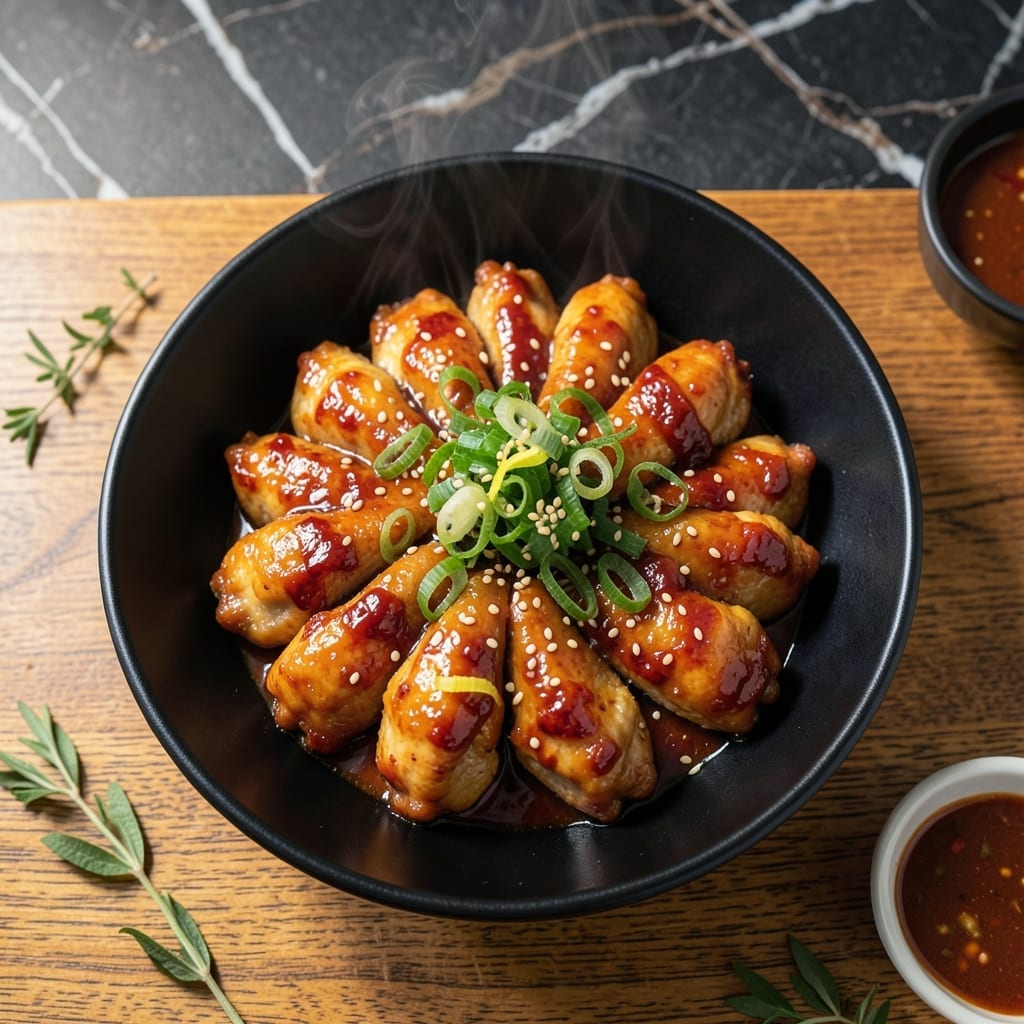
This Korean chicken delivers a perfect balance of sweet and savory flavors with every bite. The sticky glaze caramelizes beautifully in the oven, creating an irresistible sheen that coats each piece completely.
The sesame seeds add a nutty crunch that contrasts with the tender meat. I’ve refined this recipe to ensure the sauce reduces to the ideal consistency without burning, even at high heat.
You’ll achieve restaurant-quality results with simple pantry ingredients and 30 minutes of active prep. The aroma alone will have everyone gathering around the table before serving.
Serve over steamed rice to soak up every drop of that glossy, umami-packed sauce. This dish brings bold Korean flavors to any weeknight dinner.
Ingredients for Korean Chicken
Simple pantry staples create that glossy, umami-packed Korean chicken you crave for weeknight dinners.
| Ingredient | Amount | Notes |
|---|---|---|
| Boneless Chicken Thighs 🍗 | 2 lb | Skin-on for crispiness, or boneless skinless |
| Soy Sauce 🫒 | ½ cup | Low-sodium preferred for balance |
| Brown Sugar 🍚 | ½ cup | Packed, for caramelization |
| Honey 🍯 | ¼ cup | For natural sweetness and shine |
| Rice Vinegar 🍋 | 2 tbsp | Adds tang to cut sweetness |
| Gochujang 🌶️ | 2 tbsp | Korean chili paste for heat |
| Garlic Cloves 🧄 | 4 cloves | Minced for maximum flavor |
| Fresh Ginger 🌿 | 1 tbsp | Grated, for zesty warmth |
| Sesame Oil 🫒 | 1 tbsp | Toasted for depth of flavor |
| Sesame Seeds 🌰 | 2 tbsp | Toasted for nutty crunch |
| Cornstarch 🌾 | 1 tbsp | For thickening the glaze |
| Green Onions 🧅 | 4 whole | Thinly sliced for garnish |
| Vegetable Oil 🫒 | 2 tbsp | For searing chicken |
The chicken is key here. Boneless thighs stay juicier than breasts—look for skin-on at Whole Foods or your butcher (or grab skinless if that’s easier). Gochujang is essential for authentic flavor; find it at H Mart or the Asian aisle of most supermarkets. Don’t skip the fresh ginger and garlic—they build the base of that restaurant-quality sauce.
No gochujang? Sriracha mixed with a pinch of miso gets you close. Out of honey? Maple syrup or agave works in a pinch. Brown sugar can be swapped for white in a 1:1 ratio, but the molasses in brown adds depth. For extra heat, add a pinch of cayenne to the glaze. The sesame seeds can be white or black—both add that signature crunch.
The glaze thickens as it cools, so serve immediately. Leftovers keep 3-4 days in the fridge, but the sesame seeds lose crispness. Reheat in a skillet to revive the texture. Freezes well for up to 3 months if you’re meal prepping.
Why You’ll Love This Recipe
- One Pan Wonder: I just toss the chicken thighs with soy sauce, brown sugar, and honey, then let the oven do the work.
- Sweet-Savory Magic: The honey and brown sugar caramelize into this sticky, finger-licking glaze that pairs perfectly with the soy sauce tang.
- Feeds a Crowd: I make a big batch on Sunday and it’s my lunch all week—still tastes amazing cold or reheated.
- Budget Stretcher: Boneless thighs are cheap, and this recipe turns them into something restaurant-worthy without breaking the bank.
Step-by-Step Instructions for Korean Chicken With Sticky Sweet Glaze
Master this technique and the combination of sweet, spicy, and nutty flavors will become a staple.
Step 1: Create the Marinade Base
In a large bowl, whisk together the 0.5 cup soy sauce, 0.5 cup brown sugar, 0.25 cup honey, 2 tbsp rice vinegar, and 2 tbsp gochujang until the brown sugar fully dissolves. This balance of sweet, salty, and spicy creates the signature flavor profile.
Add the 4 cloves minced garlic and 1 tbsp grated fresh ginger. I always use fresh ginger here—dried ginger lacks the bright, zesty quality that cuts through the richness. Let the marinade sit for 5 minutes to allow the flavors to meld before adding the chicken.
Step 2: Coat and Marinate the Chicken
Add the 2 lb boneless chicken thighs to the marinade, ensuring each piece is fully coated. I prefer skin-on thighs for extra crispiness, but boneless skinless works too. Let the chicken marinate at room temperature for 15-20 minutes—longer than this and the acid in the vinegar can start to break down the meat too much.
While the chicken marinates, toast the 2 tbsp sesame seeds in a dry skillet over medium heat for 2-3 minutes until golden brown and fragrant. Set them aside for garnishing later. This step enhances their nutty flavor and adds a satisfying crunch to the final dish.
Step 3: Sear the Chicken to Perfection
Heat the 2 tbsp vegetable oil in a large skillet over medium-high heat until shimmering. Remove the chicken from the marinade (reserve the marinade) and sear for 5-6 minutes per side until deep golden brown and cooked through. Don’t overcrowd the pan—work in batches if necessary to ensure proper browning.
The chicken should reach an internal temperature of 165°F. You’ll see the edges caramelizing from the sugars in the marinade, which is exactly what you want for that sticky, glossy finish.
Step 4: Reduce the Sauce and Finish
Pour the reserved marinade into the same skillet and bring to a simmer over medium heat. In a small bowl, mix the 1 tbsp cornstarch with 1 tbsp of the marinade to create a slurry, then whisk it into the simmering sauce. Cook for 2-3 minutes until the sauce thickens to a glossy, syrupy consistency that coats the back of a spoon.
Return the seared chicken to the skillet and turn to coat in the reduced sauce. Drizzle with the 1 tbsp sesame oil and cook for an additional 1 minute to incorporate the toasted sesame flavor throughout.
Step 5: Garnish and Serve
Transfer the chicken to a serving platter and pour any remaining sauce from the pan over the top. Sprinkle with the toasted sesame seeds and thinly sliced 4 whole green onions for a fresh, crisp contrast to the rich, sticky chicken.
Serve immediately while the sauce is still warm and glossy. The chicken should have a beautiful sheen from the honey and soy, with the sesame seeds adding texture and visual appeal to every bite.
Pro Tips For Making Korean Chicken
- Pat Thighs Dry: I learned this the hard way—drying the chicken thighs with paper towels before cooking guarantees that golden, sticky crust instead of steamed meat.
- Simmer the Sauce: After burning three batches, I finally figured out that reducing the soy sauce, brown sugar, and honey mixture for 3-4 minutes thickens it just enough to cling to the chicken.
- Skip the Overcrowding: Sounds weird, but it works: cooking the chicken in a single layer makes sure each piece gets properly caramelized rather than stewing in its own juices.
- Add Vinegar Last: My grandmother swore by this, and she was right: stir in the rice vinegar at the very end to keep the sauce from turning too sour while it reduces.
Troubleshooting This Dish
Sauce Too Thin
If your glaze isn’t thickening, the cornstarch slurry likely needs more time. Simmer for an additional 3-4 minutes over medium heat. I often add an extra ½ tsp cornstarch mixed with water if it’s still runny. 🌡️
Burning the Glaze
Sugars burn easily at high heat. If you see dark spots forming, lower the temperature to medium-low immediately. Stir frequently and use a light-colored pan to monitor the color better. A heavy-bottomed skillet helps distribute heat evenly.
Chicken Not Cooking Through
Cut the thickest piece to check doneness—it should be opaque with no pink. If undercooked, return to the pan and cook for 2-3 minutes more. Thighs are forgiving, but always use a meat thermometer to confirm 165°F internally.
Sesame Seeds Burning
Toast sesame seeds over low heat and stir constantly. They go from golden to burnt in 30 seconds. I pull them off the heat just before they look done—they’ll continue to cook from residual heat. 💡
Sauce Too Salty
Balance the saltiness by adding 1 tbsp honey or a splash of rice vinegar. The sweetness and acidity will counter the salt without diluting the flavor. Taste as you go to avoid overcorrecting.
Chicken Sticking to Pan
Ensure your pan is fully preheated before adding chicken. Use 1 extra tbsp vegetable oil if needed. Don’t move the chicken for the first 3-4 minutes—this allows a proper crust to form, making it easier to flip.
Nutrition Facts
Frequently Asked Questions
Can I use chicken breasts instead of thighs?
Yes, but thighs stay juicier. If using breasts, reduce cooking time to 4-5 minutes per side to prevent dryness. Brining for 30 minutes first helps maintain moisture.
How spicy is this dish?
The 2 tbsp gochujang gives mild heat. For more kick, add 1 tsp red pepper flakes. Omit gochujang entirely for a kid-friendly version.
Can I make this ahead of time?
Marinate chicken up to 24 hours ahead, but cook just before serving. Reheat leftovers in a skillet over medium heat to restore the glaze.
What if I don’t have gochujang?
Substitute with 1 tbsp sriracha plus 1 tsp miso paste. The flavor won’t be identical, but it’ll still taste great.

- Jollof Rice Sauce Recipe: West African Tomato and Spice Infusion - September 25, 2026
- Japanese Rice Soup Recipe: Umami-Rich Comfort in a Bowl - September 25, 2026
- Homemade Cream Of Rice Recipe: Silk-Smooth Breakfast in Minutes - September 25, 2026