
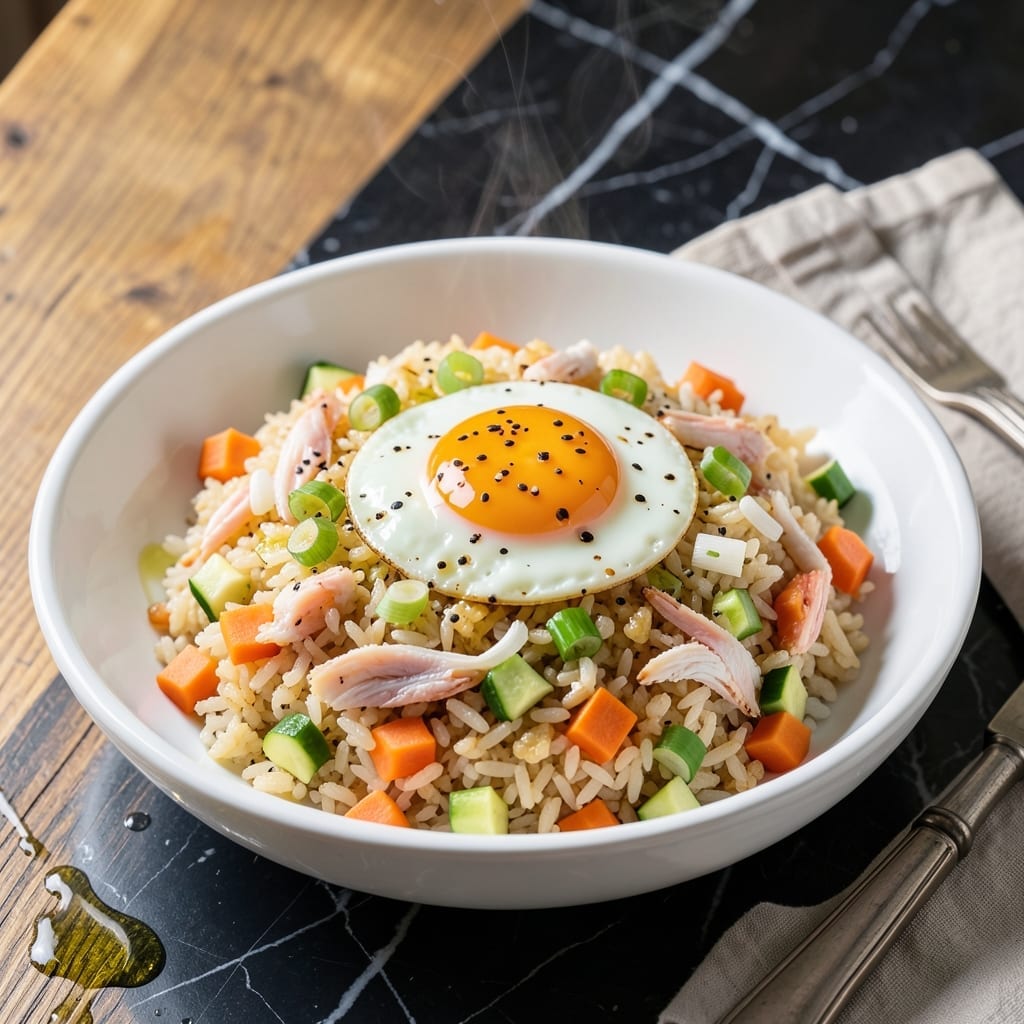
This Korean crab fried rice delivers wok-charred flavor with every bite, blending sweet crab meat with traditional seasonings. The dish captures the essence of Korean street food in your home kitchen.
The secret lies in high-heat cooking that creates smoky depth while preserving the crab’s delicate sweetness. Each grain of rice absorbs the umami-rich sauce, creating a harmony of textures and flavors.
You’ll achieve restaurant-quality results with simple techniques and accessible ingredients. The final dish features tender crab, savory rice, and a subtle sweetness that defines Korean cuisine.
Perfect as a main course or side dish, this fried rice brings bold Korean flavors to your table with minimal effort.
Ingredients for Korean Crab Fried Rice
Every bite starts with these fresh, bold ingredients for authentic wok-charred flavor.
| Ingredient | Amount | Notes |
|---|---|---|
| Cooked White Rice 🍚 | 4 cups | Day-old, chilled preferred |
| Imitation Crab Meat 🦀 | 8 oz | Flaked, or use real lump crab |
| Large Eggs 🥚 | 2 whole | Beaten for scrambling |
| Green Onions 🧅 | 4 whole | Thinly sliced, white and green parts separated |
| Carrot 🥕 | 1 whole | Medium, finely diced |
| Zucchini 🥒 | 1 whole | Medium, finely diced |
| Garlic Cloves 🧄 | 3 cloves | Minced for maximum flavor |
| Gochujang 🌶️ | 2 tbsp | Korean red pepper paste |
| Soy Sauce 🫒 | 2 tbsp | Low-sodium preferred |
| Sesame Oil 🫒 | 1 tbsp | Toasted for depth |
| Vegetable Oil 🫒 | 2 tbsp | High smoke point for frying |
| Sugar 🍚 | 1 tsp | Balances the heat |
| Salt 🧂 | ½ tsp | Adjust to taste |
| Black Pepper 🌶️ | ¼ tsp | Freshly ground preferred |
| Toasted Sesame Seeds 🌰 | 1 tbsp | For garnish and crunch |
The crab is the star here. Imitation crab from H Mart or Korean markets works great (and is budget-friendly), but if you can splurge, fresh lump crab meat takes this to restaurant level. Day-old rice is key—it fries up fluffy instead of mushy. I keep a batch in the fridge just for fried rice nights. For the gochujang, look for Sempio or Kochukaru brands at Asian grocery stores.
No gochujang? Sriracha plus a dash of miso paste gets you close, though the flavor won’t be as complex. Swap crab for shrimp or scallops if that’s what’s on hand. Fresh out of sesame oil? Perilla oil adds a nice twist. The veggies are flexible—bell peppers or peas work too. Just keep everything finely diced so it blends into the rice.
This dish is best fresh out of the wok, but leftovers keep for 2-3 days in the fridge. Reheat in a skillet with a splash of oil to restore the crispiness. Don’t freeze it—the rice gets gummy. Toast the sesame seeds just before serving for maximum crunch.
Why You’ll Love This Recipe
- 20-Minute Meal: I can get this from fridge to plate faster than delivery arrives, and the carrot adds just enough crunch.
- Umami Bomb: The imitation crab soaks up the soy and sesame oil like a flavor sponge, making every bite ridicously good.
- Lunchbox Hero: Pack it cold for work or school—my kid actually eats the veggies when they’re mixed in.
- Pantry MVP: Between us, I always have leftover rice and a bag of crab sticks, so this saves me from takeout on those “what’s for dinner?” nights.
Step-by-Step Instructions for Korean Crab Fried Rice
Here’s the method. Straightforward, tested, works every time.
Step 1: Prep Vegetables and Protein
Finely dice the carrot and zucchini into uniform ¼-inch pieces for even cooking. Thinly slice the green onions, keeping white and green parts separate for layered flavor. Mince the 3 cloves garlic cloves until it’s nearly paste-like.
Flake the 8 oz imitation crab meat into bite-sized pieces with your fingers. Beat the 2 whole large eggs in a small bowl with a pinch of the 0.5 tsp salt and 0.25 tsp black pepper. This prep ensures everything cooks quickly and evenly when it hits the hot wok.
Step 2: Stir-Fry Aromatics and Vegetables
Heat 1 tbsp vegetable oil in a wok or large skillet over high heat until it shimmers. Add the white parts of the green onions and the minced garlic cloves, stir-frying for 20-30 seconds until fragrant but not browned.
Add the diced carrot and zucchini, tossing constantly with a wooden spatula for 2-3 minutes until the vegetables soften slightly but retain their bright color. The edges should start to look slightly translucent—this means they’re ready for the next step.
Step 3: Combine Rice, Sauce, and Crab
Push the vegetables to one side of the wok and add the remaining 1 tbsp vegetable oil. Pour in the beaten eggs and scramble until just set but still slightly runny—about 45 seconds. Immediately add the 4 cups cooked white rice, breaking up any clumps with your spatula.
Drizzle the 2 tbsp gochujang, 2 tbsp soy sauce, 1 tbsp sesame oil, and 1 tsp sugar over the rice. Add the flaked imitation crab meat. Stir-fry for 3-4 minutes until everything is evenly coated and the rice develops a slight char with a nutty aroma.
Step 4: Finish and Garnish
Taste and adjust seasoning with the remaining 0.5 tsp salt if needed. The flavors should be balanced—sweet from the crab, spicy from the gochujang, and umami from the soy. Remove from heat and stir in the green parts of the green onions, reserving a pinch for garnish.
Transfer to a serving platter and sprinkle with the reserved green onions and the 1 tbsp toasted sesame seeds. The rice should have distinct wok-hei charred bits and a glossy, well-coated appearance. Serve immediately while hot for the best texture and flavor.
Pro Tips For Making Korean Crab Fried Rice
- Use Cold Rice: Day-old rice works best—fresh rice turns mushy when fried. I learned this the hard way after my first batch turned into a sticky mess.
- Chop Crab Small: Shred the imitation crab into tiny pieces so it distributes evenly and doesn’t clump together in big, rubbery chunks.
- Cook Eggs Separately: Scramble the eggs first, remove them from the pan, then add back at the end—this prevents them from overcooking into dry bits.
- High Heat, Quick Stir: Crank the heat to medium-high and keep everything moving constantly. After burning three batches, I finally figured out this is the only way to get that coveted slight char.
Storing and Reheating korean crab fried rice
Refrigerator Storage
Let your fried rice cool completely before storing—this prevents condensation that makes it soggy. Transfer to airtight containers (I use glass ones) and refrigerate at 40°F or below for up to 3 days. The flavors will actually deepen overnight. ❄️
Freezer Storage
While I don’t recommend freezing this dish (the rice tends to get mushy), you can freeze portions for up to 1 month if needed. Use freezer-safe bags with all air pressed out, and thaw overnight in the fridge before reheating.
Skillet Reheating
My preferred method: heat 1 tbsp vegetable oil in a skillet over medium-high heat. Add the fried rice in a single layer and cook for 3-4 minutes per side, stirring occasionally. This restores the wok-charred texture beautifully. 🔥
Microwave Reheating
For quick meals, spread the rice on a microwave-safe plate and cover with a damp paper towel. Heat on 70% power for 1-2 minutes, stir, then repeat until hot. Add a splash of water if it seems dry.
Reviving Leftovers
If your reheated rice lacks flavor, drizzle with a little extra sesame oil or soy sauce. For texture, crack an egg into the skillet during reheating and scramble it in. This trick makes leftovers taste almost fresh.
Nutrition Facts
Frequently Asked Questions
Can I use fresh rice instead of day-old?
Day-old rice works best because it’s drier and fries up fluffier. Fresh rice can get mushy and clump together in the wok. If you must use fresh, spread it on a tray to cool and dry out for 30 minutes before cooking.
What’s a good substitute for gochujang?
Mix 1 tbsp sriracha with 1 tsp miso paste for a similar spicy-savory kick. It won’t be identical, but the combination provides depth. Adjust the amount to taste.
Why does my fried rice turn out soggy?
This usually happens from overcrowding the pan or using too much sauce. Cook in batches if needed and use high heat to maintain the wok’s temperature. Let the rice develop a slight char before adding more ingredients.
Can I make this dish ahead of time?
Prep all ingredients in advance but cook just before serving. The dish loses its signature wok-charred texture if made too early. Store prepped veggies in the fridge for up to 24 hours.

- Mujadara Rice and Lentils Recipe: Earthy Spiced Lentils With Caramelized Onions - November 1, 2026
- Naija Fried Rice Recipe: Street-Style Spice With Veggie Crunch - November 1, 2026
- Mushy Rice Recipe: Fluffy Grains Transformed in Minutes - November 1, 2026