
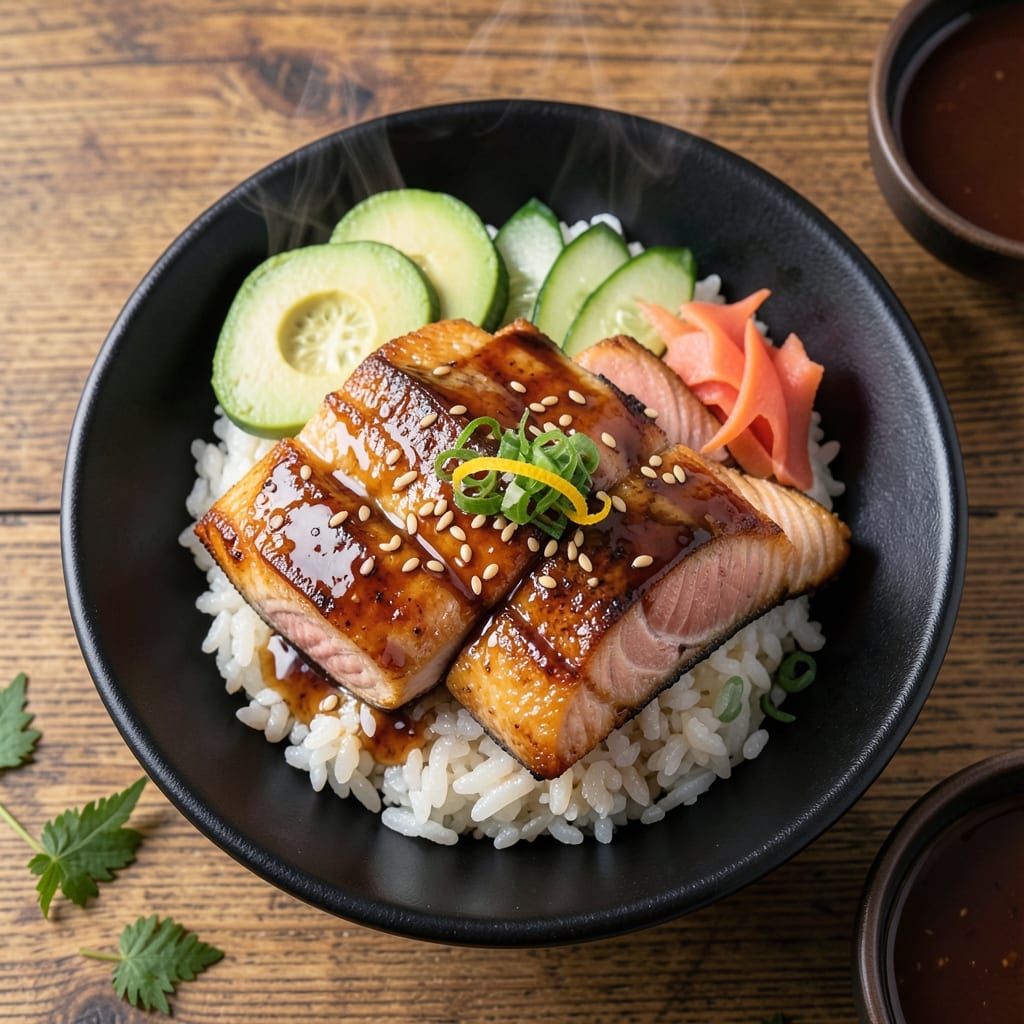
This Japanese-inspired salmon bowl brings bold umami flavors to your table with minimal effort. The wok-searing technique locks in juices while creating a crispy exterior that pairs perfectly with steamed rice.
What sets this dish apart is the quick, high-heat cooking method that mimics restaurant quality at home. A simple glaze of soy, mirin, and sake transforms ordinary salmon into something extraordinary in under 15 minutes.
The foundation of fluffy rice supports the rich, savory salmon beautifully. Top with pickled vegetables or a soft-boiled egg for added texture and visual appeal.
This creation proves that impressive meals don’t require complex techniques—just smart ingredient combinations and precise timing.
Ingredients for Japanese Salmon Rice Bowl Recipe Tiktok
High-quality salmon, umami-rich glaze, and fluffy rice create this restaurant-worthy bowl at home.
| Ingredient | Amount | Notes |
|---|---|---|
| Salmon Fillets 🐟 | 1 ½ lb | Skin-on, center-cut preferred |
| Sushi Rice 🍚 | 2 cups | Rinsed until water runs clear |
| Soy Sauce 🫒 | ¼ cup | Low-sodium preferred |
| Mirin 🍶 | 2 tbsp | Sweet cooking rice wine |
| Sake 🍶 | 2 tbsp | Dry variety for balance |
| Brown Sugar 🍚 | 1 tbsp | For glaze caramelization |
| Fresh Ginger 🌿 | 1 tbsp | Peeled and grated finely |
| Garlic Cloves 🧄 | 3 cloves | Minced for maximum flavor |
| Green Onions 🧅 | 4 whole | Thinly sliced for garnish |
| Sesame Seeds 🌰 | 1 tbsp | Toasted for nutty aroma |
| Neutral Oil 🫒 | 2 tbsp | High smoke point for searing |
| Rice Vinegar 🍶 | 1 tbsp | For pickled vegetables option |
| Cucumber 🥒 | ½ whole | Thinly sliced for topping |
| Soft-Boiled Eggs 🥚 | 4 whole | 6-minute cook time for runny yolk |
The salmon quality is non-negotiable here. Wild-caught sockeye or king salmon from Whole Foods or Trader Joe’s provides the best texture and flavor. Look for vibrant color and no fishy odor—freshness is key. Sushi rice brands like Nishiki or Koshihikari yield the ideal sticky texture. For the sake and mirin, Japanese specialty stores offer superior quality, but most supermarkets carry acceptable versions.
No sake? Substitute dry sherry or white wine at a 1:1 ratio. Mirin can be replaced with 1 tbsp honey mixed with 1 tbsp rice vinegar. For a gluten-free option, use tamari instead of soy sauce. The brown sugar can be swapped for coconut sugar (same amount). If fresh ginger isn’t available, ground ginger at one-third the quantity works, though the flavor will be less bright.
Store raw salmon in the coldest part of your fridge and use within 1-2 days. Cooked rice keeps for 3-4 days in an airtight container. The glaze can be made ahead and stored for up to 1 week. For optimal texture, assemble bowls just before serving to maintain crispness.
Why You’ll Love This Recipe
- One Pan Magic: The salmon and rice cook together in the same pot, so I’m not stuck washing a mountain of dishes afterward.
- Sweet-Savory Glaze: The mirin and soy sauce caramelize on the salmon, giving that sticky, umami-rich coating I can’t stop sneaking bites of.
- Meal Prep Hero: I make a big batch on Sunday and the flavors actually get better by Wednesday’s lunch.
- Budget Stretcher: A little sake and mirin go a long way, so this feels fancy without the price tag of takeout.
Step-by-Step Instructions for Japanese Salmon Rice Bowl
Master the technique behind this viral dish with precise timing and professional methods.
Step 1: Prepare the Sushi Rice Foundation
Rinse the 2 cups Sushi Rice under cold water until the water runs completely clear. This removes excess starch that could make your rice gummy. I use a fine-mesh strainer for this process, agitating the grains gently with my fingers.
Cook the rice according to package instructions, but let it rest covered for 10 minutes after cooking. The grains should be distinct yet tender, with a slight stickiness that’s perfect for bowl construction. Keep it warm until assembly.
Step 2: Create the Umami Glaze for Salmon
In a small saucepan, combine the 0.25 cup Soy Sauce, 2 tbsp Mirin, 2 tbsp Sake, 1 tbsp Brown Sugar, 1 tbsp Fresh Ginger, and 3 cloves Garlic Cloves. Bring to a gentle simmer over medium heat and cook for 3-4 minutes until the sugar dissolves and the mixture thickens slightly.
The glaze should coat the back of a spoon with a glossy sheen. Remove from heat immediately to prevent over-reduction—this maintains the perfect balance of sweet, salty, and umami flavors that will elevate the salmon.
Step 3: Wok-Sear the Salmon to Perfection
Pat the 1.5 lb Salmon Fillets completely dry with paper towels. This ensures a proper sear. Heat 2 tbsp Neutral Oil in a wok or large skillet over medium-high heat until shimmering but not smoking.
Place the salmon skin-side down and press gently with a spatula for 10 seconds to prevent curling. Sear undisturbed for 4-5 minutes until the skin is crisp and golden. Flip and brush generously with half the prepared glaze, cooking for another 2-3 minutes until the fish flakes easily with a fork. The internal temperature should reach 145°F.
Step 4: Assemble the Bowl with Precision
Divide the warm sushi rice among four bowls. Top each portion with a seared salmon fillet, then drizzle with the remaining glaze. The rice should be the base, with the salmon positioned slightly off-center for visual appeal.
Arrange the 0.5 whole Cucumber (thinly sliced) and 4 whole Soft-Boiled Eggs (halved) around the salmon. Sprinkle with 1 tbsp Sesame Seeds and 4 whole Green Onions (thinly sliced) for color and texture contrast. Each bowl should be a balanced composition of colors and temperatures.
Step 5: Final Touches and Serving
For an elevated presentation, lightly toss the cucumber slices with 1 tbsp Rice Vinegar before arranging. This adds a bright, tangy element that cuts through the richness of the salmon and glaze.
Serve immediately while the salmon is still warm and the egg yolks are runny. The ideal bite combines all elements: the crispy salmon skin, creamy egg, cool cucumber, and sticky rice soaked with umami glaze.
Pro Tips For Making Japanese Salmon Rice Bowl Recipe Tiktok
- Pat Salmon Dry: I learned this the hard way—skip this and your salmon will steam instead of sear. Press the fillets between paper towels for 30 seconds to guarantee that crispy skin everyone loves.
- Rinse the Rice: Sounds tedious, but it removes excess starch so your sushi rice doesn’t turn into a gummy mess. Swirl it in cold water 3-4 times until the water runs clear.
- Don’t Boil the Glaze: Resist the urge to simmer your soy-mirin-sake mix at full blast—it’ll reduce too fast and turn bitter. Keep it at a gentle bubble to build that sticky, glossy finish.
- Rest Before Serving: Give the salmon 3-4 minutes off the heat before slicing over rice. It keeps the juices inside the fish instead of all over your bowl.
Best Sauces and Condiments for This Recipe
Classic Teriyaki Glaze
This is my go-to for enhancing the salmon’s natural flavors. Mix 3 tbsp soy sauce, 1 tbsp mirin, 1 tbsp sake, and 1 tsp brown sugar. Simmer for 5 minutes until thickened, then brush on seared salmon. The glossy finish is irresistible. ✨
Spicy Sriracha Mayo
Combine ¼ cup mayonnaise with 1-2 tbsp sriracha and 1 tsp lime juice for a creamy, fiery kick. I use Kewpie mayo for authentic Japanese flavor. Drizzle over the bowl just before serving to maintain the vibrant color.
Miso-Sesame Dressing
Whisk together 2 tbsp white miso paste, 1 tbsp rice vinegar, 1 tbsp sesame oil, and 1 tsp honey. Thin with 1-2 tbsp water for a pourable consistency. This adds complex umami depth to every bite. 💛
Quick Pickled Vegetables
Slice ½ cucumber and 1 carrot thinly, then toss with 2 tbsp rice vinegar, 1 tsp sugar, and ½ tsp salt. Let sit for 15 minutes before adding to bowls. The crunch and tang cut through the richness perfectly.
Ginger-Scallion Oil
Heat ¼ cup neutral oil until hot, then pour over 2 tbsp minced scallions and 1 tbsp grated ginger. Let steep for 10 minutes before drizzling. I love how this adds aromatic warmth without overpowering the dish.
Furikake Seasoning
Sprinkle 1-2 tsp furikake over each bowl for an instant flavor boost. Look for nori komi or salmon-flavored varieties at Asian markets. It adds texture and a subtle seafood depth that complements the salmon beautifully.
Nutrition Facts
Frequently Asked Questions
Can I use a regular pan instead of a wok?
Yes! A heavy skillet works just as well for searing. Use medium-high heat and ensure the pan is hot before adding oil. The key is maintaining consistent heat for that perfect crispy skin.
What’s the best rice substitute?
Short-grain white rice is ideal, but jasmine or basmati work in a pinch. Avoid long-grain varieties as they lack the stickiness needed for bowl structure. Rinse thoroughly for best texture.
How do I prevent the salmon from sticking?
Pat the fillets completely dry and don’t move them for the first 4-5 minutes. A well-heated pan with enough oil creates a natural non-stick surface. Let the skin crisp before flipping.
Can I make this ahead of time?
Cook the rice and glaze up to 1 day ahead, but sear the salmon fresh. Assemble bowls just before serving to keep the skin crispy and the egg yolk runny.

- Mujadara Rice and Lentils Recipe: Earthy Spiced Lentils With Caramelized Onions - November 1, 2026
- Naija Fried Rice Recipe: Street-Style Spice With Veggie Crunch - November 1, 2026
- Mushy Rice Recipe: Fluffy Grains Transformed in Minutes - November 1, 2026