
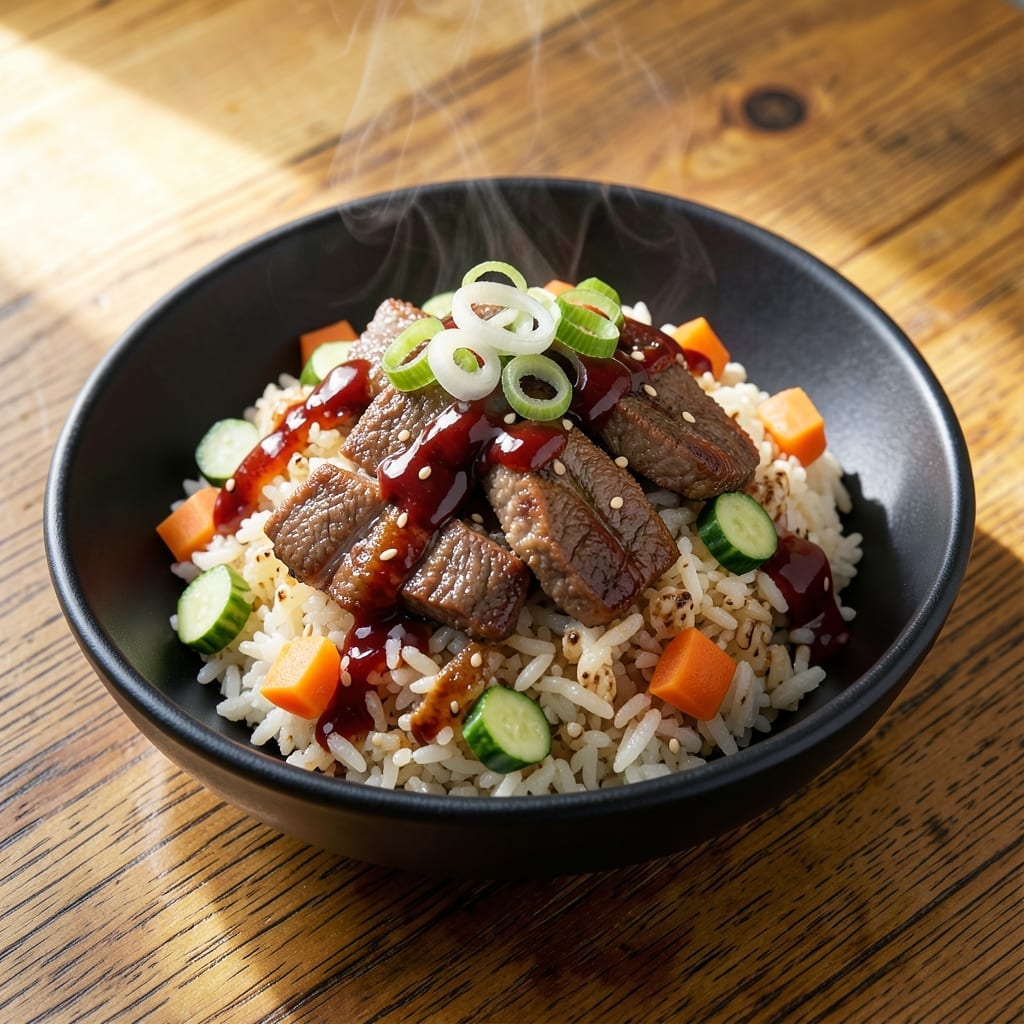
This Korean BBQ fried rice brings smoky-sweet beef and nutty grains together in a dish that’s both hearty and deeply satisfying.
The secret lies in using leftover bulgogi or quickly marinated beef, paired with day-old rice for that perfect chewy texture. A touch of gochujang adds heat, while sesame oil lends its signature aroma.
Every bite delivers caramelized beef, crisp vegetables, and rice that’s golden and slightly crispy. It’s a complete meal that balances rich, savory, and slightly spicy flavors.
Ready in under 30 minutes, this recipe turns simple ingredients into a dish that tastes like it came from a Korean kitchen.
Ingredients for Korean Bbq Fried Rice
Day-old rice, smoky beef, and bold Korean flavors come together for this satisfying dish.
| Ingredient | Amount | Notes |
|---|---|---|
| Day-Old Cooked White Rice 🍚 | 4 cups | Cold, preferably overnight |
| Bulgogi Beef 🥩 | 1 lb | Thinly sliced, pre-marinated |
| Gochujang 🌶️ | 2 tbsp | Korean red pepper paste |
| Sesame Oil 🫒 | 1 ½ tbsp | Toasted, for aroma |
| Soy Sauce 💧 | 3 tbsp | Low-sodium preferred |
| Carrots 🥕 | 1 whole | Medium, diced small |
| Zucchini 🥒 | 1 whole | Medium, diced small |
| Green Onions 🧅 | 4 whole | Thinly sliced, whites and greens separated |
| Garlic Cloves 🧄 | 3 cloves | Minced finely |
| Large Eggs 🥚 | 2 whole | Beaten, for topping |
| Vegetable Oil 🫒 | 2 tbsp | Neutral flavor, for frying |
| Sesame Seeds 🌰 | 1 tbsp | Toasted, for garnish |
| Salt 🧂 | ½ tsp | Adjust to taste |
| Black Pepper 🌶️ | ¼ tsp | Freshly ground |
The beef is non-negotiable here. Leftover bulgogi (from a Korean market or your own batch) saves time, but you can quick-marinate thin ribeye slices with soy, sugar, garlic, and pear for 30 minutes. H Mart or Assi Plaza carry authentic bulgogi beef if you’re near a Korean grocery. Day-old rice is key—fresh rice turns mushy when stir-fried.
No bulgogi? Thinly sliced sirloin or flank steak works, but marinate it first. Substitute gochujang with sriracha mixed with miso (1:1 ratio) if needed. Frozen peas or corn can replace the zucchini or carrots. For extra authenticity, add a splash of rice vinegar at the end for brightness.
Store leftovers airtight in the fridge for up to 3 days. Reheat in a skillet with a splash of water to revive the texture. Freeze without the egg topping for up to 3 months—just add fresh egg when reheating.
Why You’ll Love This Recipe
- One Pan Wonder: I toss everything—the beef, rice, and sauces—into one hot pan, and dinner’s ready before I even set the table.
- Umami Bomb: The gochujang and soy sauce mix with the caramelized bulgogi for that sweet-spicy depth I crave every time.
- Feeds a Crowd: I double the batch and pack leftovers for lunch the next day—still tastes amazing cold or reheated.
- Budget Stretcher: Day-old rice and leftover bulgogi beef turn into a brand-new meal, saving me a grocery run.
Step-by-Step Instructions for Korean BBQ Fried Rice
Master the technique for perfectly charred grains with bold, balanced flavors every time.
Step 1: Prep Vegetables and Aromatics
Dice the carrots and zucchini into small, even ¼-inch pieces so they cook quickly and uniformly. Thinly slice all 4 green onions, keeping the whites and greens separate for layered flavor. Mince the 3 garlic cloves finely—this ensures they distribute evenly throughout the dish.
This prep work is crucial because the cooking process moves fast once it starts. Having everything ready prevents burning and ensures each bite contains a perfect mix of textures and flavors. I keep the diced vegetables in separate piles to maintain control over the cooking process.
Step 2: Scramble Eggs and Cook Bulgogi Beef
Heat 1 tablespoon vegetable oil in a large wok or skillet over medium-high heat until shimmering. Pour in the 2 beaten large eggs and scramble quickly until just set but still slightly soft—about 1 minute. Remove the eggs and set aside.
In the same pan, add the remaining 1 tablespoon vegetable oil and cook the 1 lb bulgogi beef for 3-4 minutes until browned and cooked through. The pre-marinated beef will release its smoky-sweet flavors into the pan, creating a rich base for the fried rice.
Step 3: Stir-Fry Vegetables and Rice
Add the diced carrots and zucchini to the pan with the beef. Stir-fry for 3-4 minutes until the vegetables soften slightly but retain a bit of crispness. Add the minced garlic and white parts of the green onions, cooking for 30 seconds until fragrant.
Break up the 4 cups day-old cooked white rice with your hands and add it to the pan. The cold, dry rice is essential—it fries up fluffy with distinct grains rather than turning mushy. Stir-fry everything together for 2-3 minutes until the rice is heated through.
Step 4: Season and Finish
Create a well in the center of the pan and add the 2 tbsp gochujang, 3 tbsp soy sauce, and 1.5 tbsp sesame oil. Stir quickly to distribute these liquids evenly throughout the rice. The gochujang will melt into the mixture, coating each grain with its spicy-sweet depth.
Return the scrambled eggs to the pan and add the green onion tops. Season with ½ tsp salt and ¼ tsp black pepper. Toss everything together for 1-2 minutes until the rice takes on a glossy sheen and all ingredients are uniformly distributed.
Remove from heat and sprinkle with 1 tbsp sesame seeds for a nutty finish.
Pro Tips For Making Korean Bbq Fried Rice
- Use Cold Rice: I learned this the hard way—fresh rice turns to mush. Day-old, refrigerated white rice holds its shape and fries up with that perfect chewy texture.
- Pre-cook the Beef: Skip raw beef and use pre-made bulgogi for faster cooking and deeper flavor. Just chop it into small pieces so it distributes evenly in the rice.
- High Heat First: Crank the heat to medium-high when frying the rice. Sounds obvious, but it’s the only way to get those slightly crispy edges without turning the dish soggy.
- Bloom the Gochujang: Mix the gochujang with a little sesame oil and soy sauce before adding it to the pan. This keeps it from clumping and helps it coat every grain of rice.
Flavor Customization for This Dish
Spice Level Adjustments
For a milder dish, reduce gochujang to 1 tbsp and add 1 tsp honey to balance the heat. This keeps the depth of flavor without overwhelming spiciness. I often do this when cooking for kids or sensitive palates.
Extra Umami Boost
Add 1 tbsp fish sauce or 1 tsp soy sauce for an extra layer of savory complexity. A sprinkle of MSG (¼ tsp) works too if you’re comfortable with it. These small additions elevate the beef’s natural richness.
Vegetable Swaps
Swap zucchini for bell peppers (diced) or add kimchi (½ cup) for tangy depth. Mushrooms (½ cup shiitake) add earthy notes. Always dice vegetables small so they cook quickly and blend seamlessly with the rice. 🥗
Protein Variations
Use thinly sliced pork or chicken instead of beef—marinate with the same bulgogi flavors. For a vegetarian version, tofu (1 lb, pressed and cubed) works beautifully. Add 1 tsp smoked paprika for a BBQ-like depth.
Texture Enhancements
For extra crunch, top with crushed roasted peanuts or fried shallots. A drizzle of chili oil adds heat and texture. I love the contrast of crispy elements against the soft rice and tender beef. 🔥
Garnish Ideas
Beyond sesame seeds, try cilantro, nori strips, or a lime wedge for brightness. These finishing touches add freshness and visual appeal. A soft-boiled egg on top makes it restaurant-style.
Nutrition Facts
Frequently Asked Questions
Can I use fresh rice instead of day-old?
Always use day-old rice for best texture. Fresh rice contains too much moisture, making your fried rice mushy instead of fluffy. Spread freshly cooked rice on a tray and refrigerate for 1-2 hours if needed.
What if I don’t have bulgogi beef?
Use thinly sliced sirloin or ribeye marinated with soy sauce, brown sugar, garlic, and pear for 30 minutes. For vegetarian, try pressed tofu with 1 tsp smoked paprika for depth.
How do I make it less spicy?
Reduce gochujang to 1 tbsp and add 1 tsp honey to balance. For no heat, omit gochujang entirely and use 1 tbsp soy sauce plus 1 tsp sugar.
Can I add other vegetables?
Try bell peppers, kimchi, or shiitake mushrooms. Dice small for even cooking. ½ cup of any vegetable works well in this dish.

- Jollof Rice Sauce Recipe: West African Tomato and Spice Infusion - September 25, 2026
- Japanese Rice Soup Recipe: Umami-Rich Comfort in a Bowl - September 25, 2026
- Homemade Cream Of Rice Recipe: Silk-Smooth Breakfast in Minutes - September 25, 2026