
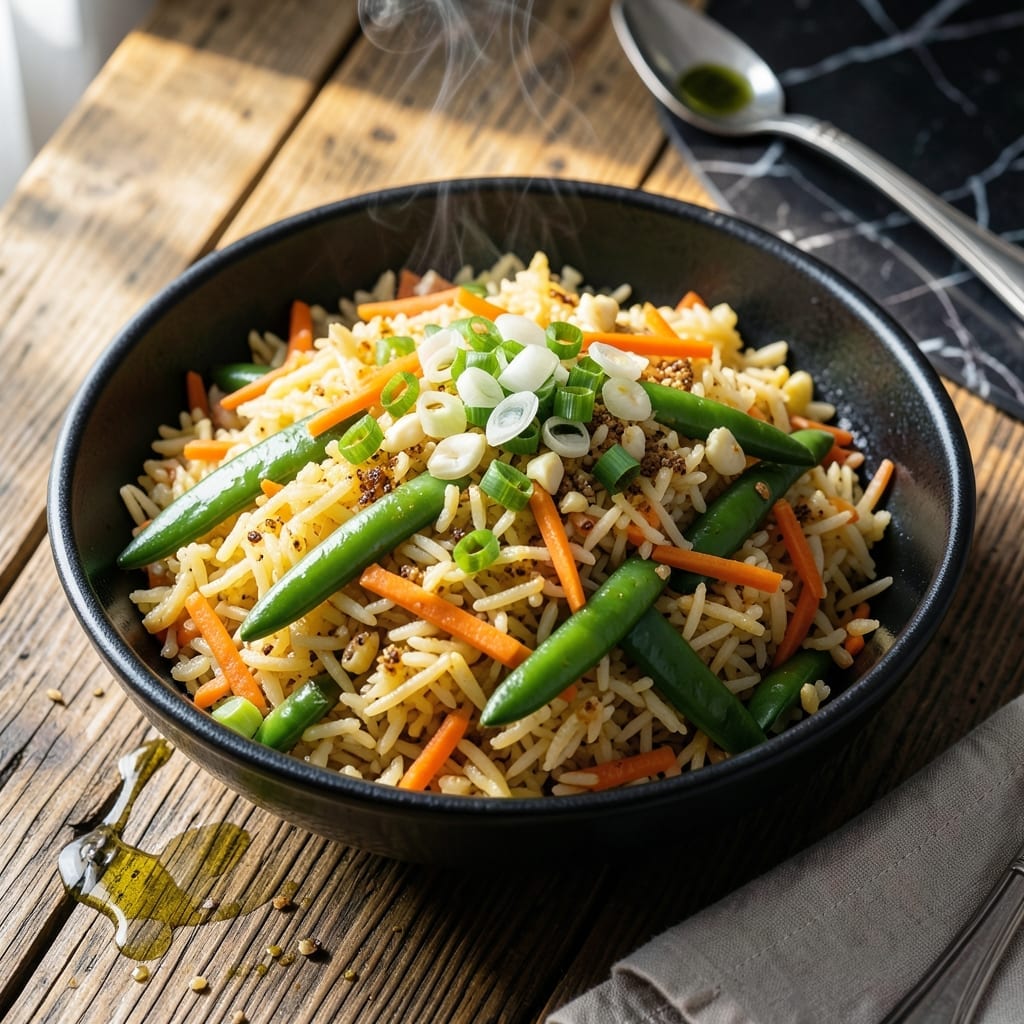
This street-style vegetarian fried rice brings bold Indian flavors to your kitchen with minimal effort. The key lies in high-heat cooking and a precise blend of traditional spices.
You’ll achieve perfectly charred vegetables and fragrant basmati rice with that signature wok-hei taste. The result is a restaurant-quality dish ready in 30 minutes.
Ingredients for Veg Fried Rice Recipe Indian
Basmati rice, fresh veggies, and bold Indian spices come together for this vibrant dish.
| Ingredient | Amount | Notes |
|---|---|---|
| Basmati Rice 🍚 | 2 cups | Day-old, cooked and cooled |
| Carrots 🥕 | 2 whole | Medium, finely diced |
| Green Beans 🌱 | 1 cup | Trimmed, cut into 1-inch pieces |
| Green Onions 🧅 | 4 whole | Thinly sliced, whites and greens separated |
| Garlic Cloves 🧄 | 4 cloves | Minced finely |
| Fresh Ginger 🌿 | 1 tbsp | Peeled and grated |
| Green Chilies 🌶️ | 2 whole | Finely chopped, seeds removed |
| Cumin Seeds 🌿 | 1 tsp | Whole, for tempering |
| Mustard Seeds 🌿 | 1 tsp | Whole, for tempering |
| Ground Turmeric 🌶️ | ½ tsp | For color and earthiness |
| Garam Masala 🌿 | 1 tsp | Freshly ground preferred |
| Vegetable Oil 🫒 | 3 tbsp | High smoke point for frying |
| Soy Sauce 💧 | 2 tbsp | Low-sodium for balance |
| Lemon Juice 🍋 | 1 tbsp | Freshly squeezed |
| Fresh Cilantro 🌿 | ¼ cup | Chopped, for garnish |
Basmati rice is non-negotiable here—its long grains hold up to high-heat stir-frying without turning mushy. Look for aged basmati at Indian grocery stores (like Patel Brothers or H-Mart) for the best texture and aroma. The cumin and mustard seeds are the flavor base, so make sure they’re fresh (old spices taste like dust). I always grab my whole spices from Burlap & Barrel for maximum punch.
No basmati? Jasmine rice works in a pinch, but the dish won’t have that signature Indian perfume. Fresh ginger and garlic are key—jarred minced versions won’t cut it. Short on veggies? Bell peppers or snap peas add great crunch. For extra protein, firm tofu (pressed and cubed) soaks up the spices beautifully. Skip the soy sauce if avoiding gluten, and use tamari instead.
Cooked rice keeps in the fridge for 3-4 days—perfect for meal prep. The fried rice itself is best eaten fresh but reheats well in a skillet with a splash of water. Store leftovers in an airtight container for up to 3 days. Freezing isn’t recommended (the texture suffers).
Why You’ll Love This Recipe
- One Pan Wonder: I toss everything—basmati, carrots, green beans—into a single pan. Honestly, cleanup is a breeze.
- Garlic Kick: The minced garlic cloves fry into the rice, giving it that deep, aromatic punch I crave every time.
- Lunchbox Hero: I pack leftovers for work, and the veggies stay crisp even the next day.
- Budget Stretcher: A cup of rice, a handful of veggies, and I’ve fed four of us for pennies.
Step-by-Step Instructions for Veg Fried Rice Indian
This street-style method delivers smoky, spiced rice with perfectly charred vegetables every time.
Step 1: Temper the Whole Spices in Hot Oil
Heat 3 tbsp Vegetable Oil in a large wok or deep skillet over medium-high heat until it shimmers. Add 1 tsp Cumin Seeds and 1 tsp Mustard Seeds, then immediately cover with a lid—this prevents the seeds from popping out of the pan.
Cook for 30-45 seconds until the mustard seeds begin to pop and the cumin seeds turn fragrant and slightly darker. This tempering process releases the aromatic oils in the spices, creating the foundation of flavor for your dish. Keep the heat high but watch carefully to avoid burning the spices.
Step 2: Sauté Aromatics and Vegetables
Uncover and add 4 cloves Garlic Cloves, 1 tbsp Fresh Ginger, 2 whole Green Chilies, and the white parts of 4 whole Green Onions. Stir-fry for 1-2 minutes until the garlic turns light golden and the raw smell disappears.
Add 2 whole Carrots and 1 cup Green Beans, then increase heat to high. Stir-fry for 4-5 minutes until the vegetables are tender-crisp with slightly charred edges. The wok should be hot enough that the veggies sizzle audibly when stirred.
Step 3: Incorporate Rice and Seasonings
Add 2 cups Basmati Rice, breaking up any clumps with your spatula. The rice should be day-old and cold—this prevents it from turning mushy during cooking. Stir-fry for 2-3 minutes until the rice is fully heated through and begins to develop a slight toasted aroma.
Reduce heat to medium, then add 0.5 tsp Ground Turmeric, 1 tsp Garam Masala, and 2 tbsp Soy Sauce. Stir well to coat the rice and vegetables evenly. The turmeric will give the dish its characteristic golden hue while the garam masala adds depth.
Step 4: Finish with Fresh Elements and Serve
Drizzle 1 tbsp Lemon Juice over the rice and toss to combine. The acidity brightens all the flavors. Remove from heat and stir in the green parts of the 4 whole Green Onions—these add a fresh, crisp contrast to the cooked elements.
Garnish with 0.25 cup Fresh Cilantro and serve immediately while hot. The cilantro should be added at the very end to preserve its vibrant color and fresh flavor. Each serving should have a balance of charred vegetables, fragrant rice, and bright herbal notes.
Pro Tips For Making Veg Fried Rice Recipe Indian
- Use Day-Old Rice: Fresh rice turns mushy—spread leftover basmati on a tray and refrigerate overnight to dry it out. I learned this the hard way after too many soggy batches.
- High Heat Only: Crank the flame to max and cook in small batches. After burning three attempts, I finally figured out that crowded veggies steam instead of searing.
- Uniform Veg Cuts: Slice carrots and green beans into thin, even sticks—about 2 inches long—so they cook through in the same 3-4 minutes as the garlic. Sounds fussy, but it works.
- Prep All First: Have every ingredient chopped, measured, and within reach before the wok hits the flame. My grandmother swore by this, and she was right: fried rice moves too fast for mid-cook chopping.
Storing and Reheating This Dish
Refrigerator Storage
Let your fried rice cool completely before transferring to an airtight container. It will keep in the fridge at 40°F or below for up to 3 days. The flavors actually deepen overnight as the spices continue to meld. ❄️
Freezing Not Recommended
While you can freeze leftovers for up to 1 month, I don’t recommend it. The rice tends to turn mushy and lose its signature wok-charred texture when thawed and reheated. Fresh is always best with this dish.
Skillet Reheating
My preferred method: Heat a skillet over medium heat, add 1-2 tbsp water, then spread the rice in an even layer. Cover and heat for 3-4 minutes, stirring occasionally. This revives the texture beautifully.
Microwave Method
Place portions in a microwave-safe dish with 1 tbsp water per cup of rice. Cover loosely and heat on 70% power for 1-2 minutes, stirring halfway. Add fresh cilantro after reheating to brighten the flavors. 🔥
Reviving Leftovers
If your rice seems dry after storage, sprinkle 1-2 tsp water over it before reheating. The steam will help restore moisture. Always taste and adjust seasoning—sometimes a pinch of salt or squeeze of lemon brings it back to life.
Nutrition Facts
Frequently Asked Questions
Why use day-old rice for fried rice?
Day-old rice is drier and firmer, preventing mushiness when stir-fried. Freshly cooked rice has too much moisture and will clump together in the wok.
Can I add other vegetables to this recipe?
Bell peppers, snap peas, or corn work well. Just ensure they’re cut uniformly for even cooking and maintain the high heat to achieve that signature char.
How do I prevent my fried rice from being bland?
Don’t skimp on the tempering step with cumin and mustard seeds. Also, always taste before serving and adjust with extra garam masala or a squeeze of lemon if needed.
What can I use instead of soy sauce?
For a gluten-free option, use tamari. Coconut aminos work too but have a sweeter profile. Adjust salt levels accordingly as these substitutes vary in sodium content.

- Jollof Rice Sauce Recipe: West African Tomato and Spice Infusion - September 25, 2026
- Japanese Rice Soup Recipe: Umami-Rich Comfort in a Bowl - September 25, 2026
- Homemade Cream Of Rice Recipe: Silk-Smooth Breakfast in Minutes - September 25, 2026