
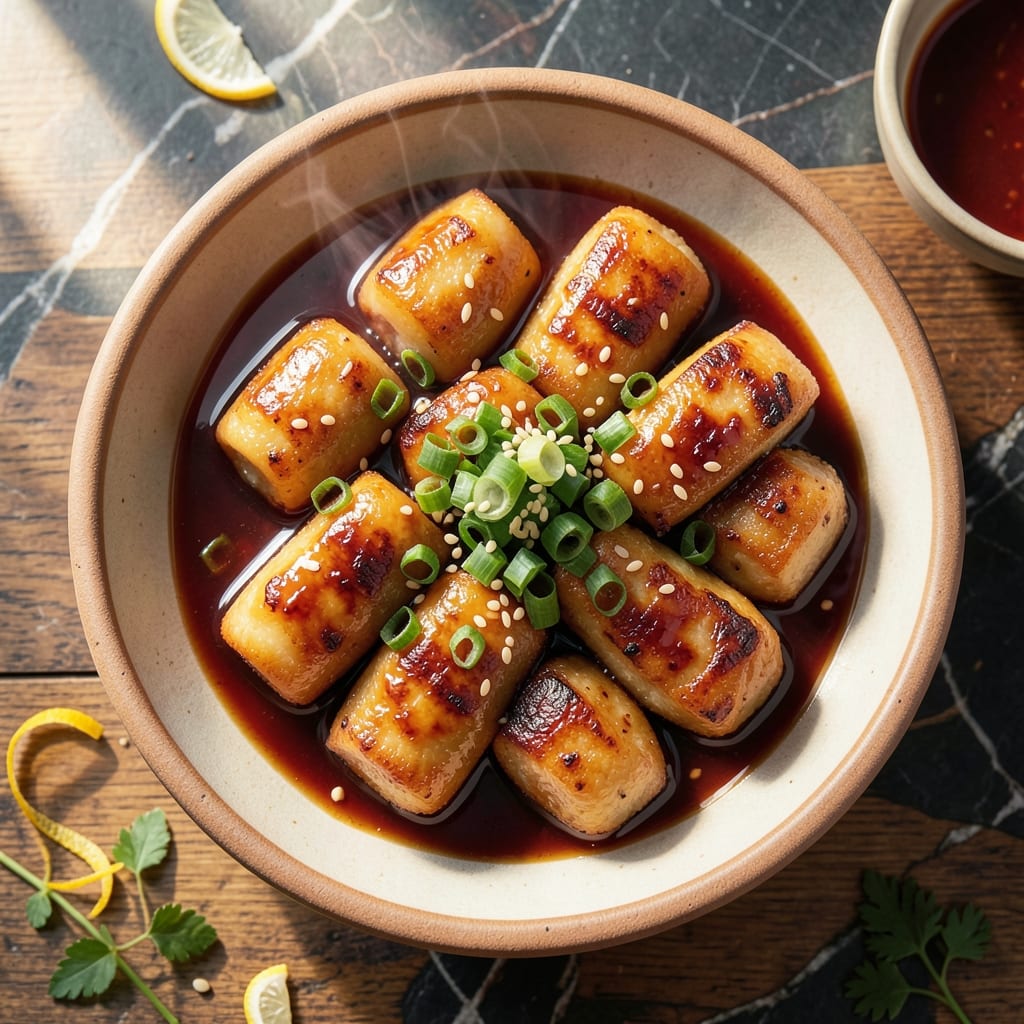
This street food classic brings together chewy rice cakes and savory fish cakes in a dish that’s as satisfying as it is comforting. I’ve refined this recipe to capture the authentic flavors of Korean markets right in your kitchen.
The key is cooking the rice cakes until they’re soft but still slightly resistant, while the fish cakes develop a golden crust. A simple sauce ties everything together, creating layers of umami and subtle sweetness.
You’ll end up with a dish that’s hearty yet balanced, with textures that keep every bite interesting. It’s the kind of meal that feels special but comes together with minimal effort.
Serve it hot, garnished with green onions and a sprinkle of sesame seeds for the full experience.
Ingredients for Korean Rice Cake Fish Cake
Chewy rice cakes, golden fish cakes, and a bold sauce bring this street food to life.
| Ingredient | Amount | Notes |
|---|---|---|
| Korean Rice Cakes 🍚 | 1 lb | Cylindrical ttuk, pre-soaked if hard |
| Fish Cakes 🐟 | 8 pieces | Korean odeng, thawed if frozen |
| Green Onions 🧅 | 4 whole | Thinly sliced for garnish |
| Sesame Seeds 🌿 | 1 tbsp | Toasted for aroma |
| Soy Sauce 🫒 | 3 tbsp | Low-sodium preferred |
| Gochujang 🌶️ | 2 tbsp | Korean chili paste |
| Brown Sugar 🍯 | 1 tbsp | Or honey for sweetness |
| Garlic Cloves 🧄 | 3 cloves | Minced for sauce |
| Sesame Oil 🫒 | 1 tbsp | Toasted for depth |
| Vegetable Oil 🫒 | 2 tbsp | For pan-frying fish cakes |
| Red Pepper Flakes 🌶️ | ½ tsp | Optional for heat |
| Rice Vinegar 🍚 | 1 tbsp | Balances sauce sweetness |
| Dashi Stock 🍲 | 1 cup | Or vegetable broth |
The rice cakes are everything here. Look for cylindrical ttuk at Korean markets—they’re chewier than the flat kind. H Mart or Nam Dae Mun usually stock them fresh or frozen. If they’re rock-hard, soak in warm water for 20 minutes before cooking. For fish cakes, Korean odeng (surimi-based) is traditional, but any mild white fish cake works. Check the freezer section if the fresh case is empty.
No gochujang? Sriracha plus a little miso paste gets you close (start with 1 tbsp each). Vegan? Swap fish cakes for tofu or king oyster mushrooms. Out of dashi? Vegetable or even chicken broth works in a pinch. The brown sugar can be subbed with maple syrup or honey. If you can’t find sesame oil, skip it—don’t use regular oil as a replacement, the flavor’s totally different.
Leftovers keep 3-4 days in the fridge (the rice cakes soak up sauce like crazy). Reheat gently in a pan with a splash of water to bring the chew back. Freezing? Not ideal—rice cakes turn mushy when thawed. Best made fresh and eaten hot, which honestly isn’t hard since it comes together in 30 minutes.
Why You’ll Love This Recipe
- 20-Minute Meal: I toss everything in one pan and it’s ready before the rice cooker finishes.
- Umami Bomb: The soy sauce and fish cakes create this deep, savory flavor that’s ridiculously good.
- Feeds a Crowd: I make a big batch and it disappears—great for potlucks or lazy weekends.
- Budget Stretcher: Rice cakes and fish cakes are cheap, but the dish feels like a restaurant meal.
Step-by-Step Instructions for Korean Rice Cake Fish Cake
This method brings out the best chewy texture and bold flavors in every bite.
Step 1: Prepare the Rice Cakes and Fish Cakes
If your Korean rice cakes are hard or dry, soak them in warm water for 10-15 minutes until they become soft and pliable. Drain them well in a colander and set aside. This step ensures they cook evenly and absorb the sauce beautifully.
For the fish cakes, check if they’re frozen—if so, thaw them in the refrigerator for 1 hour or at room temperature for 30 minutes. Once thawed, cut them into bite-sized pieces. This makes them easier to eat and allows them to soak up more of the delicious sauce.
Step 2: Make the Savory-Sweet Sauce
In a small bowl, combine the 3 tbsp soy sauce, 2 tbsp gochujang, 1 tbsp brown sugar, minced 3 cloves garlic cloves, 1 tbsp sesame oil, 0.5 tsp red pepper flakes, and 1 tbsp rice vinegar. Whisk everything together until the brown sugar dissolves completely and the sauce is smooth.
I like to taste the sauce at this point to ensure the balance of flavors is just right. The sauce should be savory with a touch of sweetness and a subtle kick from the gochujang and red pepper flakes. If it needs a little more tang, you can add a splash more rice vinegar.
Step 3: Pan-Fry the Fish Cakes
Heat the 2 tbsp vegetable oil in a large skillet over medium-high heat. Add the fish cake pieces in a single layer, being careful not to overcrowd the pan. Cook for 2-3 minutes per side until they turn golden brown and slightly crispy on the outside.
Once the fish cakes are cooked, remove them from the pan and set them aside on a paper towel-lined plate to drain any excess oil. This step gives them a nice texture and deepens their flavor before they meet the rice cakes and sauce.
Step 4: Bring It All Together
In the same skillet, add the drained Korean rice cakes and pour the prepared sauce over them. Stir well to coat the rice cakes evenly. Then, add the 1 cup dashi stock and bring the mixture to a gentle simmer over medium heat. Cook for 5-7 minutes, stirring occasionally, until the rice cakes are heated through and the sauce thickens slightly.
Return the fish cakes to the skillet and stir everything together. Let it simmer for another 2-3 minutes so the fish cakes absorb some of the sauce and all the flavors meld together beautifully.
Step 5: Garnish and Serve
Remove the skillet from the heat and stir in the thinly sliced 4 whole green onions. Then, sprinkle the 1 tbsp sesame seeds over the top. The green onions add a fresh, crisp contrast to the chewy rice cakes and fish cakes, while the sesame seeds provide a nutty aroma.
Transfer to a serving dish and enjoy immediately while hot. The rice cakes should be tender and chewy, the fish cakes flavorful and slightly crisp, and the sauce rich and perfectly balanced with every bite.
Pro Tips For Making Korean Rice Cake Fish Cake
- Soak the Rice Cakes: I learned this the hard way—dry rice cakes turn rock-hard when cooked, so soak them in warm water for 10-15 minutes before adding to the pan. They’ll plump up and absorb the sauce better.
- Pan-Fry Fish Cakes First: Skip the boiling and pan-fry the fish cakes for 2-3 minutes per side in a little oil to get a golden crust. It adds texture and keeps them from falling apart in the sauce.
- Don’t Overcrowd the Pan: After burning three batches, I finally figured out that rice cakes and fish cakes need room to cook evenly. Work in batches if your pan isn’t big enough.
- Bloom the Soy Sauce: Sounds weird, but it works: heat the soy sauce with a teaspoon of sugar and a clove of minced garlic for 1-2 minutes before adding the other ingredients. It deepens the flavor.
Common Mistakes When Making Great korean rice cake fish cake
Skipping the Soak
Hard rice cakes need soaking—10-15 minutes in warm water makes them pliable. Skipping this step means they’ll stay rock-hard in the center while the outside burns. I learned this the hard way my first time making this dish.
Overcrowding the Pan
Fish cakes release moisture when cooking. Crowding them steams instead of fries, leaving you with soggy pieces. Cook in batches with 2 tbsp vegetable oil over medium-high heat for that perfect golden crust.
Sauce Imbalance
This sauce needs balance—too much gochujang overpowers, too little makes it bland. Taste as you mix the 3 tbsp soy sauce, 1 tbsp brown sugar, and other ingredients. Adjust with a splash of rice vinegar if needed. 💡
Rushing the Simmer
Let the rice cakes simmer in the sauce for 5-7 minutes. Rushing this step leaves them undercooked inside. The sauce should thicken slightly and coat each piece evenly.
Neglecting the Garnish
Don’t skip the green onions and sesame seeds—they add freshness and aroma that elevate the dish. I always toast my sesame seeds first for extra nuttiness.
Using Cold Stock
Cold dashi stock slows down the cooking process. Use room temperature or warm stock to maintain consistent heat. This helps the rice cakes absorb flavor evenly.
Nutrition Facts
Frequently Asked Questions
What if my rice cakes are too hard to chew?
Soak them in warm water for 10-15 minutes before cooking. This softens them perfectly for even cooking and sauce absorption. Skipping this step risks a crunchy center.
Can I make this spicier?
Add extra gochujang or a pinch of red pepper flakes to the sauce. Start with 1/2 tsp and adjust to taste. Balance is key!
What’s the best way to reheat leftovers?
Gently warm in a pan with a splash of water over medium heat for 3-4 minutes. This restores the chewy texture better than microwaving.
Can I use frozen fish cakes?
Yes! Thaw them in the fridge for 1 hour or at room temperature for 30 minutes. Pat dry before frying for the best crispiness.

- Jollof Rice Sauce Recipe: West African Tomato and Spice Infusion - September 25, 2026
- Japanese Rice Soup Recipe: Umami-Rich Comfort in a Bowl - September 25, 2026
- Homemade Cream Of Rice Recipe: Silk-Smooth Breakfast in Minutes - September 25, 2026