
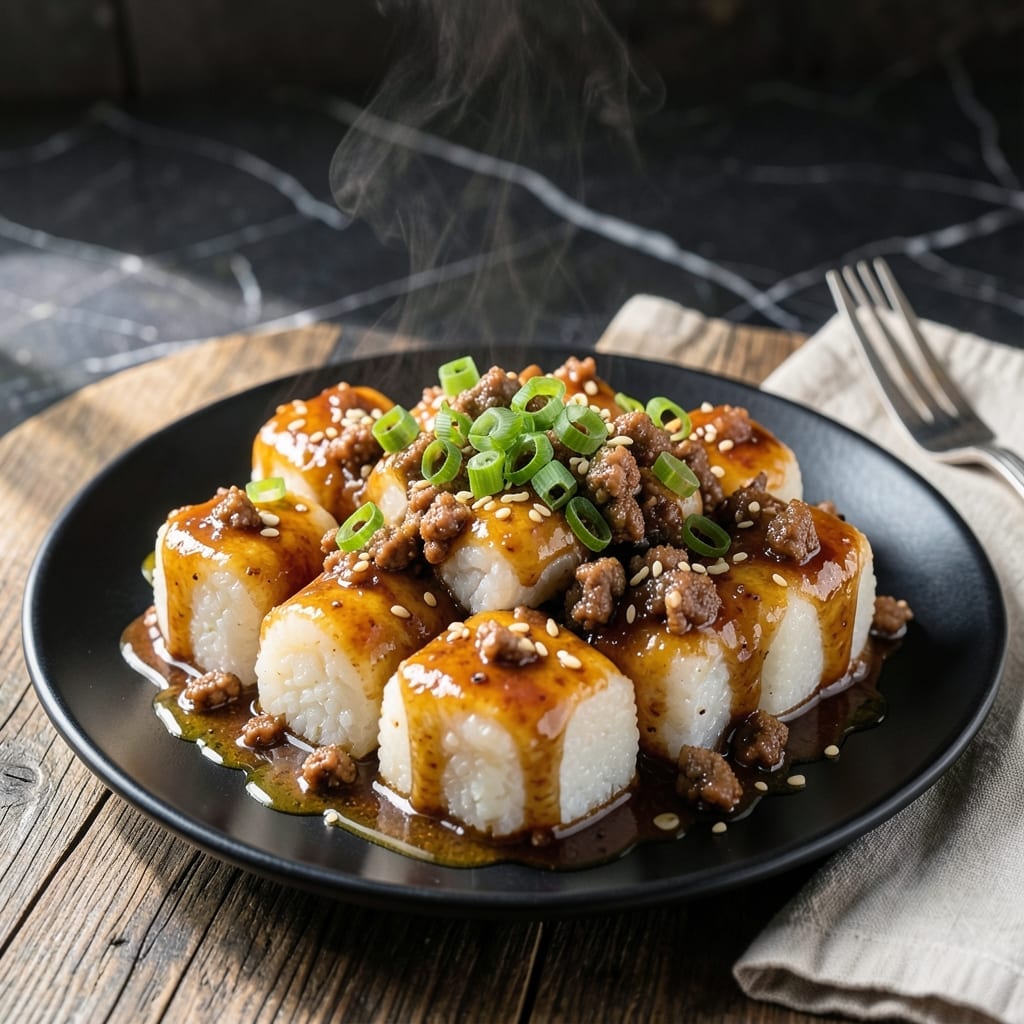
There’s something deeply satisfying about the chewy texture of Korean rice cakes paired with spicy, savory ground pork. This dish brings authentic Korean flavors to your home kitchen with a balance of heat, sweetness, and umami.
The rice cakes soak up the bold, spicy-sweet sauce while the ground pork adds hearty richness. A few simple ingredients and traditional seasonings create layers of flavor that taste like they came from a Korean restaurant.
What emerges is a dish with tender rice cakes and perfectly seasoned pork that’s both comforting and exciting. Each bite delivers that signature chewy texture with a kick of spice that keeps you coming back.
Ready to transform your dinner routine with this Korean classic. Here’s how to make it.
Ingredients for Korean Rice Cake Ground Pork
A handful of authentic ingredients bring this Korean classic to vibrant, flavorful life.
| Ingredient | Amount | Notes |
|---|---|---|
| Korean Rice Cakes 🍚 | 1 lb | Cylindrical or flat, pre-soaked if dry |
| Ground Pork 🐖 | 1 lb | Preferably 80/20 fat ratio |
| Gochujang 🌶️ | 3 tbsp | Korean red chili paste, essential |
| Soy Sauce 🫒 | 3 tbsp | Low-sodium preferred for balance |
| Brown Sugar 🍚 | 2 tbsp | Light or dark, packed |
| Garlic Cloves 🧄 | 4 cloves | Minced finely for even distribution |
| Fresh Ginger 🌿 | 1 tbsp | Grated or minced |
| Sesame Oil 🫒 | 1 tbsp | Toasted for depth of flavor |
| Vegetable Oil 🫒 | 2 tbsp | For sautéing pork and rice cakes |
| Green Onions 🧅 | 4 whole | Thinly sliced, white and green parts |
| Carrot 🥕 | 1 whole | Julienned for texture contrast |
| Red Bell Pepper 🌶️ | ½ whole | Thinly sliced for color |
| Toasted Sesame Seeds 🌾 | 1 tsp | For garnish and crunch |
| Korean Red Pepper Flakes 🌶️ | 1 tsp | Gochugaru, adjust for heat preference |
| Salt 🧂 | ½ tsp | To taste, for seasoning |
The rice cakes are everything here. Look for fresh ones in the refrigerated section of an Asian market (they’re chewy and soft) or grab dried and soak them yourself—just don’t skip the soak. Ground pork with a bit of fat (80/20) keeps the dish rich. H Mart or Korean grocery stores will have gochujang and gochugaru, but Amazon works in a pinch. Fresh ginger and garlic are non-negotiable for that authentic punch.
No gochujang? Sriracha plus a little miso paste gets you close (not perfect, but functional). Swap pork for ground chicken or beef if that’s what you’ve got. Brown sugar can be replaced with honey or maple syrup, but the molasses notes in brown sugar really complement the gochujang. Skip the sesame oil and you’ll lose a layer of depth—it’s worth the investment.
Fresh rice cakes keep in the fridge for 3-4 days (soak dried ones as needed). Gochujang and gochugaru last 6-12 months in a cool, dark place. The dish reheats well—store leftovers in an airtight container for up to 3 days.
Why You’ll Love This Recipe
- One Pot Meal: I toss everything in a single pan—the rice cakes, pork, gochujang, soy sauce—and let it simmer. Cleanup’s a breeze.
- Sweet and Spicy: The gochujang and brown sugar create this sticky, caramelized glaze on the pork. It’s the kind of flavor that makes you go back for seconds.
- Weeknight Hero: Between us, this is my Tuesday night lifesaver. It’s hearty enough for dinner but quick enough for lunch the next day.
- Stretches Far: A pound of pork and a bag of rice cakes feeds my family of four, with leftovers. Honestly, it’s one of the most budget-friendly meals I make.
Step-by-Step Instructions for Chewy Rice Cakes with Spicy Pork
Master the art of this dish with my foolproof method for perfect texture and bold flavor every time.
Step 1: Prepare the Aromatic Base
Heat the 2 tbsp vegetable oil in a large skillet or wok over medium-high heat. Add the 1 lb ground pork and cook for 5-6 minutes, breaking it into small pieces with a wooden spoon until it’s no longer pink and starts to brown.
Stir in the minced 4 cloves garlic cloves, 1 tbsp fresh ginger, 1 whole carrot (julienned), and 0.5 whole red bell pepper (thinly sliced). Cook for 3-4 minutes until the carrot begins to soften and the garlic becomes fragrant. This builds the flavor foundation for your dish.
Step 2: Create the Spicy-Sweet Sauce
Reduce heat to medium and add the 3 tbsp gochujang, 3 tbsp soy sauce, and 2 tbsp brown sugar to the pork mixture. Stir well to combine, ensuring the gochujang is fully incorporated—it can be thick and sticky.
Add the 1 tbsp sesame oil and 0.5 tsp salt. Cook for 2-3 minutes, stirring constantly, until the sauce thickens slightly and coats the pork evenly. The brown sugar will caramelize slightly, adding depth to the flavor. Taste and adjust seasoning if needed.
Step 3: Incorporate the Rice Cakes
Add the 1 lb Korean rice cakes to the skillet, stirring gently to coat them in the sauce. If using dry rice cakes that were pre-soaked, they should be tender but still slightly chewy. Cook for 4-5 minutes, stirring occasionally, until the rice cakes absorb some of the sauce and become soft.
Splash in ¼ cup water if the mixture seems too dry—the rice cakes will release starch, which helps thicken the sauce into a glossy coating. You want the rice cakes to be tender but still slightly chewy, not mushy.
Step 4: Finish and Garnish
Remove from heat and stir in the thinly sliced 4 whole green onions, reserving a few slices for garnish. The residual heat will soften the green onions slightly while keeping their fresh crunch.
Transfer to a serving dish and garnish with the remaining green onions, 1 tsp toasted sesame seeds, and 1 tsp Korean red pepper flakes. The toasted sesame seeds add a nutty crunch, while the Korean red pepper flakes provide a final kick of heat and color. Serve immediately while hot.
Pro Tips For Making Korean Rice Cake Ground Pork
- Soak the Rice Cakes: I learned this the hard way—if your rice cakes are rock-hard out of the package, soak them in warm water for 10-15 minutes while prepping the rest. They’ll soften just enough to soak up the sauce without turning mushy.
- Brown the Pork First: Always cook the ground pork until it’s fully browned and crumbly before adding the rice cakes. Skipping this leaves you with a greasy, undercooked mess instead of rich, flavorful meat.
- Balance the Gochujang: Gochujang can overpower the dish if you’re heavy-handed. Start with 2 tablespoons, then adjust with a little more soy sauce or brown sugar to taste—this keeps the heat and sweetness in check.
- Use a Heavy Pan: Sounds weird, but a heavy-bottomed skillet or pot prevents the sauce from burning while the rice cakes finish cooking. I burned two batches in a thin pan before switching to cast iron.
Pro Cooking Tips for Perfect Results
Rice Cake Prep
If using dried rice cakes, soak them in warm water for 20-30 minutes until they’re soft but still slightly firm. Fresh rice cakes from the refrigerated section work best—I find H Mart always has them. Drain well before adding to the pork mixture to prevent a watery sauce. 💡
Pork Texture Tip
Use 80/20 ground pork for the best flavor and moisture. Brown it thoroughly until it’s no longer pink but not completely crispy—you want small, crumbly pieces that will soak up the sauce. I like to press it with my spatula to create more surface area for browning.
Sauce Balance
Taste your sauce before adding the rice cakes. If it’s too spicy, add 1 tsp honey to mellow the heat. If it’s too sweet, balance with 1 tsp rice vinegar. The sauce should be bold but harmonious—adjusting now prevents over-seasoning later.
Stir-Fry Technique
Cook the rice cakes over medium-high heat and stir frequently. They’ll absorb the sauce and develop a slightly sticky, glossy coating. If they stick, add ¼ cup water and scrape up any browned bits—that’s pure flavor! Use a non-stick wok for easiest cleanup. 🔥
Garnish Like a Pro
Toast your sesame seeds in a dry pan over medium heat for 1-2 minutes until golden and fragrant. Sprinkle them along with the green onions and gochugaru right before serving for maximum crunch and freshness. This final touch makes all the difference.
Timing Matters
Don’t let the rice cakes cook too long after adding them or they’ll turn mushy. Aim for 4-5 minutes maximum—they should be tender but still have that signature chew. Serve immediately while the sauce is still glossy and the rice cakes are at their peak texture.
Nutrition Facts
Frequently Asked Questions
Do I need to soak rice cakes before cooking?
Yes, if using dried ones. Soak in warm water for 20-30 minutes until soft but still firm. Fresh refrigerated ones can go straight in.
Can I make this less spicy?
Reduce gochujang to 2 tbsp and skip the Korean red pepper flakes. Add 1 tsp honey to balance the heat.
What if my sauce is too thick?
Add ¼ cup water gradually while stirring. The rice cakes will release starch to help thicken it back up.
How long will leftovers keep?
Store in an airtight container for up to 3 days. Reheat gently with a splash of water to restore the sauce.

- Jollof Rice Sauce Recipe: West African Tomato and Spice Infusion - September 25, 2026
- Japanese Rice Soup Recipe: Umami-Rich Comfort in a Bowl - September 25, 2026
- Homemade Cream Of Rice Recipe: Silk-Smooth Breakfast in Minutes - September 25, 2026