
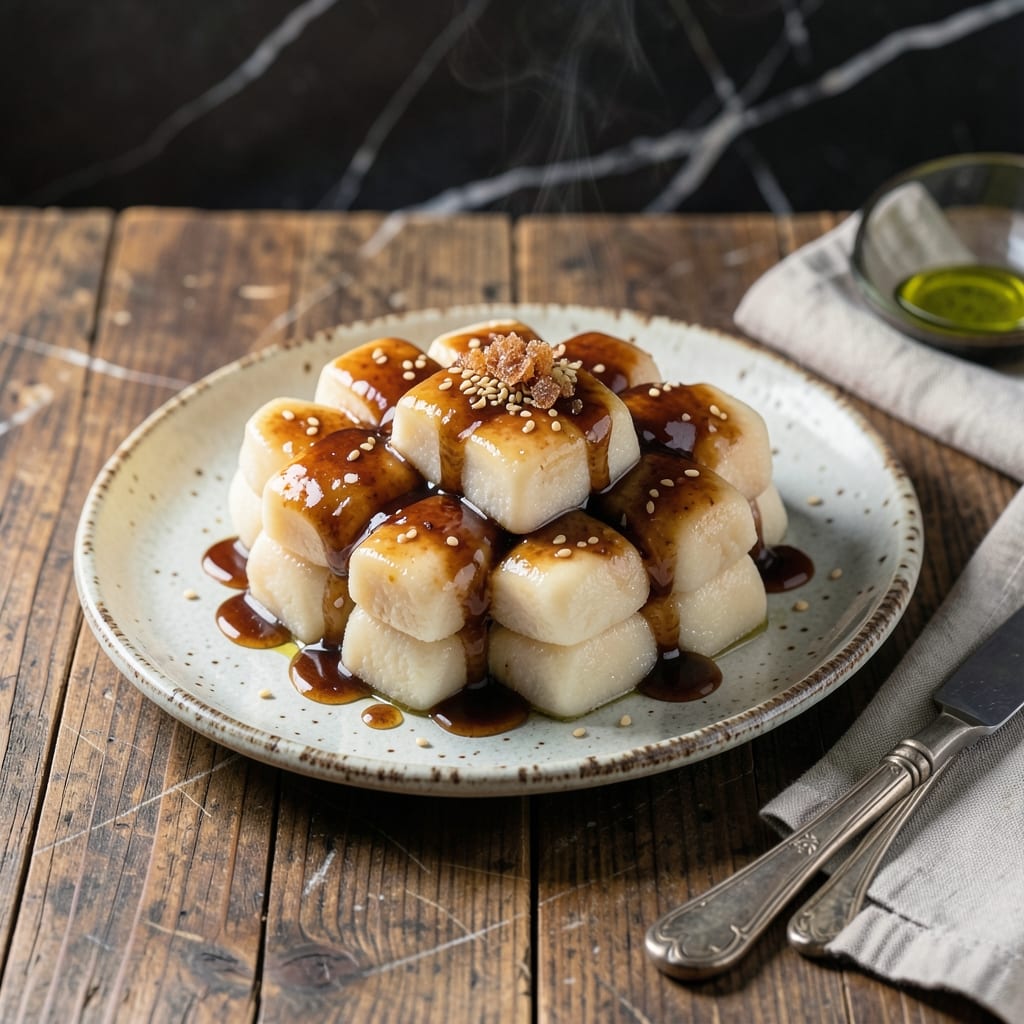
I first watched my grandmother make Korean rice cakes by feel, her hands moving with practiced precision. This dish captures that same intuitive magic with a spicy gochujang glaze.
What sets this version apart is the balance between heat and sweetness, creating a sauce that clings perfectly to the chewy rice cakes. The process is straightforward but requires attention to detail.
You’ll end up with tender rice cakes coated in a glossy, deeply flavorful sauce that’s both comforting and exciting. The dish comes together quickly once the components are prepped.
Serve immediately while hot for the best texture and flavor. This is one recipe where timing matters.
Ingredients for Korean Rice Cake Recipe Ideas
Chewy rice cakes meet bold, spicy-sweet sauce with ingredients you can find at any Asian market.
| Ingredient | Amount | Notes |
|---|---|---|
| Korean Rice Cakes 🍚 | 1 lb | Cylindrical tteok, fresh or frozen |
| Gochujang 🌶️ | ½ cup | Korean red pepper paste |
| Soy Sauce 🫒 | 3 tbsp | Low-sodium preferred for balance |
| Brown Sugar 🍯 | 2 tbsp | Light or dark variety |
| Rice Vinegar 🍶 | 1 tbsp | Mild acidity for brightness |
| Sesame Oil 🫒 | 1 tbsp | Toasted for nutty aroma |
| Garlic Cloves 🧄 | 4 cloves | Minced for maximum flavor |
| Fresh Ginger 🌿 | 1 tbsp | Grated, skin removed |
| Vegetable Stock 🥕 | 1 cup | Low-sodium for control |
| Green Onions 🧅 | 4 whole | Thinly sliced for garnish |
| Sesame Seeds 🌰 | 1 tbsp | Toasted for garnish |
| Red Pepper Flakes 🔥 | 1 tsp | Adjust for heat preference |
| Corn Syrup 🍯 | 1 tbsp | For glossy finish |
The rice cakes are everything here. H Mart or Korean grocers carry fresh tteok in the refrigerated section—look for the cylindrical ones (not the flat slices). Fresh is ideal, but frozen works too (thaw in warm water first). For gochujang, Sempio or Chongga brands are reliable. The sauce thickens as it cooks, so don’t rush it. I always grab extra rice cakes—they freeze beautifully for next time.
No gochujang? Miso paste plus Sriracha gets you close (use equal parts). Out of brown sugar? Honey or maple syrup at the same amount. Want it vegan? Agave syrup instead of honey. The vegetable stock can be swapped for water in a pinch, but you’ll lose depth. Fresh ginger is worth it—powdered at one-quarter the amount works if you’re desperate.
Leftovers keep 3-4 days in the fridge (the sauce thickens as it chills). Reheat with a splash of water to loosen. Freezes for 1 month—portion before freezing for easy meals. Always garnish fresh (those green onions and sesame seeds make it pop).
Why You’ll Love This Recipe
- One Pot Wonder: I toss everything in a single pan—rice cakes, gochujang, soy sauce—and let it simmer while I set the table.
- Sweet Heat Perfection: The gochujang and brown sugar create this sticky, spicy-sweet glaze that clings to every chewy bite.
- Weeknight Lifesaver: Between us, I’ve served this for dinner, lunch, and even a midnight snack—it works every time.
- Budget Stretcher: Honestly, a bag of rice cakes and a few pantry staples feed my family for days without breaking the bank.
Step-by-Step Instructions for Spicy Gochujang Glazed Tteokbokki
Transform simple ingredients into a dish bursting with sweet, spicy, and umami flavors.
Step 1: Prepare the Korean Rice Cakes
If using frozen 1 lb Korean Rice Cakes, soak them in warm water for 10-15 minutes until they soften and separate easily. Fresh rice cakes can be rinsed briefly under cold water to remove excess starch. This step ensures even cooking and prevents a gummy texture.
Drain the rice cakes thoroughly and set aside. I like to give them a quick pat with a clean towel to remove excess moisture—this helps the sauce cling better later. The rice cakes should be plump but not mushy before they hit the pan.
Step 2: Create the Gochujang Sauce Base
In a large skillet or wide pot, combine 0.5 cup Gochujang, 3 tbsp Soy Sauce, 2 tbsp Brown Sugar, 1 tbsp Rice Vinegar, 1 tbsp Sesame Oil, 4 cloves Garlic Cloves (minced), and 1 tbsp Fresh Ginger (grated). The aroma alone will make your kitchen smell incredible.
Add 1 cup Vegetable Stock and 1 tbsp Corn Syrup, then whisk until the mixture is smooth and the brown sugar fully dissolves. Bring this to a gentle simmer over medium heat—you’ll see small bubbles forming at the edges. This base develops depth as it reduces slightly.
Step 3: Cook the Rice Cakes in the Sauce
Add the drained Korean Rice Cakes to the simmering sauce. Stir gently to coat every piece evenly. The rice cakes will absorb the sauce and plump up further as they cook. Let them simmer for 5-7 minutes, stirring occasionally, until the sauce thickens and the rice cakes are tender.
Watch for the sauce to reduce to a glossy, syrupy consistency that clings to the rice cakes. If it thickens too quickly, add a splash of water or additional vegetable stock to loosen it. The rice cakes should be chewy but not hard in the center when done.
Step 4: Finish and Garnish
Once the rice cakes are cooked to your liking, stir in 1 tsp Red Pepper Flakes for an extra kick of heat. Taste and adjust the seasoning—if you prefer more sweetness, a touch of additional brown sugar works beautifully.
Transfer the tteokbokki to a serving dish and garnish with 4 whole Green Onions (thinly sliced) and 1 tbsp Sesame Seeds (toasted). The green onions add a fresh, crisp contrast to the rich, spicy sauce, while the sesame seeds provide a nutty crunch. Serve immediately while hot and glossy.
Pro Tips For Making Korean Rice Cake Recipe Ideas
- Soak the Rice Cakes: I learned this the hard way—dry rice cakes stay rock-hard. Soak them in warm water for 15-20 minutes before cooking, or they’ll never absorb the gochujang sauce properly.
- Bloom the Gochujang: Heat the gochujang with a little oil for 1-2 minutes before adding liquids. Sounds weird, but it deepens the flavor and removes that raw paste taste.
- Balance the Sweetness: Brown sugar can overpower the dish. Start with half the amount you think you need, then adjust—gochujang and soy sauce already bring their own sweetness.
- Simmer, Don’t Boil: After adding the rice cakes, keep the heat at a gentle simmer. Boiling turns them mushy fast, and nobody wants gluey rice cakes in their stir-fry.
Creative Variations of This korean rice cake recipe ideas
Cheesy Tteokbokki
Add 1 cup shredded mozzarella and ½ cup cheddar to the cooked rice cakes, then stir until melted into the sauce. This Korean-Italian fusion creates a stretchy, gooey texture that kids especially love. I like to top with an extra sprinkle of cheese before serving. 💛
Seafood Delight
Stir in ½ lb cooked shrimp or scallops during the final 2 minutes of cooking. The seafood soaks up the spicy sauce beautifully. For extra depth, add 1 tbsp fish sauce to the glaze. This version feels fancy but comes together just as easily.
Vegetable Medley
Add 1 cup sliced mushrooms and ½ cup bell peppers when cooking the sauce. The vegetables soften and absorb the flavors. For crunch, stir in 1 cup bean sprouts at the very end. Honestly, this is my go-to for adding more greens to the meal.
Mild Version
Reduce gochujang to ¼ cup and add 2 tbsp tomato paste for a sweeter, kid-friendly version. The tomato mellows the heat while keeping the sauce rich. I often make this for my nieces who can’t handle spice yet.
Extra Spicy
Double the red pepper flakes and add 1 chopped jalapeño to the sauce. For serious heat lovers, stir in 1 tbsp gochugaru (Korean chili flakes) at the end. Serve with cold milk ready—trust me on this one. 🔥
Creamy Twist
Stir in ¼ cup heavy cream or coconut milk at the end for a richer, milder sauce. This version pairs wonderfully with grilled meats. The cream tempers the heat while adding a luxurious mouthfeel.
Nutrition Facts
Frequently Asked Questions
Can I use fresh rice cakes instead of frozen?
Yes! Rinse fresh rice cakes briefly under cold water to remove excess starch. They’ll cook faster than frozen—reduce simmering time by 2-3 minutes.
How do I make it less spicy?
Cut the gochujang in half and add 2 tbsp tomato paste for sweetness. This kid-friendly version keeps the rich sauce texture.
What’s the best way to reheat leftovers?
Microwave with a splash of water for 1-2 minutes, stirring halfway. Or reheat in a skillet over medium-low heat with a little stock.

- Jollof Rice Sauce Recipe: West African Tomato and Spice Infusion - September 25, 2026
- Japanese Rice Soup Recipe: Umami-Rich Comfort in a Bowl - September 25, 2026
- Homemade Cream Of Rice Recipe: Silk-Smooth Breakfast in Minutes - September 25, 2026