
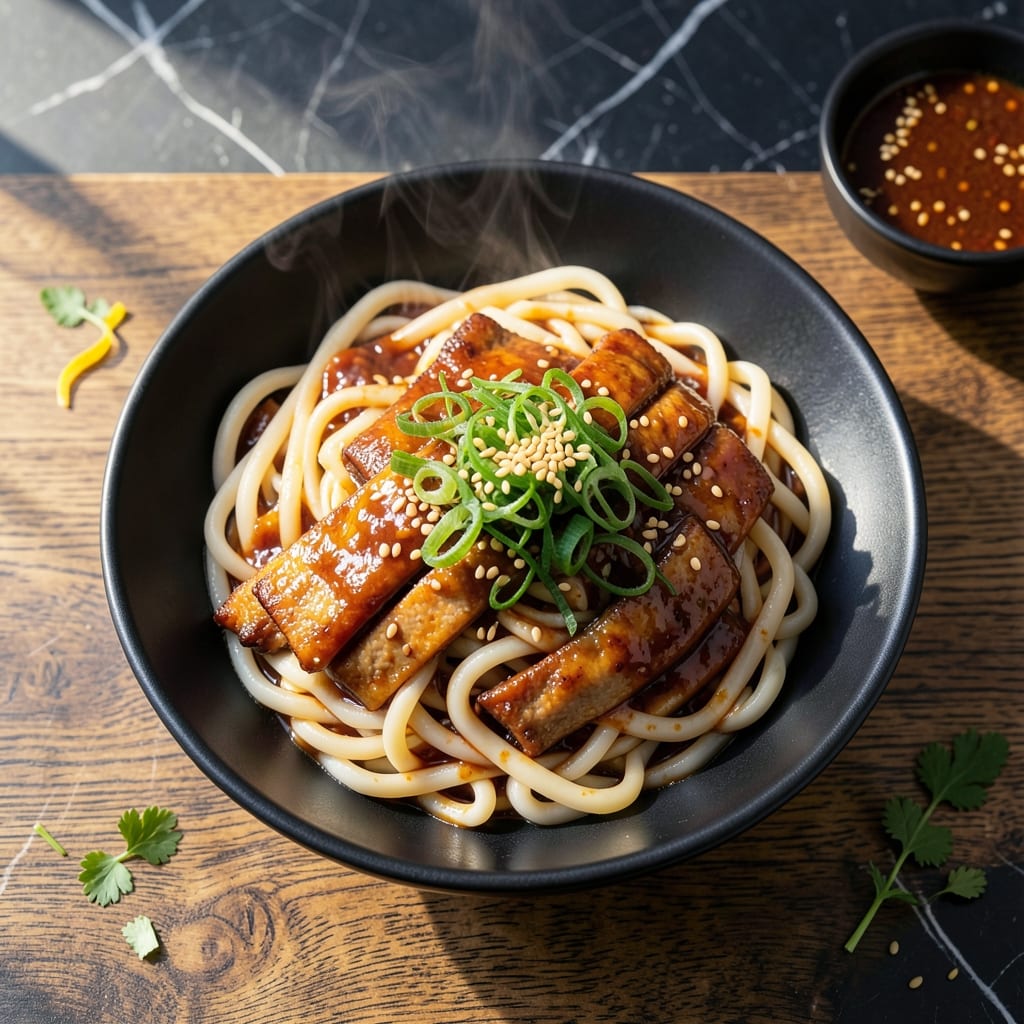
This Korean rice noodle dish delivers perfect chewy texture and bold flavors in every bite. The secret lies in the stir-fry technique and a well-balanced sauce.
I’ve refined this method to ensure the noodles stay springy, not mushy. High heat and quick cooking preserve their ideal consistency while allowing the flavors to meld.
The sauce combines sweet, savory, and spicy notes that coat each strand beautifully. Fresh vegetables add crunch and color to the final dish.
Serve hot for the best experience. This recipe brings restaurant-quality results to your home kitchen.
Ingredients for Korean Rice Noodle
Fresh vegetables, chewy noodles, and a bold sauce create this vibrant stir-fry at home.
| Ingredient | Amount | Notes |
|---|---|---|
| Dried Rice Stick Noodles 🍜 | 8 oz | Soaked in warm water 15 minutes |
| Soy Sauce 🥢 | ⅓ cup | Low-sodium preferred for balance |
| Gochujang 🌶️ | 2 tbsp | Korean red pepper paste essential |
| Brown Sugar 🍚 | 2 tbsp | Light or dark both work |
| Rice Vinegar 🍶 | 2 tbsp | Balances sweetness and spice |
| Sesame Oil 🫒 | 1 tbsp | Toasted for best aroma |
| Garlic Cloves 🧄 | 4 cloves | Minced finely for even flavor |
| Fresh Ginger 🌿 | 1 tbsp | Grated or minced |
| Carrots 🥕 | 2 whole | Julienned for quick cooking |
| Bell Peppers 🌶️ | 2 whole | Thinly sliced, any color |
| Green Onions 🧅 | 4 whole | Sliced, whites and greens separated |
| Vegetable Oil 🫒 | 3 tbsp | High smoke point for stir-frying |
| Sesame Seeds 🌿 | 1 tbsp | Toasted for garnish |
| Red Pepper Flakes 🌶️ | ½ tsp | Adjust to spice preference |
The rice noodles are non-negotiable here. Look for rice stick noodles (sometimes labeled as pad Thai noodles) at Asian markets or the international aisle of larger supermarkets like Kroger or Whole Foods. The gochujang is just as critical—Sempio or Chung Jung One are reliable brands. Avoid substituting sriracha; it lacks the fermented depth. For the soy sauce, Kikkoman low-sodium keeps the flavor balanced without overwhelming saltiness.
No gochujang? Miso paste plus a pinch of cayenne can approximate the umami, but the flavor profile changes. Fresh ginger is ideal, but ground ginger at half the amount works in a pinch. The vegetables are flexible—swap in snap peas, mushrooms, or cabbage. Pre-cut stir-fry veggies from the grocery store save time. For extra protein, add thinly sliced tofu or shrimp (if dietary restrictions allow).
Store uncooked noodles in a cool, dry place for up to 1 year. Once soaked, use immediately. The sauce keeps in the fridge for 1 week—stir before using. Leftover stir-fry reheats well in a skillet with a splash of water to revive the noodles. Best consumed within 3 days for optimal texture.
Why You’ll Love This Recipe
- One Pot Wonder: I toss the noodles, sauce, and a splash of water together in a single pan—no strainer, no fuss.
- Sweet Spicy Fix: The gochujang and brown sugar create this sticky, tangy glaze that clings to every chewy noodle.
- Weeknight MVP: Honestly, it’s my go-to for busy Tuesdays when I need dinner fast but still crave bold flavor.
- Budget Stretcher: A bag of rice noodles and pantry staples feed four for under ten bucks—leftovers taste even better the next day.
Step-by-Step Instructions for Korean Rice Noodles
Follow this method precisely for perfectly chewy noodles with balanced, bold Korean flavors every time.
Step 1: Soak and Prepare the Rice Stick Noodles
Place the 8 oz Dried Rice Stick Noodles in a large bowl and cover completely with warm water. Let them soak for 15 minutes until pliable but still slightly firm—they’ll soften further during stir-frying. This step is crucial; under-soaked noodles stay hard, while over-soaked ones turn mushy.
After soaking, drain the noodles in a colander and rinse briefly under cold water to stop the cooking process. Shake off excess water and set aside. The noodles should be flexible enough to bend without snapping but retain a slight bite.
Step 2: Make the Flavorful Sauce Base
In a small bowl, whisk together the 0.33 cup Soy Sauce, 2 tbsp Gochujang, 2 tbsp Brown Sugar, 2 tbsp Rice Vinegar, 1 tbsp Sesame Oil, and 0.5 tsp Red Pepper Flakes. Stir until the brown sugar fully dissolves and the sauce is smooth and glossy.
This sauce delivers the signature Korean balance of sweet, spicy, tangy, and umami. Taste and adjust if needed, but the listed ratios are tested for harmony. The gochujang should be fully incorporated—no streaks remaining.
Step 3: Stir-Fry the Vegetables and Aromatics
Heat 2 tbsp Vegetable Oil in a large wok or skillet over high heat until shimmering. Add the 4 cloves Garlic Cloves (minced) and 1 tbsp Fresh Ginger (grated), stir-frying for 30 seconds until fragrant but not browned.
Immediately add the 2 whole Carrots (julienned) and 2 whole Bell Peppers (thinly sliced). Stir-fry for 2-3 minutes until the vegetables soften slightly but retain a crisp bite. The carrots should turn vibrant orange and the peppers should just begin to blister.
Step 4: Combine Noodles and Sauce
Add the remaining 1 tbsp Vegetable Oil to the pan, then incorporate the soaked and drained noodles. Pour the sauce evenly over the noodles and vegetables. Using tongs, toss everything together for 3-4 minutes over medium-high heat.
The noodles should absorb most of the sauce and become tender yet chewy. Stir constantly to prevent sticking—you’ll see the sauce cling to the noodles and vegetables, creating a glossy, cohesive dish.
Step 5: Garnish and Serve
Remove from heat and fold in the 4 whole Green Onions (sliced, whites and greens separated). The residual heat will wilt the greens slightly while keeping their freshness. Sprinkle with 1 tbsp Sesame Seeds (toasted) and toss once more to distribute evenly.
Serve immediately while hot. Each serving should have a vibrant mix of noodles, vegetables, and sauce, with sesame seeds glistening on top. The noodles should be chewy, the sauce rich but balanced, and the vegetables tender-crisp.
Pro Tips For Making Korean Rice Noodle
- Soak Noodles First: Cover rice stick noodles in warm water for 10-15 minutes before cooking—I learned this the hard way after ending up with crunchy centers more times than I’d like to admit.
- Bloom Gochujang: Heat the gochujang in the pan with a little oil for 30 seconds before adding liquids. Sounds weird, but it deepens the flavor and removes that raw paste taste.
- Skip Over-Soaking: Drain the noodles as soon as they’re pliable but still slightly firm. After mushy noodles ruined two dinners, I finally realized they’ll soften more in the sauce.
- Balance the Sauce: Taste and adjust with a splash of rice vinegar if the brown sugar makes it too sweet, or a pinch more sugar if the gochujang is too sharp—my grandmother swore by this, and she was right.
Troubleshooting korean rice noodle
Noodles Too Soft
If your noodles turn mushy, you likely over-soaked them. Reduce soaking time to 12 minutes and check frequently. Drain immediately when they bend but still have a slight bite. 💡
Sauce Too Thick
Thick sauce means too much heat caused the sugars to caramelize. Lower the temperature to medium-high and add 2 tbsp water to thin it out. Stir constantly to prevent sticking.
Vegetables Soggy
Soggy veggies happen when they’re overcooked. Stir-fry the carrots and bell peppers for just 2 minutes before adding noodles. They’ll soften further as they absorb the sauce.
Sauce Too Bland
If flavors seem weak, boost with 1 tbsp soy sauce and 1 tsp gochujang. Taste and adjust in small increments. The sauce should coat the back of a spoon with a glossy sheen.
Noodles Stick Together
Prevent clumping by rinsing soaked noodles under cold water and tossing with 1 tsp sesame oil before stir-frying. Use tongs to separate them while cooking. 🌟
Sauce Not Absorbing
If sauce pools at the bottom, cook for 1-2 more minutes over medium-high heat. The noodles need time to soak up the flavors. Stir constantly for even distribution.
Nutrition Facts
Frequently Asked Questions
What’s the best way to store leftover noodles?
Keep leftovers in an airtight container in the fridge for up to 3 days. Reheat in a skillet with a splash of water to restore the chewy texture.
Can I use fresh rice noodles instead of dried?
Yes, but reduce the soaking time to 5-7 minutes since fresh noodles soften faster. Skip the cold rinse to avoid making them mushy.
How do I make this dish spicier?
Add 1 extra tbsp gochujang or a pinch of red pepper flakes to the sauce. For heat without changing flavor, include sliced jalapeños or chili oil at the end.
Can I add protein to this dish?
Thinly sliced beef, chicken, or shrimp work well. Cook the protein first, set aside, then mix in at the end to avoid overcooking.

- Jollof Rice Sauce Recipe: West African Tomato and Spice Infusion - September 25, 2026
- Japanese Rice Soup Recipe: Umami-Rich Comfort in a Bowl - September 25, 2026
- Homemade Cream Of Rice Recipe: Silk-Smooth Breakfast in Minutes - September 25, 2026