
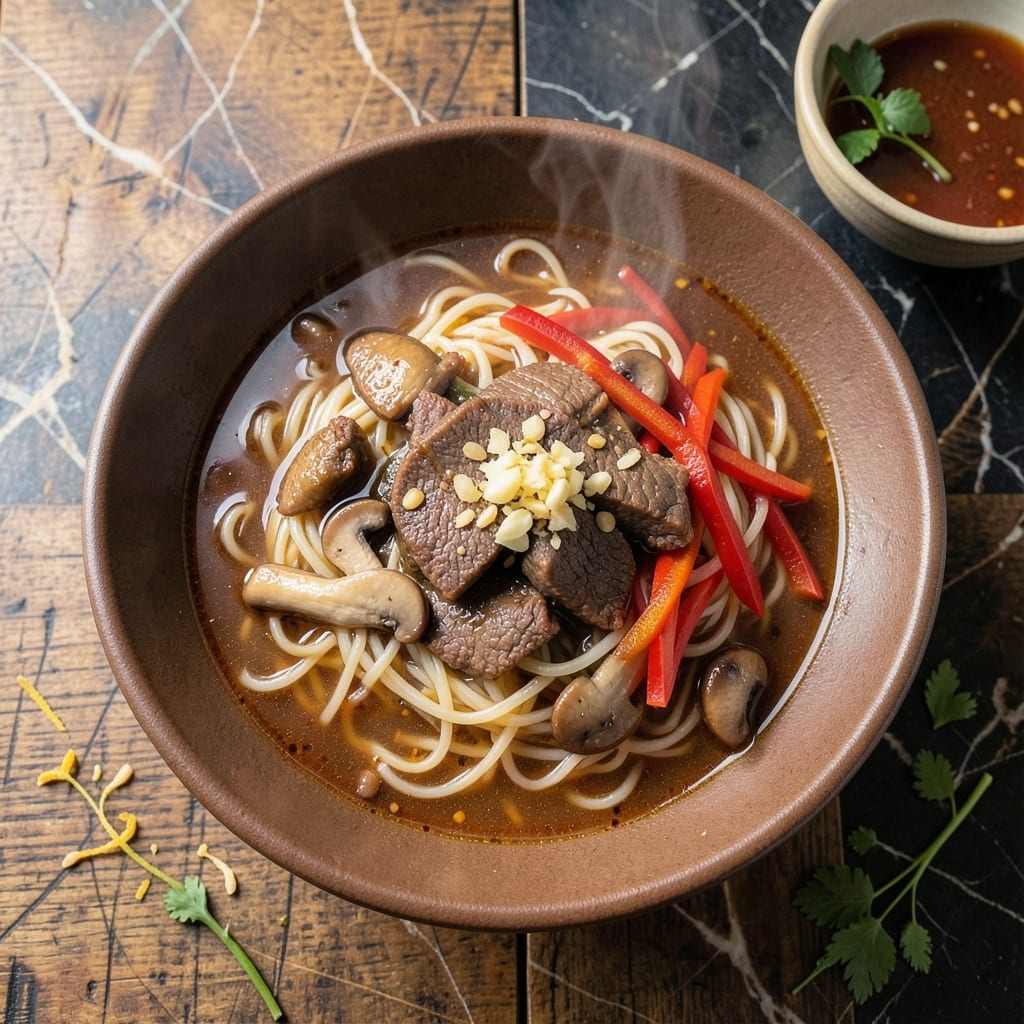
This Korean-inspired soup brings warmth and depth to any table with its chewy rice noodles and aromatic broth. A comforting dish that balances bold flavors without overwhelming the senses.
I developed this version after testing multiple broth combinations, focusing on simplicity and authenticity. The key lies in building layers of flavor through careful spice selection and precise cooking times.
The result is a bowl of noodles that are perfectly tender, swimming in a spiced broth that’s rich yet clean. Each spoonful delivers a satisfying mix of textures and tastes.
Serve with fresh herbs or a side of kimchi for an extra layer of complexity. Here’s how to make it.
Ingredients for Korean Rice Noodle Soup
Pantry staples meet a few fresh additions for this vibrant, comforting bowl.
| Ingredient | Amount | Notes |
|---|---|---|
| Rice Noodles 🍜 | 8 oz | Dried, flat rice sticks preferred |
| Beef Broth 🍲 | 6 cups | Low-sodium for control |
| Soy Sauce 🫕 | ¼ cup | Use reduced-sodium variety |
| Gochujang 🌶️ | 2 tbsp | Korean chili paste essential |
| Sesame Oil 🫒 | 1 tbsp | Toasted for depth of flavor |
| Garlic Cloves 🧄 | 4 cloves | Minced for aromatic base |
| Fresh Ginger 🌿 | 1 tbsp | Peeled and grated finely |
| Green Onions 🧅 | 4 whole | Thinly sliced for garnish |
| Mushrooms 🍄 | 1 cup | Shiitake or white button, sliced |
| Carrots 🥕 | 1 whole | Julienned for texture contrast |
| Red Bell Pepper 🌶️ | 1 whole | Thinly sliced for color |
| Lime 🍈 | 1 whole | Cut into wedges for serving |
| Cilantro 🌿 | ½ cup | Fresh leaves for garnish |
| Sesame Seeds 🌾 | 1 tbsp | Toasted for garnish |
| Brown Sugar 🍚 | 1 tsp | Balances spice and salt |
The noodles are non-negotiable here—look for flat rice sticks (not vermicelli) at any Asian market or the international aisle. Brands like Shirataki or Annie Chun’s work great. Gochujang is the soul of the broth; H Mart or Amazon carry it if your local store doesn’t. Fresh ginger and garlic are worth the effort—pre-minced just doesn’t have the same punch.
No gochujang? Sriracha plus a pinch of miso gets you 80% there. Swap beef broth for vegetable or chicken if preferred. Mushrooms can be any variety—shiitake add umami, but whites work too. Out of cilantro? Thai basil or green onions alone still bring brightness. The lime is key (don’t skip it), but bottled juice works in a pinch.
Broth keeps 4-5 days in the fridge, but the noodles soak it up fast—store them separately if prepping ahead. Freeze broth for 3 months. Garnishes are best fresh, so add those right before serving. Leftovers reheat beautifully (the flavors just get deeper).
Why You’ll Love This Recipe
- One Pot Wonder: I just dump rice noodles into simmering beef broth with gochujang and it’s done—no extra pans, no stress.
- Umami Bomb: The soy sauce, sesame oil, and gochujang mix hits this ridiculously good sweet-spicy-savory balance every time.
- Meals for Days: I make a big batch Sunday and it reheats like a dream all week. Yes, even on a Tuesday night.
- Budget Hero: Rice noodles and broth stretch so far. Honestly, it feels like a luxury bowl for pennies.
Step-by-Step Instructions for Korean Rice Noodle Soup
This method guarantees perfectly tender noodles and a deeply flavored broth every time.
Step 1: Prepare the Aromatic Base
In a large pot, heat the 1 tbsp sesame oil over medium heat until shimmering. Add the 4 cloves garlic cloves and 1 tbsp fresh ginger, stirring constantly for 30-45 seconds until fragrant. The aroma should be punchy and bright—this is your flavor foundation.
Immediately add the 2 tbsp gochujang and cook for 1 minute to bloom its spicy, fermented depth. Stir in the 0.25 cup soy sauce and 1 tsp brown sugar, then pour in the 6 cups beef broth. Bring to a gentle simmer and let it cook for 5 minutes to meld the flavors.
Step 2: Add Vegetables and Simmer
Stir in the 1 cup mushrooms, julienned 1 whole carrots, and thinly sliced 1 whole red bell pepper. The broth should return to a simmer within 2-3 minutes—you’ll see small bubbles breaking the surface.
Reduce the heat to low and let the soup simmer for 8-10 minutes until the carrots soften slightly but still retain a bit of bite. The mushrooms should be tender and the bell pepper vibrant. Taste the broth—it should be rich, slightly spicy, and balanced by the sugar.
Step 3: Cook the Rice Noodles
Add the 8 oz rice noodles to the simmering broth. Submerge them completely and cook for 3-4 minutes until they turn translucent and are chewy, not mushy. Stir occasionally to prevent sticking, but avoid overworking them—they should remain intact.
Here’s the thing—rice noodles cook fast, so keep an eye on them. They’re done when they’re pliable and slightly springy to the bite. If the broth reduces too much, add a splash of water to maintain the right consistency. The noodles will continue to absorb liquid as they sit.
Step 4: Finish and Garnish
Remove the pot from heat. Thinly slice the 4 whole green onions and chop the 0.5 cup cilantro. Stir half of each into the soup for freshness, reserving the rest for garnish. The green onions should wilt slightly in the hot broth, while the cilantro adds a bright finish.
Ladle the soup into bowls and top with the remaining green onions, cilantro, and 1 tbsp sesame seeds. Serve with lime wedges on the side for a citrusy kick. Each bowl should be vibrant, aromatic, and packed with layers of texture and spice. Enjoy immediately while the noodles are at their peak.
Pro Tips For Making Korean Rice Noodle Soup
- Bloom the Gochujang: I learned this the hard way—cook the gochujang in a spoonful of sesame oil for 30 seconds before adding broth. It mellows the raw edge and deepens the flavor in the soup.
- Soak Noodles First: Rice noodles turn gummy if boiled straight from the package. Give them a 5-minute soak in warm water while you prep, then they’ll cook evenly in the broth.
- Skip Cold Broth: After burning three batches, I finally figured out that adding cold beef broth to a hot pot drops the temperature too fast. Bring it to a simmer first, then combine.
- Finish with Sesame: Sounds weird, but it works: stir in the sesame oil at the very end, off the heat. High heat can make it bitter, but a final drizzle keeps the aroma bright.
Wine and Beer Pairings for This korean rice noodle soup
Korean Beers
For an authentic pairing, I love Hite or OB Beer—their crisp, clean profiles cut through the spice while complementing the umami. The light carbonation refreshes your palate between bites. Serve ice-cold for the best experience.
Light Lagers
A Japanese lager like Asahi or Sapporo works beautifully here. Their subtle sweetness balances the gochujang‘s heat without overpowering the broth. I always keep a six-pack in my fridge for noodle nights.
Wheat Beers
Belgian witbiers with citrus notes, like Hoegaarden, enhance the lime and cilantro garnishes. The wheat’s creaminess also softens the spice’s sharp edge. Pour into a chilled glass for maximum aroma. 🍺
White Wines
A slightly off-dry Riesling from Germany or Washington State offers a perfect contrast. The residual sugar tames the heat while the acidity brightens the dish. Look for bottles labeled Kabinett or Spätlese. 🍷
Rosé Options
Dry Provence rosé with its crisp berry notes pairs surprisingly well. The wine’s minerality complements the sesame oil and garlic in the broth. Chill to 45-50°F before serving.
Non-Alcoholic
For a booze-free option, sparkling yuzu soda or ginger beer brings the same palate-cleansing effect. The citrus in yuzu mirrors the lime garnish, while ginger beer’s spice echoes the gochujang. 💡
Nutrition Facts
Frequently Asked Questions
Can I substitute the rice noodles?
Ramen or udon noodles work in a pinch, but they won’t have the same chewy texture. For best results, stick with flat rice sticks as they soak up the broth beautifully.
How do I adjust the spice level?
Reduce the gochujang to 1 tbsp for mild heat or add more to taste. Balance with extra brown sugar if needed. The lime garnish also helps mellow the spice.
Can I make this soup ahead of time?
Prepare the broth and vegetables up to 2 days ahead, but cook the noodles fresh. They’ll turn mushy if left in the broth too long.
What if I can’t find gochujang?
Mix 1 tbsp sriracha with 1 tsp miso paste for a similar flavor profile. It won’t be identical, but it’ll still taste delicious.

- Gambia Jollof Rice Recipe: West African One-Pot Spice Fusion - October 5, 2026
- Cream of Wild Rice Soup Recipe Minnesota: Northwoods Creaminess With Foraged Grains - October 5, 2026
- Frozen Cauliflower Fried Rice Recipe: Quick Low-Carb Wok Magic - October 5, 2026