
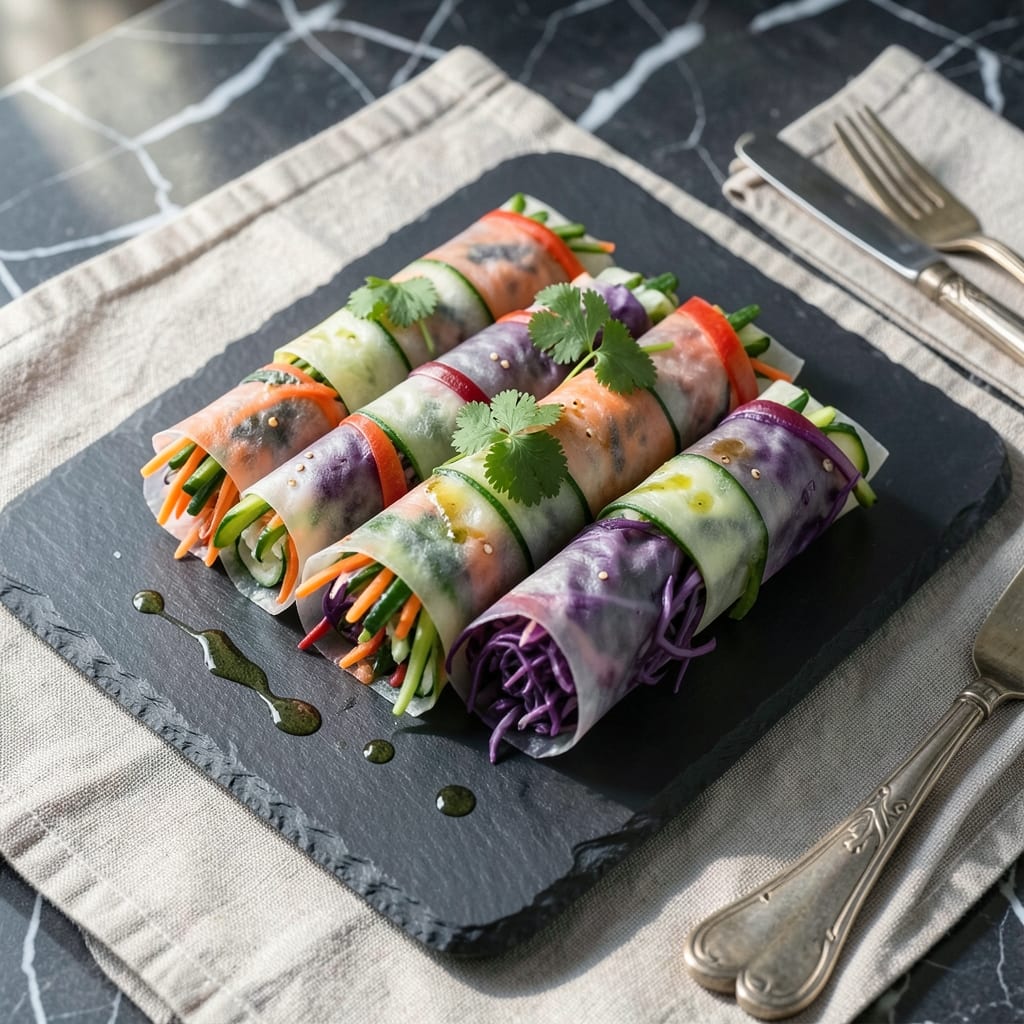
These fresh spring vegetable wraps bring a light yet flavorful Korean twist to classic rice paper rolls. The secret lies in the balance of crisp textures and vibrant seasonings that make every bite satisfying.
I developed this version to highlight traditional Korean ingredients like gochujang and sesame, creating a dish that’s as authentic as it is refreshing. The rice paper softens just enough to hold the filling without tearing.
You’ll love how the colorful vegetables and aromatic herbs come together for a no-cook dish that’s ready in 20 minutes. Perfect for warm weather or as a healthy appetizer.
Serve with a tangy dipping sauce for an extra layer of Korean-inspired flavor. Here’s how to make them.
Ingredients for Korean Rice Paper Rolls
Crisp vegetables, aromatic herbs, and bold Korean flavors wrapped in delicate rice paper.
| Ingredient | Amount | Notes |
|---|---|---|
| Rice Paper Wrappers 🌯 | 8 sheets | 8-inch diameter, spring roll type |
| Carrots 🥕 | 2 whole | Julienned into matchsticks |
| English Cucumber 🥒 | 1 whole | Seeded and julienned |
| Red Bell Pepper 🌶️ | 1 whole | Thinly sliced into strips |
| Purple Cabbage 🥬 | 1 cup | Thinly shredded |
| Fresh Cilantro 🌿 | ½ cup | Stems removed, roughly chopped |
| Fresh Mint Leaves 🍃 | ¼ cup | Whole leaves for garnish |
| Green Onions 🧅 | 4 whole | Thinly sliced on diagonal |
| Gochujang 🌶️ | 2 tbsp | Korean red pepper paste |
| Soy Sauce 🫒 | 2 tbsp | Use tamari for gluten-free |
| Rice Vinegar 🍶 | 1 tbsp | Unseasoned variety preferred |
| Sesame Oil 🫒 | 1 tsp | Toasted for best flavor |
| Agave Nectar 🍯 | 1 tbsp | Or maple syrup alternative |
| Toasted Sesame Seeds 🌰 | 1 tbsp | For garnish and crunch |
The rice paper wrappers are non-negotiable here—look for the spring roll variety (8-inch diameter) at Asian markets or the international aisle. They should be translucent and free of tears. For the gochujang, Sempio or CJ brands are widely available and consistently good. If your grocery store has a Korean section, that’s your best bet. The carrots and cucumber need to be super fresh (firm, not bendy) for that satisfying crunch.
No gochujang? Sriracha mixed with a teaspoon of miso paste gives a similar sweet-spicy depth. Fresh herbs are ideal, but dried at one-third the amount works in the dipping sauce. The red bell pepper can be swapped for yellow or orange (whatever’s on sale). For gluten-free, tamari instead of soy sauce—just check the label. And if you’re out of agave, honey works (but skip it for strict vegan).
Keep rice paper wrappers in a cool, dry place—they last 12 months. Once opened, store in an airtight container. The vegetables stay fresh for 4-5 days in the fridge. Make the dipping sauce ahead—it actually tastes better after 24 hours as the flavors meld.
Why You’ll Love This Recipe
- No Cook Needed: I just soak the rice paper and stuff it with veggies—no oven, no stove, no fuss.
- Crunch in Every Bite: The raw carrots and cucumber give that fresh, crisp texture I crave in every roll.
- Lunchbox Hero: Honestly, these stay perfect in the fridge for days, so I pack them for work without stress.
- Budget Stretcher: A bag of rice paper and a few veggies feed us for pennies—my wallet thanks me.
Step-by-Step Instructions for Korean Rice Paper Rolls
Here’s my foolproof method for assembling these vibrant, flavor-packed wraps with ease.
Step 1: Prep All Vegetables and Herbs
Begin by julienning the 2 whole Carrots into matchsticks, seeding and slicing the 1 whole English Cucumber into thin strips, and cutting the 1 whole Red Bell Pepper into slender ribbons. Thinly shred the 1 cup Purple Cabbage for a colorful crunch.
Remove stems from the 0.5 cup Fresh Cilantro and roughly chop the leaves. Thinly slice the 4 whole Green Onions on a diagonal. Keep the 0.25 cup Fresh Mint Leaves whole for a bright, aromatic garnish. Having everything prepped and organized ensures a smooth rolling process.
Step 2: Soften the Rice Paper Wrappers
Fill a shallow dish with warm water. Submerge one Rice Paper Wrapper at a time for 5-10 seconds until pliable but still slightly firm. Over-soaking will make them fragile and difficult to handle.
Lay the softened wrapper on a clean, damp kitchen towel. This prevents sticking and gives you a stable surface to work on. Repeat with one more wrapper if you’re confident, but I recommend starting with one at a time until you get the hang of it.
Step 3: Layer Fillings and Roll Tightly
Place a small handful of the prepared vegetables—carrots, cucumber, bell pepper, cabbage, cilantro, and green onions—toward the bottom third of the wrapper. Avoid overfilling; ¼ to ⅓ cup total per wrap ensures it seals properly.
Fold the sides inward, then roll tightly from the bottom up, similar to a burrito. The wrapper should encase the fillings snugly without tearing. If it breaks, patch it with a small piece of dry wrapper dipped in water. Practice makes perfect here!
Step 4: Prepare the Gochujang Dipping Sauce
In a small bowl, whisk together the 2 tbsp Gochujang, 2 tbsp Soy Sauce, 1 tbsp Rice Vinegar, 1 tsp Sesame Oil, and 1 tbsp Agave Nectar until smooth. This sauce delivers a sweet, spicy, and umami-rich punch that complements the freshness of the rolls perfectly.
Taste and adjust the balance if needed. If it’s too thick, thin it with a teaspoon of warm water. Transfer to a serving bowl and sprinkle with the 1 tbsp Toasted Sesame Seeds for added texture and visual appeal.
Step 5: Serve and Enjoy Immediately
Arrange the finished rolls on a platter and garnish with the reserved fresh mint leaves. These are best served fresh, as the wrappers tend to harden if left too long.
Serve with the gochujang dipping sauce on the side. Each bite should offer a satisfying crunch from the vegetables, a hint of sweetness from the sauce, and a refreshing contrast from the herbs. Enjoy your creation while it’s at its peak texture and flavor!
Pro Tips For Making Korean Rice Paper Rolls
- Soften the Wrappers: Dip rice paper in warm water for 5-7 seconds only—any longer and they’ll tear when you try to roll them. I learned this the hard way after ruining three wrappers in a row.
- Julienne the Veggies: Cut carrots, cucumber, and bell pepper into thin, matchstick strips (about 2 inches long) so they roll neatly and don’t poke through the wrapper. Sounds tedious, but it makes a real difference.
- Skip Overfilling: Use about 2 tablespoons of filling per roll—more than that and the wrapper will burst open. After my first few attempts looked like sad little burritos, I finally got the hang of it.
- Dampen the Plate: Keep a damp kitchen towel or a lightly wet plate under the rice paper while assembling to prevent sticking. Does it look weird? Yes. Does it work? Every single time.
Wine and Beer Pairings for This Dish
Crisp White Wines
A dry Riesling from Korea or Germany cuts through the gochujang’s heat with its bright acidity and citrus notes. I love how the slight sweetness balances the spice. For a domestic option, try Dr. Loosen Blue Slate—it’s a perfect match. 🍷
Light Beers
A crisp Korean lager like Hite or OB Beer offers a refreshing contrast to the bold flavors. The light body and mild bitterness cleanse your palate between bites. For craft beer lovers, a pilsner with its clean finish works beautifully.
Sparkling Options
Sparkling sake is an underrated pairing that enhances the dish’s freshness. The effervescence lifts the herbs and vegetables. Alternatively, a dry Prosecco with its apple and pear notes complements the crunchy textures.
Flavorful Reds
If you prefer red wine, choose a lightly chilled Beaujolais with its bright red fruit flavors. The low tannins won’t overpower the delicate rice paper or fresh vegetables. Avoid heavy, oaky reds that clash with the dish’s lightness.
I find Louis Jadot Beaujolais-Villages particularly enjoyable with these rolls. 🔥
Nutrition Facts
Frequently Asked Questions
Can I make these rolls ahead of time?
Prepare fillings and sauce up to 1 day ahead, but assemble rolls just before serving. Wrappers harden if refrigerated. Store prepped veggies in airtight containers with damp paper towels to stay crisp.
What if my rice paper tears while rolling?
Patch small tears with a piece of dry wrapper dipped in water. To prevent this, don’t overfill and keep wrappers slightly firm when soaking. Practice makes perfect!
Can I use different vegetables?
Try shredded zucchini, bean sprouts, or avocado. For crunch, add julienned jicama or daikon. Just keep pieces thin and uniform for easy rolling.
How do I adjust the spice level in the sauce?
Reduce gochujang to 1 tbsp for mild heat, or add 1 tsp honey to balance spice. For extra kick, include ½ tsp Korean chili flakes. Taste as you go!

- Mujadara Rice and Lentils Recipe: Earthy Spiced Lentils With Caramelized Onions - November 1, 2026
- Naija Fried Rice Recipe: Street-Style Spice With Veggie Crunch - November 1, 2026
- Mushy Rice Recipe: Fluffy Grains Transformed in Minutes - November 1, 2026