
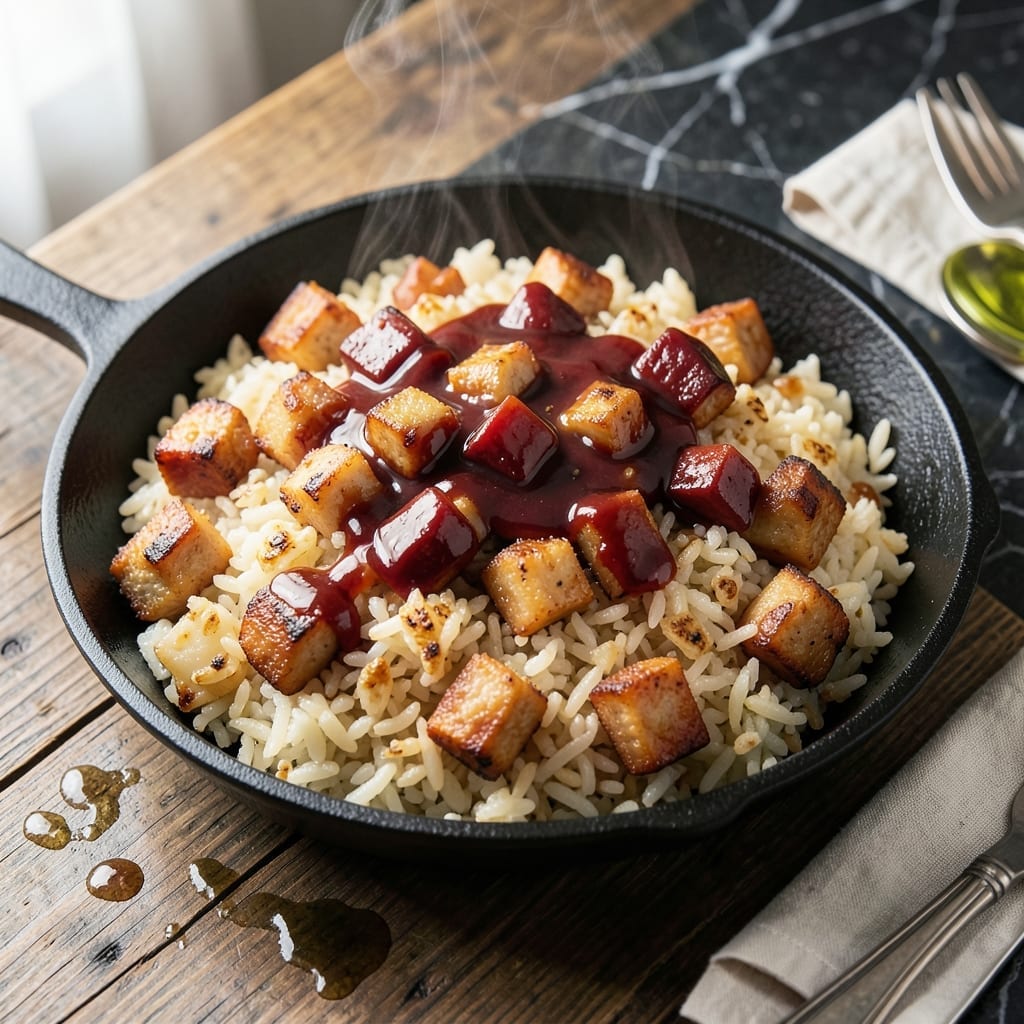
There’s a reason Korean spam fried rice has become a global favorite—it delivers bold, savory flavors with minimal effort. This dish transforms simple ingredients into something extraordinary with its perfect balance of salty, spicy, and umami notes.
The magic happens when crispy Spam cubes meet tangy kimchi and fluffy rice in a hot pan. I’ve refined this technique over years of home cooking to ensure every bite carries that signature restaurant-quality taste without complicated steps.
What you’ll achieve is a dish with perfectly caramelized edges, rich depth from gochujang, and the satisfying texture contrast between soft rice and crispy Spam. The crowning touch comes from the runny egg yolk that ties everything together.
This creation works as a quick weeknight dinner or a satisfying side. The flavors only improve as they meld together.
Ingredients for Korean Spam Fried Rice
Transform everyday pantry staples into a restaurant-quality dish bursting with bold Korean flavors.
| Ingredient | Amount | Notes |
|---|---|---|
| Cooked White Rice 🍚 | 4 cups | Day-old, chilled preferred |
| Spam 🥓 | 12 oz | Cubed, any variety |
| Kimchi 🥬 | 1 cup | Chopped, with juices |
| Gochujang 🌶️ | 2 tbsp | Korean red pepper paste |
| Soy Sauce 🫒 | 2 tbsp | Low-sodium preferred |
| Sesame Oil 🫒 | 1 tbsp | Toasted, for finishing |
| Large Eggs 🥚 | 4 whole | For topping |
| Green Onions 🧅 | ½ cup | Thinly sliced, for garnish |
| Garlic Cloves 🧄 | 3 cloves | Minced |
| Vegetable Oil 🫒 | 2 tbsp | Neutral flavor, for frying |
| Sugar 🍚 | 1 tsp | Balances acidity |
| Sesame Seeds 🌿 | 1 tsp | Toasted, for garnish |
| Black Pepper 🌶️ | ½ tsp | Freshly ground |
The Spam is non-negotiable here—Hormel is the gold standard for that authentic texture and saltiness. Korean markets will have the best kimchi (look for Napa cabbage versions with vibrant red color), but most Asian grocery stores carry decent options. Gochujang varies wildly in heat and sweetness; Sempio or Chung Jung One are reliable brands with consistent quality and depth.
No kimchi? Sauerkraut plus a pinch of gochugaru (Korean chili flakes) gets you close. Out of gochujang? 1 tbsp sriracha mixed with 1 tsp miso paste works as a substitute. Spam can be swapped for diced ham or bacon, but the salty-sweet profile won’t be identical. For a vegetarian twist, extra-firm tofu (pressed and cubed) soaks up flavors nicely.
Leftover fried rice keeps well for 3-4 days refrigerated in an airtight container. Reheat in a skillet with a splash of water to restore moisture. The eggs are best added fresh, but the base rice mixture freezes beautifully for up to 3 months.
Why You’ll Love This Recipe
- One Pan Wonder: I toss in the Spam, kimchi, and rice with gochujang and soy sauce—everything cooks together in minutes.
- Umami Bomb: The salty Spam, tangy kimchi, and spicy gochujang hit all the right notes in every bite.
- Lunchbox Hero: I pack leftovers for work and they taste even better the next day. Honestly, it’s my new meal prep MVP.
- Budget Friendly: A can of Spam and leftover rice turn into a filling meal for under five bucks.
Step-by-Step Instructions for Korean Spam Fried Rice
Master the technique and timing for perfectly balanced flavors and textures in this dish.
Step 1: Prepare and Sear the Spam
Heat 2 tablespoons vegetable oil in a large skillet or wok over medium-high heat until it shimmers. Add the 12 oz Spam cubes and cook undisturbed for 2-3 minutes to develop a golden-brown crust.
Stir and continue cooking for another 2 minutes until all pieces are evenly browned and slightly crispy at the edges. This step builds the savory foundation of the dish. Transfer the Spam to a plate and set aside.
Step 2: Sauté Aromatics and Kimchi
In the same skillet, add the minced 3 cloves garlic cloves and cook for 30 seconds until fragrant, stirring constantly to prevent burning. Immediately add the 1 cup kimchi with its juices and the 1 teaspoon sugar.
Cook for 3-4 minutes over medium heat, stirring occasionally, until the kimchi softens slightly and the juices begin to reduce. The sugar balances the kimchi’s acidity while deepening its umami profile.
Step 3: Combine Rice and Sauce Components
Add the chilled 4 cups cooked white rice to the skillet, breaking up any clumps with a wooden spoon. Drizzle the 2 tablespoons gochujang and 2 tablespoons soy sauce over the rice, then stir thoroughly to distribute the sauces evenly.
Cook for 4-5 minutes over medium-high heat, pressing the rice against the pan occasionally to create crispy bits. Return the reserved Spam to the skillet and fold it into the rice mixture. Season with 0.5 teaspoon black pepper.
Step 4: Finish with Eggs and Garnishes
Create four small wells in the fried rice mixture. Crack each of the 4 whole large eggs into a well. Cover the skillet and cook for 3-4 minutes until the egg whites are set but yolks remain runny.
Remove from heat and drizzle the 1 tablespoon sesame oil over the top. Garnish with 0.5 cup green onions and 1 teaspoon sesame seeds. The sesame oil adds a nutty finish while the garnishes provide freshness and crunch.
Pro Tips For Making Korean Spam Fried Rice
- Use Day-Old Rice: Fresh rice turns mushy—spread leftover rice on a tray and refrigerate overnight to dry it out. I learned this the hard way after my first few batches turned to paste.
- Crisp the Spam First: Sear spam cubes in a hot pan for 2-3 minutes until golden before adding anything else. This builds a caramelized crust that makes a real difference in flavor.
- Drain the Kimchi: Squeeze excess liquid from the kimchi before chopping—too much moisture steams the rice instead of frying it. Sounds small, but it actually changes the outcome.
- Sauce Last, Not First: Add gochujang and soy sauce at the very end after the rice is hot. Stirring them in too early makes the rice gummy and dulls the spice.
Health Benefits of This Recipe
Probiotic Powerhouse
Kimchi, the star of this dish, is fermented cabbage packed with lactobacillus bacteria that support gut health. A 1-cup serving provides billions of beneficial probiotics, which aid digestion and boost your immune system. I notice I feel lighter after eating kimchi-based meals. 💪
Protein-Packed Energy
Spam delivers 18g of protein per 2-oz serving, making this fried rice a satisfying, energy-boosting meal. Combined with the 6g of protein per egg, you’re getting a complete amino acid profile to keep you full for hours.
Metabolism Boost
The capsaicin in gochujang gives your metabolism a natural kick, while the garlic and sesame oil contain compounds that support cardiovascular health. I love how this dish warms you up from the inside out.
Low-Calorie Comfort
At about 350-400 calories per serving, this dish packs flavor without excess calories. The rice provides steady energy, while the veggies in kimchi add fiber and vitamins A and C.
Antioxidant Rich
Kimchi is loaded with antioxidants from its fermented vegetables, while sesame seeds add sesamin, a compound shown to reduce inflammation. The combination helps combat oxidative stress in your body. ✨
Balanced Macronutrients
You get a perfect balance of carbs from rice, protein from Spam and eggs, and healthy fats from sesame oil. This macronutrient harmony provides sustained energy without blood sugar spikes.
Nutrition Facts
Frequently Asked Questions
Can I use fresh rice instead of day-old?
Fresh rice contains more moisture, making it harder to achieve crispy bits. For best results, spread freshly cooked rice on a tray and refrigerate for 1-2 hours before using. This dries it out for better texture.
What if I don’t have gochujang?
Mix 1 tablespoon sriracha with 1 teaspoon miso paste for a similar sweet-spicy depth. In a pinch, extra soy sauce plus a pinch of sugar works, though it won’t be as complex.
How do I make it less spicy?
Reduce kimchi to 1/2 cup and replace half the gochujang with 1 tablespoon tomato paste. This maintains depth while cutting heat. Adjust to taste as you cook.
Can I add other vegetables?
Toss in diced carrots or zucchini with the kimchi. For best texture, sauté any added veggies for 2-3 minutes before mixing with rice.

- Mujadara Rice and Lentils Recipe: Earthy Spiced Lentils With Caramelized Onions - November 1, 2026
- Naija Fried Rice Recipe: Street-Style Spice With Veggie Crunch - November 1, 2026
- Mushy Rice Recipe: Fluffy Grains Transformed in Minutes - November 1, 2026