
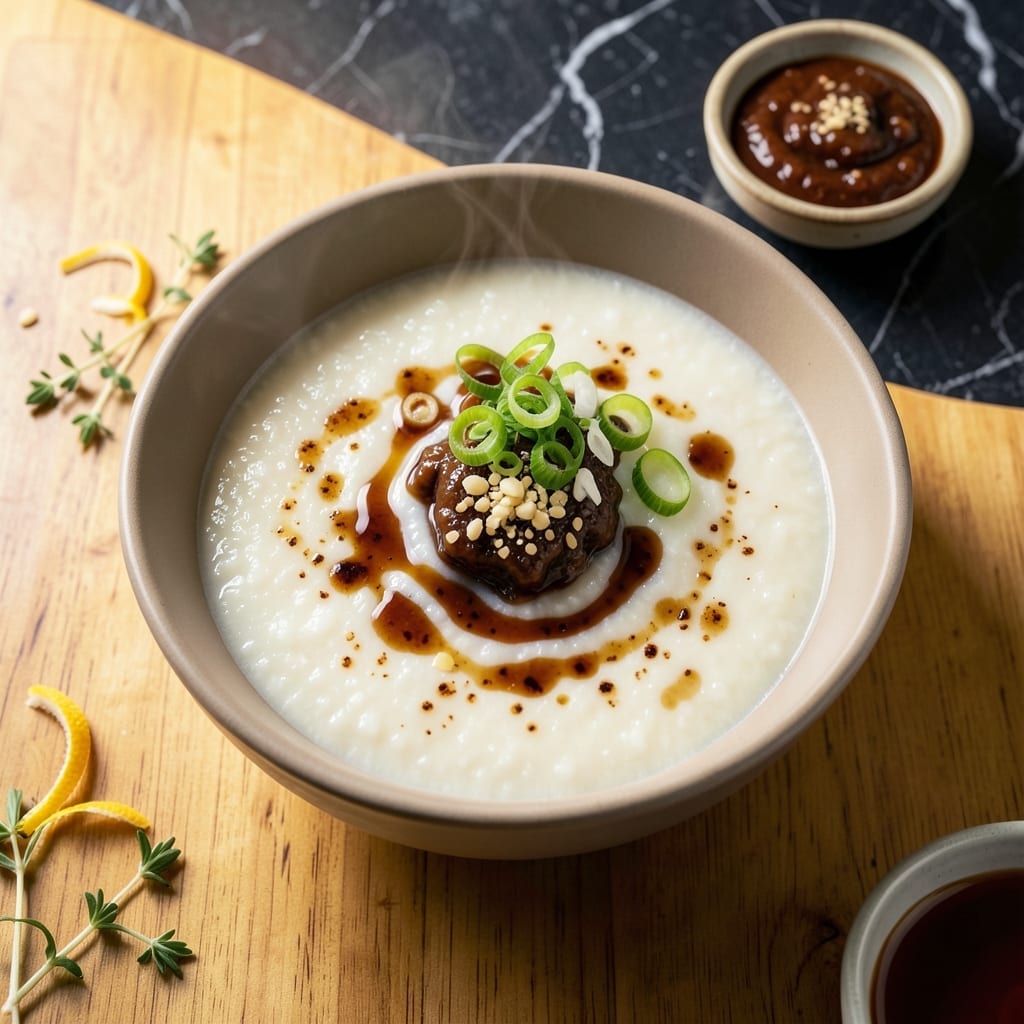
There’s something deeply comforting about a bowl of Korean rice porridge, where simplicity meets profound flavor.
This dish transforms humble rice into a silky, velvety congee with layers of fermented depth. The traditional method involves slow cooking to break down the grains completely, creating a smooth texture that’s both nourishing and satisfying.
What makes this version special is the addition of fermented ingredients that add complexity without overpowering. The result is a porridge that’s gentle on the stomach yet packed with umami richness.
Perfect for breakfast, recovery meals, or whenever you need warmth in a bowl.
Ingredients for Korean Rice Porridge
Transform humble rice into silky congee with fermented depth and umami richness in every bowl.
| Ingredient | Amount | Notes |
|---|---|---|
| Short-Grain White Rice 🍚 | 1 cup | Rinsed until water runs clear |
| Water 💧 | 8 cups | For cooking rice |
| Korean Fermented Soybean Paste 🫘 | 2 tbsp | Doenjang preferred |
| Soy Sauce 🫙 | 1 tbsp | Low-sodium for balance |
| Sesame Oil 🫒 | 1 tbsp | Toasted for aroma |
| Garlic Cloves 🧄 | 4 cloves | Minced finely |
| Fresh Ginger 🌿 | 1 tbsp | Grated or minced |
| Green Onions 🧅 | 4 whole | Thinly sliced for garnish |
| Kimchi 🥬 | ½ cup | Chopped, with juice |
| Dried Seaweed 🌊 | 2 sheets | Nori, shredded for garnish |
| Sesame Seeds 🌰 | 1 tsp | Toasted for garnish |
| Salt 🧂 | 1 tsp | Adjust to taste |
| Black Pepper 🌶️ | ½ tsp | Freshly ground preferred |
The rice quality matters here. Short-grain white rice breaks down beautifully for that signature creamy texture. Korean markets or the international aisle at Whole Foods carry the best doenjang—look for brands like Sempio or Chung Jung One. Avoid old rice; it won’t soften properly. The kimchi should be well-fermented (sour smell is good) for maximum flavor impact.
No doenjang? Miso paste at equal amounts works in a pinch, though the flavor profile shifts slightly. Short on kimchi? Sauerkraut with a dash of gochugaru mimics the tang. Green onions can be swapped for chives (use double the amount). The sesame oil is non-negotiable for authentic aroma—Kadoya or Ottogi are reliable brands available at most Asian grocers.
Leftovers thicken as they cool. Stir in water to restore the silky texture. Keeps 3-4 days refrigerated in an airtight container. Freezes well for 1 month—portion before freezing for easy reheating. Garnishes are best added fresh when serving.
Why You’ll Love This Recipe
- One-Pot Wonder: I just toss short-grain rice, water, and a spoonful of doenjang into a pot—no fancy steps, no stress.
- Umami Bomb: The fermented soybean paste and sesame oil give it that deep, savory Korean flavor I crave on chilly mornings.
- Breakfast or Dinner: Honestly, it’s my go-to whether I’m fueling up for the day or winding down with something light at night.
- Stretches for Days: A small batch of rice turns into a big pot of porridge, and leftovers reheat beautifully for lazy lunches.
Step-by-Step Instructions for Korean Rice Porridge
This method yields a velvety porridge with layered umami and perfect consistency every time.
Step 1: Prepare the Rice and Aromatics
Begin by rinsing the 1 cup short-grain white rice under cold water until the water runs completely clear. This removes excess starch and prevents the porridge from becoming gummy. Drain thoroughly in a fine-mesh sieve.
Meanwhile, mince the 4 cloves garlic cloves and grate the 1 tbsp fresh ginger until you have a fine paste. These aromatics will form the flavor base, so ensure they’re finely processed for even distribution throughout the dish.
Step 2: Simmer the Rice to Breakdown
In a heavy-bottomed pot, combine the rinsed rice with the 8 cups water. Bring to a rolling boil over high heat, then immediately reduce to a gentle simmer. Partially cover the pot to allow steam to escape while maintaining a consistent temperature.
Cook for 45-50 minutes, stirring occasionally with a wooden spoon to prevent sticking. The rice grains should begin to soften and break apart, creating a creamy, porridge-like texture. If the mixture becomes too thick before the rice fully disintegrates, add a splash of hot water to loosen it.
Step 3: Incorporate the Fermented Depth
Once the rice has broken down into a thick, soupy consistency, stir in the 2 tbsp Korean fermented soybean paste. Use a whisk or the back of your spoon to dissolve the paste completely into the porridge, ensuring no lumps remain. This ingredient adds a rich, savory depth characteristic of traditional Korean congee.
Next, add the minced garlic, grated ginger, 1 tbsp soy sauce, 1 tsp salt, and 0.5 tsp black pepper. Simmer for an additional 10 minutes on low heat, stirring frequently, to allow the flavors to meld and the porridge to thicken slightly.
Step 4: Finish with Aromatic Oils and Garnishes
Remove the pot from heat and stir in the 1 tbsp sesame oil. This final addition infuses the porridge with a nutty aroma and a subtle sheen. Taste and adjust seasoning if needed, though the soybean paste and soy sauce should provide ample saltiness.
Ladle the porridge into bowls and garnish with the 0.5 cup kimchi, thinly sliced 4 whole green onions, shredded 2 sheets dried seaweed, and a sprinkle of 1 tsp sesame seeds. The contrast of the tangy kimchi and the crisp seaweed elevates each spoonful, balancing the creamy, savory base.
Pro Tips For Making Korean Rice Porridge
- Soak the Rice: Rinse and soak the short-grain rice for at least 30 minutes before cooking—it breaks down faster and gives the porridge that smooth, creamy texture.
- Low and Slow: Keep the heat at a gentle simmer and stir often; I learned this the hard way after scorching a batch when I walked away for “just a minute.”
- Toast the Paste: Sauté the Korean fermented soybean paste in a little sesame oil for 1-2 minutes before adding liquids—it deepens the flavor and removes any raw bite.
- Finish with Oil: Drizzle the sesame oil at the very end, not during cooking, to preserve its aromatic punch; I was skeptical until I tried it, but the difference is noticeable.
Regional Styles of These Flavors
Jeonju Style
This royal city variation uses abalone broth instead of water for cooking, creating an exceptionally rich base. The porridge is finished with thinly sliced abalone and a drizzle of abalone soy sauce. It’s often served at celebratory meals and Korean weddings. 💛
Seoul Street Food
In bustling markets, you’ll find porridge vendors adding spicy tteokbokki rice cakes and fish cakes to their bowls. The combination creates a hearty, textured dish perfect for cold weather. I love the contrast of chewy rice cakes with the silky porridge.
Jeju Island
Island cooks incorporate black pork and Jeju mandarin orange zest for a unique citrusy depth. The pork is slow-cooked until it shreds easily, then stirred into the porridge just before serving. The orange zest adds a bright note that cuts through the richness.
Vegan Temple Style
Buddhist temples prepare this with mushroom broth and shitake mushrooms instead of fermented soybean paste. The result is lighter but still deeply flavorful. They often garnish with toasted pine nuts and wild fennel pollen. ✨
Modern Fusion
Chefs in Seoul’s trendy districts are reinventing this by adding truffle oil and parmesan crisps. The truffle enhances the earthy notes from the fermented soybean paste, while the parmesan adds a salty crunch that contrasts beautifully with the creamy texture.
Nutrition Facts
Frequently Asked Questions
What type of rice works best?
Short-grain white rice is ideal for its high starch content, which breaks down into a creamy texture. Avoid long-grain varieties as they stay firm and don’t create the desired silky consistency.
Can I make this in a slow cooker?
Yes! Combine all ingredients except garnishes and cook on low for 6-8 hours. Stir occasionally if possible, and add water as needed to maintain a porridge-like consistency.
How do I fix porridge that’s too thick?
Stir in hot water or broth, 1/4 cup at a time, until it reaches your desired texture. Return to low heat for 5 minutes to blend flavors.
What can I use instead of doenjang?
Miso paste is the closest substitute—use the same amount. For a milder taste, try 1 tbsp soy sauce plus 1 tbsp tahini for depth.

- Mujadara Rice and Lentils Recipe: Earthy Spiced Lentils With Caramelized Onions - November 1, 2026
- Naija Fried Rice Recipe: Street-Style Spice With Veggie Crunch - November 1, 2026
- Mushy Rice Recipe: Fluffy Grains Transformed in Minutes - November 1, 2026