
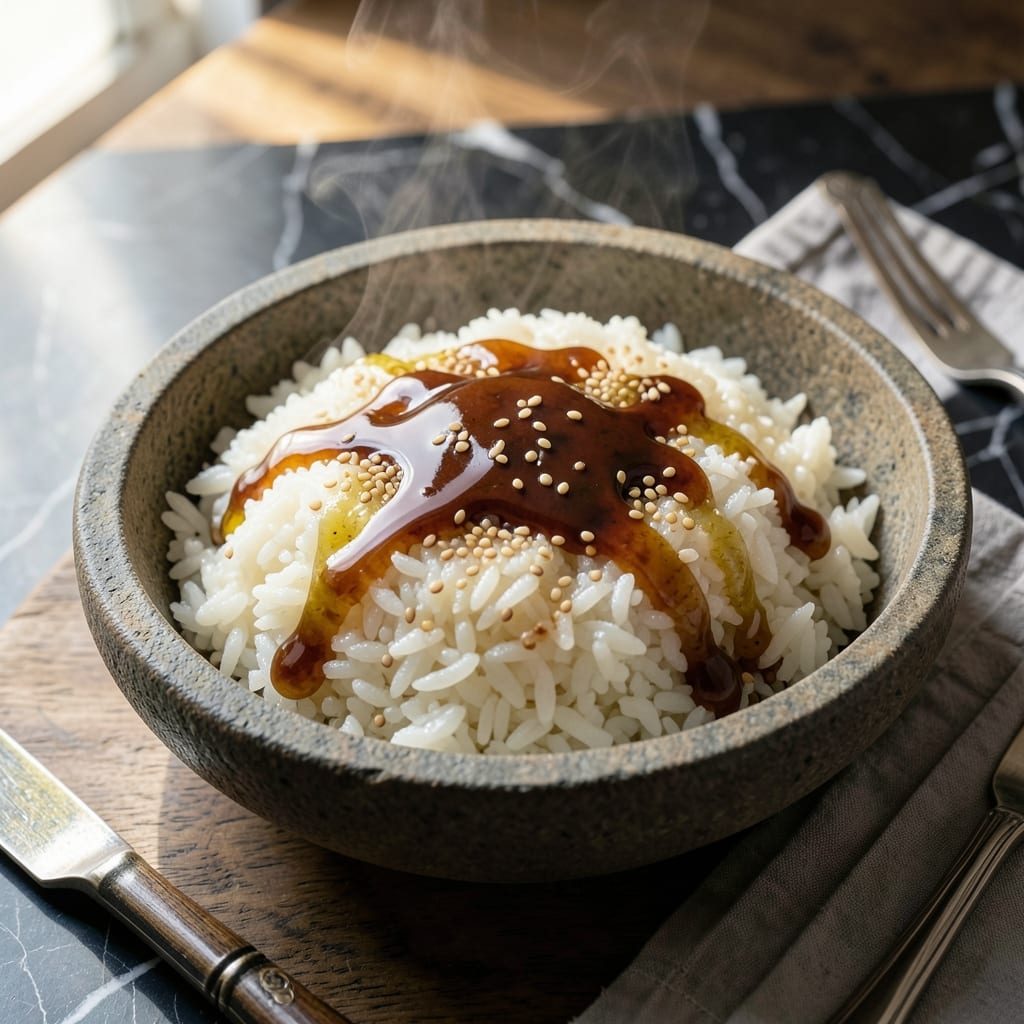
This Korean rice delivers a nutty depth that transforms simple grains into something extraordinary. The secret lies in toasting sesame seeds until golden, releasing their aromatic oils to infuse every bite.
I developed this method after years of testing ratios and techniques to achieve the perfect texture and flavor. The rice cooks up fluffy yet slightly sticky, with a subtle sweetness that complements any main dish.
What makes this dish special is its versatility. Serve it alongside spicy meats, stir-fries, or enjoy it plain with just a sprinkle of sesame salt. The toasted sesame adds a restaurant-quality finish.
The process is straightforward but precise, with each step building layers of flavor. The result is rice that’s more than a side—it’s the foundation of a great meal.
Ingredients for Korean Rice
Toasted sesame and short-grain rice create a nutty, aromatic foundation for any meal.
| Ingredient | Amount | Notes |
|---|---|---|
| Short-Grain White Rice 🍚 | 2 cups | Rinsed until water runs clear |
| Water 💧 | 2 ½ cups | Filtered or spring preferred |
| Sesame Seeds 🌰 | 3 tbsp | Toasted until golden brown |
| Sesame Oil 🫒 | 1 tbsp | Toasted variety for depth |
| Soy Sauce 🥫 | 1 tbsp | Low-sodium or tamari for gluten-free |
| Rice Vinegar 🍶 | 1 tsp | Balances sweetness and salt |
| Sugar 🍚 | 1 tsp | Organic or coconut sugar works |
| Salt 🧂 | ½ tsp | Fine sea salt preferred |
| Garlic Cloves 🧄 | 2 cloves | Minced finely for even flavor |
| Scallions 🧅 | 3 whole | Thinly sliced for garnish |
| Vegetable Oil 🫒 | 1 tsp | Neutral flavor for toasting |
The sesame seeds are everything here—toast them in a dry pan until they turn golden and release their oils. Korean markets or H Mart will have the best short-grain rice (look for labels like ‘sushi rice’ or ‘calrose’). I’ve had luck with Lundberg Farms at regular grocery stores too. The soy sauce should be Korean or Japanese for authentic flavor—Kikkoman works, but Pearl River Bridge is my go-to.
No rice vinegar? Apple cider vinegar at half the amount works in a pinch. Short on sesame seeds? Crushed peanuts or almonds add a similar crunch. For a gluten-free version, swap soy sauce for tamari or coconut aminos. The sugar can be replaced with maple syrup or agave (use one-third less since they’re sweeter). If you’re out of scallions, chives or green onion tops work too.
Leftover rice keeps 4-5 days in the fridge, though it’s best fresh. Freeze for up to 3 months in airtight bags—squeeze out all the air first. Reheat with a splash of water to restore moisture. Toasted sesame seeds lose their crunch when stored, so add them fresh each time.
Why You’ll Love This Recipe
- One Pot Wonder: I just rinse, cook, and stir in sesame oil and soy sauce—no fancy steps.
- Nutty & Rich: The toasted sesame seeds and oil give it that deep, savory Korean flavor I crave.
- Pairs With Anything: Honestly, it works with grilled meats, veggies, or even a fried egg on top.
- Budget Stretch: A big batch costs pennies and tastes even better as leftovers the next day.
Step-by-Step Instructions for Korean Rice
Here’s how to achieve that signature nutty depth with perfectly toasted sesame every time.
Step 1: Rinse and Prepare the Rice
Place the 2 cups Short-Grain White Rice in a fine-mesh strainer and rinse under cold water until the water runs completely clear. This removes excess starch and ensures fluffy, separate grains. I always use my fingers to agitate the rice while rinsing to speed up the process.
Once rinsed, drain the rice well and transfer it to your rice cooker or heavy-bottomed pot. Add the 2.5 cups Water and let it sit for 10 minutes before cooking. This brief soak helps the rice cook more evenly and prevents a crunchy bottom layer.
Step 2: Toast the Sesame Seeds
While the rice soaks, heat a dry skillet over medium-low heat. Add the 3 tbsp Sesame Seeds and spread them in an even layer. Toast for 2-3 minutes, stirring constantly, until the seeds turn golden brown and become fragrant.
Watch them closely—sesame seeds burn quickly. The moment they start to darken and you catch that nutty aroma, remove them from the pan immediately. Transfer to a small bowl and let cool completely. This toasting step is non-negotiable; it transforms the seeds from bland to intensely aromatic.
Step 3: Cook the Rice
Cook the rice using your preferred method—rice cooker, Instant Pot, or stovetop. For stovetop, bring the rice and water to a boil over high heat, then reduce to low heat, cover, and simmer for 15 minutes. Remove from heat and let it steam, covered, for another 10 minutes.
The rice is done when all the water is absorbed and the grains are tender with no chalky center. Don’t peek while it’s cooking—releasing steam disrupts the cooking process and can lead to uneven texture. The finished rice should be glossy and slightly sticky, perfect for holding onto the flavors we’re about to add.
Step 4: Prepare the Seasoning Sauce
In a small bowl, whisk together the 1 tbsp Sesame Oil, 1 tbsp Soy Sauce, 1 tsp Rice Vinegar, 1 tsp Sugar, and 0.5 tsp Salt until the sugar and salt dissolve completely. This sauce should be smooth and well combined.
Mince the 2 cloves Garlic Cloves finely and thinly slice the 3 whole Scallions. Heat the 1 tsp Vegetable Oil in a small pan over medium heat and sauté the garlic for 30 seconds until just fragrant—don’t let it brown. Stir the garlic into your seasoning sauce for an extra layer of flavor.
Step 5: Combine and Finish
Transfer the cooked rice to a large serving bowl. Drizzle the seasoning sauce evenly over the hot rice. Using a rice paddle or spatula, gently fold everything together until the rice is uniformly coated and the sauce is fully absorbed.
Sprinkle the toasted sesame seeds over the top and garnish with the sliced scallions. The heat from the rice will release the aroma of the sesame seeds, creating that unmistakable nutty depth. Serve immediately while the rice is still warm and the flavors are at their peak.
Pro Tips For Making Korean Rice
- Rinse the Rice: Wash the short-grain rice under cold water until the water runs clear—skipping this leaves your rice gummy and dull. I learned this the hard way after serving sticky, grayish rice to guests.
- Soak for 30 Minutes: Let the rinsed rice soak in water for at least 30 minutes before cooking. Sounds tedious, but it guarantees even cooking and that perfect tender bite.
- Use a 1:1 Ratio: Stick to a 1:1 rice-to-water ratio for short-grain rice—any more and you’ll end up with mushy rice, any less and it’ll be undercooked. My grandmother swore by this, and she was right.
- Toast the Sesame Seeds: Dry-toast the sesame seeds in a pan for 1-2 minutes until fragrant before adding them to the rice. I was skeptical until I tried it—it adds a nutty depth that raw seeds just can’t.
Common Mistakes When Making korean rice
Over-Rinsing Rice
Rinsing removes excess starch, but overdoing it washes away nutrients and flavor. I rinse my 2 cups Short-Grain White Rice until the water runs just slightly cloudy—not completely clear. Stop after 3-4 rinses to preserve the rice’s natural character. 💡
Burning Sesame Seeds
Sesame seeds toast in 2-3 minutes on medium-low heat. The moment they turn golden and smell nutty, pull them off. Burnt seeds add bitterness that ruins the dish. I use a light-colored pan to monitor color changes easily.
Incorrect Water Ratio
For perfect texture, use 2.5 cups Water per 2 cups rice. Too much water makes it mushy; too little leaves it crunchy. I measure with the same cup for consistency. The rice should absorb all water by cooking’s end.
Skipping the Soak
Letting rice soak for 10 minutes before cooking ensures even hydration. Skipping this can lead to uneven cooking with hard centers. I set a timer so I don’t forget this crucial step.
Overmixing the Sauce
When combining the seasoning sauce with rice, fold gently to avoid breaking grains. I use a rice paddle and make wide, sweeping motions for even distribution without mashing the rice. ✨
Adding Cold Garnishes
Always bring garnishes to room temperature before adding. Cold scallions or sesame seeds can cool the rice too quickly. I prep all garnishes while the rice cooks so everything’s ready to go.
Nutrition Facts
Frequently Asked Questions
Can I use long-grain rice instead?
Short-grain is ideal for its sticky texture, but long-grain works in a pinch. Reduce water to 2 cups for 2 cups rice to prevent mushiness. The flavor will be less authentic but still tasty.
Why toast the sesame seeds?
Toasting unlocks nutty oils that transform the dish. Raw seeds lack depth and aroma. 2-3 minutes on medium-low heat is perfect—watch closely to avoid burning.
How do I store leftovers?
Keep in an airtight container for 4-5 days in the fridge. Freeze for up to 3 months. Reheat with a splash of water to restore moisture.
Can I make this gluten-free?
Yes! Swap soy sauce for tamari or coconut aminos. Verify sesame oil is pure to avoid cross-contamination. All other ingredients are naturally gluten-free.

- Mujadara Rice and Lentils Recipe: Earthy Spiced Lentils With Caramelized Onions - November 1, 2026
- Naija Fried Rice Recipe: Street-Style Spice With Veggie Crunch - November 1, 2026
- Mushy Rice Recipe: Fluffy Grains Transformed in Minutes - November 1, 2026