
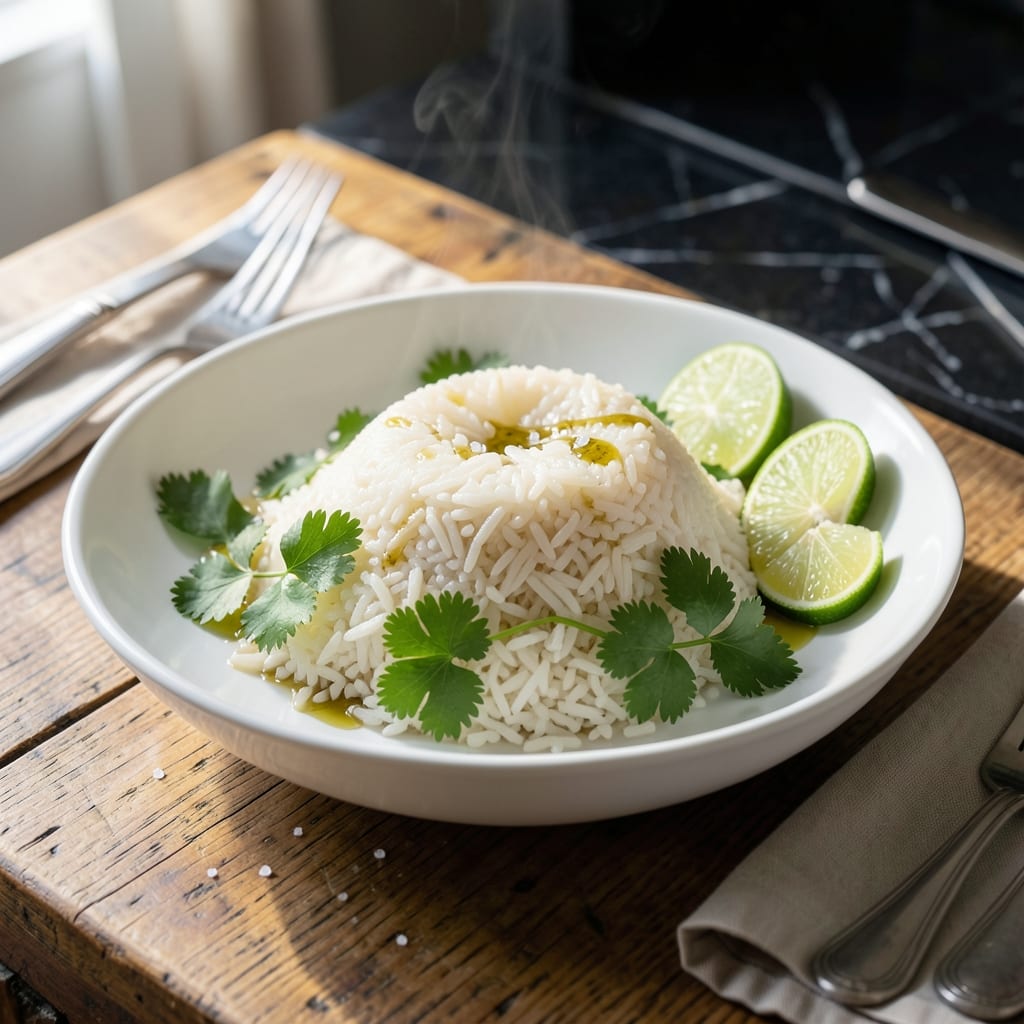
Mastering jasmine rice starts with the right ratio and technique. This method yields perfectly fluffy, aromatic grains every time with minimal effort.
The key is using a 1:1.5 rice-to-water ratio for that ideal texture. A short soak before cooking ensures even hydration, while a tight lid traps steam for consistent results.
In just 15 minutes, you’ll have fragrant rice with distinct, separate grains. The subtle floral aroma makes it the perfect base for any Asian-inspired meal.
Serve alongside stir-fries, curries, or enjoy it plain as a simple, elegant side dish.
Ingredients for Jasmine Rice Recipe 1 Cup
Eight simple ingredients for perfectly fragrant jasmine rice every single time with ease.
| Ingredient | Amount | Notes |
|---|---|---|
| Jasmine Rice 🌾 | 1 cup | Rinsed until water runs clear |
| Water 💧 | 1 ½ cups | Filtered or spring water preferred |
| Fine Sea Salt 🧂 | ½ tsp | Adjust to taste after cooking |
| Neutral Oil 🫒 | 1 tsp | Optional for toasting rice |
| Fresh Cilantro 🌿 | 2 tbsp | Chopped, for garnish optional |
| Lime Wedges 🍈 | 2 slices | For serving optional |
| Green Onions 🧅 | 2 whole | Thinly sliced for garnish |
| Sesame Seeds 🌰 | 1 tsp | Toasted, for garnish optional |
The rice quality matters most here. Look for Thai jasmine rice—brands like Elephant or Dynasty are widely available at Asian markets or the international aisle. Avoid broken grains or rice that looks dusty. The water-to-rice ratio is critical: 1.5 cups water per 1 cup rice ensures fluffy, separate grains. For best results, use filtered water to avoid any off flavors from tap water minerals.
No jasmine rice? Basmati at 1:1.5 ratio works in a pinch (texture will differ slightly). For extra fragrance, toast the rice in oil for one minute before adding water. If you skip the soak, reduce water by 2 tbsp. The salt can be omitted if serving with already-salted dishes. Fresh herbs like Thai basil make a great cilantro alternative for garnish.
Uncooked rice stores indefinitely in a cool, dark place—1-2 years if properly sealed. Cooked rice keeps 4-5 days refrigerated or 6 months frozen. For best texture, reheat frozen rice by steaming or microwaving with a splash of water (worth the extra minute).
Why You’ll Love This Recipe
- Ready in 20: I can get this fluffy jasmine rice on the table faster than takeout arrives.
- Fragrant Bites: The natural aroma of jasmine rice with a hint of cilantro makes every forkful irresistible.
- Meal Prep Hero: It pairs perfectly with stir-fries, curries, or just a fried egg on top.
- Budget Stretch: One cup of rice feeds two, costs pennies, and leftovers taste even better the next day.
Step-by-Step Instructions for Jasmine Rice
Here’s the method. Straightforward, tested, works every time.
Step 1: Rinse and Prepare the Jasmine Rice
Place the 1 cup Jasmine Rice in a fine-mesh strainer and rinse under cold running water until the water runs completely clear. This step removes excess starch, which prevents the rice from becoming gummy or sticky. I find that 3-4 rinses are usually sufficient to achieve the desired clarity.
After rinsing, I shake the strainer gently to remove as much water as possible. There’s no need to dry the rice completely—some residual moisture is fine and won’t affect the cooking process. This preparation ensures each grain cooks evenly and remains distinct.
Step 2: Toast the Rice for Enhanced Flavor
In a medium saucepan with a tight-fitting lid, heat the 1 tsp Neutral Oil over medium heat. Add the rinsed and drained jasmine rice and stir for 1-2 minutes until the grains become slightly translucent at the edges and emit a subtle nutty aroma.
This toasting step is optional but highly recommended. It adds depth to the flavor profile and helps prevent the rice from sticking together. Be careful not to let the rice brown—just warm it enough to enhance its natural fragrance.
Step 3: Cook the Rice with Proper Hydration
Add the 1.5 cups Water and 0.5 tsp Fine Sea Salt to the saucepan with the toasted rice. Stir once to distribute the rice evenly in the water. Bring to a rolling boil over high heat.
Once boiling, immediately reduce the heat to low, cover the saucepan with the lid, and let it simmer. Cook undisturbed for 12-15 minutes. You’ll know it’s working when you see steam escaping from under the lid and hear a gentle simmer.
Step 4: Rest and Fluff for Perfect Texture
After the cooking time is complete, turn off the heat and let the rice rest, covered, for an additional 10 minutes. This resting period allows the steam to finish cooking the rice and helps the grains firm up.
Then, remove the lid and gently fluff the rice with a fork, breaking up any clumps and separating the grains. The rice should be tender but not mushy, with each grain distinct and fragrant. Taste and adjust the seasoning with additional salt if needed.
Step 5: Garnish and Serve
Transfer the jasmine rice to a serving bowl or individual plates. Garnish with the 2 tbsp Fresh Cilantro, 2 whole Green Onions (thinly sliced), and 1 tsp Sesame Seeds for added color and flavor. Serve with the 2 slices Lime Wedges on the side for a bright, citrusy finish.
The cilantro adds a fresh, herbal note, while the green onions provide a mild oniony crunch. The sesame seeds contribute a subtle nuttiness, and the lime wedges allow each person to add a squeeze of acidity to their liking. Serve immediately while hot and fragrant.
Pro Tips For Making Jasmine Rice Recipe 1 Cup
- Rinse the Rice: Soak jasmine rice in cold water for 5 minutes, then rinse until the water runs clear—this removes excess starch so your grains stay fluffy, not gummy.
- Use the Right Ratio: For 1 cup jasmine rice, use 1 ¼ cups water and a pinch of fine sea salt. I learned this the hard way after ending up with mushy rice more than once.
- Let It Steam: Once the water’s absorbed, turn off the heat and let it sit covered for 10 minutes. Sounds weird, but it works: the steam finishes cooking the rice perfectly.
- Add Oil Last: Stir in a teaspoon of neutral oil and chopped cilantro after cooking—it keeps the rice from sticking and adds a fresh finish without weighing it down.
Perfect Pairings for This jasmine rice recipe 1 cup
Main Dish Pairings
This rice pairs beautifully with Thai green curry or red curry—the floral notes complement the coconut milk and spices perfectly. I also love it with lemongrass chicken for a classic Southeast Asian meal. 🌶️
Stir-Fry Companions
Serve alongside beef pad see ew or vegetable stir-fry to soak up the savory sauces. The neutral flavor lets the stir-fry ingredients shine while adding a fragrant base.
Protein Matches
For simple meals, try it with grilled salmon or teriyaki tofu. The rice’s subtle aroma enhances the protein without overpowering it. I often add a drizzle of soy sauce for extra umami.
Soup Partners
Pair with tom kha gai or pho for a comforting bowl. The rice balances the broth’s richness and adds heartiness. A squeeze of lime from your garnish ties everything together. 🍜
Salad Additions
Use leftover rice in Thai mango salad or herb salads for texture contrast. The rice absorbs the dressing beautifully, making every bite flavorful.
Beverage Pairings
Serve with jasmine tea or Thai iced tea to echo the rice’s floral notes. For beer lovers, a crisp Sapporo or Singha cuts through richer dishes. 🍵
Nutrition Facts
Frequently Asked Questions
Why rinse jasmine rice before cooking?
Rinsing removes excess starch from the surface of the grains. This prevents the rice from becoming gummy or sticky during cooking, ensuring fluffy, separate grains every time.
Can I use a rice cooker instead of a saucepan?
Use the same 1:1.5 ratio of rice to water in your rice cooker. Most machines will automatically handle the timing and temperature, delivering perfect results with zero effort.
What if my rice turns out mushy?
Mushy rice usually means too much water or lifting the lid during cooking. Next time, measure liquid precisely and resist peeking. Let it rest 10 minutes covered after cooking.

- Mujadara Rice and Lentils Recipe: Earthy Spiced Lentils With Caramelized Onions - November 1, 2026
- Naija Fried Rice Recipe: Street-Style Spice With Veggie Crunch - November 1, 2026
- Mushy Rice Recipe: Fluffy Grains Transformed in Minutes - November 1, 2026