
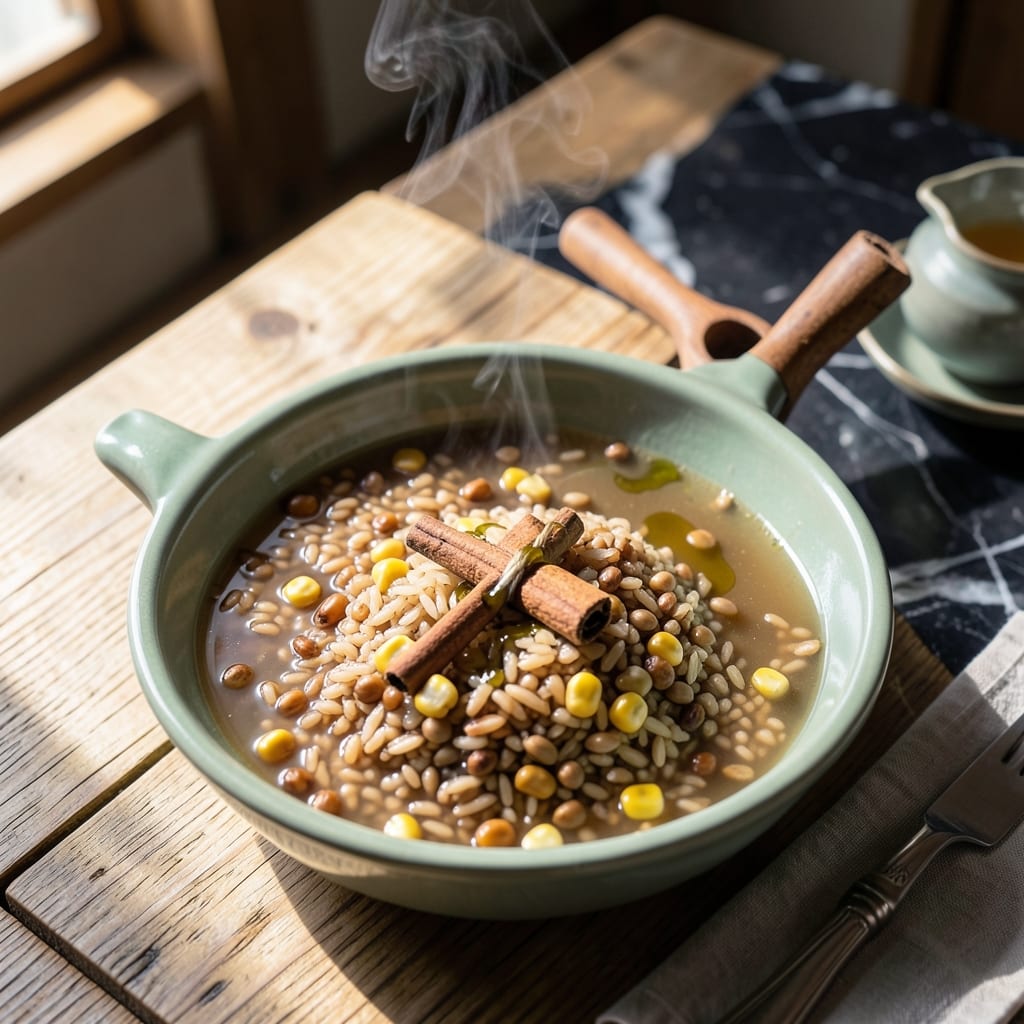
There’s a quiet elegance in Korean rice tea that transforms simple ingredients into a comforting, digestively soothing drink. This traditional infusion relies on toasted grains to create a nutty, warm brew that’s both simple and deeply satisfying.
The method is straightforward—roast the rice until golden and fragrant, then steep it in hot water to release its subtle sweetness. The result is a light, aromatic tea that’s naturally caffeine-free and perfect for any time of day.
What makes this version special is its balance of toastiness and gentle sweetness, achieved through precise toasting and steeping times. It’s a beverage that feels both nourishing and indulgent without any added sugar.
Serve it warm or chilled, depending on the season. Here’s how to make it at home.
Ingredients for Korean Rice Tea
A handful of grains and water transform into this warming, nutty, caffeine-free infusion.
| Ingredient | Amount | Notes |
|---|---|---|
| Short-Grain White Rice 🍚 | ½ cup | Uncooked, rinsed and drained |
| Water 💧 | 4 cups | Filtered for best flavor |
| Brown Rice 🌾 | ¼ cup | Optional for deeper flavor |
| Barley 🌾 | 2 tbsp | Pearl or hull-less variety |
| Roasted Corn Kernels 🌽 | 1 tbsp | Optional for sweetness |
| Cinnamon Stick 🌿 | 1 whole | Optional for spiced variation |
| Dried Dates 🌰 | 2 whole | Pitted, for natural sweetness |
| Toasted Sesame Seeds 🥜 | 1 tsp | For garnish and aroma |
The rice is the foundation here. Short-grain white rice yields the most authentic flavor and aroma—Korean brands like Ssanggyesa or Nishiki are excellent. Avoid pre-cooked or instant rice, as they lack the necessary starch content. For a more complex profile, brown rice or barley can be added in small quantities. Look for grains with minimal processing for the best results.
No short-grain rice? Jasmine or sushi rice work in a pinch, though the flavor will be slightly different. For a gluten-free version, omit the barley and increase the rice by 1 tbsp. The dates can be swapped for dried figs or raisins, and the cinnamon stick can be replaced with a pinch of ground cinnamon if preferred.
Store uncooked grains in airtight containers in a cool, dark place for up to 6 months. The toasted rice for tea can be made in advance and stored in a sealed jar for 1 week. Always use filtered water for the clearest, cleanest flavor in the final brew.
Why You’ll Love This Recipe
- Set It & Forget It: I just toss the rice, barley, and corn into water and let it simmer—no stirring, no fuss.
- Toasty Warm Hug: The roasted corn adds this nutty, almost caramel-like sweetness that makes every sip comforting.
- Breakfast or Midnight Snack: Honestly, I make a big batch and keep it in the fridge for when I need something light but satisfying.
- Penny-Pincher’s Dream: Between us, a cup of these pantry staples stretches into a week’s worth of cozy drinks.
Step-by-Step Instructions for Korean Rice Tea
This traditional method ensures a balanced infusion with nutty depth and soothing warmth.
Step 1: Rinse and Toast the Grains
Rinse the 0.5 cup Short-Grain White Rice thoroughly under cold water until the water runs clear, then drain completely. This removes excess starch that could make your tea cloudy. I always use a fine-mesh strainer for this step to prevent any grains from escaping down the drain.
In a dry skillet over medium heat, toast the drained short-grain white rice along with the 0.25 cup Brown Rice, 2 tbsp Barley, and 1 tbsp Roasted Corn Kernels for 5-7 minutes. Stir constantly until the grains turn a light golden brown and release a nutty aroma. Watch carefully—you want to toast, not burn. The moment you smell that warm, cereal-like fragrance, you’re ready for the next step.
Step 2: Simmer with Aromatics
Transfer the toasted grains to a medium saucepan and add the 4 cups Water, 1 whole Cinnamon Stick, and 2 whole Dried Dates. The dates will plump up during cooking, infusing the tea with natural sweetness and complexity.
Bring the mixture to a boil over high heat, then reduce to low heat and simmer uncovered for 20-25 minutes. You’ll notice the water gradually taking on a milky, beige hue as the grains release their starches and flavors. Skim off any foam that rises to the surface during the first few minutes of simmering.
Step 3: Strain and Finish
After simmering, remove the pan from heat and let it sit for 5 minutes to allow the grains to settle. Carefully pour the tea through a fine-mesh strainer into a heatproof pitcher or serving vessel, pressing gently on the solids to extract maximum flavor. The cinnamon stick and dates can be discarded at this point, having fulfilled their aromatic purpose.
The strained tea should have a creamy, off-white appearance with a comforting, grain-forward aroma. If you prefer a stronger concentration, you can return the strained liquid to the pan and simmer for an additional 5-10 minutes to reduce slightly. This intensifies the toasted grain notes.
Step 4: Serve with Garnish
Ladle the hot tea into individual serving cups or bowls. Just before serving, sprinkle each portion with a pinch of the 1 tsp Toasted Sesame Seeds. The seeds add a subtle nutty crunch and visual contrast to the smooth tea surface.
Serve immediately while hot. The ideal serving temperature allows the aromatic steam to carry the tea’s comforting scent without being scalding. This tea is traditionally enjoyed plain, but its natural sweetness from the toasted grains and dates makes it satisfying as is.
Pro Tips For Making Korean Rice Tea
- Toast the Grains: Dry-toast the brown rice, barley, and corn kernels in a pan for 3-4 minutes until fragrant—this deepens their nutty flavor before boiling.
- Use Cold Water: Start with cold water to extract the starches slowly for a milky, creamy tea; hot water can make it taste flat and thin.
- Skip the Rinse: Don’t rinse the short-grain rice—its excess starch is what gives the tea its signature silky texture.
- Simmer Low and Slow: Keep the heat at a gentle simmer for 20-25 minutes; a rolling boil can make the grains bitter and the liquid cloudy.
Regional Styles of This korean rice tea
Jeju Island Style
On Jeju Island, locals enhance this tea with 2 tbsp roasted black sesame for a deeper, earthier flavor. The volcanic soil gives their grains a unique mineral quality. I add the sesame during the last 2 minutes of toasting. 🌋
Seoul Street Vendor
In Seoul’s markets, vendors sweeten the tea with 1 tbsp honey or serve it iced with a splash of citron tea. The honey version is called honey sikhye and costs about $2-3 per cup. Try it with 1 tsp pine nuts on top.
Royal Court Sikhye
Historically, royal kitchens prepared sikhye with 3-4 grains including millet and sorghum. They steeped it overnight in celadon pottery for a cleaner taste. Modern adaptations use slow cookers on low heat for 6-8 hours. 🗺️
Busan Port Version
Busan’s port culture introduced roasted soybeans to the mix, adding protein. The beans are toasted separately for 3-4 minutes to prevent burning. This version pairs well with seafood pancakes as a digestive aid.
Temple Cuisine
Buddhist temples make a minimalist version with just white rice and water, focusing on meditation. The tea is served lukewarm at 104-108°F. They believe the simplicity aids in mental clarity.
Nutrition Facts
Frequently Asked Questions
How long does the toasting step take?
Toast the grains over medium heat for 5-7 minutes, stirring constantly until they turn light golden brown. Stop when you smell a nutty aroma to avoid burning.
Can I make this tea in a slow cooker?
Yes! Combine toasted grains with water and aromatics, then cook on low heat for 6-8 hours. This method enhances the depth of flavor with minimal effort.
Why did my tea turn out cloudy?
Cloudiness usually comes from insufficient rinsing of the rice. Always rinse until the water runs clear. Also, avoid boiling too vigorously during simmering.
What’s the best way to store leftover tea?
Store in an airtight container in the fridge for up to 3 days. Reheat gently on the stove or enjoy it chilled over ice.

- Mujadara Rice and Lentils Recipe: Earthy Spiced Lentils With Caramelized Onions - November 1, 2026
- Naija Fried Rice Recipe: Street-Style Spice With Veggie Crunch - November 1, 2026
- Mushy Rice Recipe: Fluffy Grains Transformed in Minutes - November 1, 2026