
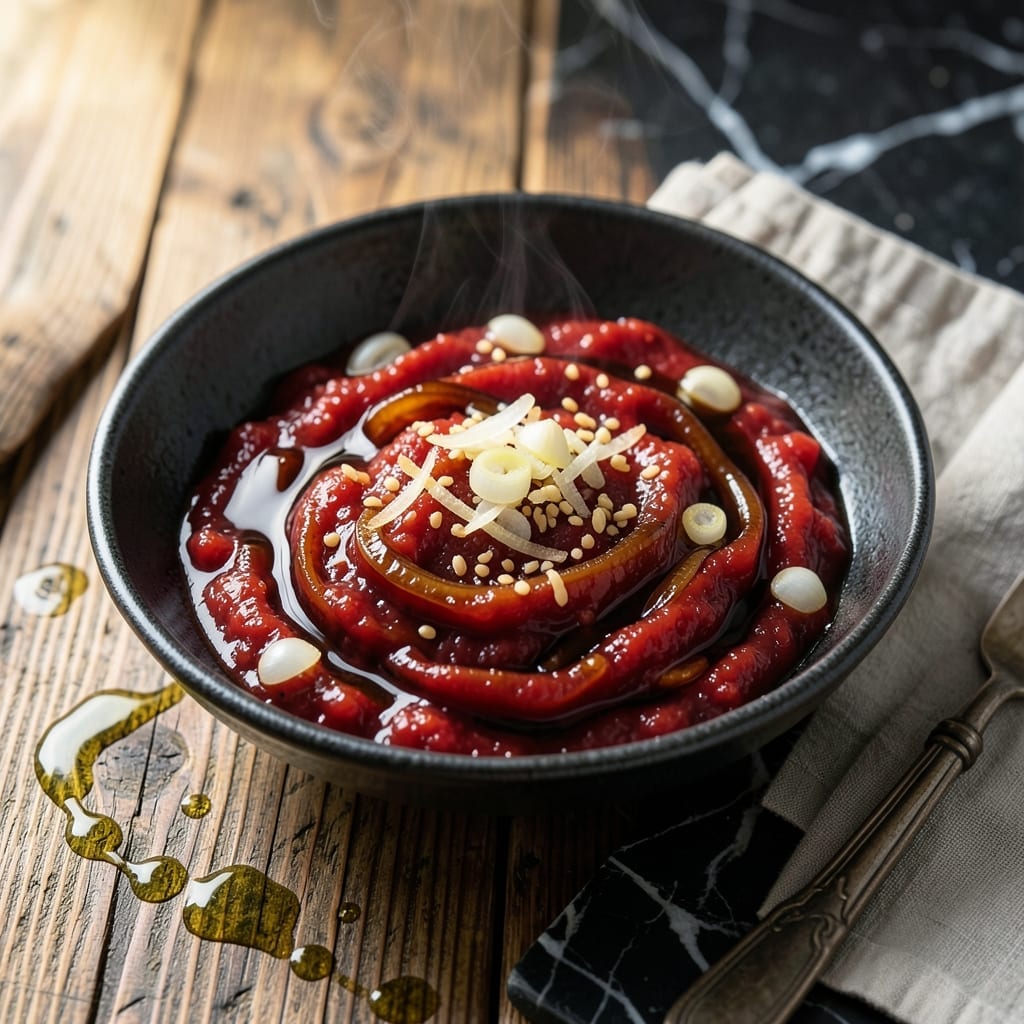
This bold, vibrant sauce transforms plain rice cakes into the iconic Korean street food you crave. The secret lies in balancing gochujang heat with sweetness and umami depth. I’ve perfected the ratios to create a sauce that’s authentically spicy without overwhelming the palate.
What makes this version special is its versatility. Use it as a marinade, dipping sauce, or stir-fry base beyond just rice cakes. The ingredients are simple pantry staples, yet the flavor profile is complex and deeply satisfying.
You’ll achieve a glossy, thick sauce that clings perfectly to every bite. The color alone—deep red with flecks of garlic and onion—signals the rich flavor within. It keeps beautifully in the fridge for up to a week.
One taste and you’ll understand why this sauce is the heart of Korean comfort food. Here’s how to make it.
Ingredients for Korean Spicy Rice Cake Sauce
Nine simple ingredients create this bold, glossy sauce you’ll want to drizzle on everything.
| Ingredient | Amount | Notes |
|---|---|---|
| Gochujang 🌶️ | ½ cup | Korean red pepper paste, essential |
| Soy Sauce 🥫 | ¼ cup | Use low-sodium if preferred |
| Brown Sugar 🍚 | 3 tbsp | For balancing heat and sweetness |
| Rice Vinegar 🍶 | 2 tbsp | Adds tangy brightness |
| Garlic Cloves 🧄 | 4 cloves | Minced for depth of flavor |
| Fresh Ginger 🌿 | 1 tbsp | Grated, adds zing |
| Onion 🧅 | ¼ cup | Finely diced for texture |
| Sesame Oil 🫒 | 1 tbsp | Toasted for nuttiness |
| Water 💧 | ½ cup | Adjusts consistency as needed |
The gochujang is non-negotiable here. Look for it in the Asian aisle of major supermarkets or at H Mart or Korean markets. Brands like Sempio or Chung Jung One are reliable. Fresh ginger and garlic make a huge difference—don’t skip them (the jarred stuff just doesn’t compare). For the soy sauce, I always keep Kikkoman on hand.
No gochujang? Sriracha mixed with miso paste gets you in the ballpark, but it won’t be the same. Out of brown sugar? Maple syrup or agave work, though the flavor shifts slightly. If rice vinegar isn’t in your pantry, apple cider vinegar at the same amount is fine (just avoid white vinegar—too harsh). Need a nut-free option? Swap sesame oil for neutral oil like avocado.
This sauce keeps like a champ. Store in an airtight jar in the fridge for up to 1 week. If you make a big batch, freeze portions in ice cube trays—thaw as needed. The flavors deepen after a day, so it’s even better leftover.
Why You’ll Love This Recipe
- One Bowl Wonder: I just dump all the ingredients—gochujang, soy sauce, brown sugar, rice vinegar, and garlic—into a bowl, whisk, and it’s ready.
- Sweet & Spicy Magic: The gochujang gives that deep heat while the brown sugar balances it with a caramel-like sweetness.
- Meal Prep Hero: I make a big batch on Sunday and use it for rice cakes, stir-fries, or even as a marinade all week.
- Budget Stretch: Five affordable pantry staples, and it makes enough sauce to last for multiple meals.
Step-by-Step Instructions for Korean Spicy Rice Cake Sauce
This method delivers rich, balanced flavors with minimal effort and maximum payoff.
Step 1: Sauté the Aromatics for Depth
Heat a medium saucepan over medium heat and add the sesame oil. Once it shimmers, add the 0.25 cup Onion and cook for 3-4 minutes until it softens and turns translucent. Stir occasionally to prevent browning.
Add the 4 cloves Garlic Cloves and 1 tbsp Fresh Ginger to the pan. Cook for 1 minute, stirring constantly—you want these to release their fragrance without burning. The aroma will be strong and inviting, a sure sign you’re on the right track.
Step 2: Bloom the Gochujang Base
Reduce the heat to low and add the 0.5 cup Gochujang to the pan. Stir well to coat the aromatics, then cook for 2 minutes. This step deepens the gochujang’s flavor, removing any raw edge and allowing its spicy, fermented notes to shine.
You’ll notice the paste darken slightly and become more fragrant. Keep stirring to prevent sticking, as gochujang can be thick and prone to catching on the bottom of the pan. This is where the magic starts to happen.
Step 3: Add Liquids and Sweeteners
Pour in the 0.25 cup Soy Sauce, 3 tbsp Brown Sugar, 2 tbsp Rice Vinegar, and 0.5 cup Water. Stir until the brown sugar dissolves completely, which should take 1-2 minutes over medium-low heat.
The mixture will thin out significantly, and the sugar will help balance the heat from the gochujang. Taste as you go—you should detect a sweet, tangy, and umami-rich base with a lingering spicy kick.
Step 4: Simmer and Thicken the Sauce
Increase the heat to medium and bring the sauce to a gentle simmer. Let it cook for 8-10 minutes, stirring occasionally. You’ll see the sauce reduce slightly, thickening to a consistency that coats the back of a spoon but still drizzles easily.
If it thickens too much, add a splash more water to reach your desired texture. The goal is a glossy, vibrant sauce that’s bold in flavor but not overwhelmingly thick. The aromatics will have melded beautifully by now, creating a harmonious blend.
Step 5: Cool and Adjust to Taste
Remove the sauce from heat and let it cool for 5-10 minutes. This allows the flavors to settle and meld together. As it cools, the sauce will thicken slightly more, which is normal.
Give it a final taste and adjust if needed. If it’s too spicy, a pinch more brown sugar can help. If it’s too sweet or thick, a splash of water or rice vinegar will balance it out. This sauce is versatile, so don’t be afraid to tweak it to your preference.
Pro Tips For Making Korean Spicy Rice Cake Sauce
- Bloom the Gochujang: Heat the gochujang in the pan for 1-2 minutes before adding liquids—this deepens the flavor and removes the raw paste taste. I learned this the hard way after wondering why my sauce tasted flat.
- Mince Garlic Finely: Press or mince the garlic cloves to a near-paste consistency so they dissolve into the sauce. Sounds fussy, but nothing ruins the texture like biting into a chunk of raw garlic.
- Balance the Sweetness: Start with half the brown sugar, then adjust—some gochujang brands are sweeter than others. After over-sweetening my first three batches, I now taste as I go.
- Simmer, Don’t Boil: Keep the sauce at a gentle simmer to thicken without reducing too fast. High heat makes the sugars burn and the sauce bitter—I know, I’ve scrubbed that pan before.
Serving Suggestions for Leftovers
Classic Tteokbokki Pairing
Serve this sauce tossed with cylindrical rice cakes for authentic Korean street food. I use fresh tteok from H Mart when available, but frozen works too—just thaw first. Add fish cakes and boiled eggs for a traditional touch. 💛
Protein Power Boosters
This sauce transforms proteins beautifully. Try it with pan-seared tofu for a vegan option, or grilled shrimp for quick weeknight dinners. For meat lovers, thinly sliced beef or pork belly soaks up the flavors wonderfully.
Vegetable Medley
Stir-fry cabbage, carrots, and zucchini in the sauce for a colorful veggie dish. I love adding mushrooms too—they absorb the spicy-sweet flavors like sponges. Baby spinach wilts perfectly in the last minute of cooking.
Rice and Noodle Bases
Drizzle over steamed white rice for an instant flavor boost. It also works as a marinade for rice noodles or as a dressing for cold somyeon noodle salad. I often serve it with kimchi fried rice for extra depth.
Dipping Sauce Ideas
Thin the sauce slightly with water for dipping. It’s fantastic with tempura, spring rolls, or even grilled cheese sandwiches. I keep a small bowl in the fridge for impromptu snacking with cucumber slices or crispy tofu. ✨
Garnish Like a Pro
Always finish with toasted sesame seeds and thinly sliced green onions. A drizzle of extra sesame oil adds shine. For heat lovers, sprinkle with gochugaru. These touches elevate the presentation and flavor.
Nutrition Facts
Frequently Asked Questions
Can I make this sauce less spicy?
Yes! Reduce the gochujang to 1/3 cup and add 1-2 tablespoons more brown sugar to balance. You can also stir in 1/4 cup of coconut milk for creaminess.
How long does the sauce last in the fridge?
Stored in an airtight container, it stays fresh for up to 1 week. For longer storage, freeze in ice cube trays for up to 3 months.
What can I use instead of rice vinegar?
Apple cider vinegar works perfectly in the same amount. Avoid white vinegar—it’s too harsh. For tang without vinegar, try 1 tablespoon of lemon juice.
Is this sauce gluten-free?
Traditional soy sauce contains wheat, but you can swap it for tamari or coconut aminos. Always check labels to confirm gluten-free status.

- Jollof Rice Sauce Recipe: West African Tomato and Spice Infusion - September 25, 2026
- Japanese Rice Soup Recipe: Umami-Rich Comfort in a Bowl - September 25, 2026
- Homemade Cream Of Rice Recipe: Silk-Smooth Breakfast in Minutes - September 25, 2026