
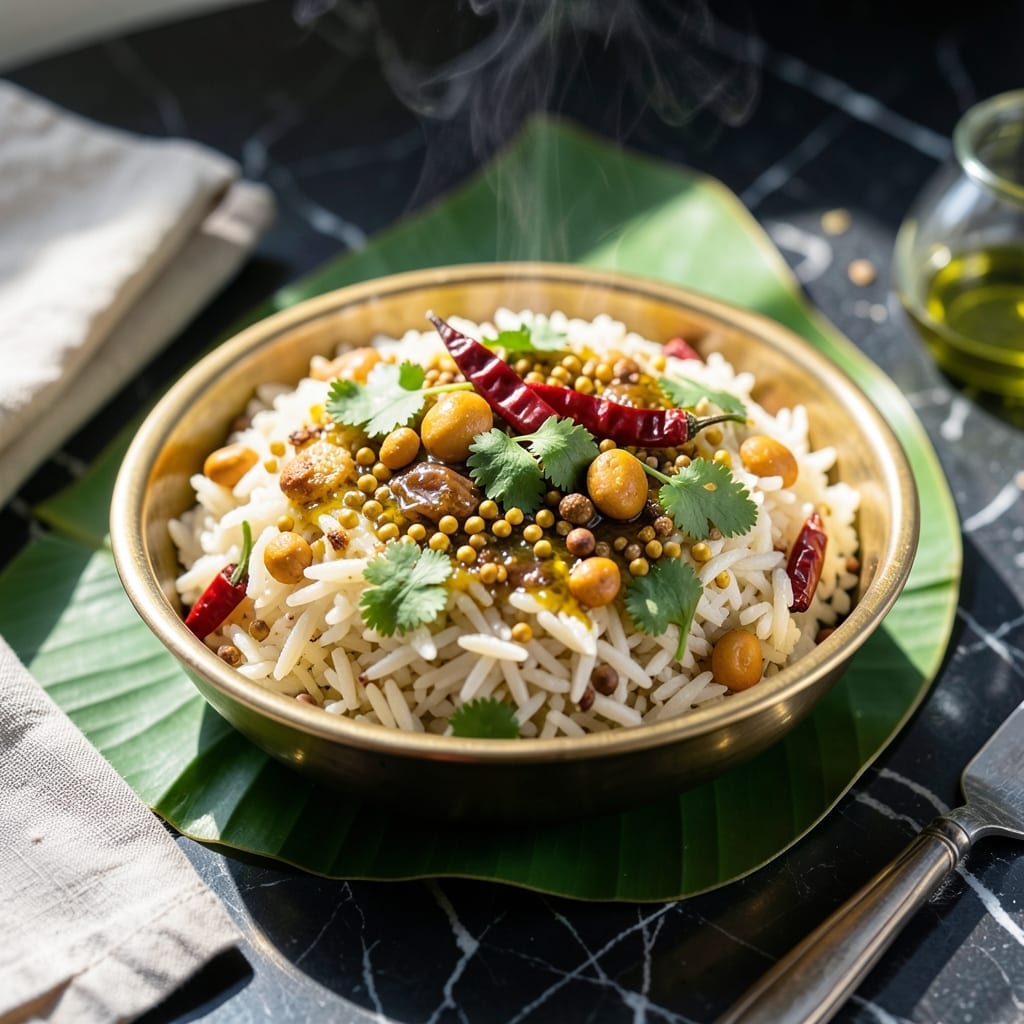
This traditional South Indian dish transforms simple rice into a fragrant masterpiece with fresh coriander leaves. The one-pot method ensures every grain absorbs the herb’s bright, citrusy essence.
I’ve refined this recipe to balance the coriander’s bold flavor with subtle spices. The technique is straightforward: temper mustard seeds and curry leaves, then layer with cooked rice and chopped kothamalli.
The result is a vibrant, aromatic rice dish that pairs perfectly with yogurt or papad. Its simplicity makes it a weekday staple in Tamil households.
This one-pot meal delivers authentic taste with minimal effort. Here’s how to make it at home.
Ingredients for Kothamalli Rice Recipe in Tamil
Fresh coriander, fragrant spices, and simple pantry staples create this vibrant one-pot meal.
| Ingredient | Amount | Notes |
|---|---|---|
| Basmati Rice 🌾 | 2 cups | Rinsed and drained thoroughly |
| Fresh Coriander Leaves 🌿 | 2 cups | Packed, finely chopped (kothamalli) |
| Mustard Seeds 🌱 | 1 tsp | Black or yellow variety |
| Urad Dal 🌾 | 1 tsp | Split black gram, optional |
| Chana Dal 🌾 | 1 tsp | Split chickpeas, optional |
| Dried Red Chilies 🌶️ | 2 whole | Broken into pieces |
| Curry Leaves 🍃 | 10 pieces | Fresh preferred |
| Green Chilies 🌶️ | 2 whole | Slit lengthwise |
| Ginger 🧄 | 1 tbsp | Fresh, finely grated |
| Asafoetida 🌿 | ¼ tsp | Hing, optional |
| Turmeric Powder 🌶️ | ¼ tsp | For color and earthiness |
| Salt 🧂 | 1 tsp | Adjust to taste |
| Vegetable Oil 🫒 | 3 tbsp | For tempering (coconut oil works too) |
| Water 💧 | 4 cups | For cooking rice |
| Lemon Juice 🍋 | 1 tbsp | Freshly squeezed |
The coriander leaves are non-negotiable here—fresh, vibrant green bunches from an Indian grocery store or well-stocked market are ideal. Look for stems that aren’t wilted; the leaves should smell citrusy and bright when crushed. Mustard seeds and curry leaves are the backbone of the tempering; Patel Brothers or any South Asian market will have these. Asafoetida (hing) adds depth but can be omitted if unavailable.
No fresh coriander? Dried coriander powder at one-third the amount works in a pinch, though the flavor won’t be as bright. Out of curry leaves? Skip them, but add an extra dried bay leaf for complexity. For heat adjustments, reduce or omit green chilies. Coconut oil instead of vegetable oil adds authentic South Indian richness. Basmati rice is traditional, but jasmine rice works too.
Cooked rice keeps well in the fridge for 3-4 days in an airtight container. The flavors deepen overnight, making leftovers even better. Reheat with a splash of water to restore moisture. For longer storage, freeze portions for up to 3 months.
Why You’ll Love This Recipe
- One Pot Wonder: Honestly, I just toss everything into a single pot—rice, coriander, the tempering of mustard seeds and dals—and it cooks itself.
- Fresh Herb Magic: That burst of fresh coriander with the nutty crunch of roasted chana dal? It’s like a flavor party in my mouth every time.
- Lunchbox Hero: I pack this for work and it tastes just as good cold. My colleagues always ask for the recipe.
- Budget Stretcher: A handful of coriander and pantry staples turn plain rice into something special. Feeds my family for pennies.
Step-by-Step Instructions for Kothamalli Rice
Master this one-pot method for perfectly fragrant rice with vibrant coriander flavor.
Step 1: Rinse and Prepare the Basmati Rice
Begin by rinsing the 2 cups Basmati Rice under cold water until the water runs clear. This removes excess starch, preventing the grains from sticking together during cooking. Drain thoroughly in a fine-mesh sieve and set aside.
While the rice drains, finely chop the 2 cups Fresh Coriander Leaves and set them aside. The key here is to pack the leaves tightly when measuring to ensure sufficient flavor infusion. The rice should be at room temperature before cooking to ensure even absorption of the 4 cups Water.
Step 2: Temper the Aromatics in Vegetable Oil
Heat the 3 tbsp Vegetable Oil in a heavy-bottomed pot over medium heat. Add the 1 tsp Mustard Seeds and allow them to spatter and pop for 30-45 seconds until they turn golden brown. This signals their flavors have fully bloomed.
Immediately add the 1 tsp Urad Dal, 1 tsp Chana Dal, 2 whole Dried Red Chilies, 10 pieces Curry Leaves, and 2 whole Green Chilies. Sauté for 1-2 minutes until the dals turn light golden and the curry leaves release their aroma. Stir in the 1 tbsp Ginger, 0.25 tsp Asafoetida, and 0.25 tsp Turmeric Powder, cooking for another 30 seconds until fragrant.
Step 3: Cook the Rice with Coriander
Add the drained basmati rice to the pot and stir for 1 minute to coat the grains with the tempered spices. This toasting step enhances the nutty flavor of the rice. Pour in the 4 cups Water and add the 1 tsp Salt, stirring to dissolve.
Bring the mixture to a rolling boil, then reduce the heat to low. Add the chopped Fresh Coriander Leaves, reserving a small handful for garnish. Cover the pot with a tight-fitting lid and simmer for 15-18 minutes until the water is fully absorbed and the rice is tender and fluffy.
Step 4: Finish and Rest Before Serving
Once the rice is cooked, turn off the heat and let it rest, covered, for 5-10 minutes. This allows the steam to distribute evenly, ensuring every grain is perfectly cooked. Avoid stirring at this stage to prevent breaking the rice grains.
Gently fluff the rice with a fork and drizzle the 1 tbsp Lemon Juice over the top. Sprinkle the reserved coriander leaves on top for a fresh, vibrant finish. Serve warm in the same pot to maintain the one-pot integrity, ensuring every bite is infused with the aromatic essence of kothamalli.
Pro Tips For Making Kothamalli Rice Recipe In Tamil
- Toast the Dals First: Heat the urad dal and chana dal in a dry pan for 2-3 minutes until golden—this deepens their nutty flavor before tempering. I learned this the hard way after tasting bland kothamalli rice too many times.
- Use Room-Temp Rice: Spread the cooked basmati rice on a plate and let it cool slightly before mixing with the coriander paste. Hot rice turns the fresh green paste into a sad, wilted mess.
- Pack the Coriander: When measuring fresh coriander leaves, press them down in the cup—those airy leaves compress a lot, and you’ll need more than you think for that vibrant green punch.
- Temper on Medium: Mustard seeds pop best at medium heat; too high and they burn, too low and they sulk in the pan. After burning two batches, I finally figured out the sweet spot.
Flavor Customization for This Recipe
Extra Herbs
For a more complex herb profile, add ½ cup fresh mint leaves along with the coriander. The combination creates a refreshing contrast that’s popular in many Tamil households. I often use this variation during summer months for a lighter touch. 💡
Spice Adjustments
Increase the heat by adding 1 tsp red chili powder during tempering. For milder flavor, reduce green chilies to 1 whole or remove seeds before adding. The dish should have a gentle warmth, not overpowering heat.
Citrus Variations
Replace lemon juice with 1 tbsp tamarind paste for a tangy South Indian twist. Alternatively, use ½ tsp amchur powder (dried mango powder) when fresh citrus isn’t available. Both add that essential sour note.
Rice Types
While basmati is traditional, jeera sambar rice or ponni rice work beautifully too. These shorter-grain varieties absorb flavors differently, creating a slightly stickier texture that many prefer. Adjust water ratio to 1:2 for these types.
Protein Additions
For a heartier meal, stir in ½ cup cooked chana or ½ cup crumbled paneer after cooking. The protein complements the coriander’s freshness without overpowering it. Add just before serving to maintain texture.
Garnish Ideas
Top with 2 tbsp toasted cashews or 2 tbsp grated coconut for added richness. These garnishes add crunch and visual appeal while staying true to South Indian flavors. Sprinkle just before serving for maximum freshness. ✨
Nutrition Facts
Frequently Asked Questions
Can I use dried coriander instead of fresh?
Use 1/3 cup dried coriander powder as a substitute, but fresh leaves give the best flavor. Dried works in a pinch but lacks the bright, citrusy notes.
How do I prevent the rice from turning mushy?
Rinse the rice thoroughly and use the exact 1:2 rice-to-water ratio. Simmer on low heat and avoid stirring after adding water.
What can I serve with this dish?
Pair it with cool yogurt, crispy papad, or a side of raita. It also complements curd rice or a simple lentil soup.
Can I make this in a rice cooker?
Yes! Temper the spices in a pan first, then add everything to the rice cooker. Use the standard rice setting.

- Mujadara Rice and Lentils Recipe: Earthy Spiced Lentils With Caramelized Onions - November 1, 2026
- Naija Fried Rice Recipe: Street-Style Spice With Veggie Crunch - November 1, 2026
- Mushy Rice Recipe: Fluffy Grains Transformed in Minutes - November 1, 2026