
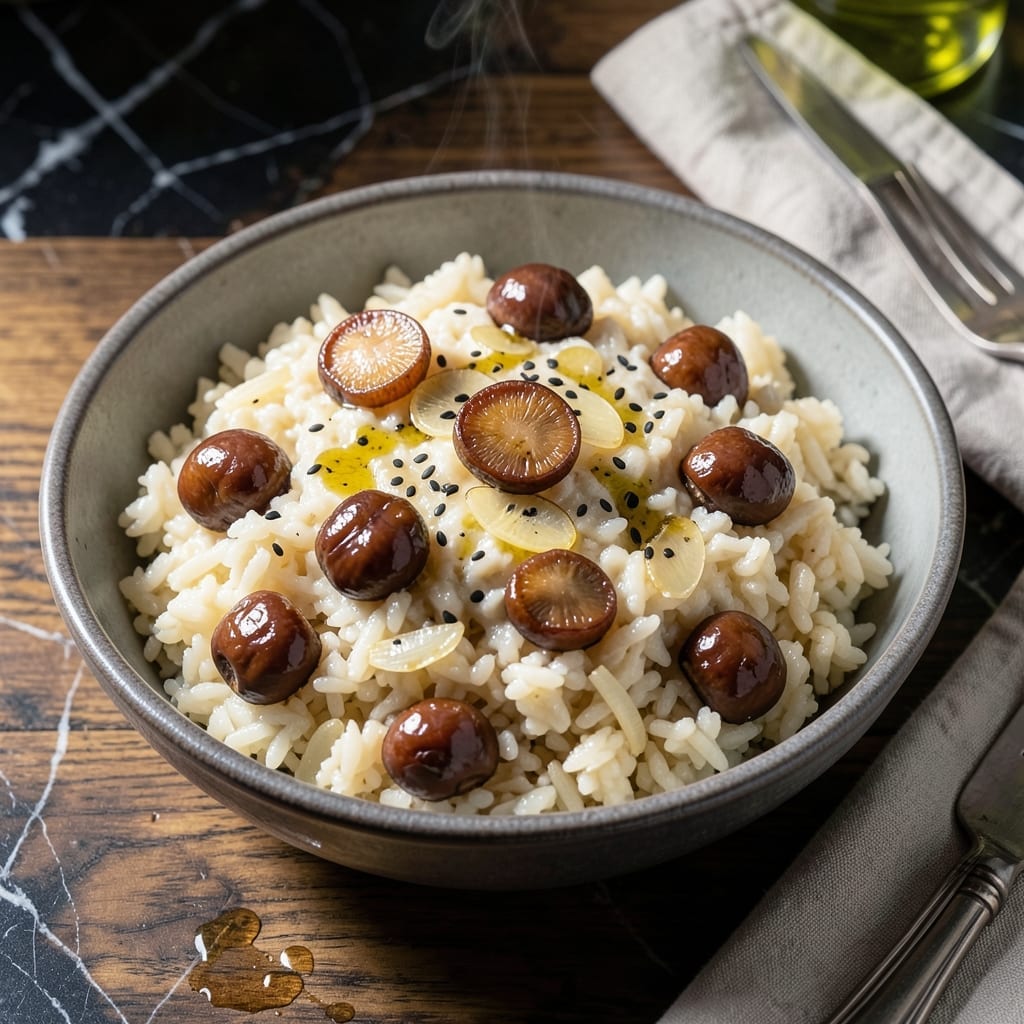
There’s something magical about the way chestnuts transform plain rice into a fragrant, nutty masterpiece that defines Korean comfort food.
This traditional dish combines short-grain rice with fresh chestnuts, creating a sweet, earthy flavor in every bite. The chestnuts soften during cooking, infusing the rice with their natural sweetness while maintaining a satisfying texture.
I’ve perfected the ratio of chestnuts to rice to ensure each forkful delivers that signature Korean balance of sweet and savory. The result is a dish that’s as aromatic as it is delicious, with the chestnuts adding both flavor and visual appeal.
Serve this as a main dish or alongside your favorite Korean proteins. Here’s how to make it.
Ingredients for Korean Chestnut Rice
Transform simple rice into a fragrant, nutty Korean masterpiece with these fresh ingredients.
| Ingredient | Amount | Notes |
|---|---|---|
| Short-Grain White Rice 🍚 | 2 cups | Rinsed until water runs clear |
| Fresh Chestnuts 🌰 | 1 lb | Peeled and halved |
| Water 💧 | 2 ½ cups | For cooking rice |
| Soy Sauce 🫒 | 2 tbsp | Low-sodium preferred |
| Sesame Oil 🫒 | 1 tbsp | Toasted for best flavor |
| Garlic Cloves 🧄 | 3 cloves | Minced finely |
| Green Onions 🧅 | 4 whole | Thinly sliced for garnish |
| Sesame Seeds 🌾 | 1 tbsp | Toasted for garnish |
| Salt 🧂 | ½ tsp | Adjust to taste |
| Black Pepper 🌶️ | ¼ tsp | Freshly ground |
| Vegetable Broth 🥕 | ½ cup | Optional for extra depth |
| Mushroom Soy Sauce 🍄 | 1 tsp | Optional for umami boost |
Chestnuts are the soul here. Fresh chestnuts in season (fall/winter) are ideal—look for firm, heavy nuts with glossy shells. Most Asian markets carry pre-peeled frozen chestnuts, which saves hours of work. Trader Joe’s sometimes has them too. For rice, short-grain white rice (like Calrose or sushi rice) is non-negotiable. The texture depends on it. Rinse until the water runs completely clear—this removes excess starch.
No fresh chestnuts? Canned or vacuum-packed chestnuts work in a pinch, but rinse them first to remove any brine. Out of soy sauce? Tamari or coconut aminos keep it gluten-free. For the broth, any vegetable-based stock adds depth, but water works fine. The sesame oil is key though—Kadoya or Ottogi brands have the best toasted flavor. Don’t skip toasting the sesame seeds.
Leftovers keep 3-4 days in the fridge, but honestly it’s best fresh. Reheat with a splash of water to revive the texture. Freezes for 1 month (the rice gets a bit dry). I make extra chestnuts to snack on while cooking.
Why You’ll Love This Recipe
- One Pot Wonder: I just dump rice, chestnuts, and water in my rice cooker and let it do all the work.
- Nutty Sweet Comfort: The chestnuts caramelize slightly in the rice, giving each bite this warm, buttery sweetness that pairs perfectly with the sesame oil.
- Feeds a Crowd: I make a big batch for potlucks and everyone goes back for seconds—even the picky eaters.
- Budget Stretch: Fresh chestnuts are cheap in season, and this dish turns a handful of humble ingredients into a filling meal that lasts for days.
Step-by-Step Instructions for Korean Chestnut Rice
This method transforms simple ingredients into a fragrant, nutty dish with perfect texture.
Step 1: Prepare the Chestnuts and Rice
Peel and halve the 1 lb Fresh Chestnuts carefully to avoid breaking them. I find scoring the flat side with an X before boiling makes peeling easier. Meanwhile, rinse the 2 cups Short-Grain White Rice in a fine-mesh strainer until the water runs completely clear—this removes excess starch for fluffier grains.
Soak the rice in fresh water for 15 minutes while you finish prepping the chestnuts. This soaking step ensures even cooking and prevents the rice from turning out gummy. Drain the rice thoroughly before cooking—any lingering water will throw off your liquid ratios.
Step 2: Cook the Rice with Chestnuts
In a heavy pot with a tight-fitting lid, combine the drained rice, 2.5 cups Water, 0.5 cup Vegetable Broth, 2 tbsp Soy Sauce, 1 tsp Mushroom Soy Sauce, 1 tbsp Sesame Oil, 0.5 tsp Salt, and 0.25 tsp Black Pepper. Stir gently to distribute the seasonings.
Add the prepared chestnuts, pushing them slightly into the rice so they cook evenly. Bring the mixture to a boil over medium-high heat, then immediately reduce to low heat, cover, and simmer for 20 minutes. Resist the urge to lift the lid—steam is crucial for tender chestnuts and properly cooked rice.
Step 3: Rest and Fluff the Rice
After 20 minutes, turn off the heat but leave the pot covered. Let it sit undisturbed for 10 minutes—this resting period allows the rice to steam in its own moisture, making the grains plump and the chestnuts tender. You’ll notice the chestnuts absorb some of the cooking liquid, infusing the rice with their sweet, earthy flavor.
Uncover and gently fold the rice from the bottom to the top with a rice paddle or silicone spatula. This fluffing separates the grains and distributes the chestnuts evenly. Be careful not to overmix, as you want to keep the chestnuts intact and the rice light.
Step 4: Add Aromatics and Garnish
Stir in the 3 cloves Garlic Cloves (minced finely) while the rice is still hot. The residual heat will mellow the garlic’s bite and infuse the dish with its aroma. Taste and adjust the seasoning with additional Salt if needed—chestnuts can vary in sweetness, so balance is key.
Transfer to a serving bowl and top with 4 whole Green Onions (thinly sliced) and 1 tbsp Sesame Seeds (toasted). The green onions add a fresh, sharp contrast to the rich, nutty rice, while the sesame seeds provide a delightful crunch. Serve immediately while the rice is still steaming for the best texture.
Pro Tips For Making Korean Chestnut Rice
- Soak the Rice: Rinse your short-grain rice until the water runs clear, then soak it for 30 minutes—this removes excess starch and guarantees fluffier, stickier grains that cling perfectly to the chestnuts.
- Pre-Cook Chestnuts: I learned this the hard way—boil or roast fresh chestnuts for 10-15 minutes before adding them to the rice, or they’ll stay hard and ruin the texture. Peel them while warm to save time.
- Watch the Water: Use slightly less water than usual (about 10% less) because chestnuts release moisture as they cook. Too much water turns the rice mushy, and nobody wants that.
- Finish with Sesame Oil: Drizzle the sesame oil over the cooked rice just before serving, not during cooking. This preserves its nutty aroma and keeps the flavor bright and fresh.
Perfect Pairings for This Dish
Traditional Korean Sides
This dish pairs beautifully with kimchi for a tangy contrast that cuts through the sweetness. I serve ½ cup per person of well-fermented napa kimchi. Kongnamul muchim (seasoned soybean sprouts) adds a refreshing crunch that complements the soft rice texture. 🥗
Protein Pairings
For a heartier meal, serve with bulgogi beef—the sweet-savory marinade echoes the chestnut’s natural sweetness. Grilled galbi (Korean short ribs) also works wonderfully, with the meat juices soaking into the rice. I recommend 4-6 oz of protein per serving.
Vegetable Complements
Sigeumchi namul (blanched spinach) brings a light, mineral note that balances the dish’s richness. Oi muchim (spicy cucumber salad) offers a cooling, crisp contrast. Both are quick to prepare while the rice cooks.
Soup Pairings
A light miso soup with tofu and wakame makes an excellent starter. For something more substantial, doenjang jjigae (soybean paste stew) adds depth. I prefer the miso for its simplicity, using 1 tbsp miso paste per cup of dashi. 🍜
Beverage Matches
Barley tea (boricha) is the classic Korean pairing—its nutty, toasted flavor mirrors the chestnuts. For something cooler, try sikhye (sweet rice drink). Both are caffeine-free and widely available at Korean markets.
Nutrition Facts
Frequently Asked Questions
Can I use canned chestnuts instead of fresh?
Yes, canned chestnuts work well. Rinse them thoroughly to remove any brine or syrup, then pat dry. They’ll soften faster than fresh, so reduce cooking time by 5 minutes.
Why do I need to soak the rice first?
Soaking for 15 minutes ensures even cooking and removes excess starch, resulting in fluffier rice. Skipping this step can lead to gummy or unevenly cooked grains.
How do I know when the chestnuts are done?
They’re ready when tender enough to pierce easily with a fork. If they’re still firm after 20 minutes, cover and cook for an additional 5 minutes on low heat.
Can I make this in a rice cooker?
Use the same ratios and cook on the standard rice setting. Add chestnuts on top before starting. Let it rest for 10 minutes after cooking.

- Mujadara Rice and Lentils Recipe: Earthy Spiced Lentils With Caramelized Onions - November 1, 2026
- Naija Fried Rice Recipe: Street-Style Spice With Veggie Crunch - November 1, 2026
- Mushy Rice Recipe: Fluffy Grains Transformed in Minutes - November 1, 2026