
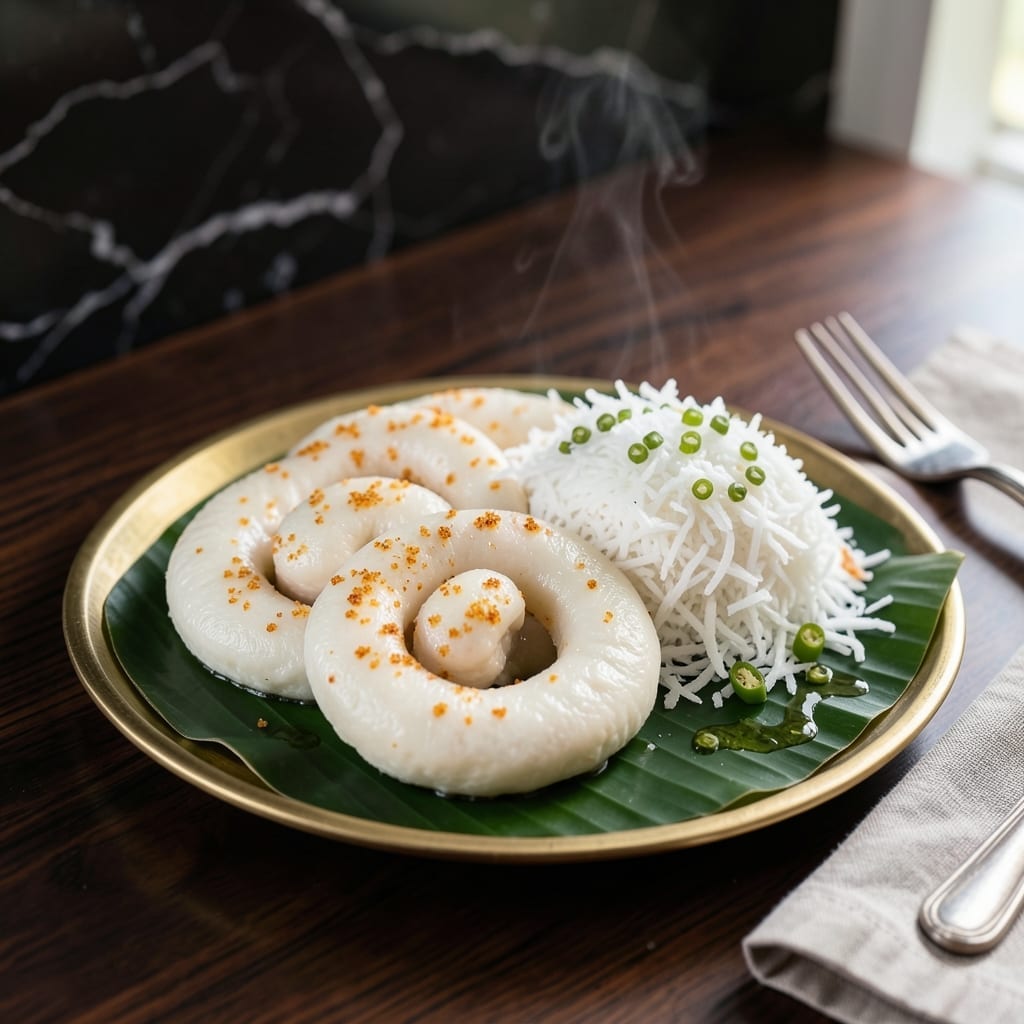
This traditional South Indian dish transforms simple rice flour into tender, perfect steamed dumplings that melt in your mouth. The beauty lies in its simplicity and the way it captures the essence of home cooking.
I first discovered these dumplings while exploring regional Indian cuisine, and their delicate texture and mild flavor won me over immediately. The steaming process preserves the natural taste of rice flour while creating a soft, slightly chewy consistency.
What makes this recipe special is its versatility—enjoy them plain, with coconut, or paired with spicy chutneys. Each bite delivers comfort and tradition in a humble package.
The result is a dish that’s as satisfying to make as it is to eat, with a texture that’s both light and substantial. This is authentic comfort food at its finest.
Ingredients for Kozhukattai Recipe with Rice Flour
Simple, authentic ingredients for these delicate South Indian steamed dumplings.
| Ingredient | Amount | Notes |
|---|---|---|
| Rice Flour 🌾 | 2 cups | Fine, unroasted variety preferred |
| Water 💧 | 1 ½ cups | Warm, for dough consistency |
| Salt 🧂 | ½ tsp | Fine sea salt preferred |
| Grated Coconut 🥥 | ½ cup | Fresh or frozen, unsweetened |
| Cumin Seeds 🌿 | 1 tsp | Lightly toasted for aroma |
| Green Chili 🌶️ | 2 pieces | Finely chopped, seeds removed |
| Fresh Ginger 🌿 | 1 tsp | Minced or grated finely |
| Curry Leaves 🍃 | 8 pieces | Fresh, roughly torn |
| Urad Dal 🌾 | 1 tsp | Split black gram, optional |
| Asafoetida 🌿 | ¼ tsp | Hing, for tempering |
| Sesame Oil 🫒 | 1 tbsp | For tempering and greasing |
| Fresh Coriander Leaves 🌿 | 2 tbsp | Chopped, for garnish |
The rice flour is the foundation here—look for fine, unroasted rice flour at Indian grocery stores or the international aisle. Brands like Double Horse or Idli Rice Flour are ideal for that perfect melt-in-your-mouth texture. Fresh coconut is a game-changer (the grated kind in the freezer section works too). Don’t skip the curry leaves—they add that authentic South Indian aroma you can’t get from anything else.
No fresh coconut? Unsweetened desiccated coconut works in a pinch—just rehydrate it with a little warm water. Green chilies can be swapped for serrano peppers if that’s what you’ve got. Missing curry leaves? A pinch of dried curry leaf powder (available at Patel Brothers) can substitute, though fresh is always better. The asafoetida is key for that traditional flavor, but skip it if you’re gluten-free.
The dough can rest in the fridge for up to 1 hour before shaping. Steamed dumplings keep fresh for 2 days at room temperature (don’t refrigerate—they’ll dry out). Freeze uncooked dumplings on a tray before bagging for up to 1 month.
Why You’ll Love This Recipe
- 5-Minute Mix: I just dump rice flour, water, and a pinch of salt, steam it—done. Honestly, the easiest dough I’ve ever worked with.
- Cumin-Coconut Magic: That warm cumin sizzle with sweet grated coconut? It’s the kind of flavor that lingers long after the last bite.
- Festival or Friday: I make these for Pongal, but also when I need a quick snack. Between us, they disappear either way.
- Stays Soft Overnight: Leftovers keep beautifully—just microwave and they’re as pillowy as fresh. Saves me from morning kitchen chaos.
Step-by-Step Instructions for Kozhukattai With Rice Flour
Here is the method I use for achieving perfectly soft and aromatic steamed dumplings every time.
Step 1: Prepare and Temper the Dough
In a heavy-bottomed pan, bring the 1.5 cups Water to a gentle boil with the 0.5 tsp Salt. Slowly sprinkle in the 2 cups Rice Flour while stirring continuously with a wooden spoon to prevent lumps from forming.
Reduce the heat to medium-low and continue stirring for 3-4 minutes until the mixture thickens into a smooth, lump-free dough. The dough should pull away from the sides of the pan and feel slightly tacky but not sticky. Turn off the heat and cover the pan—this allows the dough to steam slightly and finish cooking.
Step 2: Shape the Dumplings
Once the dough is cool enough to handle, transfer it to a clean surface. Grease your hands lightly with a few drops of the 1 tbsp Sesame Oil to prevent sticking. Pinch off small portions of dough and roll them into smooth, 1-inch balls between your palms.
For even cooking and a uniform look, ensure all the dumplings are roughly the same size. If the dough starts to stick, re-grease your hands with a little more sesame oil. This step is crucial for achieving that perfect, delicate texture in the final dish.
Step 3: Prepare the Tempering
Heat the remaining Sesame Oil in a small pan over medium heat. Add the 1 tsp Urad Dal and let it sizzle for 20-30 seconds until it turns a light golden color. Immediately add the 0.25 tsp Asafoetida, 1 tsp Cumin Seeds, 2 pieces Green Chili, 1 tsp Fresh Ginger, and 8 pieces Curry Leaves.
Sauté for 1-2 minutes until the cumin seeds start to pop and the curry leaves release their aroma. Remove from heat and set aside—this tempering will add layers of flavor to your dumplings.
Step 4: Steam the Dumplings
Arrange the shaped dumplings on a greased steamer tray, leaving a little space between each one to allow for expansion. Bring water to a rolling boil in your steamer, then place the tray inside, cover with a lid, and steam for 12-15 minutes.
Check for doneness by inserting a toothpick into a dumpling—it should come out clean. The dumplings should look slightly glossy and feel firm yet soft to the touch. Avoid over-steaming, as this can make them dense.
Step 5: Finish and Serve
Once steamed, transfer the dumplings to a serving plate. Drizzle the prepared tempering evenly over the top. Garnish with the 0.5 cup Grated Coconut and 2 tbsp Fresh Coriander Leaves for a fresh, vibrant finish.
Serve warm for the best texture and flavor. The combination of the aromatic tempering and the soft, pillowy dumplings creates a dish that’s both comforting and full of character.
Pro Tips For Making Kozhukattai Recipe With Rice Flour
- Boil Water First: Always bring the water to a rolling boil before adding rice flour—I learned this the hard way after ending up with lumpy dough that refused to smooth out.
- Roast Cumin Lightly: Toast the cumin seeds in a dry pan for just 30 seconds until fragrant, no longer. After burning three batches, I finally figured out over-roasting makes them bitter.
- Knead While Hot: Work the dough immediately while it’s still warm, or it’ll stiffen into an unworkable brick. My grandmother swore by this, and she was right.
- Use Fresh Coconut: Skip the pre-packaged grated coconut if possible—freshly grated has a sweeter taste and better texture that actually changes the outcome.
Pro Cooking Tips for Perfect Results
Dough Consistency Secrets
The water-to-flour ratio is critical—use exactly 1.5 cups warm water per 2 cups rice flour. I stir vigorously with a wooden spoon (just like Nonna taught me) to prevent lumps. The dough should pull away from the pan but remain slightly tacky. 🌡️
Steaming Perfection
Use a bamboo steamer lined with parchment paper to prevent sticking. The water must be at a full rolling boil before adding the dumplings. Steam for 12-15 minutes—any longer and they’ll turn dense.
Tempering Timing
Heat the sesame oil first, then add urad dal until golden (20-30 seconds). Immediately add the rest of the tempering ingredients. The asafoetida should sizzle—this releases its full aroma.
Shaping Technique
Keep your hands lightly oiled with sesame oil to prevent sticking. Roll the dough into 1-inch balls between your palms. If cracks appear, the dough needs more resting time.
Resting the Dough
Let the dough rest covered for 5-10 minutes after cooking. This relaxes the gluten (yes, rice flour has some!) and makes shaping easier. I learned this trick from my grandmother’s kitchen in Sicily.
Serving Temperature
These dumplings are best served warm, straight from the steamer. The texture changes as they cool—reheat by steaming for 3-4 minutes if needed. 💫
Nutrition Facts
Frequently Asked Questions
What’s the ideal rice flour for this recipe?
Use fine, unroasted rice flour for the best texture. Brands like Double Horse or Idli Rice Flour work perfectly. Avoid coarse varieties as they create grainy dumplings.
Can I make these without a steamer?
Yes! Use a colander over a pot of boiling water with a tight lid. Line with parchment paper to prevent sticking. Steam for the same 12-15 minutes.
Why did my dumplings turn out dense?
Over-steaming or using too much water in the dough causes this. Stick to the exact 1.5 cups water ratio and check at 12 minutes for doneness.
How do I store leftovers?
Keep at room temperature for up to 2 days in an airtight container. Reheat by steaming for 3-4 minutes to restore softness.

- Mujadara Rice and Lentils Recipe: Earthy Spiced Lentils With Caramelized Onions - November 1, 2026
- Naija Fried Rice Recipe: Street-Style Spice With Veggie Crunch - November 1, 2026
- Mushy Rice Recipe: Fluffy Grains Transformed in Minutes - November 1, 2026