
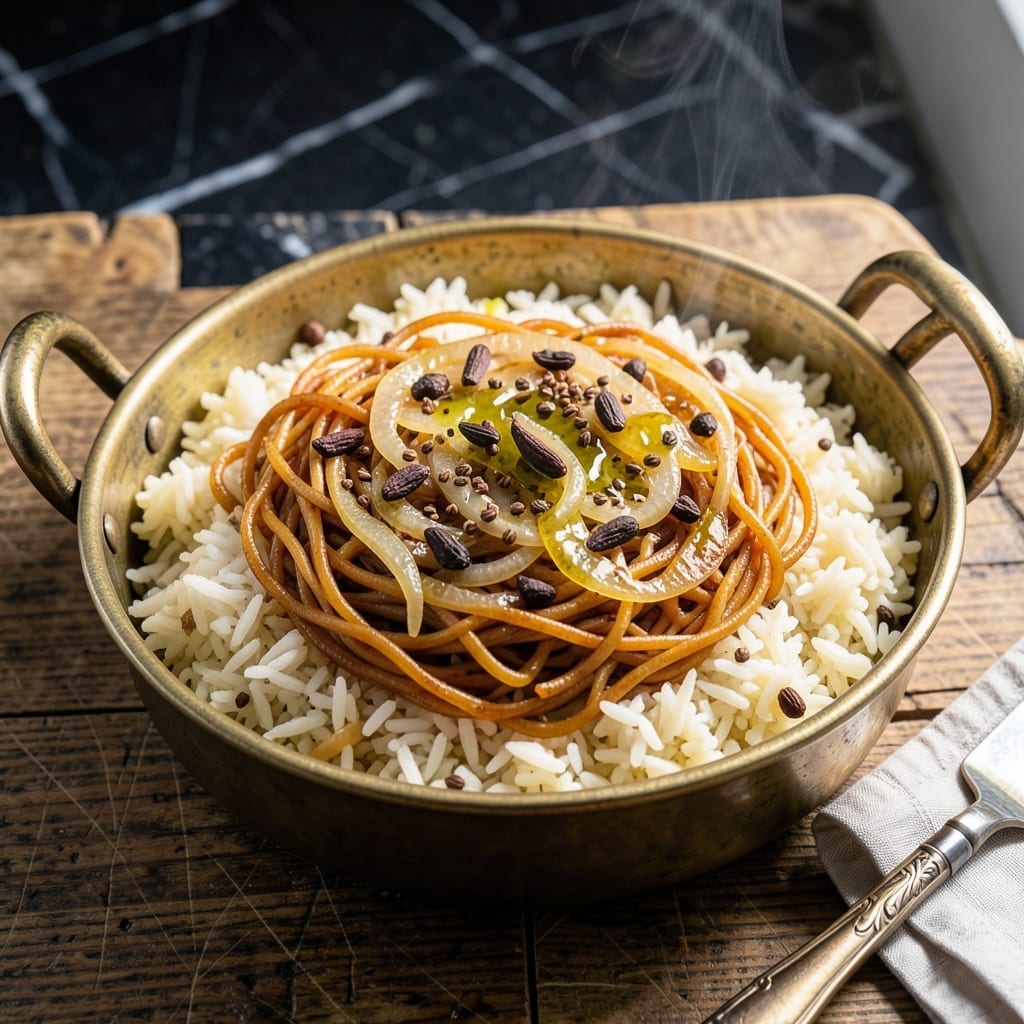
This traditional pilaf transforms simple ingredients into an aromatic masterpiece that fills your kitchen with warmth and spice. The combination of toasted vermicelli and fragrant basmati rice creates a dish that’s as visually stunning as it is delicious.
The secret lies in blooming whole spices in hot oil before adding the rice, which infuses every grain with deep, complex flavors. I’ve perfected the ratio of vermicelli to rice for the ideal texture contrast—crispy golden strands mixed with fluffy, separate grains.
What emerges from your pot is a dish with layers of flavor: nutty vermicelli, fragrant spices, and perfectly cooked rice that’s never mushy. The technique ensures each bite delivers that signature balance of texture and aroma that makes this pilaf unforgettable.
Serve it alongside curries or as a main dish with yogurt and salad. Here’s how to achieve restaurant-quality results at home.
Ingredients for Kullakar Rice
Toasted vermicelli, fragrant spices, and fluffy basmati come together for this aromatic dish.
| Ingredient | Amount | Notes |
|---|---|---|
| Basmati Rice 🍚 | 2 cups | Rinsed until water runs clear |
| Vermicelli Noodles 🍜 | ½ cup | Broken into 1-inch pieces |
| Ghee 🧈 | ½ cup | Or substitute with neutral oil |
| Whole Cumin Seeds 🌿 | 1 tsp | Lightly crushed for more flavor |
| Whole Cardamom Pods 🌿 | 4 pieces | Lightly crushed to release aroma |
| Whole Cloves 🌶️ | 4 pieces | Remove before serving if desired |
| Bay Leaf 🍃 | 1 whole | Dried or fresh |
| Cinnamon Stick 🌿 | 1 piece | 2-inch piece preferred |
| Onion 🧅 | 1 whole | Finely chopped for even cooking |
| Salt 🧂 | 1 ½ tsp | Adjust to taste at the end |
| Water 💧 | 4 cups | Or use vegetable broth for extra flavor |
| Fresh Cilantro 🌿 | ¼ cup | Chopped for garnish |
The spices are non-negotiable here. Whole cumin, cardamom, cloves, and cinnamon bloom in hot ghee for that signature aroma—Indian or Middle Eastern markets often sell them loose so you can buy just what you need. Basmati rice is key for the fluffy texture (look for Tilda or Daawat brands), and don’t skip the rinsing step to remove excess starch. Vermicelli should be the thin, broken variety, not the long pasta strands.
No ghee? Butter or neutral oil works fine, but ghee has that nutty depth. Missing a spice or two? Ground versions at half the amount can substitute, but whole seeds bloom better in oil. For extra richness, swap water for vegetable or chicken broth. The cilantro garnish is optional but adds a fresh finish— parsley works too (just use less, it’s stronger).
Leftover pilaf keeps well in the fridge for 3-4 days and reheats beautifully with a splash of water. Store spices in airtight containers away from light to preserve their punch. This dish tastes even better the next day once all the flavors meld together.
Why You’ll Love This Recipe
- One Pot Wonder: I love that everything—basmati rice, vermicelli, and spices—cooks together in one pot with almost no cleanup.
- Aromatic Heaven: The ghee-toasted cumin and cardamom fill my kitchen with a scent that makes everyone rush to the table.
- Weeknight Hero: Honestly, it’s my go-to for busy evenings when I need something filling and fast.
- Budget Stretcher: A handful of vermicelli and rice feeds my family for days, and the leftovers taste just as good.
Step-by-Step Instructions for Spice-Infused Pilaf With Toasted Vermicelli
This method delivers perfectly fragrant rice with crispy vermicelli every single time.
Step 1: Toast the Vermicelli and Spices
Melt the 0.5 cup Ghee in a heavy-bottomed pot over medium heat. Add the 0.5 cup Vermicelli Noodles and stir constantly for 2-3 minutes until they turn golden brown. Watch closely—they burn quickly.
Add the 1 tsp Whole Cumin Seeds, 4 pieces Whole Cardamom Pods, 4 pieces Whole Cloves, 1 whole Bay Leaf, and 1 piece Cinnamon Stick. Stir for 30 seconds until the spices release their aroma and the cumin sizzles. This blooms the flavors for maximum impact in your dish.
Step 2: Sauté the Onion
Add the 1 whole Onion and cook for 4-5 minutes, stirring occasionally, until translucent and just beginning to turn light golden. The onion should soften completely but not brown deeply—this creates a sweet, aromatic base.
I like to keep the heat at medium to prevent burning the spices while ensuring the onion cooks evenly. The ghee will help distribute the flavors throughout the dish as everything melts together.
Step 3: Add Rice and Water
Stir in the 2 cups Basmati Rice and cook for 1-2 minutes, allowing the grains to toast slightly and absorb the ghee and spice flavors. You’ll notice the rice becomes slightly opaque as it soaks up the aromatic base.
Pour in the 4 cups Water and add the 1.5 tsp Salt. Stir well to combine, then bring to a boil over high heat. Once boiling, reduce the heat to low, cover tightly with a lid, and let it simmer undisturbed.
Step 4: Simmer and Steam
Cook the rice for 15-18 minutes until all the water is absorbed and the grains are tender. Avoid lifting the lid during this time—steam is crucial for even cooking. You’ll know it’s done when small holes appear on the surface and the rice looks fluffy.
Turn off the heat and let the pot sit, covered, for an additional 5 minutes. This final rest allows the rice to finish steaming and ensures every grain is perfectly cooked. The vermicelli will have softened into delicate, flavorful threads.
Step 5: Fluff and Garnish
Gently fluff the rice with a fork, taking care not to break the vermicelli strands. Remove the bay leaf, cinnamon stick, cardamom pods, and cloves if you prefer a smoother texture, though leaving them in adds a rustic touch.
Sprinkle with the 0.25 cup Fresh Cilantro and serve immediately. The cilantro adds a bright, fresh contrast to the warm, spiced rice. Each bite should be fragrant, slightly nutty from the toasted vermicelli, and perfectly seasoned.
Pro Tips For Making Kullakar Rice
- Toast the Vermicelli: Fry the vermicelli in ghee until golden brown before adding rice—this adds a nutty depth that raw noodles can’t deliver.
- Rinse the Basmati: Soak and rinse the basmati rice 3-4 times until the water runs clear to remove excess starch and prevent a gummy texture.
- Temper the Spices: Heat the ghee first, then add cumin and cardamom—letting them sizzle for 15-20 seconds releases their full aroma before adding anything else.
- Use Just Enough Water: Stick to a 1:1.5 rice-to-water ratio for basmati in this dish—any more and you’ll end up with mushy grains instead of fluffy, separate ones.
Pro Cooking Tips for kullakar rice
Spice Blooming Technique
Blooming whole spices in hot ghee is the soul of this dish. I always toast cumin, cardamom, cloves, and cinnamon for exactly 30 seconds until fragrant—any longer and they’ll turn bitter. Use medium heat to prevent burning. 🌡️
Vermicelli Perfection
The ½ cup vermicelli needs constant stirring while toasting to achieve even golden-brown color. I break mine into 1-inch pieces for consistent cooking. Remove from heat the moment it turns—it continues cooking in the residual heat.
Rice Toasting Trick
After adding 2 cups basmati rice, toast it for 1-2 minutes until slightly opaque. This step enhances nutty flavors and prevents mushiness. I use a wooden spoon to avoid scraping the pot.
Steam Management
Never lift the lid during the 15-18 minute simmer. The trapped steam is what makes the grains fluffy. I check doneness by tilting the pot—when you see small holes on the surface, it’s ready.
Resting Time
Let the pilaf rest covered for 5 minutes after cooking. This final step allows the rice to absorb remaining moisture. I fluff with a fork, not a spoon, to keep the vermicelli intact.
Spice Removal
For a smoother texture, remove bay leaf, cinnamon stick, cardamom, and cloves before serving. I often leave them in for a rustic presentation—just warn your guests. ✨
Nutrition Facts
Frequently Asked Questions
Can I use regular rice instead of basmati?
Basmati gives the best texture, but long-grain white rice works in a pinch. Reduce water to 3.5 cups and check for doneness at 12 minutes. The grains won’t be as fluffy, but the flavor will still shine.
Why do I need to toast the vermicelli first?
Toasting develops a nutty flavor and prevents sogginess. The 2-3 minutes in hot ghee creates that signature golden crispness. Skip this step and you’ll miss the dish’s textural contrast.
What if my spices start to burn?
Immediately remove the pot from heat and lower the temperature. Burnt spices turn bitter. For best results, use medium heat and stir constantly while blooming.
Can I make this ahead of time?
Yes! It reheats beautifully. Store in an airtight container for up to 3 days. Add a splash of water when reheating to restore moisture.

- Jollof Rice Sauce Recipe: West African Tomato and Spice Infusion - September 25, 2026
- Japanese Rice Soup Recipe: Umami-Rich Comfort in a Bowl - September 25, 2026
- Homemade Cream Of Rice Recipe: Silk-Smooth Breakfast in Minutes - September 25, 2026